


Last Updated on January 29, 2026 by Nurseslab.in Editorial Team
Triangulation is a vital approach in research, used to enhance the credibility and validity of findings by combining multiple methods, data sources, theories, or investigators. It allows researchers to cross-verify information, identify discrepancies, and provide a more comprehensive understanding of the phenomenon under study.

This article explores the concept of triangulation, its types, methods, and a practical guide to implementing it effectively.
Triangulation
Triangulation in research refers to the practice of using multiple approaches to study a single phenomenon. By leveraging different perspectives, it minimizes biases, reduces the likelihood of errors, and strengthens the reliability of the results. This approach is especially useful in qualitative research, where subjectivity and context play significant roles.
For instance, when studying employee satisfaction, triangulation might involve using surveys (quantitative data), interviews (qualitative data), and observation to verify findings.
The Concept of Triangulation
A. Explaining the Fundamental Idea of Triangulation
At its core, triangulation is about approaching a research question or problem from different angles. Imagine you’re investigating the effectiveness of a new teaching method. Instead of relying solely on student surveys, you might also observe classroom behavior and analyze test scores. This multifaceted approach provides a more complete picture of the situation.
B. The Role of Multiple Data Sources
Triangulation often involves the use of multiple data sources. These can include surveys, interviews, observations, and existing records. By gathering data from diverse sources, you reduce the risk of bias and gain a more comprehensive understanding of the phenomenon you’re studying.
C. Triangulation as a Research Validation Strategy
Triangulation is like having a built-in validation system for your research. When findings from different methods or sources converge and support each other, it strengthens the credibility of your results. Conversely, if there are discrepancies, it prompts you to dig deeper and understand the underlying factors.
Importance of Triangulation in Research
- Enhances Credibility: By validating findings through multiple sources or methods, triangulation ensures that results are trustworthy and accurate.
- Reduces Bias: Combining diverse approaches minimizes the influence of individual biases or limitations inherent in a single method.
- Provides Comprehensive Insights: Triangulation captures the complexity of a phenomenon by integrating varied perspectives.
- Improves Rigor: It strengthens the methodological framework, making research more robust and defensible.
Types of Triangulation
Triangulation can be divided into four main types: data triangulation, methodological triangulation, researcher triangulation, and theoretical triangulation. Each type contributes to the thoroughness and accuracy of research in unique ways.
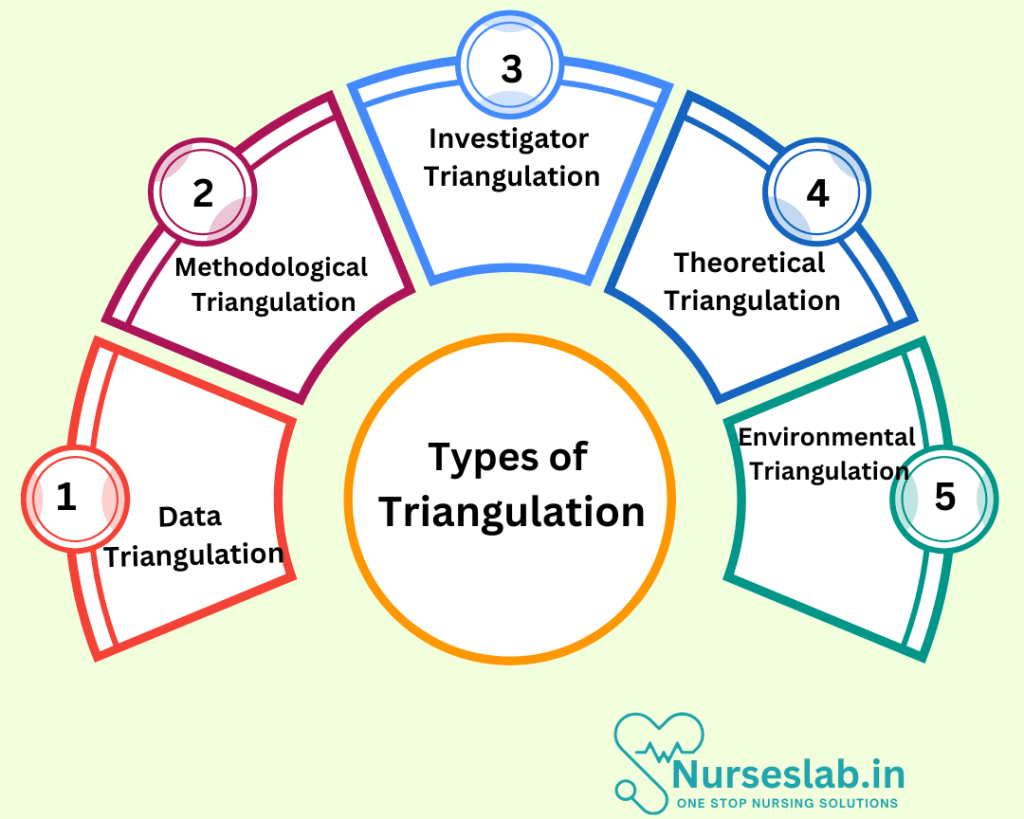
1. Data Triangulation
This type involves using different data sources to examine the same phenomenon.
- Example: Collecting data from multiple demographics, such as different age groups or geographic regions, to study consumer preferences.
- Purpose: To ensure findings are not dependent on a single source or sample.
Benefits of Data Triangulation:
- Enhanced Credibility: By using diverse sources, researchers can cross-validate findings, increasing the reliability of their results.
- Holistic Understanding: Data triangulation provides a multidimensional view, capturing the complexity and richness of the subject matter.
- Bias Reduction: Collecting data from varied sources helps minimize biases associated with specific times, places, or populations.
- Insight into Variability: Researchers can uncover trends and variations across different contexts, offering deeper insights into dynamic phenomena.
2. Methodological Triangulation
Here, researchers use multiple research methods to explore the same research question.
- Example: Combining surveys (quantitative) and focus groups (qualitative) to study employee engagement.
- Purpose: To validate results by comparing findings across different methods.
Benefits of Methodological Triangulation:
- Enhanced Credibility: Cross-verifying findings across methods increases the reliability of the results.
- Comprehensive Insights: Diverse methods provide a fuller picture of the phenomenon, capturing both numerical trends and rich contextual details.
- Mitigation of Bias: Using varied methods minimizes the biases inherent in any single approach, leading to a more balanced analysis.
- Filling Knowledge Gaps: One method can address the weaknesses or gaps left by another, creating a more robust understanding of the research topic.
3. Investigator Triangulation
This approach involves multiple researchers or observers analyzing the same data or phenomenon.
- Example: Two psychologists analyzing the same interview transcripts to ensure consistent interpretation of responses.
- Purpose: To reduce individual biases and increase reliability.
Key Benefits of Researcher Triangulation:
- Reduction of Bias: By involving multiple researchers, the study is less influenced by any single individual’s assumptions or preconceptions.
- Enhanced Credibility: Independent validation of findings by different researchers increases the reliability and trustworthiness of the results.
- Diverse Expertise: Each researcher brings unique knowledge and skills, enriching the analysis and uncovering insights that might be overlooked by a single investigator.
- Improved Objectivity: Collaborative discussions encourage critical reflection, helping researchers avoid tunnel vision and ensuring a balanced interpretation of the data.
- Cross-Validation of Findings: Discrepancies between researchers’ analyses can highlight areas requiring further investigation, strengthening the study’s overall robustness.
4. Theoretical Triangulation
Different theoretical frameworks or perspectives are applied to interpret the same data.
- Example: Using both behaviorism and constructivism to analyze learning outcomes in education research.
- Purpose: To provide a multi-dimensional understanding of the phenomenon.
Key Benefits of Theoretical Triangulation:
- Deeper Understanding: Applying multiple theories allows researchers to explore different dimensions of a phenomenon, capturing its complexity more effectively.
- Reduction of Bias: Using diverse theoretical perspectives minimizes the influence of biases associated with a single framework.
- Enhanced Analytical Rigor: The interplay between theories fosters critical thinking, encouraging researchers to evaluate their findings from multiple angles.
- Identification of Gaps: Comparing interpretations across theories can reveal areas where existing frameworks may fall short, guiding further research.
- Comprehensive Insights: Theoretical triangulation enables a holistic view by integrating complementary explanations and perspectives.
5. Environmental Triangulation
This type examines the same phenomenon in different settings or contexts.
- Example: Studying team collaboration in both virtual and in-person environments.
- Purpose: To explore the influence of contextual factors on findings.
Methods for Implementing Triangulation
1.Identify Research Objectives
Clearly define the research questions or objectives. This helps determine the appropriate types and methods of triangulation needed to achieve credible results.
2.Select Appropriate Data Sources
Use diverse sources to collect data. For example:
- Surveys and interviews for perspectives.
- Archival data for historical context.
- Observations for real-time insights.
3.Combine Multiple Methods
Integrate quantitative and qualitative methods to cover different aspects of the research question. For example, statistical analysis can reveal patterns, while qualitative methods explore underlying reasons.
4.Involve Multiple Researchers
Collaborate with co-investigators to analyze data independently and compare findings. This reduces the risk of bias in interpretation.
5.Employ Multiple Theories
Apply complementary or contrasting theories to interpret data, allowing for a richer understanding of the research problem.
6.Compare Findings
Analyze and cross-verify data from different methods, sources, or perspectives. Highlight similarities to strengthen conclusions and investigate discrepancies to uncover deeper insights.
Examples of Triangulation in Research
Healthcare Research
Study: Examining patient satisfaction with telehealth services.
- Data Triangulation: Use patient feedback, healthcare provider assessments, and service usage data.
- Methodological Triangulation: Combine surveys, in-depth interviews, and patient case studies.
- Outcome: A well-rounded view of telehealth effectiveness and areas for improvement.
Education Research
Study: Exploring student engagement in online learning environments.
- Theoretical Triangulation: Apply both cognitive load theory and self-determination theory.
- Environmental Triangulation: Analyze engagement in synchronous and asynchronous settings.
- Outcome: Insights into how teaching methods and platforms influence engagement.
Market Research
Study: Understanding consumer behavior toward eco-friendly products.
- Methodological Triangulation: Use surveys to gather preferences, focus groups for detailed opinions, and sales data for actual behavior.
- Investigator Triangulation: Involve marketing analysts and psychologists to interpret findings.
- Outcome: Comprehensive strategies to enhance product appeal.
Advantages of Triangulation
- Improved Validity: Reduces reliance on a single method or perspective, ensuring findings are well-substantiated.
- Deeper Insights: Integrates multiple dimensions of data for richer and more nuanced interpretations.
- Enhanced Reliability: Minimizes errors by verifying data consistency across different approaches.
- Flexibility: Applicable across disciplines and adaptable to various research designs.
Limitations of Triangulation
- Resource-Intensive: Requires additional time, effort, and resources to implement multiple methods or involve multiple investigators.
- Complex Analysis: Combining and interpreting data from diverse sources can be challenging.
- Potential Conflicts: Inconsistent results across methods or theories may complicate conclusions.
Practical Guide to Use Triangulation
Research is a systematic process aimed at gaining a deeper understanding of phenomena and finding credible answers to questions. However, challenges such as subjectivity and bias can affect the reliability of findings.

- Define the Problem Clearly
Ensure the research problem is well-articulated to identify appropriate triangulation strategies. - Plan for Triangulation Early
Incorporate triangulation into the study design to avoid ad-hoc adjustments. - Choose Complementary Approaches
Select methods, theories, or data sources that align with the research objectives and provide diverse insights. - Document the Process
Record how triangulation was implemented, including details about methods, sources, and analysis, to enhance transparency and replicability. - Interpret Discrepancies Carefully
Use inconsistencies to uncover additional layers of understanding rather than dismissing them as errors. - Report Findings Thoroughly
Present how triangulation contributed to the reliability and depth of the study’s conclusions.
REFERENCES
- Patton, M. Q. (2015). Qualitative Research & Evaluation Methods: Integrating Theory and Practice. Sage Publications.
- Denzin, N. K. (1978). The research act: A theoretical introduction to sociological methods. McGraw-Hill.
- Bryman, A., et al. (2021). Social Research Methods. Oxford University Press. ISBN: 9780190853662. https://global.oup.com/academic/product/social-research-methods-9780190853662/
- Creswell, J. W., & Poth, C. N. (2017). Qualitative inquiry and research design: Choosing among five approaches (4th ed.). SAGE Publications.
- Denzin, N. K. (1978). The research act: A theoretical introduction to sociological methods (2nd ed.). McGraw-Hill.
- Flick, U. (2018). An introduction to qualitative research (6th ed.). SAGE Publications.
- Miles, M. B., Huberman, A. M., & Saldaña, J. (2020). Qualitative data analysis: A methods sourcebook (4th ed.). SAGE Publications. https://us.sagepub.com/en-us/nam/qualitative-data-analysis/book246128/
- Patton, M. Q. (2015). Qualitative research and evaluation methods (4th ed.). SAGE Publications. https://us.sagepub.com/en-us/nam/qualitative-research-evaluation-methods/book232962/
- Yin, R. K. (2018). Case study research and applications: Design and methods (6th ed.). SAGE Publications. https://us.sagepub.com/en-us/nam/case-study-research-and-applications/book250150/
- https://www.formpl.us/blog/triangulation-in-research-guide-types-examples
- Rothbauer P. Triangulation. Given L , ed. The SAGE encyclopedia of qualitative research methods: Sage Publications, 2008:892–4.
Stories are the threads that bind us; through them, we understand each other, grow, and heal.
JOHN NOORD
Connect with “Nurses Lab Editorial Team”
I hope you found this information helpful. Do you have any questions or comments? Kindly write in comments section. Subscribe the Blog with your email so you can stay updated on upcoming events and the latest articles.


