


Last Updated on January 12, 2026 by Nurseslab.in Editorial Team
Extracorporeal Membrane Oxygenation (ECMO) is an advanced life support technique that temporarily replaces the function of the heart and lungs, giving them time to recover from severe but potentially reversible conditions.
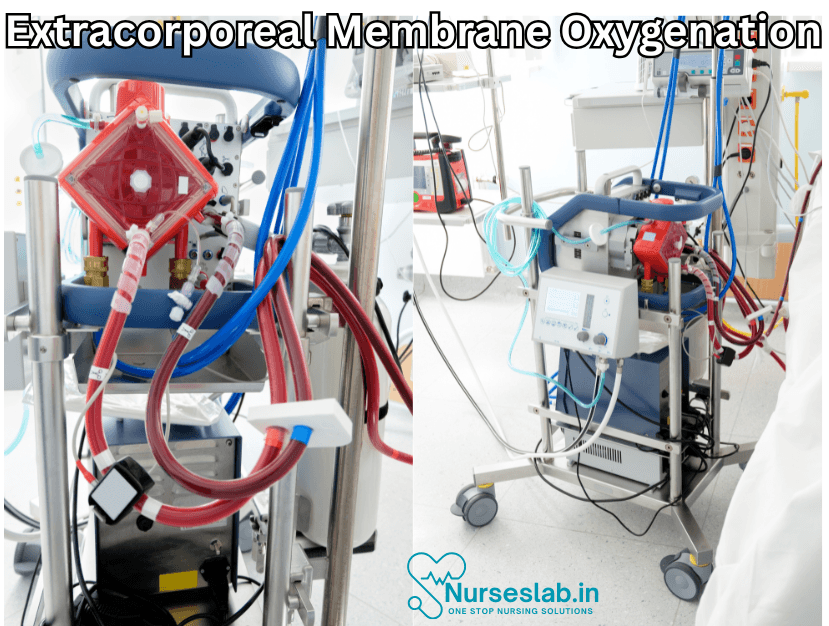
What Is ECMO?
At its core, ECMO is a process by which a patient’s blood is diverted out of the body, passed through an external circuit where it is oxygenated and cleared of carbon dioxide, and then returned to circulation. This external “lung” allows the heart and lungs to rest and recuperate when conventional treatments—such as mechanical ventilation—are insufficient. ECMO doesn’t cure the underlying illness but instead stabilizes critically ill patients, often serving as a bridge to recovery or further intervention.
Configurations of ECMO
Extracorporeal Membrane Oxygenation (ECMO) configurations refer to the specific arrangements of cannulas and circuits used to support patients with severe cardiac or respiratory failure. The two primary ECMO configurations are Veno-Venous (VV) ECMO and Veno-Arterial (VA) ECMO, each tailored to address different clinical needs.
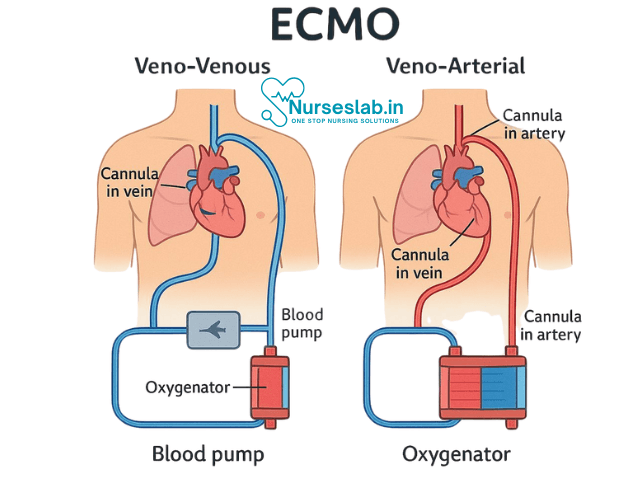
Veno-Venous (VV) ECMO
- Purpose: Mainly supports patients with severe respiratory failure.
- Mechanism: Blood is drained from a large vein, passed through the ECMO circuit (oxygenator and pump), and then returned to the venous system.
- Applications: Particularly useful in conditions such as acute respiratory distress syndrome (ARDS), severe pneumonia, or as a bridge in lung transplantation.
- Key Point: VV ECMO supports gas exchange but does not provide circulatory assistance .
Veno-Arterial (VA) ECMO
- Purpose: Provides both respiratory and circulatory support.
- Mechanism: Blood is drawn from the venous system, oxygenated via the circuit, and then pumped back into the arterial system.
- Applications: Indicated in scenarios like cardiogenic shock, cardiac arrest, or postcardiotomy complications where heart function is also compromised.
- Key Point: VA ECMO essentially takes over the work of both the heart and lungs, providing comprehensive cardiopulmonary support .
Essential Components and Circuitry
An ECMO system typically comprises several critical elements:
- Cannulas: Large tubes inserted into the patient’s veins or arteries which facilitate blood drainage and reinfusion.
- Pump: Propels blood through the circuit at controlled rates.
- Oxygenator (Artificial Lung): Enriches the blood with oxygen and removes carbon dioxide, mimicking the function of natural lungs.
- Heat Exchanger: Regulates the blood temperature, ensuring it matches the patient’s needs.
The interplay of these components is crucial, and meticulous monitoring by a multidisciplinary team—including intensivists, specialized nurses, and perfusionists—is essential to address any mechanical or patient-related complications .
Indications and Patient Selection
ECMO is generally considered when patients experience life-threatening respiratory or cardiac failure that isn’t responsive to conventional therapies. Indications include:
- Rescue Therapy: For quickly deteriorating patients where immediate support is necessary (e.g., severe ARDS or refractory cardiogenic shock).
- Bridging Therapy: To maintain organ function while awaiting recovery, a definitive diagnosis, or further interventions such as heart or lung transplantation.
Patient selection is key to optimizing outcomes since ECMO is a resource-intensive treatment that requires reversible conditions for success. Comprehensive guidelines and educational modules, like those provided through the ELSO ECMO 101 course, help teams determine appropriate candidates and manage therapy effectively
Nursing Care of Patient with ECMO
Caring for a patient on Extracorporeal Membrane Oxygenation (ECMO) requires specialized nursing skills and close monitoring to ensure patient safety and optimal outcomes. Here are key aspects of nursing care for ECMO patients:
1. Hemodynamic Monitoring
- Continuously assess blood pressure, heart rate, oxygen saturation, and perfusion.
- Monitor for hypotension or bleeding, as ECMO patients are often on anticoagulation therapy.
2. Respiratory Support
- Adjust ventilator settings based on ECMO flow and oxygenation needs.
- Prevent ventilator-associated pneumonia (VAP) through proper suctioning and oral care.
3. Anticoagulation Management
- Monitor activated clotting time (ACT) or partial thromboplastin time (PTT) to prevent clot formation.
- Watch for signs of bleeding or thrombosis, especially at the cannulation site.
4. Neurological Assessment
- Perform frequent neurological checks to detect complications like stroke or brain hypoxia.
- Monitor for changes in mental status, pupil response, and movement.
5. Infection Prevention
- Maintain strict aseptic technique when handling ECMO circuits and catheters.
- Regularly assess for signs of infection, such as fever or redness at the cannulation site.
6. Skin and Pressure Injury Prevention
- Reposition the patient frequently to prevent pressure ulcers.
- Use specialized mattresses and padding to reduce skin breakdown.
7. Psychological and Family Support
- Provide emotional support to the patient and family, as ECMO can be a stressful experience.
- Educate family members about the procedure and expected outcomes.
REFERENCES
- Rabah H, Rabah A. Extracorporeal Membrane Oxygenation (ECMO): What We Need to Know. Cureus. 2022 Jul 11;14(7):e26735. doi: 10.7759/cureus.26735. PMID: 35967165; PMCID: PMC9363689.
- Abrams, D. Agerstrand, C., Fried, J., & Brodie, D. (2023, July 19). Extracorporeal life support in adults in the intensive care unit: Overview. UpToDate. https://www.uptodate.com/contents/extracorporeal-life-support-in-adults-in-the-intensive-care-unit-overview
- Fowles, J. & Hadley-Brown, A. (2023). Nursing care of the patient on extracorporeal membrane oxygenation. In, Cardiopulmonary Bypass. Academic Press, pp 1041-1053. https://doi.org/10.1016/B978-0-443-18918-0.00067-X.
- Naddour, M., Kalani, M., Ashraf, O., Patel, K., Bajwa, O., & Cheema, T. (2019). Extracorporeal Membrane Oxygenation in ARDS. Critical care nursing quarterly, 42(4),
- Wrisinger WC, Thompson SL. Basics of Extracorporeal Membrane Oxygenation. Surg Clin North Am. 2022 Feb;102(1):23-35. doi: 10.1016/j.suc.2021.09.001. PMID: 34800387; PMCID: PMC8598290.
- Bartlett RH, Gattinoni L. Current status of extracorporeal life support (ECMO) for cardiopulmonary failure. Minerva Anestesiol. 2010 Jul;76(7):534-40. PubMed PMID: 20613694.
Stories are the threads that bind us; through them, we understand each other, grow, and heal.
JOHN NOORD
Connect with “Nurses Lab Editorial Team”
I hope you found this information helpful. Do you have any questions or comments? Kindly write in comments section. Subscribe the Blog with your email so you can stay updated on upcoming events and the latest articles.


