


Last Updated on November 20, 2025 by Nurseslab.in Editorial Team
Hip fracture are a significant health concern, particularly among older adults, often resulting from falls or direct trauma. As a nurse, understanding the intricacies of hip fracture nursing diagnoses is crucial for providing high-quality care and promoting optimal patient outcomes. This comprehensive guide will delve into the essential aspects of hip fracture nursing diagnoses, including assessment, interventions, and care planning.
Hip fractures refer to breaks in the upper portion of the femur, typically occurring within 5 cm of the hip joint. These fractures are classified into two main categories:
- Intracapsular fractures: Occur within the hip joint capsule and are often associated with minor trauma and osteoporosis.
- Capital fractures: Affect the head of the femur
- Subcapital fractures: Occur just below the femoral head
- Transcervical fractures: Involve the femoral neck
- Extracapsular fractures: Occur outside the hip joint capsule and are commonly caused by severe trauma or falls.
- Intertrochanteric fractures: Occur between the lesser and greater trochanter
- Subtrochanteric fractures: Occur below the lesser trochanter
Common signs and symptoms of hip fractures include:
- Severe pain in the hip or groin area
- Inability to bear weight on the affected leg
- External rotation of the affected limb
- Shortening of the affected leg
- Bruising and swelling around the hip area
Diagnosis typically involves a combination of physical examination and imaging studies, such as X-rays, MRI scans, or CT scans.
Nursing Process
The nursing process plays a crucial role in managing patients with hip fractures. Nurses are involved in various aspects of care, including:
- Preoperative preparation
- Perioperative care
- Postoperative management
- Pain control
- Infection prevention
- Mobility promotion
- Discharge planning and rehabilitation coordination
To provide comprehensive care, nurses must develop and implement effective care plans based on accurate nursing diagnoses. The following section outlines five nursing diagnoses commonly associated with hip fractures and their related factors, interventions, rationales, and desired outcomes.
Nursing Process
The nursing process for hip fractures involves a systematic approach to patient care, ensuring effective assessment, diagnosis, planning, implementation, and evaluation. Nurses begin by gathering a detailed patient history, including the mechanism of injury and pre-existing conditions like osteoporosis.
Nursing Assessment
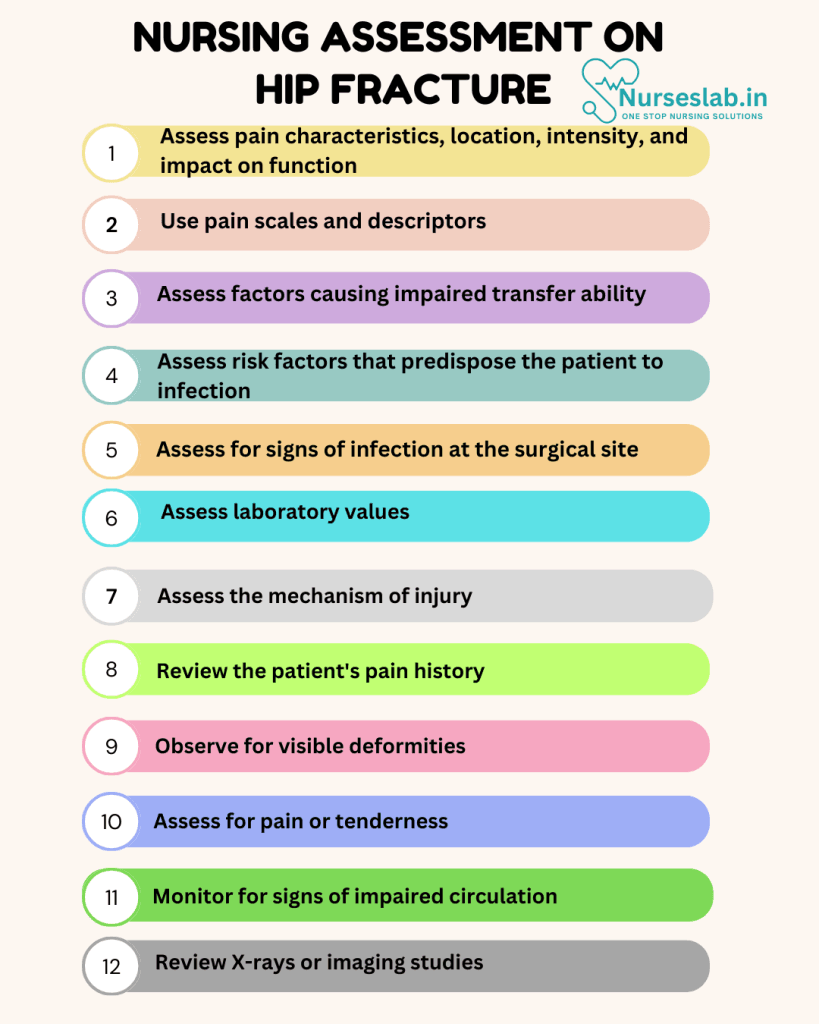
Nursing assessment for hip fractures focuses on identifying the type and severity of the injury, evaluating complications, and planning effective care. Here are the key components:
1. Health History Review
- Assess the mechanism of injury (e.g., fall, trauma, or accident).
- Identify any pre-existing conditions like osteoporosis or bone disorders.
- Review the patient’s pain history, including onset, location, and intensity.
2. Physical Examination
- Observe for visible deformities, swelling, or bruising around the hip area.
- Assess for pain or tenderness that worsens with movement or pressure.
- Check for shortening or external rotation of the affected limb.
3. Neurological and Circulatory Assessment
- Monitor for signs of impaired circulation, such as pale or cool skin, weak pulses, or delayed capillary refill.
- Perform a neurovascular check to assess sensation and motor function.
4. Diagnostic Procedures
- Review X-rays or imaging studies to confirm the type and location of the fracture.
- Conduct blood tests if needed to evaluate for infection or other complications.
Nursing Intervention
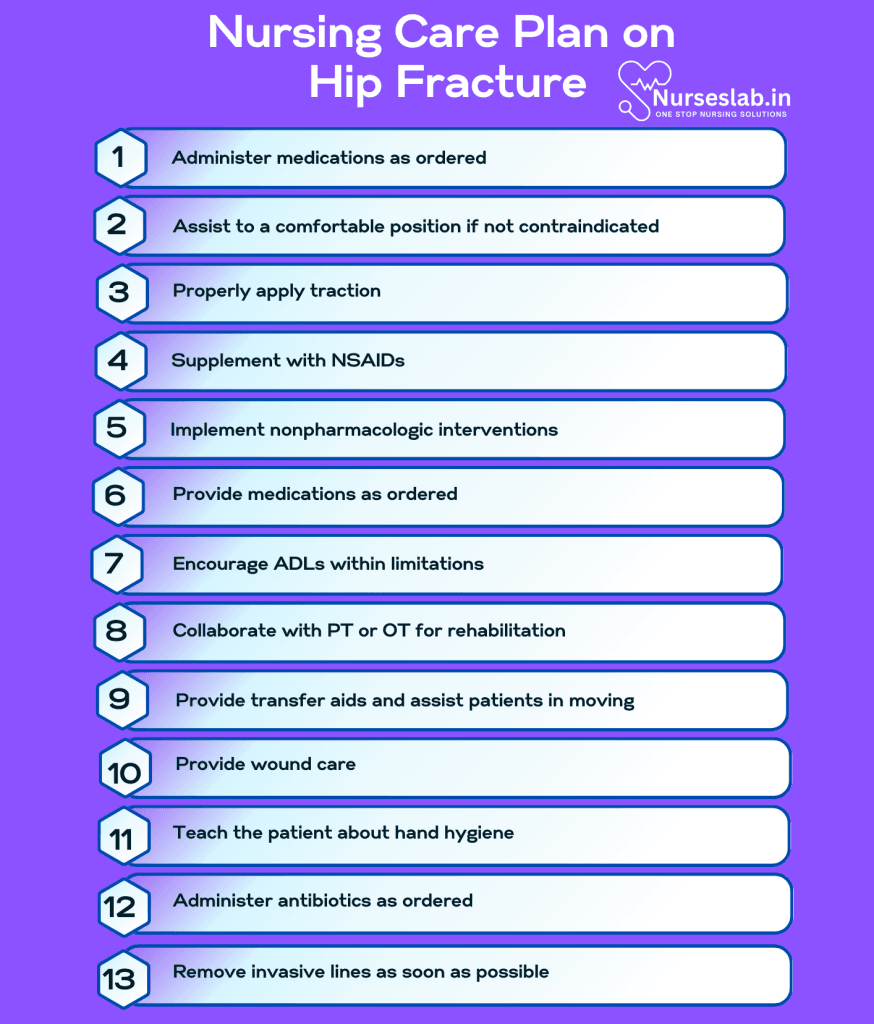
Nursing interventions for hip fractures focus on managing pain, promoting healing, and preventing complications. Here are some key interventions:
1. Pain Management
- Administer prescribed analgesics such as NSAIDs or opioids to alleviate pain.
- Use cold compresses to reduce swelling and discomfort.
- Encourage positioning and elevation of the affected limb to minimize edema.
2. Immobilization and Alignment
- Apply splints, casts, or traction to stabilize the fracture and promote proper alignment.
- Monitor for signs of compartment syndrome, such as increased pain or swelling.
- Educate patients on avoiding pressure on the immobilized area.
3. Infection Prevention
- Clean and dress any open wounds to prevent infection.
- Monitor for signs of infection, such as redness, warmth, or discharge.
- Administer antibiotics if prescribed for open fractures.
4. Nutritional Support
- Encourage a diet rich in calcium and vitamin D to support bone healing.
- Promote hydration to maintain overall health.
- Address any nutritional deficiencies that may delay recovery.
5. Mobility and Rehabilitation
- Assist with physical therapy to restore strength and range of motion.
- Encourage early ambulation as appropriate to prevent complications like blood clots.
- Provide mobility aids such as crutches or walkers for safe movement.
6. Patient Education
- Teach patients and caregivers about fracture care and signs of complications.
- Provide guidance on rehabilitation exercises to improve recovery.
- Address emotional concerns related to mobility limitations and lifestyle changes.
Nursing Care Plan
Acute Pain
Acute pain in hip fractures is a common and significant symptom. It typically arises due to the trauma of the fracture itself, as well as muscle spasms and inflammation around the affected area
Nursing Diagnosis: Acute Pain.
Related to:
- Tissue damage from fracture
- Surgical intervention
- Muscle spasms
- Inflammation and edema
Evidenced by:
- Severe localized pain in the hip or groin area, especially when attempting to move or bear weight on the affected leg.
- Guarding behavior, where the individual avoids movement to minimize pain.
- Facial expressions or verbal expressions of discomfort, such as grimacing or crying out.
- Limited mobility or inability to walk or stand.
- Muscle spasms around the fracture site, which can exacerbate the pain.
- Tenderness and swelling in the affected area.
Expected outcome:
- Pain relief: The patient should experience a significant reduction in pain through pharmacological and non-pharmacological interventions.
- Improved mobility: With effective pain management, the patient should regain the ability to move and participate in physical therapy.
- Enhanced comfort: The patient should feel more comfortable and able to rest without severe pain.
- Prevention of complications: Proper pain management can help avoid complications like muscle atrophy or joint stiffness.
Assessment:
The nursing assessment of acute pain in hip fractures involves a systematic approach to evaluate the patient’s condition and pain levels.
- Pain Characteristics:
- Assess the location, intensity, and quality of pain using standardized pain scales (e.g., numerical rating scale or FACES pain scale).
- Determine the duration and factors that exacerbate or alleviate the pain.
- Physical Examination:
- Observe for signs of guarding behavior, facial expressions of discomfort, or positioning to ease pain.
- Check for swelling, tenderness, and muscle spasms around the fracture site.
- Impact on Function:
- Evaluate the patient’s ability to move, bear weight, or perform daily activities.
- Assess for limitations in mobility and any compensatory behaviors.
- Associated Symptoms:
- Monitor for signs of inflammation, such as redness or warmth.
- Identify any systemic symptoms like fever, which could indicate complications.
- Patient History:
- Gather information about the circumstances of the injury, previous medical conditions, and current medications.
Interventions:
- Pain Assessment:
- Regularly assess the patient’s pain using standardized scales (e.g., numerical rating scale).
- Provides baseline data to evaluate the effectiveness of pain management strategies.
- Medication Administration:
- Administer prescribed analgesics, including NSAIDs or opioids, as ordered.
- Helps reduce pain intensity and improve patient comfort.
- Positioning:
- Assist the patient in finding a comfortable position that minimizes pressure on the fracture site.
- Reduces strain on the affected area and alleviates pain.
- Cold Therapy:
- Apply cold packs to the affected area intermittently.
- Decreases inflammation and numbs the area, providing temporary pain relief.
- Relaxation Techniques:
- Teach the patient relaxation methods such as deep breathing or guided imagery.
- Helps reduce stress and muscle tension, which can exacerbate pain.
- Physical Therapy Coordination:
- Collaborate with physical therapists to initiate gentle exercises.
- Promotes mobility and prevents complications like stiffness or muscle atrophy.
Impaired Physical Mobility
Impaired physical mobility in hip fractures is a common nursing diagnosis that reflects the patient’s inability to move or perform activities of daily living due to pain, muscle weakness, or structural damage.
Nursing Diagnosis: Impaired Physical Mobility
Related to:
- Pain from fracture and surgery
- Muscular weakness
- Surgical restrictions on movement
- Fear of falling or re-injury
Evidenced by:
- Limited Range of Motion: Difficulty in moving the affected hip joint.
- Pain During Movement: Pain that restricts mobility and discourages activity.
- Muscle Weakness: Reduced strength in the surrounding muscles, such as the quadriceps and gluteal muscles.
- Difficulty Walking: Challenges in maintaining balance or gait due to the fracture.
- Dependence on Assistance: Increased reliance on mobility aids like walkers or canes.
Expected outcome:
- Improved Mobility: Gradual restoration of the ability to walk and perform daily activities.
- Pain Management: Reduction in pain levels to enable better movement.
- Strength Recovery: Rebuilding muscle strength around the hip and leg.
- Independence: Increased ability to perform activities of daily living without assistance.
- Prevention of Complications: Avoiding issues like blood clots, pressure sores, or muscle atrophy through early mobilization and physiotherapy.
Assessment:
A nursing assessment for impaired physical mobility due to a hip fracture involves evaluating the patient’s condition, identifying risk factors, and planning interventions to promote recovery.
1. Patient History & Fracture Details
- Type of hip fracture (femoral neck, intertrochanteric, subtrochanteric).
- Mechanism of injury (fall, trauma, osteoporosis-related fracture).
- Pre-existing conditions (osteoporosis, diabetes, cardiovascular disease).
2. Pain Assessment
- Location, intensity, and quality of pain using a pain scale.
- Impact of pain on mobility and daily activities.
3. Physical Examination
- Range of motion and ability to bear weight.
- Presence of muscle spasms, external rotation, limb shortening.
- Skin integrity to check for pressure ulcers due to immobility.
4. Functional Mobility Assessment
- Ability to perform activities of daily living (ADLs).
- Use of assistive devices (walker, cane, wheelchair).
- Need for physical therapy or rehabilitation.
5. Psychosocial & Emotional Impact
- Fear of falling and anxiety about movement.
- Emotional distress due to loss of independence.
6. Nursing Interventions
- Pain management (medications, positioning, cold/heat therapy).
- Fall prevention (bedside rails, non-slip footwear).
- Encouraging mobility (early ambulation, physical therapy).
- Skin care (preventing pressure ulcers).
- Emotional support (counseling, reassurance).
Interventions:
1. Pain Management
Administer prescribed analgesics and non-pharmacological pain relief methods (e.g., positioning, cold therapy).
Pain control enhances comfort and encourages movement, preventing complications like muscle atrophy.
2. Encourage Early Mobilization
Assist the patient with gradual movement, including sitting up and standing with support.
Early mobilization reduces the risk of deep vein thrombosis (DVT), pneumonia, and pressure ulcers.
3. Use of Assistive Devices
Provide walkers, crutches, or wheelchairs as needed.
Assistive devices help maintain mobility while preventing falls and further injury.
4. Physical Therapy & Range of Motion (ROM) Exercises
Collaborate with physical therapists to implement ROM exercises.
Prevents joint stiffness, improves circulation, and maintains muscle strength.
5. Fall Prevention Strategies
Ensure a safe environment—remove obstacles, use non-slip footwear, and educate the patient on fall prevention.
Reduces the risk of reinjury and promotes confidence in mobility.
6. Skin Care & Pressure Ulcer Prevention
Reposition the patient frequently and use pressure-relieving devices.
Prevents skin breakdown due to prolonged immobility.
7. Psychosocial Support
Address emotional concerns, provide reassurance, and encourage participation in rehabilitation.
Reduces anxiety and promotes adherence to recovery plans.
Risk for Infection
A hip fracture increases the risk for infection, especially post-surgery
Nursing Diagnosis: Risk for Infection.
Related to:
- Surgical wound
- Presence of intravenous lines or urinary catheters
- Decreased mobility leading to poor circulation
- Compromised immune system in older adults
Evidenced by:
Clinical Evidence of Infection
- Elevated body temperature (fever) – Suggests systemic infection.
- Redness, swelling, and warmth at the surgical site – Indicates localized infection.
- Purulent drainage from the wound – A sign of bacterial infection.
- Increased white blood cell (WBC) count – Suggests an immune response to infection.
- Delayed wound healing – May indicate an underlying infection.
- Pain and tenderness beyond expected post-surgical discomfort.
- Signs of systemic infection – Fatigue, chills, and confusion (especially in elderly patients).
Risk Factors Contributing to Infection
- Prolonged immobility – Increases the risk of pneumonia and urinary tract infections (UTIs).
- Surgical site contamination – Can lead to post-operative infections.
- Use of urinary catheters – Raises the risk of UTIs.
- Poor nutritional status – Weakens immune response.
- Comorbidities (diabetes, immunosuppression) – Increase susceptibility to infections.
Expected outcome:
- Prevention of Infection: With proper surgical techniques and post-operative care, the risk of infection can be minimized. This includes the use of prophylactic antibiotics and maintaining a sterile environment during surgery.
- Early Detection: Monitoring for signs of infection, such as redness, swelling, warmth, or discharge at the surgical site, is crucial. Early intervention can prevent the infection from worsening.
- Effective Management: If an infection occurs, timely treatment with antibiotics or surgical intervention (if necessary) can lead to a good recovery.
- Improved Healing: With proper care, the surgical site should heal without complications, allowing the patient to regain mobility and function.
- Reduced Risk of Reoperation: Preventing infections reduces the likelihood of needing additional surgeries, which can be physically and emotionally taxing for the patient.
Assessment:
Nursing assessment for the risk of infection in hip fractures involves a thorough evaluation to identify potential risk factors and early signs of infection.
- Patient History:
- Assess for pre-existing conditions like diabetes, immunosuppression, or malnutrition that may increase infection risk.
- Review the patient’s history of previous infections or surgeries.
- Physical Examination:
- Inspect the surgical site for redness, swelling, warmth, or discharge.
- Monitor for systemic signs of infection, such as fever, chills, or elevated heart rate.
- Wound Care:
- Evaluate the cleanliness and condition of the wound dressing.
- Check for any signs of delayed wound healing or unusual odor.
- Laboratory Tests:
- Monitor white blood cell (WBC) count and other inflammatory markers like C-reactive protein (CRP).
- If infection is suspected, obtain wound cultures for identification of pathogens.
- Patient Education:
- Assess the patient’s understanding of infection prevention measures, such as hand hygiene and proper wound care.
- Evaluate adherence to prescribed antibiotics or other treatments.
- Environmental Factors:
- Ensure the patient’s environment is clean and conducive to recovery.
- Assess for any potential sources of contamination.
Interventions:
- Maintain Sterile Technique:
- Use sterile gloves, dressings, and equipment during wound care and surgical site management.
- Prevents contamination and reduces the risk of introducing pathogens to the surgical site.
- Administer Prophylactic Antibiotics:
- Ensure timely administration of prescribed antibiotics before and after surgery.
- Helps to prevent bacterial infections, especially in the early post-operative period.
- Monitor for Signs of Infection:
- Regularly assess the surgical site for redness, swelling, warmth, or discharge, and monitor vital signs for fever.
- Early detection of infection allows for prompt treatment, minimizing complications.
- Educate the Patient and Caregivers:
- Intervention: Teach proper hand hygiene, wound care techniques, and the importance of adhering to prescribed medications.
- Rationale: Empowers the patient and caregivers to actively participate in infection prevention.
- Promote Adequate Nutrition:
- Encourage a balanced diet rich in protein, vitamins, and minerals to support healing and immune function.
- Proper nutrition enhances tissue repair and strengthens the body’s defenses against infection.
- Ensure Proper Wound Care:
- Change dressings as per protocol and keep the wound clean and dry.
- Reduces the risk of bacterial growth and promotes healing.
- Encourage Early Mobilization:
- Assist the patient with prescribed physical therapy and ambulation as tolerated.
- Improves circulation and reduces the risk of complications like pressure ulcers, which can become infection sites.
Risk for Impaired Skin Integrity
Impaired skin integrity is a significant concern for patients with hip fractures, especially due to factors like immobility, surgical interventions, and the risk of pressure injuries
Nursing Diagnosis: Risk for Impaired Skin Integrity
Related to:
- Extended periods of immobility
- Pressure on bony prominences
- Altered sensation due to pain medications or nerve involvement
- Poor nutritional status
- Incontinence
Evidenced by:
- Physical Signs:
- Redness or discoloration of the skin.
- Swelling or warmth in affected areas.
- Open wounds, abrasions, or ulcers.
- Blanching or bruising of the skin.
- Patient Reports:
- Pain, itching, or burning sensations.
- Numbness or tingling in the skin.
- Behavioral Indicators:
- Guarding or avoiding movement to ease discomfort.
- Limited mobility due to pain or injury.
- Environmental Factors:
- Prolonged immobility or bedrest.
- Moisture from incontinence or sweating.
- Friction or shearing forces during repositioning.
Expected outcome:
- Skin Integrity Maintenance:
- The patient will maintain intact skin without signs of breakdown or injury.
- Timely Healing:
- Any existing wounds or skin issues will heal without complications.
- Effective Prevention:
- The patient will demonstrate understanding and implementation of measures to prevent pressure injuries.
- Improved Comfort:
- The patient will report reduced discomfort related to skin issues.
- Enhanced Mobility:
- The patient will achieve improved mobility, reducing the risk of pressure injuries.
Assessment:
The nursing assessment for the risk of impaired skin integrity in patients with hip fractures involves a comprehensive evaluation to identify potential risk factors and early signs of skin breakdown.
- Physical Assessment:
- Conduct a head-to-toe skin examination, focusing on bony prominences like the sacrum, heels, and hips.
- Look for redness, swelling, warmth, or open wounds.
- Assess for signs of pressure injuries, such as non-blanchable redness or skin discoloration.
- Risk Factor Evaluation:
- Evaluate the patient’s mobility and activity level.
- Assess for moisture-related risks, such as incontinence or excessive sweating.
- Check for nutritional deficiencies or dehydration that may impair skin healing.
- Use of Assessment Tools:
- Utilize evidence-based tools like the Braden Scale to assess the risk of pressure injuries. This scale evaluates factors such as sensory perception, moisture, activity, mobility, nutrition, and friction/shear.
- Patient History:
- Review the patient’s medical history for conditions like diabetes, vascular diseases, or previous skin integrity issues.
- Assess for any medications that may affect skin healing, such as corticosteroids.
- Psychosocial and Environmental Factors:
- Consider the patient’s mental state and ability to participate in preventive measures.
- Evaluate the care environment for adequate support surfaces and repositioning practices.
Interventions:
Here are some nursing interventions for addressing the risk of impaired skin integrity in patients with hip fractures, along with their rationales:
- Repositioning Every 2 Hours
Regular repositioning helps relieve pressure on areas prone to skin breakdown, such as the sacrum and heels. - Using Pressure-Relieving Devices
Devices like specialized mattresses or cushions distribute pressure evenly, reducing the risk of pressure ulcers. - Maintaining Clean and Dry Skin
Prevents moisture-associated damage and reduces the risk of infection. - Encouraging Nutritional Intake
Adequate nutrition supports tissue repair and maintains skin integrity. - Applying Moisture Barrier Cream
Protects the skin from irritation caused by incontinence. - Conducting Regular Skin Assessments
Early identification of redness or breakdown allows for timely intervention. - Educating Patients on Skin Care
Empowering patients with knowledge about pressure ulcer prevention promotes active participation in their care.
Anxiety
Anxiety is a common emotional response in patients with hip fractures, often stemming from the trauma of the injury, fear of surgery, or concerns about recovery and independence
Nursing Diagnosis: Anxiety.
Related to:
- Unfamiliar hospital environment
- Fear of surgical procedures
- Concerns about recovery and future mobility
- Changes in role and independence
Evidenced by:
- Restlessness or Agitation: Patients may appear uneasy or have difficulty staying calm.
- Increased Heart Rate (Tachycardia): Anxiety often triggers physiological responses like a rapid heartbeat.
- Difficulty Sleeping (Insomnia): Fear of pain or surgery can disrupt sleep patterns.
- Excessive Worry or Fear: Concerns about recovery, mobility, or independence may dominate their thoughts.
- Avoidance Behavior: Patients might avoid discussing their condition or future plans due to fear or uncertainty.
- Physical Symptoms: Sweating, trembling, or gastrointestinal discomfort can also indicate anxiety.
Expected outcome:
- Reduced Anxiety Levels: Patients should demonstrate decreased feelings of worry, fear, or restlessness.
- Improved Coping Mechanisms: Patients will adopt healthier ways to manage stress and uncertainty related to their condition.
- Enhanced Emotional Well-Being: A sense of calm and emotional stability should be evident.
- Increased Participation in Care: Patients will actively engage in their treatment and rehabilitation plans.
- Better Sleep Patterns: Anxiety-related insomnia or sleep disturbances should improve.
- Improved Recovery Outcomes: Addressing anxiety can lead to better adherence to rehabilitation and overall recovery.
Assessment:
The nursing assessment of anxiety in patients with hip fractures involves identifying both physical and emotional indicators of distress. :
- Subjective Data Collection:
- Ask the patient about their feelings of worry, fear, or unease.
- Explore concerns related to surgery, recovery, or loss of independence.
- Assess for sleep disturbances or difficulty concentrating.
- Objective Data Collection:
- Observe for signs of restlessness, agitation, or avoidance behavior.
- Monitor vital signs for physiological responses to anxiety, such as increased heart rate or blood pressure.
- Note any physical symptoms like sweating, trembling, or gastrointestinal discomfort.
- Behavioral Assessment:
- Evaluate the patient’s willingness to participate in care or rehabilitation.
- Look for signs of withdrawal or reluctance to communicate.
- Psychosocial Assessment:
- Assess the patient’s support system, including family and friends.
- Identify any pre-existing mental health conditions or coping mechanisms.
- Use of Standardized Tools:
- Utilize anxiety assessment scales, such as the Hamilton Anxiety Rating Scale (HAM-A), to quantify the severity of anxiety.
Interventions:
- Provide Emotional Support
Offering reassurance and empathy helps reduce fear and promotes a sense of security. - Encourage Open Communication
Allowing the patient to express their concerns and fears can alleviate anxiety and build trust. - Educate the Patient About Their Condition and Treatment
Knowledge reduces uncertainty and empowers the patient to actively participate in their care. - Incorporate Relaxation Techniques
Techniques such as deep breathing, guided imagery, or meditation can help calm the mind and reduce physiological symptoms of anxiety. - Involve Family or Caregivers
A strong support system provides emotional comfort and helps the patient feel less isolated. - Administer Anti-Anxiety Medications as Prescribed
Medications can help manage severe anxiety, allowing the patient to focus on recovery. - Create a Calm and Comfortable Environment
Reducing noise and distractions can help the patient feel more at ease.
Nursing Diagnoses and Rationales for Hip Fracture
1. Acute Pain
Rationale: Hip fractures cause significant pain due to the break itself, muscle spasms, and the necessity of surgical intervention. Effective pain management is crucial to ensure patient comfort and promote recovery. Administering prescribed analgesics, applying ice packs, and repositioning the patient carefully can help mitigate pain.
2. Impaired Physical Mobility
Rationale: Following a hip fracture, patients often experience limited mobility due to pain, surgical recovery, and fear of causing further injury. Assisting with transfers, encouraging the use of mobility aids, and facilitating physical therapy can help improve mobility and prevent complications such as pressure ulcers and muscle atrophy.
3. Risk for Infection
Rationale: Post-operative patients are at increased risk for infection, particularly at the surgical site. Ensuring proper wound care, monitoring for signs of infection, and adhering to strict aseptic techniques can help prevent infections.
4. Risk for Falls
Rationale: Patients with hip fractures are at a heightened risk of falls due to weakness, pain, and altered gait. Implementing fall prevention strategies such as removing hazards, ensuring adequate lighting, and providing assistance with ambulation can reduce the risk of subsequent falls.
5. Risk for Impaired Skin Integrity
Rationale: Immobility and pressure from prolonged bed rest can lead to pressure ulcers. Regular repositioning, using pressure-relieving devices, and maintaining skin hygiene are essential to protect skin integrity.
6. Constipation
Rationale: Reduced mobility, pain medications, and changes in diet can contribute to constipation in patients with hip fractures. Encouraging a diet high in fiber, promoting fluid intake, and administering stool softeners or laxatives as needed can help alleviate constipation.
7. Knowledge Deficit
Rationale: Patients may be unaware of the necessary precautions, rehabilitation exercises, and pain management strategies required for optimal recovery. Providing comprehensive education on post-operative care, mobility techniques, and the importance of follow-up appointments can empower patients to actively participate in their recovery process.
8. Anxiety
Rationale: The injury, surgery, and hospitalization can cause significant anxiety for patients. Offering emotional support, providing clear information about the treatment plan, and employing relaxation techniques such as deep breathing exercises can help reduce anxiety levels.
9. Risk for Ineffective Airway Clearance
Rationale: Pain and immobility may inhibit the patient’s ability to cough effectively, leading to retained secretions and potential respiratory complications. Encouraging deep breathing exercises, using an incentive spirometer, and facilitating chest physiotherapy can help maintain airway clearance.
10. Activity Intolerance
Rationale: Due to the pain and physical limitations caused by a hip fracture, patients may experience fatigue and decreased endurance. Gradually increasing activity levels, providing rest periods, and ensuring pain control before activities can help improve activity tolerance.
REFERENCES
- Alexiou, K. I., Roushias, A., Varitimidis, S. E., & Malizos, K. N. (2018). Quality of life and psychological consequences in elderly patients after a hip fracture: a review. Clinical interventions in aging, 13, 143-150.
- Carpintero, P., Caeiro, J. R., Carpintero, R., Morales, A., Silva, S., & Mesa, M. (2014). Complications of hip fractures: A review. World journal of orthopedics, 5(4), 402-411.
- Handoll, H. H., Sherrington, C., & Mak, J. C. (2011). Interventions for improving mobility after hip fracture surgery in adults. Cochrane Database of Systematic Reviews, (3).
- Menzies, I. B., & Mendelson, D. A. (2019). Nursing Care of the Patient with a Hip Fracture. Nursing Clinics of North America, 54(2), 153-169.
- Olsson, L. E., Karlsson, J., & Ekman, I. (2016). The integrated care pathway reduced the number of hospital days by half: a prospective comparative study of patients with acute hip fracture. Journal of orthopaedic surgery and research, 11(1), 3.
- Resnick, B., Beaupre, L., McGilton, K. S., Galik, E., Liu, W., Neuman, M. D., … & Magaziner, J. (2016). Rehabilitation interventions for older individuals with cognitive impairment post-hip fracture: a systematic review. Journal of the American Medical Directors Association, 17(3), 200-205. https://www.jamda.com/article/S1525-8610(15)00641-6/abstract
Stories are the threads that bind us; through them, we understand each other, grow, and heal.
JOHN NOORD
Connect with “Nurses Lab Editorial Team”
I hope you found this information helpful. Do you have any questions or comments? Kindly write in comments section. Subscribe the Blog with your email so you can stay updated on upcoming events and the latest articles.


