


Last Updated on January 23, 2026 by Nurseslab.in Editorial Team
Sports injuries can occur during any physical activity—from a simple fall during play to a more serious ligament, muscle, or bone injury. Quick and effective first aid for Sport Injury can make a big difference in limiting damage and encouraging fast recovery.
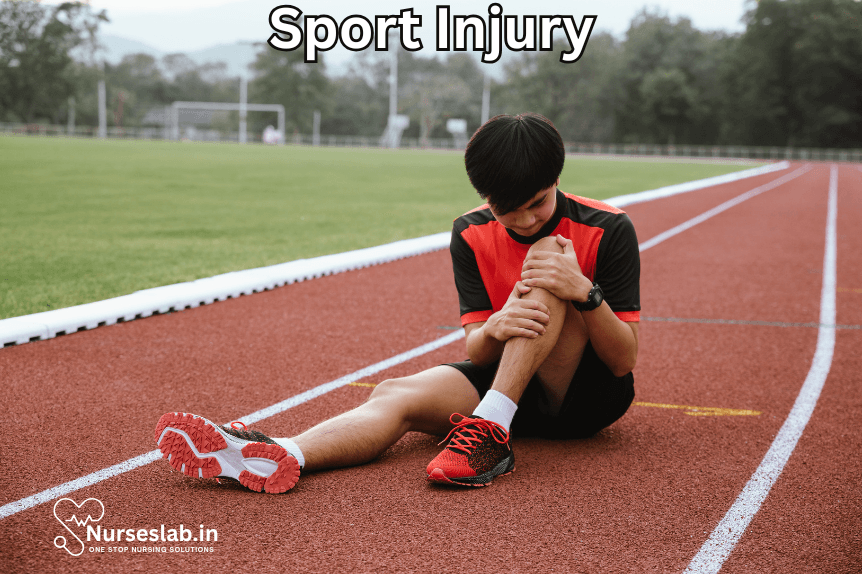
A sports injury takes place when someone plays a sport or engages in exercise, damaging a part of their body. While such injuries are particularly common in children, adults experience them as well.
There are certain people who are especially at risk of sports injuries, including:
- People who are out of shape.
- People who frequently partake in contact sports that involve collisions or tackling.
- People who don’t put on proper protective equipment.
- People who indulge in workouts without warming up and cooling down.
- People who participate in physical activities that involve running, jumping, pivoting, and so on.
Sports injuries can either be chronic, where they develop with time, or acute, where they are sudden.
Are you wondering how you can help someone who suffers from a sports injury? That’s exactly what we will be exploring today.
In this article, we will be getting into the symptoms and causes of sports injuries, the first aid involved in such injuries, their diagnosis and treatment, and how to treat sports injuries.
Symptoms of Sports Injury
The symptoms of a sports injury depend on the type of injury. Some of the common signs and symptoms are as follows:
- Swelling
- Bruising
- Weakness or stiffness
- Tenderness, pain, or ache
- Decreased range of motion
- Skin being warm to the touch
- Being unable to bear weight on the foot, leg, or hip
- Deformity, such as a joint or bone being out of place
- Popping, clicking, cracking, or grinding noise
- Having trouble with moving a body part normally
Causes of Sports Injury
The cause of a sports injury can be varied, with some of the examples being:
- Accidents, such as falls.
- Wearing shoes that don’t provide adequate support or don’t fit properly.
- Not having good exercise habits, such as not stretching enough or forgetting to warm up.
- Starting an exercise regimen or resorting to physical activity all of a sudden when your body isn’t accustomed to it.
- Not wearing proper safety equipment or wearing it incorrectly or wearing damaged gear.
How are Sports Injury Diagnosed?
When you go to a doctor with a sports injury, they will first conduct a physical examination and ask you questions regarding how you got injured and the symptoms you have been experiencing.
Depending on the type of injury and its severity, they could recommend different tests. These could include an X-ray, an MRI scan, or a CT scan. The images provided by these tests will help the doctor determine how to proceed.
How are Sports Injuries Treated?
The severity and type of sports injury determine the kind of treatment a patient should receive. When a sports injury is serious, the treatment methods could involve:
- Injections to deal with the pain and swelling.
- Surgery to treat fractures or repair cartilage, tendon, or ligament tears.
- Prescribing anti-inflammatory medicines.
- Immobilization with the help of a sling, splint, cast, or other medical devices.
- Physical therapy to strengthen and heal the injured areas.
First Aid for Sport Injury
Below is a comprehensive guide that outlines the basic steps and considerations for providing first aid after a sports injury.
1. Initial Assessment
- Ensure Safety: First, make sure the area is safe. Stop the activity immediately, and if necessary, move the injured person to a safe space away from further risks.
- Assess the Injury: Look for signs of injury such as severe pain, swelling, deformity, or inability to move the injured area. Ask the injured person about how the injury occurred and the level of pain to determine the severity.
- Determine Consciousness and Breathing: If the injured person is unconscious or has trouble breathing, call emergency services immediately before proceeding with any further first aid.
2. The R.I.C.E. (or P.R.I.C.E.) Principle
Many sports injuries—especially sprains, strains, and bruises—can be managed initially using the R.I.C.E. method:
- Rest:
- Stop using the injured part immediately.
- Avoid putting weight on the injured area or stressing it further.
- Ice:
- Apply an ice pack or cold compress (wrapped in a cloth to protect the skin) on the injured area.
- Keep the ice on for 10–15 minutes at a time, and repeat it several times over the first 48 hours.
- This helps reduce swelling, pain, and inflammation.
- Compression:
- Use an elastic bandage to gently wrap the injured area.
- Compression can help control swelling but be sure not to wrap too tightly, as restricted blood flow may cause additional problems.
- Elevation:
- Elevate the injured area above heart level if possible.
- This helps minimize swelling by reducing blood flow to the area.
Some frameworks expand this to P.R.I.C.E., where Protection is added as the first step to guard the injured area from further harm by stabilizing it or using a brace/splint if necessary.
3. Treatment for Specific Injuries
- Sprains and Strains:
- Follow the R.I.C.E. method.
- Monitor for any signs of a more severe tear or ligament damage. If the pain worsens or mobility doesn’t return, medical evaluation may be needed.
- Bruises and Contusions:
- Icing helps reduce bleeding under the skin.
- Apply gentle compression if swelling is significant.
- Fractures or Dislocations:
- Immobilize the injury: Avoid moving the injured limb and, if possible, use a splint to stabilize the area.
- Do not attempt to realign a dislocated joint on your own.
- Seek emergency medical care immediately.
- Cuts and Abrasions:
- Clean the wound with mild soap and water.
- Apply an antiseptic and cover with a sterile bandage.
- Monitor for signs of infection in the following days.
- Concussions and Head Injuries:
- Monitor for symptoms such as dizziness, confusion, or nausea.
- Keep the injured person at rest, and if symptoms worsen or if there is loss of consciousness, seek medical help immediately.
4. Preparing a Sports First Aid Kit
Ensure that your sports first aid kit is well-stocked with essentials:
- Wound Care Supplies: Adhesive bandages in various sizes, sterile gauze pads, antiseptic wipes, adhesive tape, and antibiotic ointment.
- Pain Relief: Over-the-counter pain relievers (such as ibuprofen or acetaminophen).
- Support Items: Elastic bandages for compression, cold packs or gel packs, and splinting materials.
- Specialized Items: A CPR face shield for emergency resuscitation, and if available, an Automated External Defibrillator (AED) for conditions that may lead to cardiac arrest.
5. When to Seek Professional Medical Attention
- Severe Injuries: If you suspect a fracture, dislocation, or severe ligament/muscle injury.
- Worsening Symptoms: Increased pain, significant swelling, or an inability to move the injured area.
- Persistent Issues: If the injury does not improve with basic first aid care within a few days or if there are signs of infection (redness, warmth, or pus).
Prevention Sports Injury
Listed below are the tips to remember in order to prevent sports injuries:
- Go for activities and sports that are not too dangerous. Stay away from the ones that expose you to frequent tackles and collisions.
- Before you engage in an exercise or sport, make sure to learn the proper techniques before implementing them.
- Don’t indulge in the same sport or physical activity throughout the year. This is particularly applicable to kids.
- If you believe your body is asking you to rest, do listen to it instead of pushing your boundaries.
- Before and after any workout, make sure to stretch. Warm up prior to a workout and cool down after one.
- Proper safety gear and shoes are vital for any physical activity and ensure these items are always in good condition.
- Consume plenty of water before, during, and after a workout.
- Don’t rush whenever you begin a new routine or exercise. For example, if you’re playing football for the first time and doing yoga as a beginner, don’t try to do too much of it at once. Start slowly before gradually picking up the pace and increasing the intensity.
- Doing a mix of exercises is the best for your body. So, mix up your routine every now and then, including cardiovascular exercises, strength training, and so on.
REFERENCES
- Tammy Henderson, Common First Aid for Sports, July 3, 2020, https://www.aedcpr.com/articles/common-first-aid-for-sports/
- Ricky Kambray, Common First Aid for Sports: Types, Treatment & Prevention, https://studyplex.org/blog/common-first-aid-for-sports/
- John Furst · April 15, 2024, First Aid for Sport: 9 Effective Relief Tips, https://www.firstaidforfree.com/first-aid-for-sport/
- First Aid for Sports Injuries, Updated on: November 8, 2024, https://cprcourseonline.com/blog/first-aid-for-sports-injuries/
Stories are the threads that bind us; through them, we understand each other, grow, and heal.
JOHN NOORD
Connect with “Nurses Lab Editorial Team”
I hope you found this information helpful. Do you have any questions or comments? Kindly write in comments section. Subscribe the Blog with your email so you can stay updated on upcoming events and the latest articles.


