


Last Updated on January 13, 2026 by Nurseslab.in Editorial Team
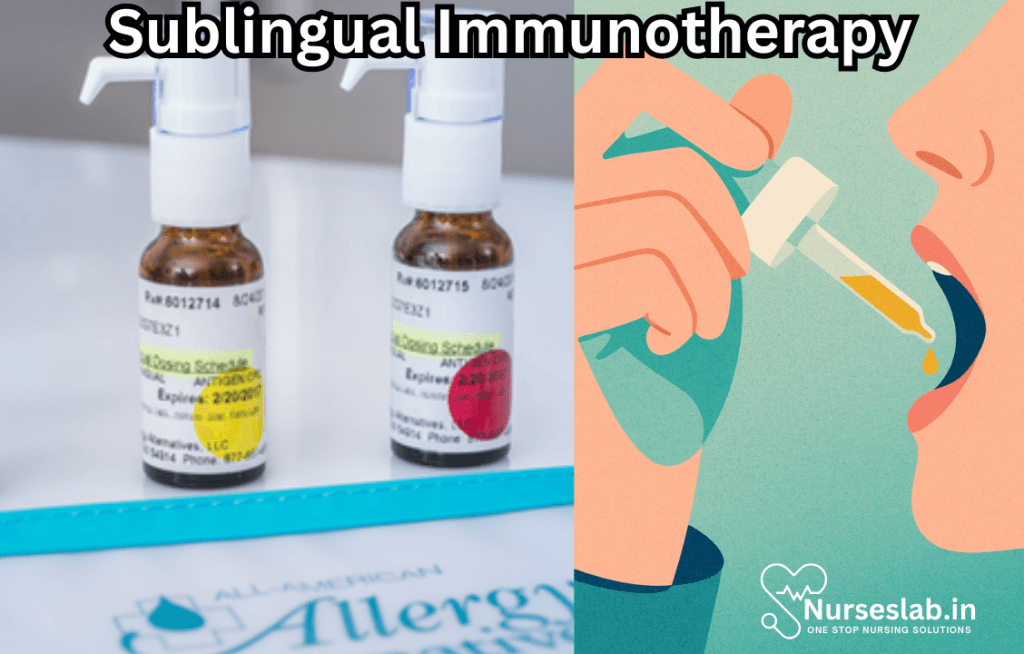
Sublingual Immunotherapy (SLIT) is a form of allergy treatment where small doses of allergens are placed under the tongue—typically in the form of tablets or drops. The goal is to desensitize the immune system over time, reducing allergic symptoms and improving long-term tolerance.
Introduction
Allergic diseases, ranging from hay fever and asthma to food allergies and eczema, affect millions worldwide and significantly reduce the quality of life for sufferers. While traditional treatments focus on symptom management, immunotherapy offers a unique approach by targeting the underlying cause of allergies. Sublingual immunotherapy (SLIT) has emerged as a safe, convenient, and increasingly popular alternative to conventional allergy shots (subcutaneous immunotherapy, or SCIT). This document provides a detailed exploration of SLIT, including its mechanism, indications, efficacy, safety, and future directions.
What is Sublingual Immunotherapy (SLIT)?
Sublingual immunotherapy is a method of treating allergies by administering small doses of allergen extracts under the tongue, usually in the form of drops or tablets. The goal is to desensitize the immune system to specific allergens over time, reducing the severity of allergic reactions or eliminating them altogether.
SLIT vs. SCIT:
- SLIT uses the sublingual (under-the-tongue) route, while SCIT involves injections under the skin.
- SLIT is typically self-administered at home, making it more convenient and less invasive.
- SLIT has a strong safety profile with fewer systemic reactions compared to allergy shots.
How Does SLIT Work?
SLIT works on the principles of immunological tolerance. When allergens are administered in small, controlled doses under the tongue, they are absorbed by specialized immune cells in the oral mucosa. These cells process the allergens and help educate the immune system to become less reactive.
Key mechanisms include:
- Induction of regulatory T-cells that suppress allergic inflammation.
- Reduction in allergen-specific IgE antibodies (responsible for allergic symptoms).
- Increase in protective IgG4 antibodies and other immune-modulating factors.
Over repeated exposure, this “retraining” of the immune system can lead to sustained tolerance or significantly reduced sensitivity to the offending allergen.
What Allergies Can SLIT Treat?
SLIT is primarily used to treat respiratory allergies, including:
- Pollen allergies (grass, tree, and weed pollens)
- House dust mite allergy
- Animal dander allergies (cat, dog, etc.)
- Mold allergies
In some regions and under research protocols, SLIT is also being investigated for food allergies (such as peanut, milk, or egg allergy) and other allergic conditions.
Forms of SLIT
SLIT can be delivered in two primary forms:
- SLIT Tablets: Pre-measured, standardized doses of allergen in tablet form (e.g., grass, ragweed, dust mite tablets).
- SLIT Drops: Liquid extracts placed under the tongue, either compounded by allergists or provided as standardized products.
Tablets are typically approved and regulated in many countries, while drops may be used off-label or in special circumstances.
SLIT Protocol and Administration
The administration of SLIT generally follows these steps:
- Initial evaluation: Allergy testing (skin prick tests or blood tests) to identify the causative allergens.
- Choice of allergen extract: Selection based on clinical history and test results.
- Initiation phase: The first dose is usually administered under medical supervision to monitor for adverse reactions.
- Maintenance phase: Daily self-administration at home, typically for 3-5 years.
Patients are instructed to hold the tablet or drops under the tongue for 1-2 minutes before swallowing, allowing the allergen to be absorbed by the oral mucosa.
Efficacy of SLIT
A substantial body of scientific evidence supports the efficacy of SLIT, especially for allergic rhinitis and mild to moderate allergic asthma caused by pollen and dust mites. Benefits include:
- Reduction in allergic symptoms (sneezing, runny nose, itchy eyes, etc.)
- Decreased need for symptomatic medications (antihistamines, nasal steroids)
- Improvement in quality of life and daily functioning
- Long-term disease modification, with effects often persisting after treatment ends
The efficacy may depend on proper patient selection, adherence to therapy, and use of standardized allergen extracts.
Safety and Side Effects
SLIT is generally safe and well-tolerated. The most common side effects are mild and occur locally in the mouth, including:
- Itching or tingling under the tongue
- Mild swelling or irritation of the mouth or throat
These symptoms often resolve on their own with continued use. Serious systemic reactions, such as anaphylaxis, are exceedingly rare with SLIT, especially compared to SCIT.
Precautions:
- First dose should be administered in a healthcare setting.
- Patients with uncontrolled asthma or a history of severe allergic reactions may not be suitable candidates.
- Discontinuation is recommended if severe side effects occur.
Advantages of SLIT
SLIT offers several key advantages:
- Non-invasive (no needles)
- Convenient home administration
- High safety profile, low risk of severe reactions
- Suitable for children and adults
- Potential for disease-modifying and lasting benefits
Limitations and Challenges
Despite its many benefits, SLIT also comes with certain limitations:
- Requires daily dosing over several years
- Efficacy may be less pronounced for some allergens or severe asthma
- Not all allergens have commercially available, standardized SLIT extracts
- Cost and insurance coverage may vary by region
- Variable adherence rates in real-world practice
SLIT in Children
SLIT is considered safe and effective in children, with many studies demonstrating reduced symptoms, improved school attendance, and greater tolerance to environmental allergens. Parents should ensure consistent daily dosing and consult with their allergist regarding candidacy and ongoing monitoring.
Recent Advances and Research
Ongoing research continues to expand the potential applications of SLIT. Some promising areas include:
- Food allergy desensitization: Early studies show promise in treating peanut, milk, and egg allergies, though these therapies are not yet widely available.
- Combination therapies: Investigating SLIT in conjunction with other biologics or treatments for synergistic effects.
- Personalized immunotherapy: Tailoring SLIT regimens based on genetic, molecular, and clinical factors for optimized outcomes.
Further research is essential to refine protocols, expand indications, and maximize the benefits of SLIT for more patients.
Patient Experience and Practical Considerations
SLIT requires commitment to daily therapy and regular follow-up with a healthcare provider. Patient education is crucial to ensure proper administration and understanding of potential side effects. Most individuals can integrate SLIT into their daily routines with minimal disruption.
Nursing Care of Patients Undergoing Sublingual Immunotherapy (SLIT)
The therapy utilises daily administration of allergen tablets or drops, placed under the tongue and held for a specific period before swallowing. SLIT is particularly effective for pollen-induced allergies, dust mite allergies, and certain food allergies, depending on the available formulations.
Assessment Prior to SLIT Initiation
Patient Selection and Contraindications
- Comprehensive allergy history: Confirm the specific IgE-mediated allergy via skin prick testing or serum-specific IgE assays.
- Assessment of comorbidities: Screen for uncontrolled asthma, autoimmune disorders, or severe oral conditions, as these may contraindicate SLIT.
- Medication review: Identify use of beta-blockers or ACE inhibitors, which may complicate management of potential adverse reactions.
- Oral health assessment: Ensure patients have no active oral infections, ulcers, or significant dental work scheduled during therapy initiation.
Patient Education and Informed Consent
- Explain the purpose, expected benefits, and potential risks of SLIT.
- Discuss the commitment required—daily administration for months or years—and the importance of adherence for efficacy.
- Obtain informed consent and document patient understanding.
Administration of SLIT
Initial Dose Administration
- First dose is typically administered under medical supervision (often in an allergy clinic) to monitor for immediate adverse reactions.
- Observe the patient for at least 30 minutes post-administration for signs of local or systemic allergic reactions.
- Ensure emergency equipment and medications (e.g., epinephrine, antihistamines, oxygen) are readily available in case of anaphylaxis.
Subsequent Home Administration
- Patients or caregivers are instructed on correct technique: wash hands, place the tablet/drop under the tongue, hold for the recommended time, and avoid eating or drinking for 5–15 minutes afterward.
- Advise patients to maintain a regular daily schedule and to record each dose in a diary or logbook.
- Instruct on proper storage—most SLIT products require room temperature or refrigeration; check manufacturer’s guidance.
Monitoring and Managing Adverse Effects
Common Side Effects
- Local reactions: itching, tingling, or mild swelling of the mouth, lips, or throat are common and often resolve spontaneously.
- Systemic reactions: rarely, patients may experience urticaria, gastrointestinal symptoms, or, very rarely, anaphylaxis.
- Oral hygiene: stress the importance of maintaining good oral hygiene to minimise local side effects and risk of infection.
Nursing Response to Adverse Events
- For mild reactions, advise patients to continue therapy and monitor symptoms. Offer guidance on symptomatic relief (e.g., rinsing mouth with water).
- For moderate reactions (persistent swelling, discomfort, mild systemic symptoms), instruct the patient to withhold the next dose and contact the healthcare provider for further advice.
- For severe or rapidly progressing reactions (difficulty breathing, widespread hives, dizziness), activate emergency response protocols and administer epinephrine as per standing orders. Arrange transfer to emergency care.
Ongoing Patient Support and Education
Adherence Support
- Regular follow-ups (in-person or telehealth) to reinforce adherence, review symptom control, and address patient concerns.
- Use motivational interviewing techniques to explore barriers to compliance, such as forgetfulness, adverse effects, or misunderstanding of instructions.
- Provide written instructions, reminder tools (apps, alarms), and involve family members or caregivers when appropriate.
Education on Infection Prevention and Oral Care
- Stress hand hygiene before administration and avoiding contaminated surfaces.
- Encourage patients to report any new dental issues, mouth sores, or infections promptly to prevent complications.
- Regular dental visits and daily oral care (brushing, flossing) are important to maintain mucosal integrity.
Coordination with Healthcare Team
- Communicate regularly with prescribing allergist or immunologist regarding patient progress, adverse events, and any issues with compliance.
- Document all relevant findings, interventions, and patient feedback in the medical record.
- Arrange referrals to primary care, dental, or psychological support if required, especially if non-adherence or anxiety is noted.
Discharge Planning and Home Care Considerations
- Assess readiness for home administration and reinforce key points of safe practice.
- Ensure the patient has access to emergency medication (e.g., auto-injectable epinephrine if indicated) and knows how to use it.
- Provide written emergency action plans and contact details for urgent medical advice.
- Encourage the patient and caregivers to maintain a daily symptom and dose diary.
Prevention and Safety Strategies
- Avoid allergen exposure during the high pollen season when starting therapy, unless otherwise advised by the specialist.
- Monitor for signs of non-compliance or improper technique during follow-ups.
- Participate in ongoing education and training in allergy and immunotherapy best practices.
Community Resources and Support
- Provide information on allergy support groups, advocacy organizations, and reputable online resources for additional education.
- Refer to community pharmacists for medication counselling and support with adherence tools.
- Connect families with school nurses or workplace health professionals if SLIT is being administered to children or adolescents.
REFERENCES
- Allergic Rhinitis. In: Schwinghammer TL, DiPiro JT, Ellingrod VL, DiPiro CV, eds. DiPiro’s Pharmacotherapy Handbook. 12th ed. McGraw Hill; 2023.
- Howard Boltansky, Sublingual Immunotherapy – Allergy Drops, https://www.hopkinsmedicine.org/health/conditions-and-diseases/seasonal-allergies/could-allergy-drops-be-the-key-to-allergy-relief
- American College of Allergy, Asthma & Immunology. SLIT. https://acaai.org/allergies/management-treatment/allergy-immunotherapy/slit/. Last reviewed 2/28/2017.
- Min JY, Jee HM, Lee HY, Kang SY, on the behalf of the Korean Academy of Asthma Allergy and Clinical Immunology (KAAACI) Allergen Immunotherapy and Allergen Working Group. The KAAACI Guidelines for Sublingual Immunotherapy. Allergy Asthma Immunol Res. 2024 Jan;16(1):9-21. doi: 10.4168/aair.2024.16.1.9. PMID: 38262388; PMCID: PMC10823141.
- Nowak-Wegrzyn A, Sato S, Fiocchi A, Ebisawa M. Oral and sublingual immunotherapy for food allergy. https://pubmed.ncbi.nlm.nih.gov/31524655/ Curr Opin Allergy Clin Immunol. 2019 Dec;19(6):606-613.
- Schworer SA, Kim EH. Sublingual immunotherapy for food allergy and its future directions. https://pubmed.ncbi.nlm.nih.gov/32611211/. Immunotherapy. 2020 Aug;12(12):921-931.
Stories are the threads that bind us; through them, we understand each other, grow, and heal.
JOHN NOORD
Connect with “Nurses Lab Editorial Team”
I hope you found this information helpful. Do you have any questions or comments? Kindly write in comments section. Subscribe the Blog with your email so you can stay updated on upcoming events and the latest articles.


