


Last Updated on January 11, 2026 by Nurseslab.in Editorial Team
Metabolism of lipids includes digestion by bile salts and lipases, absorption of fatty acids, and pathways such as β-oxidation, lipogenesis, and ketogenesis. These processes provide energy, build cell membranes, and regulate hormones essential for health.
Overview of Lipids
Lipids are a heterogeneous group of organic compounds characterised by their insolubility in water and solubility in non-polar solvents such as ether, chloroform, and benzene. They are essential components of all living cells and perform a variety of structural, metabolic, and regulatory functions. Lipids include fats, oils, waxes, phospholipids, steroids, and other related compounds. Their structural diversity allows them to participate in multiple biological processes, including energy storage, membrane structure, and cell signalling.
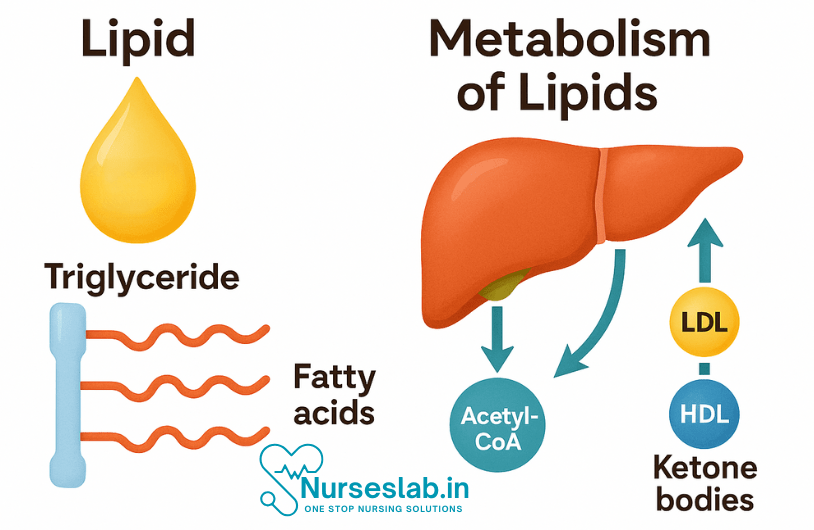
Classification of Lipids
Lipids are broadly classified into three main categories: simple lipids, compound lipids, and derived lipids. Each class has unique structural features and biological roles.
Simple Lipids
Simple lipids are esters of fatty acids with various alcohols. The most common examples are triglycerides (triacylglycerols), which consist of three fatty acid molecules esterified to a single glycerol molecule. Waxes, another type of simple lipid, are esters of long-chain fatty acids with long-chain alcohols. These lipids primarily serve as energy reserves and protective coatings.
Compound Lipids
Compound lipids contain additional functional groups besides fatty acids and alcohols. The major types include:
- Phospholipids: Contain a phosphate group in addition to fatty acids and glycerol. They are key components of cell membranes.
- Glycolipids: Comprise fatty acids, sphingosine (a complex alcohol), and carbohydrate groups. Glycolipids are important for cell recognition and signalling.
- Lipoproteins: Complexes of lipids with proteins, crucial for the transport of lipids in blood.
Derived Lipids
Derived lipids are substances obtained by hydrolysis of simple and compound lipids. They include fatty acids, glycerol, steroids (such as cholesterol), fat-soluble vitamins (A, D, E, K), and other alcohols. These molecules are involved in various metabolic and regulatory functions.
Examples of Lipids
- Triglycerides (fats and oils)
- Cholesterol
- Phosphatidylcholine (a phospholipid)
- Sphingomyelin (a glycolipid)
- Lipoproteins (HDL, LDL, VLDL, chylomicrons)
- Fat-soluble vitamins (A, D, E, K)
Structure of Lipids
The structure of lipids varies depending on their class, but they generally consist of long hydrocarbon chains or rings, making them hydrophobic.
Fatty Acids
Fatty acids are carboxylic acids with long hydrocarbon chains, which can be either saturated (no double bonds) or unsaturated (one or more double bonds). Saturated fatty acids are typically solid at room temperature, while unsaturated fatty acids are usually liquid. The chain length and degree of unsaturation influence the physical and biochemical properties of lipids.
- Saturated fatty acids: Palmitic acid, stearic acid
- Unsaturated fatty acids: Oleic acid, linoleic acid, arachidonic acid
Triglycerides
Triglycerides are the primary storage form of lipids in the body. They are composed of three fatty acid molecules esterified to a glycerol backbone. The fatty acid composition determines whether a triglyceride is a fat (solid) or oil (liquid) at room temperature.
Phospholipids
Phospholipids consist of two fatty acids, a glycerol molecule, and a phosphate group attached to a polar head (e.g., choline, ethanolamine, serine). Their amphipathic nature (having both hydrophobic and hydrophilic regions) is crucial for forming biological membranes, where they arrange into bilayers.
Steroids
Steroids are characterised by a core structure of four fused hydrocarbon rings. Cholesterol is the most abundant steroid in the human body and serves as a precursor for steroid hormones, bile acids, and vitamin D.
Functions of Lipids
Lipids are vital to several physiological processes. Their functions include:
- Energy Storage: Lipids provide a dense source of energy (9 kcal/g) and are stored in adipose tissue for use during fasting or increased energy demand.
- Structural Role: Phospholipids and cholesterol are essential components of cell membranes, maintaining fluidity and integrity.
- Insulation and Protection: Subcutaneous fat acts as thermal insulation and cushions vital organs.
- Cell Signalling: Lipids such as prostaglandins, leukotrienes, and steroid hormones function as signalling molecules in various physiological pathways.
- Absorption of Fat-Soluble Vitamins: Lipids facilitate the absorption of vitamins A, D, E, and K.
- Hormone Production: Cholesterol is a precursor for steroid hormones like cortisol, aldosterone, oestrogens, and androgens.
Digestion and Absorption of Lipids
The digestion and absorption of dietary lipids involve several specialised enzymes and physiological processes, primarily occurring in the gastrointestinal tract.
Enzymes Involved
- Lingual and Gastric Lipases: Initiate the breakdown of lipids in the mouth and stomach, especially in infants.
- Pancreatic Lipase: The main enzyme that hydrolyses triglycerides into monoglycerides and free fatty acids in the small intestine.
- Phospholipase and Cholesterol Esterase: Break down phospholipids and cholesterol esters, respectively.
Pathways of Digestion and Absorption
Dietary lipids are emulsified by bile salts secreted by the liver and stored in the gallbladder. This emulsification increases the surface area for enzyme action. Lipases then hydrolyse triglycerides into free fatty acids and monoglycerides, which form micelles with bile salts. These micelles transport lipids to the enterocytes (intestinal cells), where absorption occurs. Inside enterocytes, lipids are re-esterified and packaged into chylomicrons—lipoprotein particles that enter the lymphatic system and eventually the bloodstream.
Clinical Implications
Disorders of lipid digestion and absorption can lead to steatorrhoea (fatty stools), deficiencies of fat-soluble vitamins, and malnutrition. Conditions such as pancreatic insufficiency, bile duct obstruction, and certain genetic disorders (e.g., abetalipoproteinaemia) can impair lipid absorption.
Metabolism of Lipids
Lipid metabolism encompasses several interconnected pathways that regulate the synthesis, breakdown, and utilisation of lipids. The major metabolic pathways include beta-oxidation, lipogenesis, and ketogenesis.
Beta-Oxidation (Fatty Acid Oxidation)
Beta-oxidation is the process by which fatty acids are broken down in the mitochondria to generate acetyl-CoA, NADH, and FADH2. Acetyl-CoA enters the citric acid cycle (Krebs cycle) to produce ATP, the energy currency of the cell. This pathway is especially important during fasting, prolonged exercise, and in conditions where carbohydrate availability is low.
- Activation of fatty acids in the cytoplasm (formation of fatty acyl-CoA).
- Transport into mitochondria via the carnitine shuttle system.
- Sequential removal of two-carbon units as acetyl-CoA.
Defects in beta-oxidation can result in metabolic disorders such as medium-chain acyl-CoA dehydrogenase deficiency (MCAD), leading to hypoglycaemia and muscle weakness.
Lipogenesis (Fatty Acid Synthesis)
Lipogenesis is the synthesis of fatty acids from acetyl-CoA, primarily occurring in the liver and adipose tissue. This process is stimulated by insulin and occurs when there is an excess of carbohydrates in the diet. The newly synthesised fatty acids are esterified to form triglycerides for storage.
- Conversion of acetyl-CoA to malonyl-CoA (rate-limiting step; catalysed by acetyl-CoA carboxylase).
- Elongation of fatty acid chain by fatty acid synthase complex.
Lipogenesis is crucial for energy storage and maintaining energy balance in the body.
Ketogenesis
Ketogenesis is the production of ketone bodies (acetoacetate, beta-hydroxybutyrate, and acetone) from acetyl-CoA in the liver. This pathway is activated during prolonged fasting, starvation, uncontrolled diabetes mellitus, or low-carbohydrate diets. Ketone bodies serve as alternative energy sources for the brain, heart, and muscles when glucose is scarce.
Excessive ketone production can lead to ketoacidosis, a life-threatening condition often seen in poorly controlled type 1 diabetes.
Regulation of Lipid Metabolism
Lipid metabolism is tightly regulated by hormonal and nutritional signals:
- Insulin: Promotes lipogenesis and inhibits lipolysis (breakdown of fat).
- Glucagon and Adrenaline: Stimulate lipolysis and beta-oxidation during fasting or stress.
- Cortisol: Mobilises fatty acids from adipose tissue.
Disruptions in these regulatory mechanisms can lead to metabolic diseases such as obesity, diabetes, and dyslipidaemia.
Clinical Relevance:
Lipid disorders are common and have significant implications for public health. Nurses must be equipped to assess, monitor, and educate patients regarding these conditions.
Lipid Disorders
- Hyperlipidaemia: Elevated levels of lipids (cholesterol, triglycerides) in the blood, increasing the risk of atherosclerosis and cardiovascular diseases.
- Hypolipidaemia: Abnormally low levels of lipids, which may be associated with malnutrition, liver disease, or genetic disorders.
- Obesity: Excessive accumulation of adipose tissue due to chronic energy imbalance.
- Fatty Liver Disease: Accumulation of triglycerides in liver cells, often linked to obesity, diabetes, and alcohol abuse.
- Inborn Errors of Lipid Metabolism: Genetic defects affecting enzymes involved in lipid metabolism, such as Tay-Sachs disease, Gaucher’s disease, and familial hypercholesterolaemia.
Nursing Assessment
Nurses play a pivotal role in the assessment and management of lipid disorders. Key aspects include:
- Obtaining a thorough patient history (diet, physical activity, family history of lipid disorders).
- Monitoring vital signs and anthropometric measurements (BMI, waist circumference).
- Assisting in blood sample collection for lipid profile testing (total cholesterol, HDL, LDL, triglycerides).
- Recognising signs and symptoms of lipid disorders (xanthomas, corneal arcus, hepatomegaly).
- Assessing risk factors for cardiovascular diseases.
Patient Care and Education
Nursing care focuses on patient education, lifestyle modification, and adherence to therapeutic regimens:
- Educating patients about the importance of a balanced diet low in saturated fats and cholesterol.
- Encouraging regular physical activity and weight management.
- Explaining the rationale and side effects of lipid-lowering medications (e.g., statins, fibrates).
- Supporting behavioural change and addressing barriers to adherence.
- Monitoring for adverse effects and complications of therapy.
Effective communication and culturally sensitive counselling are essential to achieve optimal patient outcomes.
REFERENCES
- Harbans Lal, Textbook of Applied Biochemistry and Nutrition& Dietetics 2nd Edition ,November 2024, CBS Publishers and Distributors, ISBN: 978-9394525757
- Suresh K Sharma, Textbook of Biochemistry and Biophysics for Nurses, 2nd Edition, September 2022, Jaypee Publishers, ISBN: 978-9354655760
- Peter J Kennelly, Harpers Illustrated Biochemistry Standard Edition, September 2022, McGraw Hill Lange Publishers, ISBN: 978-1264795673
- Denise R Ferrier, Ritu Singh, Lippincott Illustrated Reviews Biochemistry, Second Edition, June 2024, ISBN- 978-8197055973
- Yadav, Tapeshwar & Bhadeshwar, Sushma. (2022). Essential Textbook of Biochemistry for Nursing.
- Applied Sciences, Importance of Biochemistry for Nursing Practice, November 2, 2023, https://bns.institute/applied-sciences/importance-biochemistry-nursing-practice/
Stories are the threads that bind us; through them, we understand each other, grow, and heal.
JOHN NOORD
Connect with “Nurses Lab Editorial Team”
I hope you found this information helpful. Do you have any questions or comments? Kindly write in comments section. Subscribe the Blog with your email so you can stay updated on upcoming events and the latest articles.


