


Last Updated on February 13, 2026 by Nurseslab.in Editorial Team
A parathyroid scan is a nuclear medicine test that identifies overactive or enlarged parathyroid glands, often used to diagnose primary hyperparathyroidism. It supports surgical planning and accurate localization through radiotracer imaging and functional assessment.
Introduction
The parathyroid scan, also known as parathyroid scintigraphy or sestamibi scan, is a specialised nuclear medicine imaging technique designed to evaluate the parathyroid glands. These four small glands, located adjacent to the thyroid in the neck, play a vital role in calcium homeostasis through the secretion of parathyroid hormone (PTH). Abnormal parathyroid function, especially overactivity (hyperparathyroidism), can lead to significant metabolic disturbances, including hypercalcaemia and associated complications.
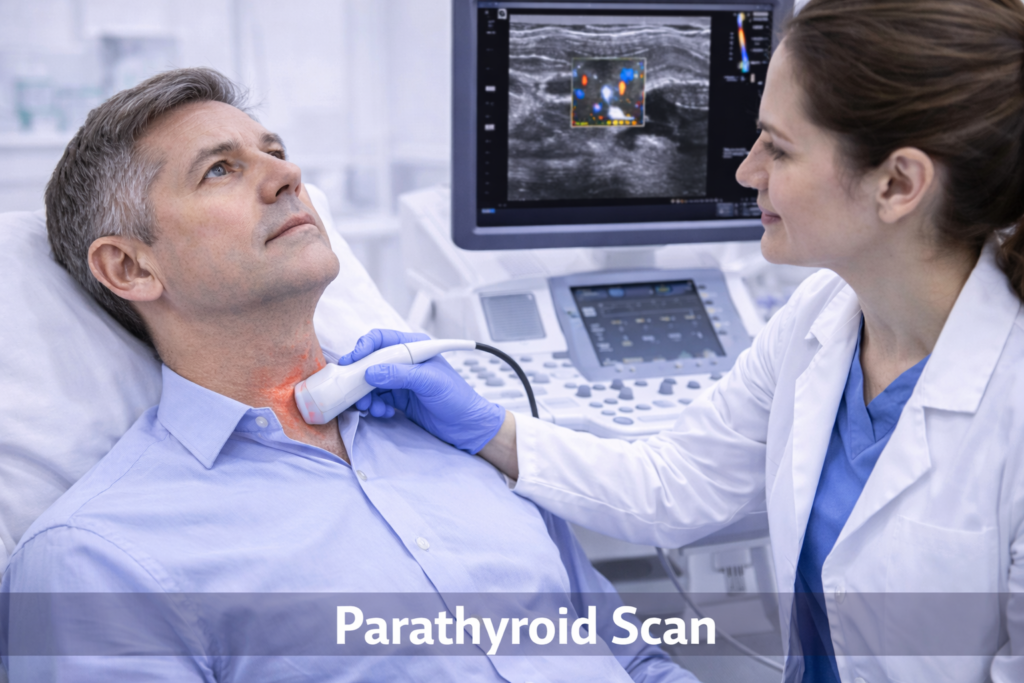
Parathyroid scans have become an invaluable tool in the diagnosis and preoperative localisation of abnormal parathyroid tissue, particularly in patients considered for surgical intervention. The scan is non-invasive, relatively safe, and provides functional as well as anatomical information that guides clinicians in effective management.
Purpose and Indications
Medical Reasons for the Scan
The primary purpose of a parathyroid scan is to detect and localise hyperfunctioning parathyroid tissue, typically adenomas, hyperplasia, or rarely, carcinoma. The scan is particularly useful in patients with suspected or confirmed primary hyperparathyroidism, where one or more parathyroid glands produce excessive PTH, resulting in elevated serum calcium levels.
Common Clinical Indications
- Primary Hyperparathyroidism: Most commonly due to a solitary parathyroid adenoma, but can also be caused by glandular hyperplasia or, rarely, parathyroid carcinoma.
- Secondary Hyperparathyroidism: Usually seen in chronic kidney disease, leading to compensatory parathyroid hyperplasia.
- Persistent or Recurrent Hyperparathyroidism: In patients with ongoing symptoms or elevated PTH/calcium levels after previous parathyroid surgery.
- Preoperative Localisation: To assist surgeons in identifying the location of abnormal glands prior to minimally invasive or targeted parathyroidectomy.
- Ectopic Parathyroid Tissue: Detection of parathyroid tissue in atypical locations, such as the mediastinum, which may not be accessible through standard surgical exploration.
The scan is not typically used for routine screening but is indicated in patients with biochemical and clinical diagnosis of hyperparathyroidism, especially when surgery is contemplated.
Preparation for the Parathyroid Scan
Patient Instructions
Proper preparation is essential for accurate scan results and patient safety. Patients are generally advised as follows:
- Fasting: Fasting is not typically required for a parathyroid scan. Patients may eat and drink as usual unless instructed otherwise by the imaging centre.
- Medication Review: Patients should inform their healthcare provider about all medications, including calcium supplements, vitamin D, bisphosphonates, and thyroid medications. Some medicines may interfere with scan results and require temporary discontinuation.
- Allergies and Reactions: Report any known allergies, especially to radiopharmaceuticals or previous adverse reactions to nuclear medicine procedures.
- Pregnancy and Breastfeeding: Female patients should notify their doctor if pregnant, planning to conceive, or breastfeeding. Nuclear medicine scans are generally avoided during pregnancy unless absolutely necessary.
- Hydration: Patients may be encouraged to drink water before and after the scan to facilitate excretion of the radiotracer.
- Clothing and Jewellery: Comfortable clothing is recommended. Patients should remove necklaces and metallic objects from the neck and chest area.
Contraindications and Precautions
- Absolute Contraindications: Pregnancy is a relative contraindication due to potential radiation risk to the fetus. The scan is performed only if the benefits outweigh the risks.
- Relative Contraindications: Breastfeeding mothers should discuss the timing of the scan and may need to suspend breastfeeding temporarily following the procedure.
- Renal Impairment: The radiotracer is excreted through the kidneys; dose adjustments may be necessary in patients with significant renal dysfunction.
Pre-Scan Requirements
- Consent: Informed consent must be obtained after explaining the procedure, risks, and benefits to the patient.
- Baseline Investigations: Recent serum calcium and PTH levels should be available to correlate with scan findings.
- IV Access: An intravenous cannula is required for administration of the radiopharmaceutical.
Procedure Steps
Equipment Used
- Radiopharmaceutical: The most commonly used agent is Technetium-99m sestamibi (Tc-99m MIBI). Occasionally, other agents such as Tc-99m tetrofosmin or thallium-201 may be used.
- Gamma Camera: A specialised device that detects gamma radiation emitted by the radiotracer and produces images.
- Computer Workstation: For processing and analysing the acquired images.
Step-by-Step Process
- Patient Positioning: The patient is asked to lie supine (on their back) on the imaging table, with the neck extended slightly to optimise visualisation of the parathyroid region. Head supports or cushions may be used for comfort and stability.
- Radiotracer Administration: An intravenous injection of the radiopharmaceutical (usually 20–25 millicuries of Tc-99m sestamibi) is administered, typically into a vein in the arm. The radiotracer is taken up by both thyroid and parathyroid tissue but washes out more rapidly from normal thyroid tissue than from hyperfunctioning parathyroid glands.
- Early Imaging (Initial Phase): Imaging begins approximately 10–15 minutes after injection. The gamma camera acquires images of the neck and upper chest. Early images show uptake in both the thyroid and abnormal parathyroid tissue.
- Delayed Imaging (Late Phase): Additional images are taken after 1.5 to 3 hours. By this time, the radiotracer has largely washed out from normal thyroid tissue but remains in hyperfunctioning parathyroid tissue. This differential retention aids localisation.
- Additional Views: Oblique, lateral, or SPECT (Single Photon Emission Computed Tomography) images may be obtained for better localisation, particularly in cases of ectopic or deeply located glands.
- Completion: Once all images are acquired, the procedure is complete. The patient may be asked to wait briefly while the images are reviewed for adequacy.
Duration
The entire scan typically takes 2 to 4 hours, including waiting periods between early and delayed imaging. Actual imaging time is about 30–60 minutes.
Interpretation of Results
How Results Are Analysed
The acquired images are reviewed by a nuclear medicine physician or radiologist with expertise in parathyroid imaging. Interpretation involves comparing early and delayed images to identify areas of persistent radiotracer uptake, suggesting abnormal parathyroid tissue.
- Positive Scan: Focal area(s) of persistent radiotracer retention, typically inferior or posterior to the thyroid gland, consistent with parathyroid adenoma or hyperplasia.
- Negative Scan: No abnormal retention seen; this does not exclude disease, as some abnormal glands may not be visualised due to small size or low radiotracer uptake.
- Multiple Glands: More than one area of abnormal uptake may indicate multiglandular disease (hyperplasia or multiple adenomas).
- Ectopic Glands: Uptake detected outside the usual location, such as in the chest (mediastinum), may represent ectopic parathyroid tissue.
Common Findings and Their Implications
- Solitary Adenoma: Most frequent cause of primary hyperparathyroidism; localised as a single hot spot.
- Parathyroid Hyperplasia: Multiple glands showing uptake, often more diffuse.
- Carcinoma: Rare; may present as a large area of intense uptake with associated clinical and biochemical features.
- Incidental Findings: Occasionally, thyroid nodules or other neck abnormalities may be detected.
Scan results must be interpreted in conjunction with clinical presentation, biochemical markers (serum calcium, PTH), and other imaging studies such as ultrasound or CT scan for comprehensive assessment.
Risks and Benefits
Potential Risks and Side Effects
- Radiation Exposure: The scan involves a low dose of ionising radiation, generally considered safe. The risk is minimal compared to the diagnostic benefit but should be weighed carefully in children and pregnant women.
- Allergic Reactions: Rarely, patients may experience allergic or hypersensitivity reactions to the radiotracer.
- Injection Site Complications: Mild pain, bruising, or swelling at the site of intravenous injection may occur.
- Renal Considerations: Patients with impaired renal function may have delayed clearance of the radiotracer.
Advantages and Benefits
- Non-Invasive and Painless: The procedure does not involve surgery or significant discomfort.
- High Sensitivity and Specificity: Particularly for solitary adenomas, improving surgical planning and reducing operative time.
- Guidance for Minimally Invasive Surgery: Accurate localisation enables targeted parathyroidectomy, reducing morbidity and length of hospital stay.
- Detection of Ectopic Glands: Facilitates identification of abnormal tissue in unusual locations, which may otherwise be missed during exploration.
- Complementary Role: When combined with other imaging modalities, enhances diagnostic confidence and accuracy.
Aftercare and Follow-up
Post-Procedure Care
- Observation: Most patients can resume normal activities immediately after the scan. Observation is generally unnecessary unless the patient experiences discomfort or adverse reactions.
- Hydration: Patients are encouraged to drink plenty of fluids to promote excretion of the radiotracer via the kidneys.
- Breastfeeding: Mothers may be advised to suspend breastfeeding for 24–48 hours, depending on the radiotracer used. Expressed milk during this period should be discarded.
- Injection Site Care: If there is discomfort or bruising at the injection site, local application of a cold pack may provide relief.
Follow-Up Instructions
- Result Review: Patients should follow up with their referring doctor to discuss the scan results and implications for further management.
- Additional Investigations: Further tests, such as ultrasound, CT, or MRI, may be recommended for comprehensive evaluation or surgical planning.
- Surgical Referral: If abnormal parathyroid tissue is localised and surgery is indicated, referral to an experienced endocrine surgeon is advised.
- Long-Term Monitoring: Patients with hyperparathyroidism require ongoing monitoring of serum calcium, PTH, and kidney function, even after intervention.
Nursing Care for Patients Undergoing Parathyroid Gland Scan
The scan, commonly performed using nuclear medicine techniques, helps identify abnormal gland activity or localisation prior to surgical intervention. Nurses play a pivotal role in the care of patients undergoing this procedure, ensuring safety, comfort, and optimal outcomes through comprehensive care at every stage.
Pre-Procedure Nursing Care
Effective nursing care begins with thorough pre-procedure preparation. This stage involves patient assessment, preparation, and education, each critical for a successful scan and patient wellbeing.
Patient Assessment
Nurses should conduct detailed assessments, including reviewing the patient’s medical history, allergies, current medications, and any previous reactions to contrast agents or radiopharmaceuticals. Baseline vital signs should be recorded, and laboratory results such as serum calcium and phosphate levels should be reviewed, as these may influence scan interpretation and patient safety.
Preparation
Preparation includes ensuring the patient has adhered to any pre-scan instructions, such as fasting or withholding certain medications. If the scan involves the use of radioactive tracers, nurses must verify that the patient understands the process and potential risks. The patient should remove jewellery and metallic objects from the neck and chest area to prevent interference with imaging. Nurses should also confirm that informed consent has been obtained.
Patient Education
Clear and supportive communication is vital. Nurses should explain the purpose of the scan, what will happen during the procedure, and address any concerns the patient may have. Information about the duration of the scan, the need to remain still, and sensations they may experience should be provided. Patients should be reassured about the safety of the procedure and advised to inform the nurse if they feel unwell at any point.
Intra-Procedure Nursing Responsibilities
During the scan, nurses are responsible for monitoring, ensuring patient comfort, and maintaining safety throughout the procedure.
Monitoring
Continuous monitoring of the patient’s vital signs is essential, particularly if there is a history of allergic reactions or anxiety. Nurses should observe for signs of distress, discomfort, or adverse reactions to the radiopharmaceuticals. Immediate access to emergency equipment and medications should be ensured.
Patient Comfort
Patient positioning is crucial for optimal imaging and comfort. Nurses should assist the patient in maintaining the required posture and provide support to prevent muscle strain. If the patient expresses discomfort, nurses should offer reassurance and adjust positioning where possible without compromising scan quality.
Safety Considerations
Radiation safety protocols must be strictly followed. Nurses should wear protective gear as appropriate and minimise exposure by maintaining a safe distance during tracer administration. They should verify the correct dosage and ensure proper handling of radioactive materials. The scan room should be equipped with clear signage indicating radiation use, and access should be restricted to authorised personnel.
Post-Procedure Nursing Care
Following the scan, nurses continue to play a vital role in patient observation, instruction, and facilitating follow-up care.
Observation
Patients should be monitored for any immediate adverse effects, such as allergic reactions, nausea, or dizziness. Nurses should assess the injection site for signs of inflammation or extravasation if a radiopharmaceutical was administered intravenously. Vital signs should be rechecked and documented.
Patient Instructions
Nurses should provide clear instructions regarding post-scan activities. Patients may be advised to drink plenty of fluids to help eliminate the tracer from their system. Information about when results will be available and any additional follow-up appointments should be given. If the patient is discharged, they should be informed of symptoms that require immediate medical attention, such as persistent nausea, swelling, or difficulty breathing.
Follow-Up
Nurses may coordinate with other healthcare professionals to schedule follow-up appointments or further investigations based on scan findings. They should ensure that the patient’s primary care team receives all relevant information and that the patient understands the next steps in their care plan.
Patient Education
Patient education is a continuous process before, during, and after the scan. Nurses should tailor information to the individual’s needs and level of understanding.
- Explain the reason for the scan and its importance in diagnosing parathyroid disorders.
- Describe the procedure, including preparation, what to expect during the scan, and post-scan instructions.
- Emphasise radiation safety measures and reassure patients about the low risk associated with the procedure.
- Discuss potential side effects and what to do if they occur.
- Provide written information or resources for further reading if available.
Potential Complications and Nursing Interventions
Although parathyroid gland scans are generally safe, nurses must be vigilant for potential complications and prepared to intervene promptly.
Complications
- Allergic reaction: Rare, but possible with radiopharmaceuticals. Symptoms may include rash, itching, or anaphylaxis.
- Extravasation: Leakage of the tracer into surrounding tissue at the injection site can cause pain or local tissue damage.
- Nausea or dizziness: Some patients may experience mild symptoms following tracer administration.
- Anxiety: The scan environment or procedure may cause psychological distress.
Nursing Interventions
- Monitor for early signs of complications and respond promptly, using emergency protocols if needed.
- Provide supportive care for minor symptoms, such as offering fluids or reassurance.
- Educate patients about signs of delayed complications and encourage them to seek medical advice if necessary.
- Document all observations, interventions, and patient responses for continuity of care.
REFERENCES
- Raeymaeckers S, Tosi M, De Mey J. 4DCT Scanning Technique for Primary Hyperparathyroidism: A Scoping Review. Radiol Res Pract. 2021 May 21;2021:6614406. doi: 10.1155/2021/6614406. PMID: 34094599; PMCID: PMC8163538.
- Hindié E, Zanotti-Fregonara P, Tabarin A, Rubello D, Morelec I, et al. The role of radionuclide imaging in the surgical management of primary hyperparathyroidism https://pubmed.ncbi.nlm.nih.gov/25858040/. J Nucl Med. 2015 May;56(5):737-44.
- Morris MA, Saboury B, Ahlman M, Malayeri AA, et al. Parathyroid Imaging: Past, Present, and Future https://pmc.ncbi.nlm.nih.gov/articles/PMC8914059/). Front Endocrinol (Lausanne). 2022 Feb 25;12:760419.
- etranović Ovčariček, P., Giovanella, L., Carrió Gasset, I. et al. The EANM practice guidelines for parathyroid imaging. Eur J Nucl Med Mol Imaging 48, 2801–2822 (2021). https://doi.org/10.1007/s00259-021-05334-y
- Primary hyperparathyroidism. National Institute of Diabetes and Digestive and Kidney Diseases. https://www.niddk.nih.gov/health-information/endocrine-diseases/primary-hyperparathyroidism
- Petranović Ovčariček P, Giovanella L, Carrió Gasset I, Hindié E, Huellner MW, et al. The EANM practice guidelines for parathyroid imaging (https://pubmed.ncbi.nlm.nih.gov/33839893/). Eur J Nucl Med Mol Imaging. 2021 Aug;48(9):2801-2822.
Stories are the threads that bind us; through them, we understand each other, grow, and heal.
JOHN NOORD
Connect with “Nurses Lab Editorial Team”
I hope you found this information helpful. Do you have any questions or comments? Kindly write in comments section. Subscribe the Blog with your email so you can stay updated on upcoming events and the latest articles.


