


Last Updated on January 28, 2026 by Nurseslab.in Editorial Team
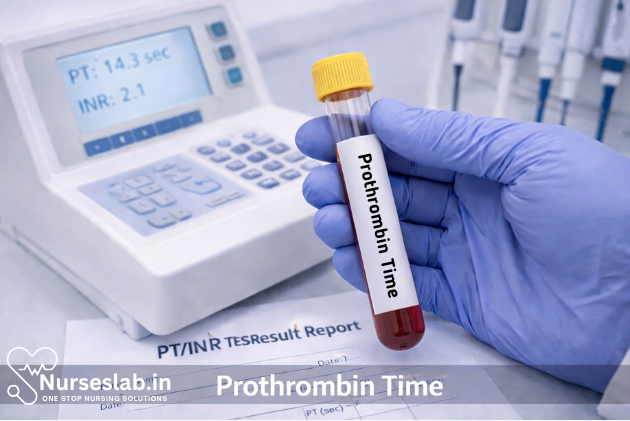
The Prothrombin Time (PT) test evaluates how quickly blood clots by measuring clotting factor activity. It is essential for monitoring warfarin therapy, assessing liver function, and diagnosing bleeding or clotting disorders in clinical practice.
Introduction
The Prothrombin Time (PT) test stands as a cornerstone of clinical laboratory diagnostics, providing crucial insights into the coagulation system’s integrity. Since its inception in the early 20th century, the PT test has evolved into an indispensable tool for evaluating haemostasis, monitoring anticoagulant therapy, and diagnosing a range of bleeding and thrombotic disorders.
Historical Context
The PT test was first described by Dr. Armand Quick in 1935, revolutionising the approach to coagulation testing. Prior to its development, clinicians had limited means to assess the extrinsic pathway of the coagulation cascade. Quick’s method allowed for the quantification of clotting time in plasma following the addition of tissue thromboplastin and calcium. Over the decades, refinements in reagents, instrumentation, and standardisation have enhanced the test’s accuracy and clinical applicability.
Definition and Purpose of the Prothrombin Time Test
The Prothrombin Time test is a laboratory assay designed to measure the time it takes for plasma to clot after the addition of tissue factor (thromboplastin) and calcium. The primary purpose of the PT test is to evaluate the function of the extrinsic and common pathways of the coagulation cascade, particularly factors I (fibrinogen), II (prothrombin), V, VII, and X. By assessing the integrity of these factors, the test serves to identify deficiencies or inhibitors that may predispose to abnormal bleeding or thrombosis.
Clinically, the PT test is performed to:
- Monitor patients on vitamin K antagonist therapy (e.g., warfarin)
- Screen for inherited or acquired coagulation disorders
- Evaluate liver function and synthetic capacity
- Investigate unexplained bleeding or bruising
Clinical Significance
The PT test occupies a central role in the diagnosis and management of haemostatic disorders. Its clinical significance is multifaceted, including the following aspects:
- Assessment of Extrinsic and Common Pathways: The PT specifically evaluates the efficiency of the extrinsic (factor VII) and common pathways (factors I, II, V, X), making it a valuable screening tool for deficiencies or inhibitors affecting these components.
- Diagnosis of Liver Disease: As most clotting factors are synthesised in the liver, a prolonged PT may indicate hepatic dysfunction or synthetic failure, as seen in cirrhosis, hepatitis, or acute liver failure.
- Monitoring Anticoagulant Therapy: The PT test, expressed as the International Normalised Ratio (INR), is the standard method for monitoring patients on oral anticoagulants such as warfarin, ensuring therapeutic efficacy while minimising the risk of bleeding.
- Detection of Vitamin K Deficiency: Vitamin K is essential for the carboxylation of several clotting factors. Deficiency, whether due to malnutrition, malabsorption, or certain medications, can prolong the PT.
- Preoperative Screening: Although not routinely recommended for all surgical patients, the PT may be used to screen individuals with a history suggestive of bleeding tendencies or liver disease.
Test Procedure
Sample Collection
Proper sample collection is vital for accurate PT results. The standard procedure involves:
- Venipuncture: Blood is drawn into a vacutainer containing 3.2% sodium citrate as an anticoagulant, in a ratio of 9 parts blood to 1 part citrate.
- Mixing: The tube is gently inverted to ensure thorough mixing of blood and anticoagulant.
- Processing: The sample is promptly transported to the laboratory, where it is centrifuged to separate plasma from cellular components.
Laboratory Methods and Reagents
The laboratory procedure comprises the following steps:
- Plasma Preparation: Platelet-poor plasma is obtained after centrifugation.
- Addition of Reagents: An aliquot of plasma is incubated at 37°C. Thromboplastin (tissue factor combined with phospholipids) and calcium chloride are then added.
- Measurement: The time from reagent addition to clot formation is measured in seconds. Modern laboratories often use automated coagulometers for greater precision.
Reagents may vary between manufacturers, with differences in tissue factor source and composition, potentially affecting results. To address this, the INR system was introduced for standardisation.
International Normalised Ratio (INR)
Due to inter-laboratory variability in PT results, the INR was established to provide a uniform system for reporting results, particularly in patients receiving warfarin. The INR is calculated as:
INR = (Patient PT / Mean Normal PT) ^ ISI
where ISI (International Sensitivity Index) reflects the sensitivity of the thromboplastin used. The INR allows for consistent interpretation of PT results across different settings.
Interpretation of Results
Normal Ranges
The reference range for PT in healthy adults is typically 11–16 seconds, though this may vary depending on the laboratory and reagents. The therapeutic INR range for most indications (e.g., atrial fibrillation, venous thromboembolism) is generally 2.0–3.0. For mechanical heart valves, a higher range (2.5–3.5) may be targeted.
Abnormal Findings and Clinical Implications
A prolonged PT indicates impaired function of the extrinsic or common coagulation pathway. Common causes include:
- Liver Disease: Decreased synthesis of clotting factors.
- Vitamin K Deficiency: Impaired carboxylation of factors II, VII, IX, and X.
- Warfarin Therapy: Inhibition of vitamin K-dependent clotting factors.
- Disseminated Intravascular Coagulation (DIC): Consumption of clotting factors.
- Inherited Factor Deficiencies: Rarely, congenital deficiencies of factor VII or other components.
- Presence of Inhibitors: Such as lupus anticoagulant or specific factor inhibitors.
A shortened PT is uncommon and generally not clinically significant, though it may occasionally be seen in conditions with increased clotting activity.
Factors Affecting the PT Test
- Medications: Anticoagulants (warfarin), antibiotics (which may alter vitamin K-producing gut flora), and certain chemotherapeutic agents can prolong PT.
- Liver Function: The liver synthesises most clotting factors; hepatic impairment leads to prolonged PT.
- Vitamin K Status: Dietary insufficiency, malabsorption, or antagonists can result in prolonged PT.
- Technical Variables: Incorrect blood-to-anticoagulant ratio, delayed processing, or improper storage may artefactually alter results.
- Analytical Interferences: Haemolysis, lipaemia, or the presence of heparin may interfere with assay accuracy.
- Patient Factors: Age, pregnancy, and certain genetic polymorphisms may influence baseline PT values.
Common Uses of the PT Test
- Monitoring Anticoagulation Therapy: The most frequent application is in monitoring warfarin therapy. Regular PT/INR testing guides dose adjustments to maintain therapeutic efficacy and minimise bleeding risk.
- Diagnosing Bleeding Disorders: PT is a first-line test in evaluating unexplained bleeding, helping differentiate between extrinsic, intrinsic, and common pathway defects when used alongside the activated partial thromboplastin time (aPTT).
- Liver Disease Evaluation: PT is sensitive to liver synthetic function and is part of the assessment for chronic or acute liver disease.
- Preoperative Assessment: Selected patients with risk factors or clinical suspicion of bleeding disorders may undergo PT testing prior to surgery.
- Detection of Vitamin K Deficiency: Particularly relevant in neonates, malnourished individuals, or those with malabsorption syndromes.
Limitations and Challenges
- Test Variability: Despite INR standardisation, differences in reagents, instrumentation, and calibration persist, leading to potential inter-laboratory variation.
- Interfering Factors: Technical errors in sample collection, processing, or storage can yield inaccurate results. Haemolysis, lipaemia, and presence of anticoagulants other than warfarin may interfere with the assay.
- Sensitivity to Extrinsic Pathway: The PT test does not detect deficiencies in intrinsic pathway factors (e.g., factors VIII, IX, XI, XII); aPTT is required for their assessment.
- False Positives/Negatives: Certain conditions, such as lupus anticoagulant, may prolong PT without reflecting true haemostatic impairment.
- Limited Value in Some Populations: Routine use in preoperative screening for unselected patients is not supported by evidence and may lead to unnecessary delays or interventions.
- Comparison with Other Coagulation Tests: PT should be interpreted in conjunction with other tests, such as aPTT, fibrinogen levels, and platelet count, for a comprehensive evaluation of haemostasis.
Nursing Care of Patients Undergoing Prothrombin Time (PT) Testing Procedure
Nurses play a pivotal role in preparing patients for PT testing, ensuring accurate sample collection, providing patient education, monitoring for complications, and interpreting results to guide subsequent care.
Nursing Responsibilities Before PT Testing
1. Patient Assessment
Before the procedure, nurses should conduct a thorough assessment, which includes:
- Reviewing the patient’s medical history, particularly any bleeding disorders, liver disease, or anticoagulant use
- Assessing current medications and herbal supplements that may affect coagulation (e.g., warfarin, aspirin, NSAIDs, ginkgo biloba)
- Identifying allergies, especially to latex or antiseptics
- Evaluating for signs of active bleeding or bruising
2. Patient Education
Effective communication is essential to reduce patient anxiety and ensure cooperation. Key points to include:
- Purpose of the PT test and its significance
- Procedure overview: blood sample collection, expected duration, and any sensations (e.g., mild discomfort from venipuncture)
- Importance of adhering to medication schedules and dietary restrictions, especially regarding foods high in vitamin K (e.g., leafy greens)
- Instructions to avoid strenuous activity or heavy lifting immediately before the test to reduce the risk of bruising
- Reassurance that the procedure is generally safe and well-tolerated
3. Preparation for the Procedure
- Verify the physician’s order for PT/INR testing
- Check the patient’s identity using two identifiers
- Ensure all necessary equipment is available: sterile gloves, tourniquet, alcohol swabs, appropriate blood collection tubes (typically light blue-top tubes containing sodium citrate), needles, and bandages
- Confirm the timing of the test, especially if it is required at a specific interval post-medication administration
- Assess the patient’s veins for optimal site selection
During the PT Testing Procedure
1. Aseptic Technique and Safety
Nurses must maintain strict aseptic technique throughout the procedure to prevent infection and ensure sample integrity:
- Perform hand hygiene before and after the procedure
- Wear gloves and use sterile equipment
- Clean the venipuncture site with an alcohol swab and allow it to dry completely
- Avoid touching the cleaned site before needle insertion
2. Blood Sample Collection
- Apply a tourniquet proximal to the chosen site, ensuring it is not left on for more than one minute to prevent hemoconcentration
- Use a butterfly needle or standard needle, depending on vein size and patient comfort
- Withdraw the required volume of blood into the light blue-top tube, ensuring the correct blood-to-anticoagulant ratio (usually 9:1)
- Gently invert the tube 3-4 times to mix the blood with the anticoagulant—never shake the tube as this can cause hemolysis
- Release the tourniquet as soon as blood flow is established
- Remove the needle, apply gentle pressure to the site with sterile gauze, and secure with a bandage
- Dispose of sharps and contaminated materials according to facility policy
3. Patient Monitoring During the Procedure
- Observe the patient for signs of dizziness, fainting, or anxiety during and after sample collection
- Monitor for excessive bleeding at the venipuncture site, especially in patients with known coagulopathies or on high-dose anticoagulation
- Provide reassurance and support as needed
Post-Procedure Nursing Care
1. Site Care and Complication Prevention
- Apply pressure to the venipuncture site for at least 2-3 minutes, or longer if the patient is at increased risk of bleeding
- Inspect the site for hematoma formation, continued bleeding, or signs of infection
- Instruct the patient to keep the bandage on for several hours and to report any unusual swelling, pain, or persistent bleeding
2. Patient Education After Testing
- Advise the patient to avoid vigorous use of the arm for several hours
- Provide guidance on recognizing signs of complications, such as excessive bruising, swelling, or infection at the puncture site
- Remind the patient of follow-up appointments and the importance of regular PT/INR monitoring, especially for those on warfarin therapy
- Educate about medication adherence and dietary considerations, emphasizing the need for consistency in vitamin K intake
3. Documentation
- Document the date, time, site of venipuncture, patient’s response, and any complications
- Record the volume of blood drawn and the type of collection tube used
- Note any relevant patient education provided and the patient’s understanding
- Ensure that the sample is correctly labeled and promptly transported to the laboratory
Special Considerations in PT Testing
1. Pediatric and Geriatric Patients
- Children may require additional psychological support and the presence of caregivers
- Older adults may have fragile veins and increased risk of bruising; use the smallest gauge needle necessary and apply prolonged pressure post-procedure
2. Patients with Bleeding Disorders
- Anticipate a prolonged bleeding time and be prepared to manage complications
- Coordinate with the healthcare team regarding possible need for blood products or reversal agents if bleeding occurs
3. Anticoagulated Patients
- Monitor closely for signs of excessive bleeding or hematoma formation
- Ensure that PT/INR testing is performed at appropriate intervals, as determined by the prescribing physician
Interpretation of Results and Nursing Implications
Nurses should be familiar with the expected PT/INR values for individual patients, based on their diagnosis and treatment plan. Significant deviations from the therapeutic range may require prompt intervention, such as dosage adjustment, holding anticoagulant medication, or administration of vitamin K.
- Report critical values to the physician immediately
- Monitor for signs and symptoms of bleeding (e.g., hematuria, melena, epistaxis, petechiae)
- Educate the patient on bleeding precautions if the INR is above the therapeutic range
- Reinforce the importance of medication compliance and regular laboratory monitoring
Complications and Nursing Interventions
1. Hematoma Formation
- Apply firm pressure to the site post-procedure
- Elevate the limb and apply a cold compress if swelling develops
- Monitor for expansion and report significant hematomas to the healthcare provider
2. Infection
- Maintain aseptic technique during blood collection
- Educate the patient on signs of infection and when to seek medical attention
3. Excessive Bleeding
- Prolonged pressure and elevation of the limb
- Immediate notification of the healthcare provider for uncontrolled bleeding
- Preparation for possible administration of reversal agents or blood products
REFERENCES
- Feldman M, et al., eds. Liver chemistry and function tests. In: Sleisenger and Fordtran’s Gastrointestinal and Liver Disease: Pathophysiology, Diagnosis, Management. 11th ed. Elsevier; 2021.https://www.clinicalkey.com.
- Merck Manual. Overview of Blood Clotting Disorders https://www.merckmanuals.com/home/blood-disorders/bleeding-due-to-clotting-disorders/overview-of-blood-clotting-disorders. Reviewed/Revised September 2023.
- National Hemophilia Foundation. Factor II https://www.hemophilia.org/bleeding-disorders-a-z/types/other-factor-deficiencies/factor-ii.
- Prothrombin time and international normalized ratio (PT/INR) https://www.testing.com/tests/prothrombin-time-and-international-normalized-ratio-ptinr/. Lab Tests Online. Modified 11/9/2021.
- Mayo Clinic Laboratories. Prothrombin time (PT). https://www.mayocliniclabs.com/test-catalog/overview/602171#Clinical-and-Interpretive.
- Yang R, Zubair M, Moosavi L. Prothrombin Time (https://www.ncbi.nlm.nih.gov/books/NBK544269/). [Updated 2024 Jan 23]. In: StatPearls [Internet]. Treasure Island (FL): StatPearls Publishing; 2024 Jan-.
Stories are the threads that bind us; through them, we understand each other, grow, and heal.
JOHN NOORD
Connect with “Nurses Lab Editorial Team”
I hope you found this information helpful. Do you have any questions or comments? Kindly write in comments section. Subscribe the Blog with your email so you can stay updated on upcoming events and the latest articles.


