


Last Updated on January 15, 2026 by Nurseslab.in Editorial Team
Rheumatoid arthritis (RA) is a chronic inflammatory autoimmune disease that causes a person’s immune system to mistakenly attack its own body tissues resulting in pain, swelling, and stiffness of the joints. It usually affects the hands, feet, and wrists. RA has the potential to cause systemic inflammation affecting the skin, eyes, lungs, heart, and blood vessels.
The exact cause of RA is unknown, but researchers believe it to be associated with genetics, hormones, or environmental factors. Triggers of the condition are also unclear, but persons at increased risk are women, those with a family history of RA, and smokers.
Symptoms of rheumatoid arthritis include:
- Tender, warm, and swollen joints
- Nodules under the skin or on organs
- Decreased range of motion
- Stiffness, especially in the mornings or after long periods of inactivity
- Pain
- Fatigue
- Weakness
- Low-grade fever
RA is characterized by periods of flares and remissions. They may be difficult to predict, but flares can be kept to a minimum with proper treatment, and long-term damage to the joints can be prevented or lessened.
Specific blood tests such as anti-cyclic citrullinated peptide (anti-CCP) and rheumatoid factor test can help detect antibodies present with RA. Erythrocyte sedimentation rate and C-reactive protein are often elevated when the disease is active. X-rays can track disease progression, and MRI scans can assess severity.
Nursing Process
RA is often managed by a specialist called a rheumatologist. Nurses can support adherence and disease management by educating patients on their medications, pain control, and preventing systemic complications.
Nursing Assessment
The initial evaluation of a patient with suspected or diagnosed RA involves a detailed medical history and comprehensive physical examination. Key aspects to assess include:
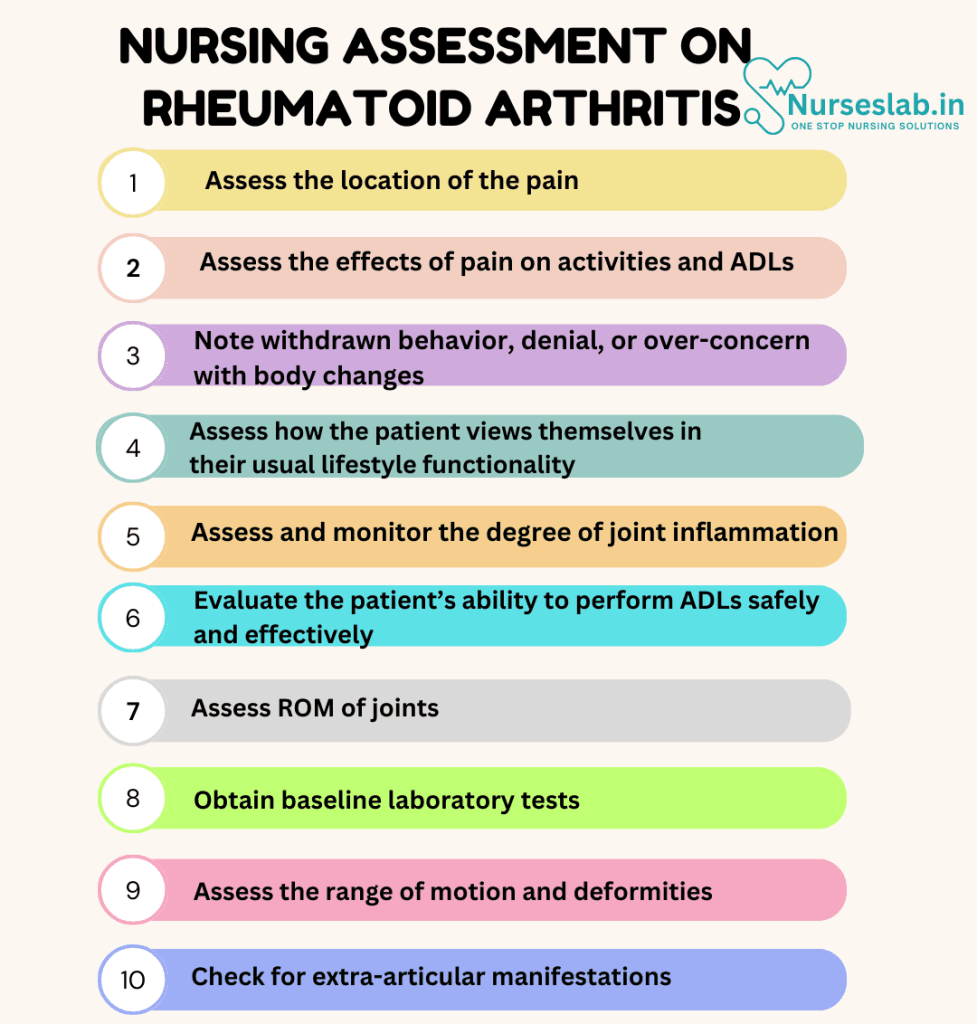
Medical History: Review the patient’s history for risk factors such as family history of RA, recent viral infections, smoking, and other autoimmune disorders. Inquire about the onset, duration, and pattern of joint pain and stiffness, as well as any systemic symptoms such as fatigue, fever, or weight loss.
Physical Examination: Perform a thorough physical examination focusing on the joints. Look for signs of inflammation, such as swelling, redness, warmth, and tenderness. Assess the range of motion and deformities in the affected joints. Check for extra-articular manifestations, such as rheumatoid nodules, which can occur in various body parts.
Laboratory Tests: Obtain baseline laboratory tests, including complete blood count (CBC), erythrocyte sedimentation rate (ESR), C-reactive protein (CRP), and rheumatoid factor (RF). Anti-cyclic citrullinated peptide (anti-CCP) antibodies are also significant markers for diagnosing RA.
Imaging Studies: X-rays, ultrasound, and magnetic resonance imaging (MRI) can help assess the extent of joint damage and monitor disease progression. These imaging modalities provide a detailed view of joint structures and help guide treatment decisions.
Nursing Interventions
Nursing interventions are integral to the effective management of rheumatoid arthritis. By conducting thorough assessments, administering appropriate treatments, and offering continuous support, nurses play a pivotal role in improving health outcomes and quality of life for patients.
Medication Management
Anti-inflammatory Drugs: Nonsteroidal anti-inflammatory drugs (NSAIDs) are commonly prescribed to reduce inflammation and relieve pain. Educate the patient on the proper use and potential side effects of these medications.
DMARDs and Biologic Agents: Disease-modifying antirheumatic drugs (DMARDs) and biologic agents are critical in slowing disease progression and preventing joint damage. Monitor the patient for side effects and ensure adherence to the prescribed regimen.
Pain Management: Pain management strategies may include acetaminophen, topical analgesics, and in some cases, opioids. Provide education on safe use and potential risks associated with pain medications.
Physical Therapy and Exercise
Range of Motion Exercises: Encourage regular range of motion exercises to maintain joint flexibility and prevent stiffness. Collaborate with physical therapists to develop an individualized exercise plan.
Strengthening Exercises: Strengthening exercises help improve muscle support around the joints, reducing the burden on affected areas. Recommend low-impact activities such as swimming, cycling, and walking.
Assistive Devices: Assess the need for assistive devices such as splints, braces, and canes to enhance mobility and reduce joint strain. Educate the patient on the proper use of these devices.
Occupational Therapy
Activity Modification: Teach the patient techniques to modify daily activities to minimize joint stress and prevent flare-ups. This may include using ergonomic tools and adaptive equipment.
Energy Conservation: Educate the patient on energy conservation strategies, such as pacing activities, taking breaks, and prioritizing tasks to manage fatigue effectively.
Nutritional Support
Anti-inflammatory Diet: Recommend an anti-inflammatory diet rich in fruits, vegetables, whole grains, and omega-3 fatty acids. Advise reducing the intake of processed foods, red meat, and sugar.
Weight Management: Assist the patient in achieving and maintaining a healthy weight to reduce joint stress and improve overall health. Provide resources for nutrition counseling and weight loss programs.
Nursing Care Plans
Once the nurse identifies nursing diagnoses for rheumatoid arthritis, nursing care plans help prioritize assessments and interventions for both short and long-term goals of care. In the following section, you will find nursing care plan examples for rheumatoid arthritis.
Chronic Pain
Tissues become inflamed, causing damage to joints and chronic pain and stiffness in patients who have RA.
Nursing Diagnosis: Chronic Pain
Related to:
- Joint damage
- Inflammation
As evidenced by:
- Verbalization of pain
- Stiffness
- Fatigue
- Guarding behavior
- Erythema and swelling of the joints
- Decreased range of motion
Expected outcomes:
- Patient will verbalize relief or control of pain.
- Patient will be able to participate in activities and perform self-care.
- Patient will verbalize two strategies to control pain.
Assessment:
1. Assess the location of the pain.
The primary complaint of patients suffering from RA is chronic pain and stiffness of the joints. Nurses can keep track of tender and swollen joints using a Disease Activity Score calculator.
2. Assess the effects of pain on activities and ADLs.
Assess when the pain and stiffness occurs and if it interferes with the patient’s ability to perform ADLs, hobbies, and exercise.
Interventions:
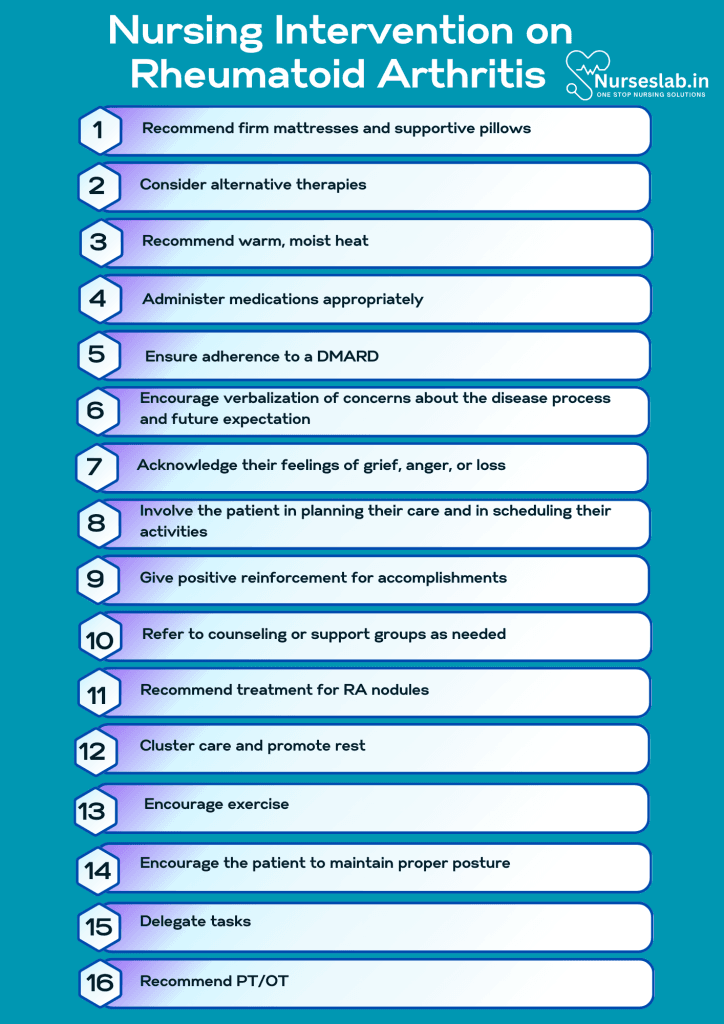
1. Recommend firm mattresses and supportive pillows.
Soft sagging mattresses and soft pillows prevent the maintenance of proper body alignment, placing further stress on the affected joints and preventing restful sleep.
2. Consider alternative therapies.
Massage, acupuncture, meditation, and more can help reduce cortisol levels, the stress hormone, which in turn reduces inflammation.
3. Recommend warm, moist heat.
Heat promotes muscle relaxation and mobility, decreases pain, and relieves morning stiffness. Methods such as using paraffin gloves and whirlpool baths will provide sustained heat to reduce pain and improve the range of motion (ROM) of affected joints.
4. Administer medications appropriately.
NSAIDs are given to reduce inflammation and ease pain. Diclofenac, a common topical NSAID, can be applied directly to the joints. Steroids may be prescribed during flares to reduce inflammation and to slow joint damage.
5. Ensure adherence to a DMARD.
Disease-modifying antirheumatic drugs (DMARDs) are used to treat RA and slow disease progression. These drugs reduce systemic inflammation and the incidence of flares.
Disturbed Body Image
Patients who suffer from RA will experience swelling, changes in the shape of their hands and feet, weight gain or loss, and walking difficulties. These physical changes may affect their self-esteem.
Nursing Diagnosis: Disturbed Body Image
Related to:
- Inability to perform usual tasks
- Impaired mobility
- Altered self-image perception
As evidenced by:
- Joint deformities
- RA nodules
- Negative self-talk
- Change in lifestyle and ability to perform roles
- Withdrawal from social involvement
- Attempt to hide body parts
- Sense of isolation
Expected outcomes:
- Patient will verbalize acceptance of joint deformities.
- Patient will formulate realistic plans for the future.
- Patient will demonstrate positive lifestyle changes.
Assessment:
1. Note withdrawn behavior, denial, or over-concern with body changes.
These behaviors may suggest emotional exhaustion or maladaptive coping methods, requiring more in-depth intervention or psychological support.
2. Assess how the patient views themselves in their usual lifestyle functionality.
Identifying how the illness affects their self-perception and interactions with others will determine the need for further intervention and counseling.
Interventions:
1. Encourage verbalization of concerns about the disease process and future expectations.
Listening to the patient’s concerns regarding their experiences with the illness and what they expect to happen in the future will provide an opportunity to identify fears and misconceptions so that they may be addressed appropriately.
2. Acknowledge their feelings of grief, anger, or loss.
Constant pain is wearing, and feelings of anger, irritability, and resentment are common. Listen and let the patient express their thoughts without fear of judgment.
3. Involve the patient in planning their care and in scheduling their activities.
Involving the patient in the treatment process will enhance feelings of competency and self-worth, encouraging independence and participation in therapy.
4. Give positive reinforcement for accomplishments.
Providing positive feedback will allow the patient to feel good about themselves, reinforce positive behavior, and enhance self-confidence.
5. Refer to counseling or support groups as needed.
Counseling professionals such as psychiatric clinical nurse specialists, psychologists, or support groups may be needed for ongoing support to deal with any feelings of loss or difficulty coping with a chronic disease.
6. Recommend treatment for RA nodules.
RA nodules usually aren’t painful but may be a source of embarrassment for the patient. Steroid injections or surgery can shrink or remove them, though they will often come back.
Impaired Physical Mobility
Rheumatoid arthritis may cause deformities in the affected joints, making movement difficult. The joints most often affected by RA are in the fingers, hands, wrists, ankles, feet, knees, shoulders, and elbows.
Nursing Diagnosis: Impaired Physical Mobility
Related to:
- Skeletal deformity
- Intolerance to activity
- Decreased muscle strength
- Contractures
As evidenced by:
- Reluctance to attempt movement
- Limited ROM
- Stiffness and pain
- Slow, uncoordinated ambulation
- Use of assistive devices
Expected outcomes:
- Patient will maintain or increase the strength and function of the affected joints.
- Patient will participate in recommended physical therapy.
- Patient will maintain joint function with the absence of contractures.
Assessment:
1. Assess and monitor the degree of joint inflammation.
The activity or exercise level depends on the inflammatory process’s progression or resolution.
2. Evaluate the patient’s ability to perform ADLs safely and effectively.
Restricted movement influences the capacity to perform ADLs. Safety with ambulation and self-care is a priority.
3. Assess ROM of joints.
This assessment provides baseline data and monitoring of the effectiveness of the plan of care.
Interventions:
1. Cluster care and promote rest.
Clustering related tasks instead of spacing them out over time will allow the patient to have longer periods of rest. As fatigue is common in RA, adequate rest is important.
2. Encourage exercise.
Exercising maintains and improves joint function, muscle strength, and stamina. Inadequate exercise leads to joint stiffening and poor bone health. If exercise is painful, assist the patient with ROM exercises.
3. Encourage the patient to maintain proper posture.
Keeping an upright posture with proper joint alignment can help prevent contractures and maintain mobility.
4. Delegate tasks.
Some tasks, such as cleaning the house or maintaining the yard, may become too painful or unsafe. The patient may need to delegate or hire others to perform tasks.
5. Recommend PT/OT.
Physical therapy can prolong mobility and strength through appropriate exercise. Occupational therapists can provide tools like eating utensils or toothbrushes with larger grips to aid in the patient’s performance of tasks independently.
Nursing Diagnoses and Rationales for Rheumatoid Arthritis
1. Chronic Pain
Rationale: Rheumatoid Arthritis (RA) is a chronic autoimmune disease that causes inflammation in the joints, leading to persistent pain. The pain might result from joint swelling, degeneration of cartilage, or the formation of fibrous tissue. Effective pain management strategies, including medication, physical therapy, and alternative therapies such as acupuncture, can help alleviate chronic pain and improve patient comfort.
2. Impaired Physical Mobility
Rationale: Patients with RA often experience reduced mobility due to joint stiffness, swelling, and pain. This can limit their ability to perform daily activities and impact their overall quality of life. Assessing the extent of mobility impairment, developing individualized exercise programs, and providing assistive devices can enhance physical mobility and independence.
3. Fatigue
Rationale: The chronic inflammation and immune response associated with RA can lead to significant fatigue. Patients may also experience fatigue as a side effect of medications or due to disrupted sleep patterns caused by pain. Educating patients on energy conservation techniques, encouraging regular rest periods, and addressing factors contributing to fatigue can help manage this symptom.
4. Disturbed Body Image
Rationale: RA can cause visible joint deformities, which may affect a patient’s body image and self-esteem. Providing emotional support, counseling, and connecting patients with support groups can help them cope with changes in their appearance and maintain a positive self-image.
5. Ineffective Coping
Rationale: The chronic nature of RA and its impact on daily life can lead to stress, anxiety, and depression. Patients may struggle to cope with the ongoing pain and limitations imposed by the disease. Offering psychological support, teaching coping strategies, and facilitating access to mental health resources can help patients manage the emotional challenges of living with RA.
6. Self-Care Deficit
Rationale: Due to the pain and limited mobility associated with RA, patients may find it difficult to perform self-care activities such as dressing, bathing, and grooming. Assessing the level of self-care deficit, providing adaptive equipment, and teaching patients alternative methods to perform daily tasks can enhance their ability to care for themselves.
7. Risk for Injury
Rationale: The joint instability and reduced range of motion in RA patients increase the risk of falls and other injuries. Implementing fall prevention strategies, ensuring a safe home environment, and educating patients on safe movement techniques can reduce the risk of injury.
8. Knowledge Deficit
Rationale: Patients with RA may lack understanding of the disease, its progression, and the importance of treatment adherence. Providing comprehensive education on RA, medication management, lifestyle modifications, and the importance of regular follow-up appointments can empower patients to take an active role in managing their condition.
REFERENCES
- Ackley, B.J., Ladwig, G.B.,& Makic, M.B.F. (2017). Nursing diagnosis handbook: An evidence-based guide to planning care (11th ed.). Elsevier.
- Carpenito, L.J. (2013). Nursing diagnosis: Application to clinical practice (14th ed.). Lippincott Williams & Wilkins.
- Rheumatoid arthritis. Mayo Clinic. https://www.mayoclinic.org/diseases-conditions/rheumatoid-arthritis/symptoms-causes/syc-20353648.
- American College of Rheumatology. (2024). Clinical Practice Guidelines for Rheumatoid Arthritis Management. Arthritis Care & Research, 76(1), 1-25.
- Smith, J. A., & Johnson, B. C. (2023). Evidence-Based Nursing Interventions in Rheumatoid Arthritis: A Systematic Review. Journal of Rheumatology Nursing, 15(2), 45-62.
- Williams, M. E., et al. (2023). Quality of Life Outcomes in RA Patients: The Role of Nursing Care. International Journal of Rheumatic Diseases, 26(3), 298-310.
- Brown, R. D., & Davis, S. M. (2024). Nursing Management of Autoimmune Disorders: Current Perspectives. Advanced Nursing Practice, 18(1), 12-28.
- Thompson, K. L., et al. (2023). Patient Education Strategies in Rheumatoid Arthritis: A Meta-Analysis. Patient Education and Counseling, 106(4), 789-801.
- Garcia, P. A., & Martinez, R. N. (2024). Nursing Care Plans in Rheumatology: Evidence-Based Approaches. Clinical Nursing Research, 33(1), 67-85.
- Rheumatoid arthritis. NHS. https://www.nhs.uk/conditions/rheumatoid-arthritis/.
- Doenges, M. E., Moorhouse, M. F. (1993). Nurses’s Pocket Guide: Nursing Diagnoses with Interventions (4th Ed.). F.A. Davis Company.
- Rheumatoid Arthritis. Cleveland Clinic. https://my.clevelandclinic.org/health/diseases/4924-rheumatoid-arthritis.
- Rheumatoid Arthritis: Causes, Symptoms, Treatment and More. Arthritis Foundation. https://www.arthritis.org/diseases/rheumatoid-arthritis.
Stories are the threads that bind us; through them, we understand each other, grow, and heal.
JOHN NOORD
Connect with “Nurses Lab Editorial Team”
I hope you found this information helpful. Do you have any questions or comments? Kindly write in comments section. Subscribe the Blog with your email so you can stay updated on upcoming events and the latest articles.


