


Last Updated on January 16, 2026 by Nurseslab.in Editorial Team
Cancer, one of the leading causes of death in the world, is characterized by the unregulated or uncontrolled growth of cells that infiltrate and damage tissues and organs in the body.
Symptoms of cancer can vary depending on which part of the body is affected. Some of the general signs of cancer include:
- Fatigue
- Lump under the skin
- Sudden and unintended weight changes
- Skin changes
- Swollen lymph nodes
- Bowel and bladder habit changes
- Difficulty swallowing
- Persistent cough
- Dyspnea
- Unexplained bleeding
- Hoarseness
- Persistent and unexplained muscle pain
- Persistent and unexplained fever
- Persistent indigestion
Cancer cells develop when abnormal cells divide and mutate. Gene mutations can be inherited or acquired from carcinogens, radiation, or viruses.
Factors that increase the risk for cancer development include:
- Older age
- Unhealthy lifestyle choices or habits
- Family history
- Chronic health conditions
- Environmental/occupational hazards
Early cancer diagnosis offers the best chance of treatment and survival. There are a wide array of cancer screening tests available. To confirm a cancer diagnosis, various tests may be conducted including physical exams, urine, stool, and blood tests, and imaging tests like MRI, CT scan, and PET scan. Biopsies can confirm the type of cancer cells along with the stage and grade.
Cancer treatments may include surgery, chemotherapy, radiation, bone marrow transplant, immunotherapy, hormone therapy, and targeted drug therapy.
Nursing Process
A cancer diagnosis has a tremendous effect on a person’s physiologic, psychological, and social well-being. Despite advances in treatment, there is still fear and anxiety associated with the diagnosis of cancer.
As healthcare professionals caring for patients with cancer, nurses are in a position to change people’s perceptions and attitudes about cancer and its treatment. It is vital to help people decrease the risk of developing cancer, encourage cancer screenings, help patients adhere to cancer treatments, and provide support to the patient and family as they cope with their prognosis.
Nursing Assessment
A thorough nursing assessment is crucial in identifying the unique needs of each cancer patient. This involves:
- Physical Examination: Conducting a comprehensive physical examination to assess the patient’s overall health status, including vital signs, physical symptoms, and any signs of complications related to cancer or its treatment.
- Symptom Management: Identifying and evaluating symptoms such as pain, fatigue, nausea, and emotional distress. This helps in developing a tailored care plan to manage these symptoms effectively.
- Psychosocial Assessment: Understanding the emotional, psychological, and social impacts of cancer on the patient. This includes assessing the patient’s support system, coping mechanisms, and mental health status.
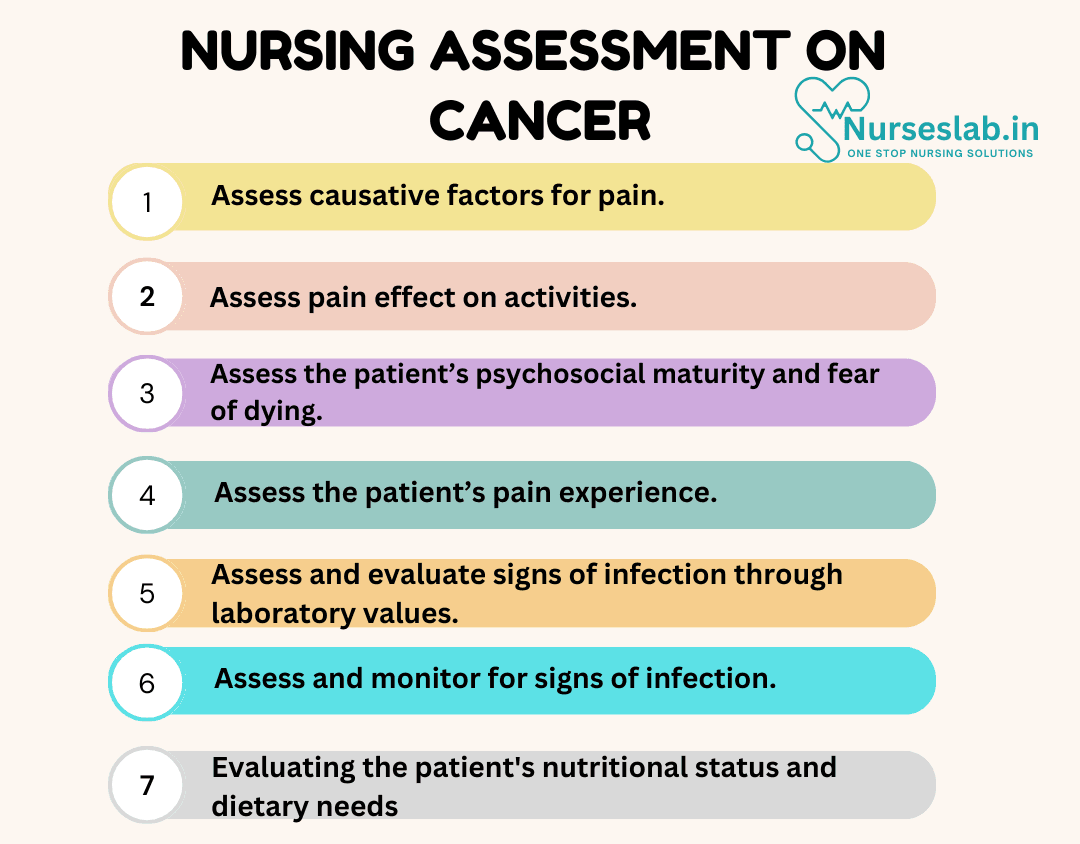
- Nutritional Assessment: Evaluating the patient’s nutritional status and dietary needs, as cancer and its treatment can significantly affect appetite and nutritional intake.
Nursing Interventions
Nursing interventions are designed to address the identified needs and improve the patient’s quality of life. Key interventions include:

Symptom Management
Nurses implement strategies to alleviate symptoms and improve patient comfort. This includes administering medications for pain relief, antiemetics for nausea, and providing guidance on managing fatigue and other treatment-related side effects.
Patient Education
Educating patients about their condition, treatment options, and self-care practices is essential. Nurses provide information on medication administration, potential side effects, lifestyle modifications, and strategies to manage symptoms at home.
Emotional Support
Cancer diagnosis and treatment can be emotionally taxing. Nurses offer crucial emotional support through:
- Active Listening: Offering a listening ear to patients’ concerns and fears, validating their feelings, and providing reassurance.
- Counseling Referrals: Referring patients to professional counselors or support groups if needed, to provide additional emotional and psychological support.
- Family Involvement: Engaging family members in the care process, providing them with necessary information, and supporting them as they assist the patient.
Nursing Care Plans
Once the nurse identifies nursing diagnoses related to cancer, nursing care plans help prioritize assessments and interventions for both short and long-term goals of care. In the following section, you will find nursing care plan examples for cancer.
Acute Pain
There are different causes of cancer pain but it is mostly caused by tumors pressing on nerves, bones, and other organs. In some cases, the pain is caused by cancer treatments like chemotherapy drugs and radiation.
Nursing Diagnosis: Acute Pain
Related to:
- Disease process
- Tumor growth
- Inflammatory process
- Cancer treatment
As evidenced by:
- Diaphoresis
- Distraction behavior
- Expressive behaviors
- Guarding behavior
- Positioning to ease pain
- Protective behavior
- Report of activity changes
- Changes in vital signs
Expected Outcomes:
- The patient will report a decrease in pain
- The patient will implement two strategies to ease pain
Assessment:
1. Assess causative factors for pain.
Pain in cancer can be caused by the disease process or due to cancer treatments. Determining the causative factor of pain will help plan and evaluate the most appropriate interventions.
2. Assess pain effect on activities.
Assess if the pain is preventing the patient from moving, eating, or other ADLs.
Interventions:
1. Encourage the patient to use nonpharmacologic pain relief interventions.
Massage, meditation, heat, and other diversional activities promote relaxation and pain relief.
2. Administer pain relief medications as needed.
Opioids and NSAIDs may be prescribed to help manage pain in patients with cancer.
3. Educate the patient about the pain management plan.
Improved control of pain is achieved when the patient has a better understanding of the nature of the pain, its causes, and treatment.
4. Offer resources for coping with the psychological impacts of pain.
Cancer pain affects all aspects of the patient’s well-being. Cognitive behavioral strategies can help the patient with coping with discomfort and other unpleasant effects of pain.
5. Encourage complementary therapies if not contraindicated.
Complementary therapies like acupuncture, yoga, aromatherapy, and hypnotherapy can help relieve pain without the adverse effects of medication.
Death Anxiety
Patients diagnosed with advanced cancer often report death anxiety. This is emotional distress that is associated with the anticipation of death and the process of dying, negatively affecting a person’s quality of life.
Nursing Diagnosis: Anxiety
Related to:
- Anticipation of the outcome of the disease process
- Anticipation of pain
- Anticipation of suffering
- Awareness of imminent death
- Uncertainty of own prognosis
- Discussions surrounding death
- Changes in family roles
As evidenced by:
- Expresses fear of dying
- Expresses concern about the impact of one’s death on family members
- Expresses deep sadness
- Expresses fear of premature death
- Expresses fear of pain related to dying
- Expresses fear of a prolonged dying process
- Expresses fear of suffering related to dying
- Expresses fear of separation from loved ones
- Expresses fear of the unknown
- Reports negative thoughts related to death and dying
- Expresses powerlessness
Expected Outcomes:
- The patient will express feelings about death and its effects and seek help in coping
- The patient will express acceptance of their prognosis
Assessment:
1. Assess the patient’s psychosocial maturity and fear of dying.
According to reports, females are more at risk for developing death anxiety than males. There is also an increased risk of developing stress-related illnesses when faced with anticipatory death.
2. Assess the patient’s pain experience.
Patients with advanced cancer may require palliative care. Pain management and relief should be a priority in end-stage cancer as this can help improve the dying patient’s experience at the end of life.
Interventions:
1. Encourage the patient to verbalize thoughts and feelings.
Acknowledging the patient’s feelings and emotions about the cancer diagnosis and imminent death enhances trust and a therapeutic relationship. Oncology nurses are often a support system for patients as they undergo cancer treatments.
2. Educate the patient about the stages of grief.
The grieving process is important to help frame and identify one’s feelings. Understanding the grieving process will reinforce the normality of feelings experienced by the patient after a cancer diagnosis, allowing them to deal with grieving more efficiently.
3. Encourage family members to be involved in patient care.
A reliable support system will help the patient feel less isolated. Encourage the patient to lean on their friends and family for support.
4. Refer to grief counseling.
Counselors and spiritual advisors can assist the patient with their feelings of anxiety and anticipatory grieving.
Risk for Infection
Patients with cancer have a higher risk of infection due to immune system changes. Cancer itself and its treatments reduce the body’s ability to fight infection.
Nursing Diagnosis: Risk for Infection
Related to:
- Immunosuppression
- Cancer treatments
- Chronic disease processes
- Invasive treatment procedures
As evidenced by:
A risk diagnosis is not evidenced by signs and symptoms, as the problem has not occurred yet and nursing interventions are directed at the prevention of symptoms.
Expected Outcomes:
- The patient will identify and initiate interventions that can help reduce the risk of infection
- The patient will be free from any signs of infection
Assessment:
1. Assess and evaluate signs of infection through laboratory values.
Cultures may be requested to identify causative factors for infections and appropriate therapy. CBC with differentials can help determine the status of myelosuppression due to the effects of chemotherapy.
2. Assess and monitor for signs of infection.
Early recognition of infection in various parts of the body enables the initiation of early interventions to prevent complications.
Interventions:
1. Encourage infection control measures.
Frequent hand washing protects the patient from infection. Screening visitors and placing the patient in isolation will help reduce the risk of airborne and droplet infections.
2. Remain home when possible.
Patients with cancer should reduce their interaction with lots of people such as in stores or restaurants. When venturing out for necessary appointments or errands, a mask should be worn to reduce the transmission of diseases.
3. Provide adequate rest periods but remain active.
Patients with cancer experience fatigue and weakness due to the effects of the disease and its treatment. Ensuring that the patient has adequate rest periods reduces the incidence of fatigue while adequate exercise can prevent the loss of muscle function and support healthy immune function.
4. Alert the healthcare team to signs of infection.
A cold or flu virus can be detrimental to a patient with cancer. Ensure the patient knows to alert the healthcare team to any symptoms such as a fever, cough, chills, sore throat, or mouth sores.
5. Maintain asepsis of invasive lines.
Patients may have PICC lines, implanted ports, or urinary catheters. Maintain sterile technique when changing a PICC dressing or accessing a port to prevent introducing bacteria. Clean urinary catheters daily and discontinue once appropriate.
Nursing Diagnosis and Rationale for Cancer
1. Fatigue
Rationale: Fatigue is a prevalent symptom in cancer patients, often resulting from the disease itself and its treatments, such as chemotherapy, radiation, and surgery. It can significantly impact a patient’s quality of life, reducing their ability to perform daily activities and participate in social interactions. Nurses should assess the level of fatigue, identify contributing factors, and develop a management plan. Educating patients on energy conservation techniques, promoting regular physical activity, and collaborating with healthcare providers to manage fatigue can improve the patient’s overall well-being.
2. Pain
Rationale: Pain is a common and distressing symptom experienced by cancer patients. It can result from the tumor itself, treatment-related side effects, or other medical conditions. Effective pain management is essential to improve the patient’s comfort and quality of life. Nurses should conduct thorough pain assessments, considering factors such as intensity, location, and duration. They should administer prescribed analgesics, monitor the patient’s response, and adjust the pain management plan as needed. Providing non-pharmacological interventions, such as relaxation techniques and heat or cold therapy, can also be beneficial.
3. Anxiety
Rationale: Cancer diagnosis and treatment can evoke significant anxiety in patients, affecting their emotional and psychological well-being. Anxiety may stem from fear of the unknown, concern about treatment outcomes, or the impact on personal and family life. Nurses should create a supportive environment where patients feel comfortable expressing their fears and concerns. Providing accurate information about the disease, treatment options, and prognosis can help alleviate anxiety. Referring patients to counseling services or support groups may also be beneficial.
4. Risk for Infection
Rationale: Cancer treatments, particularly chemotherapy and radiation, can compromise the immune system, increasing the patient’s susceptibility to infections. Nurses should educate patients on the importance of infection prevention measures, such as proper hand hygiene, avoiding contact with sick individuals, and adhering to vaccination schedules. Monitoring for signs of infection, such as fever, chills, or unusual discharge, is critical. Prompt intervention and collaboration with healthcare providers are essential to manage infections effectively.
5. Imbalanced Nutrition: Less Than Body Requirements
Rationale: Cancer and its treatments can affect a patient’s appetite, taste, and ability to absorb nutrients, leading to nutritional imbalances. Malnutrition can weaken the immune system, delay wound healing, and reduce overall treatment efficacy. Nurses should assess the patient’s nutritional status regularly, considering factors such as weight loss, dietary intake, and laboratory results. Collaborating with dietitians to develop individualized nutrition plans, providing small and frequent meals, and recommending supplements can help address nutritional deficits.
6. Disturbed Body Image
Rationale: Cancer treatments, such as surgery, chemotherapy, and radiation, can alter a patient’s physical appearance, leading to disturbed body image and self-esteem issues. Changes may include hair loss, surgical scars, weight fluctuations, and skin changes. Nurses should provide a supportive environment where patients feel comfortable discussing their body image concerns. Offering education on coping strategies, referring to support groups, and encouraging the use of wigs, prosthetics, or cosmetics can help patients maintain a positive body image.
7. Impaired Skin Integrity
Rationale: Cancer treatments, particularly radiation and certain chemotherapy agents, can cause skin reactions, leading to impaired skin integrity. Symptoms may include redness, blistering, peeling, and ulceration. Nurses should assess the skin regularly, noting any changes or signs of infection. Educating patients on proper skin care, such as gentle cleansing, moisturizing, and avoiding irritants, is crucial. Administering prescribed topical treatments and collaborating with dermatologists for severe reactions can help manage skin integrity issues.
8. Nausea
Rationale: Nausea and vomiting are common side effects of cancer treatments, particularly chemotherapy and radiation. These symptoms can lead to dehydration, electrolyte imbalances, and malnutrition. Nurses should assess the severity and frequency of nausea, identifying potential triggers. Administering prescribed antiemetics before and after treatment, encouraging small and frequent meals, and promoting relaxation techniques can help manage nausea effectively.
9. Sexual Dysfunction
Rationale: Cancer and its treatments can impact a patient’s sexual health, causing changes in sexual desire, body image, and physical ability. Nurses should provide a safe space for patients to discuss their concerns, offer education on potential changes, and refer to specialists such as sex therapists if needed. Providing information on intimacy and sexual health can help patients maintain their relationships and sexual well-being.
10. Risk for Lymphedema
Rationale: Lymphedema, or swelling of the arm, can occur in patients who have undergone lymph node removal or radiation therapy. Nurses should educate patients on recognizing early signs of lymphedema, such as swelling, heaviness, or tightness in the affected arm. Teaching patients preventive measures, such as avoiding heavy lifting, practicing good skin care, and performing prescribed exercises, can help reduce the risk of lymphedema
REFERENCES
- ACCN Essentials of Critical Care Nursing. 3rd Edition. Suzanne M. Burns, MSN, RRT, ACNP, CCRN, FAAN, FCCM, FAANP. 2014. McGraw Hill Education.
- Cancer Center. WebMD. WebMD LLC. From: https://www.webmd.com/cancer/default.htm
- Cancer. World Health Organization. https://www.who.int/health-topics/cancer#tab=tab_1
- Medical-Surgical Nursing: Concepts for Interprofessional Collaborative Care. 9th Edition. Donna D. Ignatavicius, MS, RN, CNE, ANEF. 2018. Elsevier, Inc.
- What Is Cancer? National Cancer Institute. https://www.cancer.gov/about-cancer/understanding/what-is-cancer
Stories are the threads that bind us; through them, we understand each other, grow, and heal.
JOHN NOORD
Connect with “Nurses Lab Editorial Team”
I hope you found this information helpful. Do you have any questions or comments? Kindly write in comments section. Subscribe the Blog with your email so you can stay updated on upcoming events and the latest articles.


