


Neutropenia is a condition characterized by decreased levels of neutrophils. Neutrophils are a type of white blood cell, specifically a granulocyte, and are crucial to the body’s ability to fight infection.
The absolute neutrophil count (ANC) is calculated by multiplying the white blood cell count by the sum of the percentages of neutrophils (segmented neutrophils + segmented bands) and dividing by 100. The normal range is between 2,500 – 6,000 cells/mm3.
- Mild neutropenia is an ANC of less than 1,500 cells/mm3.
- Moderate neutropenia is an ANC of less than 1,000 cells/mm3.
- Severe neutropenia is an ANC of less than 500 cells/mm3.
As the ANC falls, the risk of opportunistic infections increases. Severe neutropenia increases the risk of sepsis and even death.
Symptoms and Causes
Patients with mild neutropenia may not present with symptoms. Symptoms associated with neutropenia include fever, mouth ulcers, lymphadenopathy, dyspnea, and skin abscesses.
Neutropenia is an important factor in monitoring disease processes and treatments. Cancer and chemotherapy are common causes of neutropenia. Other causes include:
- Viruses (HIV, Epstein-Barr virus, viral hepatitis, tuberculosis).
- Autoimmune diseases (Crohn’s disease, rheumatoid arthritis, systemic lupus erythematosus).
- Medications (antipsychotics, antidepressants, antimicrobials, anti-inflammatory agents).
Treatment for neutropenia includes treating infections if symptoms occur and administering growth factors to stimulate the production of granulocytes.
Nursing Process
Nursing care for patients with neutropenia includes identifying the cause of neutropenia, initiating prompt antibiotic therapy or granulocyte-colony stimulating factor, and implementing infection control practices. Strict monitoring is vital in patients with neutropenia, especially for early signs of infection and sepsis. Nurses must educate patients and their families on protective measures to implement when the immune system is suppressed.
Nursing Assessment
The initial evaluation of a patient with suspected neutropenia involves a thorough medical history and physical examination. Key aspects to assess include:
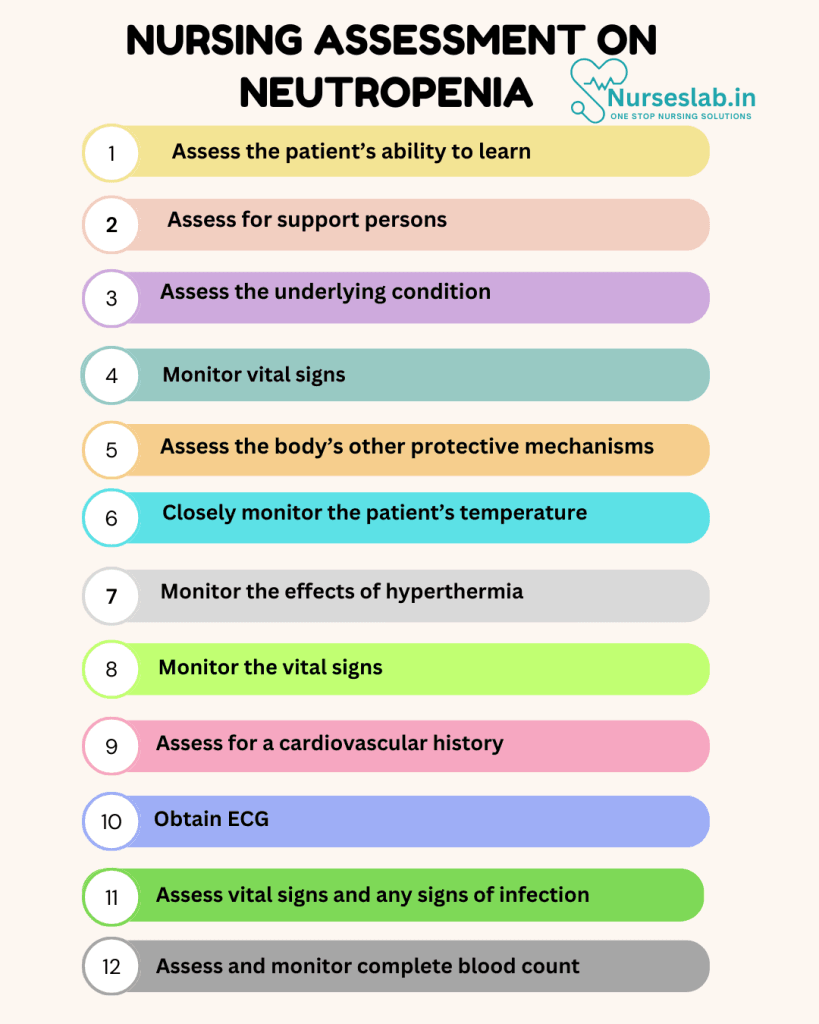
- Medical History: Review the patient’s history for risk factors such as recent chemotherapy, radiation therapy, or medications that may contribute to neutropenia. Also, inquire about symptoms such as fever, chills, fatigue, and frequent infections.
- Physical Examination: Perform a comprehensive physical examination focusing on signs of infection, such as fever, sore throat, oral ulcers, and skin abscesses. Evaluate the patient’s general appearance and vital signs.
- Laboratory Tests: Obtain baseline laboratory tests, including a complete blood count (CBC) with differential to determine the neutrophil count. Additional tests may include a blood culture, urine culture, and imaging studies if an infection is suspected.
Nursing Interventions
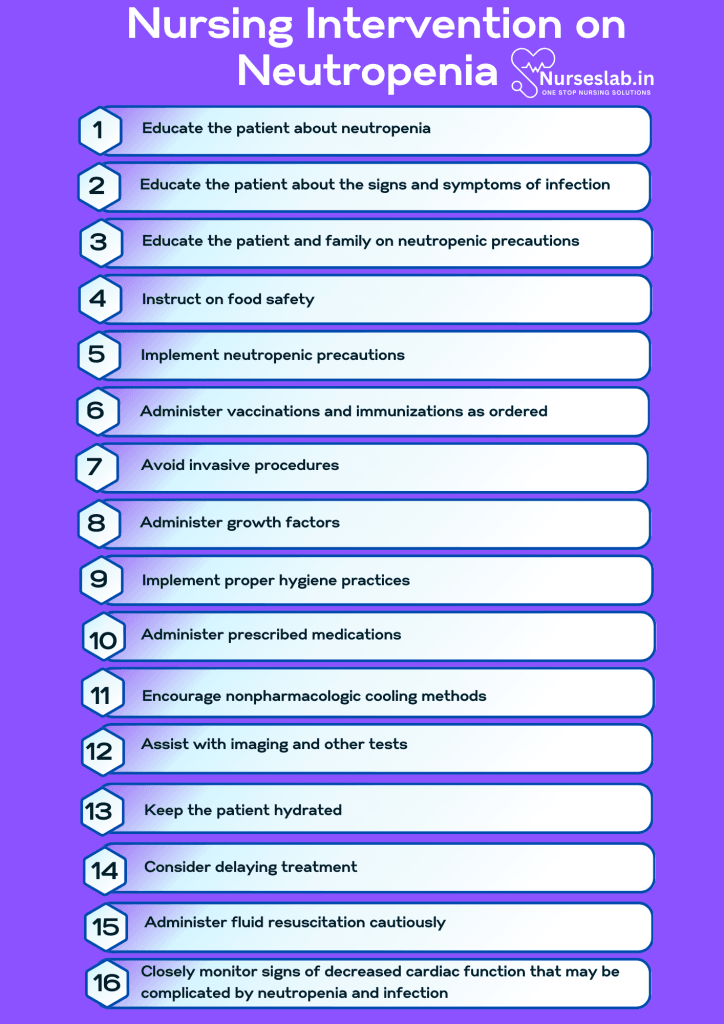
Nursing intervention is integral to the effective management of neutropenia. By conducting thorough assessments, administering appropriate treatments, and offering continuous support, nurses play a pivotal role in improving health outcomes and quality of life for patients.
Infection Prevention
To reduce the risk of infections in patients with neutropenia, nurses should implement strict infection prevention measures:
- Hand Hygiene: Emphasize the importance of frequent and thorough handwashing for both the patient and healthcare providers. Use alcohol-based hand sanitizers when soap and water are not available.
- Protective Isolation: Place the patient in a protective isolation room if necessary, to minimize exposure to infectious agents. Limit visitor access and ensure that visitors follow infection control protocols.
- Environmental Hygiene: Maintain a clean and sterile environment by regularly disinfecting surfaces and equipment. Avoid the use of fresh flowers, plants, and fruits that may carry pathogens.
Monitoring and Management
Continuous monitoring and management of neutropenic patients are essential to detect and address complications promptly:
- Vital Signs Monitoring: Regularly monitor the patient’s vital signs, including temperature, heart rate, respiratory rate, and blood pressure. A fever may be an early indicator of infection.
- Symptom Assessment: Assess and document any new or worsening symptoms, such as fever, chills, cough, or pain. Report any signs of infection immediately to the healthcare provider.
- Antimicrobial Therapy: Administer prophylactic or therapeutic antimicrobial agents as prescribed to prevent or treat infections. Ensure timely administration and monitor for potential side effects.
Patient Education
Educating patients and their families about neutropenia and its management is vital for ensuring adherence to infection prevention measures and treatment plans:
- Recognizing Symptoms: Teach patients and their families to recognize the signs and symptoms of infection and to seek immediate medical attention if symptoms occur.
- Hygiene Practices: Instruct patients on proper hygiene practices, including handwashing, oral care, and skin care, to reduce the risk of infections.
- Medication Adherence: Stress the importance of taking prescribed medications regularly and as directed to prevent further complications.
Support Resources
- Community Programs: Connect patients with local support resources such as patient support groups, educational materials, and community programs that offer assistance and information about neutropenia.
- Emotional and Psychological Support: Encourage patients to seek support from mental health professionals and peers to cope with the emotional and psychological impact of neutropenia.
Nursing Care Plans
Once the nurse identifies nursing diagnoses for neutropenia, nursing care plans help prioritize assessments and interventions for both short and long-term goals of care. In the following section, you will find nursing care plan examples for neutropenia.
Deficient Knowledge
Neutropenia may not exhibit symptoms until after complications have occurred. Patient education is essential to ensure adherence and the prevention of complications.
Nursing Diagnosis: Deficient Knowledge
Related to:
- Misinformation
- Inadequate access to resources
- Inadequate awareness of resources
- Inadequate commitment to learning
- Inadequate information
- Inadequate interest in learning
- Inadequate participation in care planning
As evidenced by:
- Inaccurate follow-through of instructions
- Inaccurate statements about a topic
- Development of complications
Expected outcomes:
- Patient will verbalize understanding of neutropenia and adhere to the plan of care.
- Patient will verbalize three neutropenic precautions they can implement at home.
Assessment:
1. Assess the patient’s ability to learn.
The patient’s learning abilities can affect patient education efforts. Patients undergoing cancer treatments may not be well enough to entertain complex concepts. Ensure information is presented at appropriate times.
2. Assess for support persons.
Learning efforts directed at those supporting the patient may be more effective.
Interventions:
1. Educate the patient about neutropenia.
In simple terms, without medical jargon, educate the patient and family about their lab values and how their numbers drive treatment.
2. Educate the patient about the signs and symptoms of infection.
Neutropenic patients have a higher risk of developing infections. Provide the patient with a list of symptoms to monitor for and when to alert their medical team.
3. Educate the patient and family on neutropenic precautions:
- Limit visitors in the home
- Wear a mask in public places
- Avoid crowded stores or restaurants
- Avoid live plants
- Maintain good oral health
- Talk to your doctor before getting vaccines
4. Instruct on food safety.
Patients with neutropenia must take care when eating fresh foods and vegetables and they must be thoroughly washed to remove bacteria. Some patients may need to avoid raw fruits and vegetables and undercooked meats.
Ineffective Protection
Ineffective protection is associated with neutropenia due to decreased immunity and defense mechanisms against pathogens and infection.
Nursing Diagnosis: Ineffective Protection
Related to:
- Low neutrophil count
- Immunosuppression
- Comorbidities (cancer, viruses, autoimmune conditions)
- Chemotherapy treatment
As evidenced by:
- Fever
- Coughing
- Dyspnea
- Fatigue
- Deficient immunity
- Delayed recovery from infection or injury
Expected outcomes:
- Patient will demonstrate an absolute neutrophil count greater than 1,500 cells/mm3.
- Patient will verbalize three strategies to protect against infection.
- Patient will remain free from infection.
Assessment:
1. Assess the underlying condition.
Determine the reason for a low neutrophil count. Possibilities include:
- Genetic conditions
- Infections
- Cancer
- Viruses
- Certain medications
- Nutritional deficiencies
- Autoimmune disorders
2. Monitor vital signs.
Frequently monitor temperature, pulse, and blood pressure for changes that indicate the onset of infection.
3. Assess the body’s other protective mechanisms.
Assess the patient’s skin, oral mucosa, urine, stool, and IV access sites for any signs of infection or breakdown that could allow the entrance of pathogens.
Interventions:
1. Implement neutropenic precautions.
The patient should be placed in a private room with the door kept closed. Do not allow anyone with an illness to visit. Ensure the patient wears a mask when being transported out of the room.
2. Administer vaccinations and immunizations as ordered.
Vaccinations are encouraged to protect the patient against infections and viruses. Ensure vaccinations are inactivated.
3. Avoid invasive procedures.
Avoid invasive procedures like rectal temperatures or IM injections that could disrupt the patient’s skin barrier and introduce bacteria.
4. Administer growth factors.
Granulocyte colony-stimulating factors can shorten the duration of neutropenia in patients receiving chemotherapy by stimulating the production of granulocytes to increase the patient’s ability to fight infection.
5. Implement proper hygiene practices.
Proper handwashing is crucial for all healthcare providers, patients, and anyone who cares for the patient. Aid in other hygiene practices such as frequent oral care and skin care.
Hyperthermia
Hyperthermia is common in patients with neutropenia, and this can be a sign of a developing infection.
Nursing Diagnosis: Hyperthermia
Related to:
- Disease processes
- Infection
As evidenced by:
- Flushed skin
- Skin warm to touch
- Diaphoresis
- Chills
- Stupor
- Tachycardia
- Tachypnea
Expected outcomes:
- Patient will be able to maintain a body temperature below 100.4 F (38 C).
- Patient will demonstrate strategies to promote a reduction in temperature.
Assessment:
1. Closely monitor the patient’s temperature.
Neutropenic fever is described as a temperature ≥ 101 F (38.3 C) or ≥ 100.4 F (38 degrees C) sustained for over an hour with an ANC of less than 1,500 cells/mL.
2. Monitor the effects of hyperthermia.
The patient’s blood pressure, heart rate, lung sounds, and urine output should be monitored for minute changes.
Interventions:
1. Administer prescribed medications.
Antibiotics and antipyretic medications are given to correct hyperthermia and treat the infection.
2. Encourage nonpharmacologic cooling methods.
Reducing the room temperature and removing excess clothing and blankets can help regulate environmental temperature, promoting patient comfort.
3. Assist with imaging and other tests.
Lab tests should be ordered to assess for changes, along with a chest x-ray, urinalysis, blood cultures, and sputum swabs, if applicable, before implementing antibiotics to detect the offending pathogen.
4. Keep the patient hydrated.
Hyperthermia can affect the patient’s hydration status. Providing adequate fluids can help reduce body temperature. Closely monitor intake and output.
5. Consider delaying treatment.
The development of hyperthermia may call for stopping further chemotherapy treatments until the infection is controlled.
Risk for Decreased Cardiac Output
Neutropenia associated with severe infection and septic shock increases the risk of decreased cardiac output.
Nursing Diagnosis: Risk for Decreased Cardiac Output
Related to:
- Infectious process
- Cardiac comorbidities
- Sepsis
As evidenced by:
A risk diagnosis is not evidenced by signs and symptoms as the problem has not yet occurred. Nursing interventions are aimed at prevention.
Expected outcomes:
- Patient will display blood pressure and pulse within normal limits.
- Patient will maintain normal sinus rhythm on ECG.
Assessment:
1. Monitor the vital signs.
Note any changes in vital signs, specifically temperature, blood pressure, and pulse rate. Fever with tachycardia and hypotension indicate possible sepsis that may worsen into septic shock.
2. Assess for a cardiovascular history.
Obtain a thorough history of cardiovascular disease that may impact cardiac function, such as heart failure, atrial fibrillation, coronary artery disease, and stroke.
3. Obtain ECG.
Inflammation of the heart caused by infection or injury may result in ECG abnormalities.
Interventions:
1. Reduce cardiac workload.
Let the heart rest and avoid strenuous activities to reduce the heart’s workload and allow for recovery from infection or injury.
2. Administer fluid resuscitation cautiously.
Patients experiencing septic shock will require fluid resuscitation to increase fluid volume as well as antibiotics to treat infection. Administer fluids cautiously in patients with heart failure to prevent fluid overload.
3. Closely monitor signs of decreased cardiac function that may be complicated by neutropenia and infection.
These include:
- Chest pain
- Blood pressure abnormalities
- Weak or diminished pulses
- Changes in mentation
- Dyspnea
- Pallor or cyanosis
- Reduced urine output
4. Apply supplemental oxygen.
Oxygenation is necessary to keep Spo2 > 95% to support cardiac function and cellular perfusion.
Risk for Infection
Patients with neutropenia have a higher risk of developing serious infections because they do not have adequate neutrophils to help fight off infection-causing pathogens.
Nursing Diagnosis: Risk for Infection
Related to:
- Chronic illness
- Decreased neutrophil count
- Leukopenia
- Chemotherapy
- Radiation therapy
- Certain medications
- Autoimmune disease processes
- Bone marrow disorders
As evidenced by:
A risk diagnosis is not evidenced by signs and symptoms, as the problem has not occurred yet, and nursing interventions are directed at the prevention of signs and symptoms.
Expected outcomes:
- Patient will remain free of infection.
- Patient will display a white blood cell count and neutrophil count within expected limits.
Assessment:
1. Assess vital signs and any signs of infection.
Infection or sepsis can manifest with fever along with respiratory distress and tachycardia.
2. Conduct a physical assessment.
Neutropenia can manifest as mouth ulcers, abscesses, rashes, and delayed wound healing.
3. Assess and monitor complete blood count.
Blood tests can help monitor the white blood cell count and neutrophil count to assess the risk of infection.
Interventions:
1. Implement neutropenic precautions.
This includes a private room with appropriate signage so staff is aware. Equipment may be left in the room, so it is only used by that patient to prevent the transmission of pathogens.
2. Limit visitors.
Patients with neutropenia are susceptible to infections and must be isolated accordingly. Limiting visitors reduces the risk of disease.
3. Teach the patient proper handwashing techniques.
Handwashing is an effective infection control method. Germs from unwashed hands can easily be transmitted from person to person.
4. Administer medications as ordered.
The granulocyte-colony stimulating factor is often given to help stimulate the bone marrow into producing more neutrophils.
5. Maintain aseptic technique.
The nurse and staff should maintain strict aseptic techniques when accessing IV lines or ports, cleaning catheters, or touching the patient.
Nursing Diagnoses and Rationales for Neutropenia
1. Risk for Infection
Rationale: Neutropenia significantly increases the risk of infections due to the lack of neutrophils, which play a crucial role in fighting infections. Regular monitoring of the patient’s temperature and other signs of infection, such as redness, swelling, or discharge, is essential. Implementing strict hand hygiene protocols, using protective isolation when necessary, and educating the patient and family about infection prevention measures can reduce the risk of infection.
2. Risk for Impaired Oral Mucous Membrane
Rationale: Chemotherapy or radiation therapy, which are common treatments for conditions causing neutropenia, can damage the oral mucous membranes, leading to ulcers, infections, and bleeding. Assessing the patient’s oral cavity regularly, providing oral care with gentle, non-irritating products, and encouraging the patient to maintain good oral hygiene can prevent complications. Collaborating with a dentist for specialized care may also be beneficial.
3. Risk for Imbalanced Nutrition: Less Than Body Requirements
Rationale: Neutropenia and its treatments can lead to decreased appetite, nausea, vomiting, and difficulty eating, resulting in inadequate nutritional intake. Assessing the patient’s nutritional status, offering small, frequent meals, and providing nutritional supplements can help meet their nutritional needs. Working with a dietitian to create a personalized nutrition plan and educating the patient on the importance of maintaining adequate nutrition can improve outcomes.
4. Fatigue
Rationale: Neutropenia and its associated treatments can cause significant fatigue, impacting the patient’s ability to perform daily activities. Assessing the patient’s energy levels, encouraging rest periods, and gradually increasing activity levels can help manage fatigue. Providing education on energy conservation techniques and involving the patient in planning their daily routine can improve their sense of control and well-being.
5. Risk for Anxiety
Rationale: The diagnosis and treatment of neutropenia can cause significant anxiety for patients and their families. Assessing the patient’s anxiety levels, providing emotional support, and offering counseling or support groups can help alleviate anxiety. Educating the patient and family about neutropenia, its treatments, and potential complications can empower them and reduce fear.
6. Risk for Impaired Skin Integrity
Rationale: Patients with neutropenia are at increased risk for skin infections and breakdown due to their compromised immune system. Regularly assessing the patient’s skin for signs of infection or injury, maintaining skin hygiene, and using protective barriers on areas prone to breakdown can prevent complications. Educating the patient and caregivers on proper skin care techniques is also crucial.
7. Ineffective Health Maintenance
Rationale: Neutropenia can disrupt the patient’s ability to manage their health effectively. Assessing the patient’s knowledge and understanding of neutropenia, providing education on infection prevention, nutrition, and self-care practices, and involving them in their care plan can enhance their ability to maintain their health. Providing resources and support for follow-up care and monitoring can ensure continuity of care and early intervention if needed.
REFERENCES
- ACCN Essentials of Critical Care Nursing. 3rd Edition. Suzanne M. Burns, MSN, RRT, ACNP, CCRN, FAAN, FCCM, FAANP. 2014. McGraw Hill Education.
- Bush, L. M. Defences against infection – Infections – MSD manual consumer version. MSD Manual Consumer Version. https://www.msdmanuals.com/home/infections/biology-of-infectious-disease/defenses-against-infection
- Cleveland Clinic. Neutropenia: What it is, types, symptoms & causes. https://my.clevelandclinic.org/health/diseases/21058-neutropenia
- Cleveland Clinic. . What are neutrophils? What can cause high or low neutrophil count. https://my.clevelandclinic.org/health/body/22313-neutrophils
- Medical-Surgical Nursing: Concepts for Interprofessional Collaborative Care. 9th Edition. Donna D. Ignatavicius, MS, RN, CNE, ANEF. 2018. Elsevier, Inc.
- Neutropenia. Approved by the Cancer.Net Editorial Board. Retrieved From: https://www.cancer.net/coping-with-cancer/physical-emotional-and-social-effects-cancer/managing-physical-side-effects/neutropenia
- Neutropenia. Cleveland Clinic. Retrieved From: https://my.clevelandclinic.org/health/diseases/21058-neutropenia
- Neutropenia. Healthline. Retrieved From: https://www.healthline.com/health/neutropenia#prevention
- Neutropenia. Mayo Clinic. Retrieved From: https://www.mayoclinic.org/symptoms/neutropenia/basics/definition/sym-20050854
Stories are the threads that bind us; through them, we understand each other, grow, and heal.
JOHN NOORD
Connect with “Nurses Lab Editorial Team”
I hope you found this information helpful. Do you have any questions or comments? Kindly write in comments section. Subscribe the Blog with your email so you can stay updated on upcoming events and the latest articles.


