


Rhabdomyolysis is characterized by the breakdown of muscle fibers that releases muscle components into the blood. This condition can result from trauma, overexertion, toxic substances, ischemia, infections, prolonged bed rest, and other underlying health conditions.
Myoglobin, creatine kinase, electrolytes, and other substances are released into the blood when the muscles become damaged. In excess, these substances can damage the kidneys, leading to kidney failure and death if untreated.
Though this condition can occur in anyone, it is more commonly found in endurance athletes, military personnel, firefighters, and older adults. Various factors contribute to muscle damage and the development of rhabdomyolysis. These causes include:
- High-intensity exercise
- Overheating
- Severe dehydration
- Medications
- Trauma
- Compression syndrome
- Substance abuse
- Metabolic disorders
- Long periods of inactivity
Signs and symptoms of rhabdomyolysis can range from mild to severe and they develop one to three days after muscle trauma or injury. The classic signs of this condition include:
- Muscle swelling
- Tender, weak, and sore muscles
- Dark, tea-colored urine
Typical tests that healthcare providers use to confirm the diagnosis of this condition include a detailed physical and medical history including recent physical activity, prescription medications, the use of illegal substances, and any recent trauma or injuries. Urine tests measure myoglobin in the urine and blood tests measure creatine kinase levels.
Nursing Process
The primary goal for treating rhabdomyolysis is fluid resuscitation to restore intravascular volume, dilute myoglobin and other toxins, and restore kidney function. Nurses play a key role in administering treatment interventions and monitoring for complications such as kidney failure.
Nursing Assessment
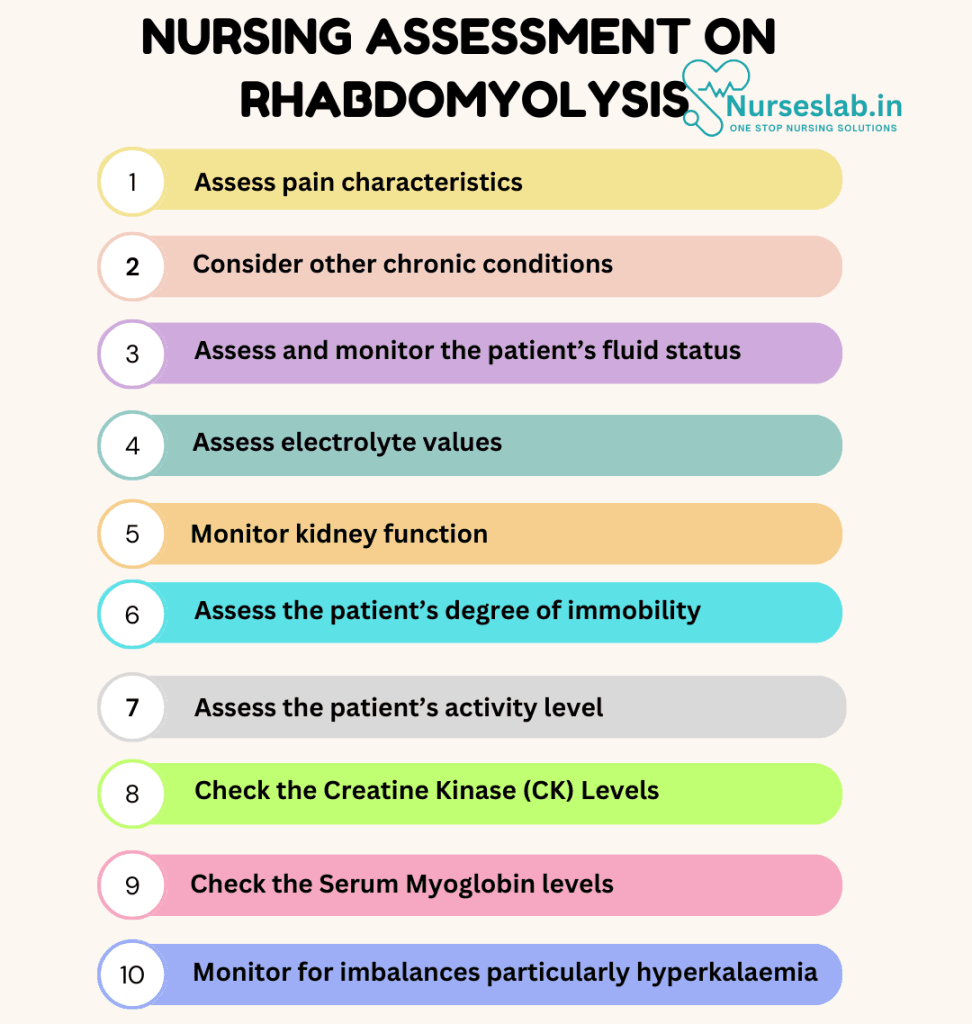
The initial nursing assessment for rhabdomyolysis involves a thorough patient history and physical examination. Key assessment areas include:
Patient History
- Identifying Risk Factors: Assess for recent trauma, excessive exercise, drug use, or other factors that could contribute to muscle breakdown.
- Symptom Onset and Duration: Determine when symptoms began and their progression over time.
- Medical History: Review the patient’s medical history for any underlying conditions or medications that might predispose them to rhabdomyolysis.
Physical Examination
- Muscle Strength and Tenderness: Evaluate the extent of muscle weakness, pain, and swelling.
- Skin Integrity: Check for signs of trauma, bruising, or pressure injuries.
- Urine Output and Color: Monitor urine output and observe for dark, tea-colored urine, which indicates myoglobinuria.
Laboratory and Diagnostic Tests
- Creatine Kinase (CK) Levels: Elevated CK levels are a hallmark of rhabdomyolysis and indicate muscle damage.
- Serum Myoglobin: High levels of myoglobin in the blood confirm muscle breakdown.
- Renal Function Tests: Assess kidney function through measurements of blood urea nitrogen (BUN) and creatinine levels.
- Electrolyte Panel: Monitor for imbalances, particularly hyperkalemia, hypocalcemia, and hyperphosphatemia.
Nursing Intervention
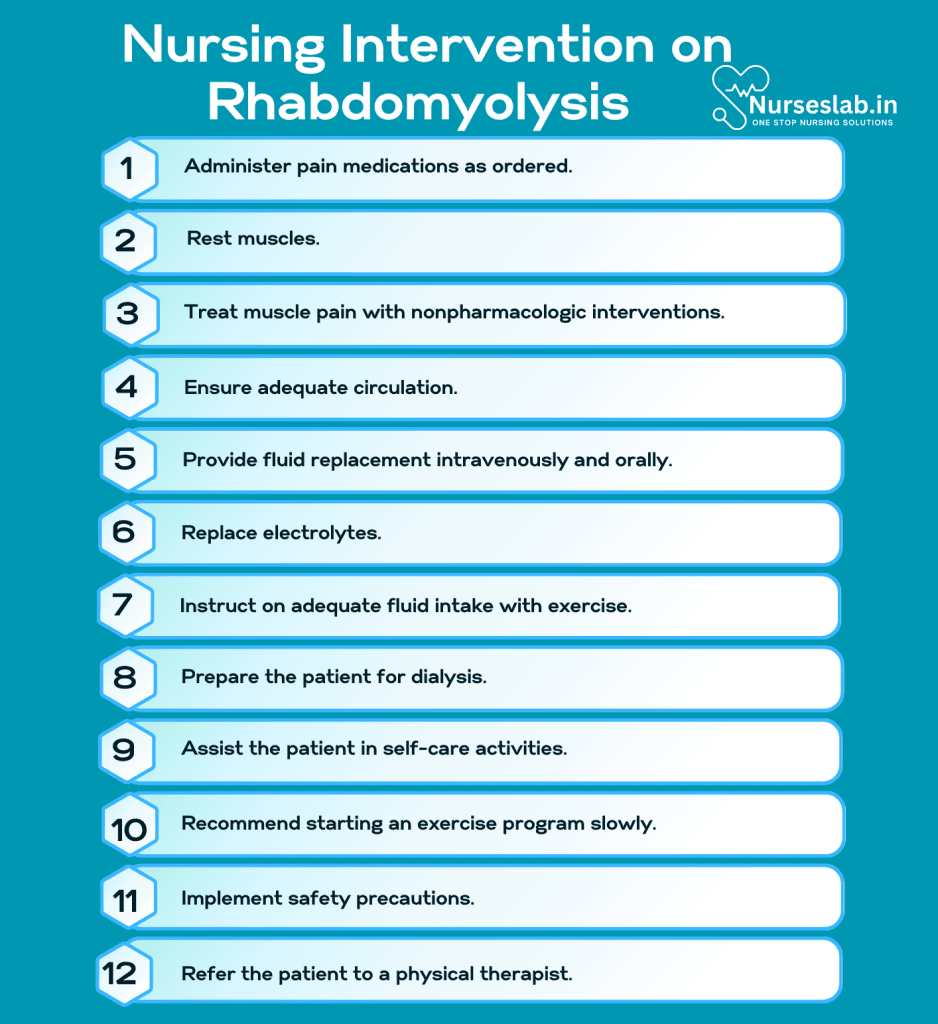
Effective nursing interventions for rhabdomyolysis focus on preventing complications, supporting renal function, and promoting muscle recovery. Key interventions include:
Fluid Management
- Intravenous (IV) Fluids: Administer isotonic saline to maintain hydration and enhance renal perfusion, which helps flush out myoglobin from the kidneys and prevent acute kidney injury.
- Monitoring Fluid Balance: Closely monitor input and output to ensure adequate hydration and prevent fluid overload.
Electrolyte Management
- Hyperkalemia Management: Administer medications such as calcium gluconate, insulin with glucose, or sodium bicarbonate to stabilize potassium levels.
- Calcium and Phosphate Balance: Provide supplements or medications as needed to correct hypocalcemia or hyperphosphatemia.
Renal Support
- Dialysis: In severe cases of acute kidney injury, consider renal replacement therapy to remove waste products and manage electrolyte imbalances.
- Renal Protection: Ensure the use of nephrotoxic drugs is minimized and adjust dosages based on renal function.
Pain Management
- Analgesics: Administer pain relief medications, such as nonsteroidal anti-inflammatory drugs (NSAIDs) or opioids, as needed to manage muscle pain and discomfort.
- Positioning and Mobility: Encourage gentle movement and repositioning to prevent pressure injuries and promote circulation.
Monitoring and Ongoing Assessment
- Vital Signs: Regularly monitor vital signs, including blood pressure, heart rate, and respiratory rate, to detect any signs of deterioration.
- Laboratory Tests: Frequently reassess CK levels, renal function tests, and electrolytes to track the patient’s progress and adjust treatment as needed.
- Urine Output: Continuously monitor urine output to ensure adequate renal function and early detection of complications.
Nursing Care Plans
Once the nurse identifies nursing diagnoses for rhabdomyolysis, nursing care plans help prioritize assessments and interventions for both short and long-term goals of care. In the following section, you will find nursing care plan examples for rhabdomyolysis.
Acute Pain
Typical signs and symptoms of rhabdomyolysis include muscle swelling, pain, stiffness, and weakness.
Nursing Diagnosis: Acute Pain
Related to:
- Inflammatory process
- Disease process
As evidenced by:
- Muscle tenderness
- Myalgia even at rest
- Hesitancy with movement
- Guarding behavior
- Positioning to ease pain
Expected outcomes:
- The patient will verbalize pain relief as evidenced by increasing activity levels
- The patient will report a pain level of 2 or less by discharge
Assessment:
1. Assess pain characteristics.
Pain assessment can help diagnose rhabdomyolysis. Myalgia at rest along with muscle weakness coupled with systemic features of fever, nausea, and tea-colored urine can differentiate from other causes.
2. Consider other chronic conditions.
When assessing and treating pain, consider other diagnoses the patient may have that contribute to pain unrelated to rhabdomyolysis such as fibromyalgia, surgical pain, arthritis, neuropathy, and more. Each type of pain may require different management.
Interventions:
1. Administer pain medications as ordered.
Pain medications like ibuprofen and other NSAIDs should be avoided as these medications can worsen kidney function in patients with rhabdomyolysis. Acetaminophen may be given to help relieve pain without compromising kidney function.
2. Rest muscles.
Resting the injured muscles is necessary to allow the fibers to recover. When returning to exercise, do so slowly and rest as needed.
3. Treat muscle pain with nonpharmacologic interventions.
Treating muscle pain in rhabdomyolysis with nonpharmacologic interventions like massage and warm compresses can help relieve discomfort while regaining strength.
4. Ensure adequate circulation.
Elevating limbs with proper support can ensure circulation which eases feelings of weakness, tingling, and pain. The nurse should also assess peripheral pulses, and skin color and warmth to ensure perfusion and circulation.
Deficient Fluid Volume
Hypovolemia and serum electrolyte imbalances are common in patients diagnosed with rhabdomyolysis. When the muscles are damaged, they release proteins and electrolytes into the body. Hypovolemia, along with the accumulation of myoglobin, increases the risk of kidney injury.
Nursing Diagnosis: Deficient Fluid Volume
Related to:
- Disease process
- Skeletal muscle injury
- Electrolyte imbalances
- Acute kidney injury
As evidenced by:
- Altered mental status
- Tea-colored urine
- Altered skin turgor
- Electrolyte imbalances
- Decreased blood pressure
- Increased body temperature
- Increased heart rate
- Increased urine concentration
- Decreased urine output
- Altered BUN/creatinine
Expected outcomes:
- The patient will maintain urine output within normal limits
- The patient will exhibit BUN and creatinine levels within normal limits
Assessment:
1. Assess and monitor the patient’s fluid status.
Accurately measuring the patient’s intake and output can help determine appropriate interventions, monitor any possible complications, and monitor the effectiveness of the current treatment.
2. Assess electrolyte values.
Rhabdomyolysis is associated with prominent fluid and electrolyte imbalances like hyperphosphatemia, hypocalcemia, hyperkalemia, hypercalcemia, hyperuricemia, and hypoalbuminemia.
3. Monitor kidney function.
BUN and creatinine results will help monitor the progression of acute kidney injury. Urine output should also be assessed for amount and color per facility policy.
Interventions:
1. Provide fluid replacement intravenously and orally.
Fluid therapy in rhabdomyolysis helps increase urine output and prevent kidney damage. IV fluids also help flush out excess muscle proteins and electrolytes from damaged muscles.
2. Replace electrolytes.
Electrolytes may need replacement. Hyperkalemia may require potassium binders or D50 with IV sodium bicarbonate. Symptomatic hypocalcemia may require IV calcium gluconate.
3. Instruct on adequate fluid intake with exercise.
The combination of extreme exercise or activity combined with a lack of fluids can create an environment for rhabdomyolysis. Athletes, service members, and firefighters may require extra fluid intake.
4. Prepare the patient for dialysis.
Dialysis may be indicated in severe cases to help the kidneys filter waste products while recovering.
Impaired Physical Mobility
Impaired physical mobility can be a cause or a complication of rhabdomyolysis.
Nursing Diagnosis: Impaired Physical Mobility
Related to:
- Myalgia or muscle pain
- Muscle weakness
- Decreased activity tolerance
- Decreased muscle control
- Decreased muscle strength
- Immobility
- Prescribed bed rest
- Falls
As evidenced by:
- Altered gait
- Decreased range of motion
- Difficulty turning
- Expresses discomfort
- Postural instability
- Slowed movement
- Spastic movement
Expected outcomes:
- The patient will demonstrate increased strength and ability to move
- The patient will participate in physical therapy twice per week
Assessment:
1. Assess the patient’s degree of immobility.
Rhabdomyolysis may cause muscle swelling, pain, and weakness. Immobility, such as prolonged bed rest or a fall may also result in rhabdomyolysis and impaired physical mobility. It is important to determine the patient’s degree of immobility to ensure safety and to help plan appropriate rehabilitation interventions.
2. Assess the patient’s activity level.
Assessing the patient’s usual activity level can help determine who may be most at risk for rhabdomyolysis as well as guide their plan of care and recovery.
Interventions:
1. Assist the patient in self-care activities.
Assisting while encouraging self-performance in activities can help the patient gain a sense of control over their situation and promote independence while recovering.
2. Recommend starting an exercise program slowly.
Preventing another episode of rhabdomyolysis can be accomplished by beginning an exercise regimen slowly and not pushing beyond personal limits.
3. Implement safety precautions.
Some cases of rhabdomyolysis develop due to an older adult falling and not being able to get up. Their muscles deteriorate from not being able to move. Nurses can prevent this occurrence by educating on fall precautions or how to call for help when alone.
4. Refer the patient to a physical therapist.
A physical therapist can help further evaluate the patient’s immobility, physical training, and strength training, and formulate an appropriate mobility plan.
Nursing Diagnosis and Rationale for Rhabdomyolysis
1. Acute Pain
Rationale: Rhabdomyolysis often presents with severe muscle pain due to muscle breakdown. The release of intracellular contents into the bloodstream can cause significant discomfort and inflammation. Nurses should assess the patient’s pain level regularly using appropriate pain scales, administer prescribed analgesics, and implement non-pharmacological pain management strategies such as cold compresses and relaxation techniques.
2. Risk for Electrolyte Imbalance
Rationale: The breakdown of muscle tissue releases potassium, phosphate, and myoglobin into the bloodstream, which can lead to electrolyte disturbances, including hyperkalemia and hypocalcemia. Regular monitoring of electrolyte levels and renal function is crucial. Nurses should administer intravenous fluids to promote renal excretion of myoglobin and electrolytes and follow prescribed electrolyte replacement protocols.
3. Impaired Renal Function
Rationale: Myoglobin released from damaged muscles can obstruct renal tubules, leading to acute kidney injury (AKI). Monitoring urine output, creatinine, and blood urea nitrogen (BUN) levels is essential. Ensuring adequate hydration through intravenous fluids can help prevent myoglobin-induced renal damage. In severe cases, dialysis may be required.
4. Risk for Decreased Cardiac Output
Rationale: Electrolyte imbalances, particularly hyperkalemia, can affect cardiac function and lead to arrhythmias. Continuous cardiac monitoring is necessary to detect any changes in heart rhythm. Nurses should be prepared to administer emergency medications, such as calcium gluconate or sodium bicarbonate, to manage life-threatening hyperkalemia and collaborate with the healthcare team for timely interventions.
5. Risk for Ineffective Tissue Perfusion
Rationale: Compromised renal function, dehydration, and muscle damage can impair tissue perfusion. Assessing peripheral pulses, capillary refill, and skin color can help identify early signs of poor perfusion. Ensuring adequate hydration, elevating the affected limbs, and avoiding constrictive bandages are crucial to maintaining effective tissue perfusion.
6. Impaired Physical Mobility
Rationale: Muscle weakness, pain, and potential complications of rhabdomyolysis can limit the patient’s ability to move. Nurses should assist with mobility exercises, provide necessary aids such as walkers or canes, and encourage gradual activity as tolerated. Collaborating with physical and occupational therapists can facilitate the development of individualized mobility plans.
7. Risk for Infection
Rationale: Breakdown of muscle tissue can lead to open wounds or pressure ulcers, increasing the risk of infection. Nurses should implement strict aseptic techniques for wound care, monitor for signs of infection, and administer prescribed antibiotics if necessary. Ensuring proper nutrition and hydration can also support the immune system and promote healing.
8. Anxiety
Rationale: The sudden onset of symptoms and potential complications of rhabdomyolysis can cause significant anxiety in patients. Nurses should provide emotional support, educate patients and families about the condition and its management, and refer to counseling services if needed. Creating a calm and reassuring environment can help alleviate anxiety.
9. Knowledge Deficit
Rationale: Patients and their families may lack understanding about rhabdomyolysis, its causes, and treatment. Providing comprehensive education about the condition, potential triggers, and preventive measures is essential. Nurses should ensure that patients understand the importance of adhering to treatment plans and recognizing early signs of complications.
REFERENCES
- ACCN Essentials of Critical Care Nursing. 3rd Edition. Suzanne M. Burns, MSN, RRT, ACNP, CCRN, FAAN, FCCM, FAANP. 2014. McGraw Hill Education.
- Medical-Surgical Nursing: Concepts for Interprofessional Collaborative Care. 9th Edition. Donna D. Ignatavicius, MS, RN, CNE, ANEF. 2018. Elsevier, Inc.
- Rhabdomyolysis. Annie Stuart. Reviewed by Jennifer Robinson, MD. WebMD. https://www.webmd.com/a-to-z-guides/rhabdomyolysis-symptoms-causes-treatments
- Rhabdomyolysis. CDC Centers for Disease Control and Prevention. https://www.cdc.gov/niosh/topics/rhabdo/default.html
- Rhabdomyolysis. MedlinePlus Trusted Healthcare for You. Updated by: Walead Latif, MD, Nephrologist and Clinical Associate Professor, Rutgers Medical School, Newark, NJ. https://medlineplus.gov/ency/article/000473.htm
- Rhabdomyolysis: pathogenesis, diagnosis, and treatment. Torres PA, Helmstetter JA, Kaye AM, Kaye AD. Ochsner J. 2015 Spring;15(1):58-69. PMID: 25829882; PMCID: PMC4365849. From: https://www.ncbi.nlm.nih.gov/pmc/articles/PMC4365849/
Stories are the threads that bind us; through them, we understand each other, grow, and heal.
JOHN NOORD
Connect with “Nurses Lab Editorial Team”
I hope you found this information helpful. Do you have any questions or comments? Kindly write in comments section. Subscribe the Blog with your email so you can stay updated on upcoming events and the latest articles.


