


Explore AI in nursing education: intelligent platforms deliver adaptive content, virtual simulations, and predictive assessments to enhance learning. AI empowers educators and students with personalized feedback, clinical decision training, and scalable solutions for modern nursing curricula.
Introduction
The realm of nursing education is undergoing a profound transformation, driven by the rapid advancement of artificial intelligence (AI) technologies. As healthcare systems worldwide face increasing complexity and demand, the need for highly competent, adaptable nurses has never been more acute. AI, with its capacity to analyse vast data sets, personalise learning, and simulate real-world scenarios, is revolutionising the way nursing students are trained and prepared for clinical practice.
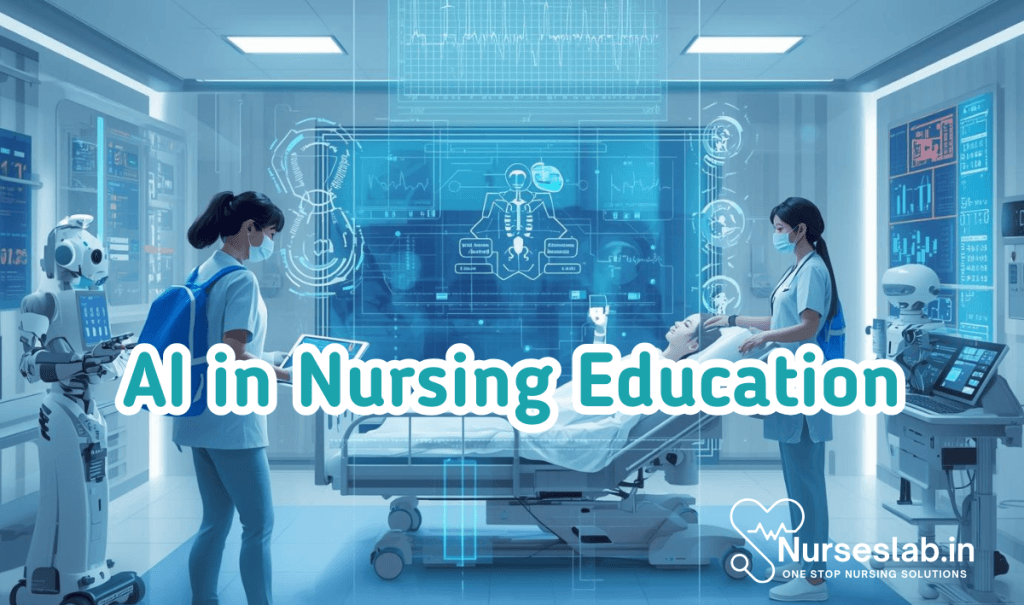
AI-Driven Curriculum Design
Adaptive Learning Platforms
Traditional nursing curricula often follow a one-size-fits-all approach, which may not address the diverse learning needs of students. AI-driven adaptive learning platforms are changing this paradigm. These platforms assess individual student strengths, weaknesses, and learning styles, dynamically adjusting the content and pace to maximise comprehension and retention. By leveraging machine learning algorithms, adaptive systems can identify knowledge gaps, recommend targeted resources, and provide real-time feedback, ensuring that each student progresses at an optimal rate.
Curriculum Customisation
Artificial intelligence (AI) enables curriculum designers to incorporate real-time data and emerging healthcare trends into educational programmes. For instance, natural language processing tools can scan medical literature and clinical guidelines, suggesting updates to the curriculum that reflect the latest evidence-based practices. This dynamic approach ensures that nursing education remains current, relevant, and aligned with the evolving demands of the healthcare sector. Additionally, Artificial intelligence can help identify which competencies are most critical for future practice, allowing educators to prioritise essential skills and knowledge areas.
Personalised Learning Pathways
Tailored Instruction
Personalised learning is at the heart of AI’s transformative potential in nursing education. AI-powered platforms can analyse student performance data, learning behaviours, and even emotional engagement to create bespoke learning pathways. For example, students struggling with pharmacology may receive additional interactive modules, while those excelling in clinical skills might be offered advanced case studies. This level of customisation not only fosters deeper understanding but also enhances student motivation and engagement.
Learning Analytics and Student Engagement
Learning analytics, powered by Artificial intelligence, provide educators with actionable insights into student progress, participation, and outcomes. Dashboards and visualisation tools highlight trends, such as common areas of difficulty or topics associated with high dropout rates. Educators can use this information to intervene early, offer targeted support, and refine instructional strategies. AI can also facilitate peer-to-peer learning by matching students with complementary strengths, fostering collaborative problem-solving and knowledge sharing.
Simulation and Virtual Reality
AI-Powered Simulation Labs
Simulation has long been a cornerstone of nursing education, allowing students to practise clinical skills in a safe, controlled environment. AI is elevating simulation to new heights through the development of intelligent virtual patients and environments. These AI-powered simulators can mimic a wide range of medical conditions, respond dynamically to student interventions, and provide real-time feedback. Unlike static mannequins, virtual patients can exhibit complex behaviours, emotional responses, and evolving symptoms, offering a more authentic and immersive learning experience.
Scenario-Based Training and Skill Development
AI-driven simulation platforms enable scenario-based training that closely mirrors real-life clinical situations. Students can engage in decision-making, critical thinking, and teamwork exercises, encountering diverse patient populations and unpredictable challenges. The ability to repeat scenarios and receive instant feedback accelerates skill acquisition and builds confidence. Moreover, AI can track performance metrics across multiple simulations, helping educators identify trends and tailor subsequent training to address specific competencies.
Automated Assessment and Feedback
Intelligent Grading Systems
Assessment is a critical component of nursing education, ensuring that students meet the required standards of knowledge and competence. AI-powered grading systems can automate the evaluation of assignments, quizzes, and even clinical simulations. These systems use natural language processing and pattern recognition to assess written responses, clinical reasoning, and procedural accuracy. Automated grading not only increases efficiency but also reduces subjectivity and bias, promoting fairness and consistency.
Formative and Summative Assessment
AI enhances both formative and summative assessment by providing timely, personalised feedback. During formative assessments, students receive instant guidance on areas for improvement, enabling them to adjust their learning strategies proactively. For summative assessments, Artificial intelligence can aggregate performance data across multiple tasks, offering a holistic view of student progress. This comprehensive approach informs both students and educators about readiness for clinical practice and areas requiring further development.
Feedback Mechanisms
Effective feedback is essential for learning and growth. AI-driven feedback systems can analyse student interactions, identify misconceptions, and deliver tailored recommendations for improvement. These systems may provide detailed explanations, suggest additional resources, or prompt reflective practice. By making feedback continuous and actionable, Artificial intelligence fosters a culture of self-directed learning and lifelong professional development.
Integration of Evidence-Based Practice
AI in Research and Clinical Decision Support
Evidence-based practice (EBP) is a cornerstone of modern nursing, ensuring that clinical decisions are informed by the best available evidence. Artificial intelligence facilitates EBP by streamlining access to research literature, synthesising findings, and generating clinical guidelines. Tools such as AI-powered literature review assistants can rapidly scan thousands of articles, extract key insights, and highlight relevant studies. In clinical education, decision support systems can simulate the process of applying evidence to patient care, helping students develop critical appraisal and decision-making skills.
Bridging Theory and Practice
Artificial intelligence helps bridge the gap between theoretical knowledge and practical application. By integrating evidence-based resources into simulation scenarios and case studies, Artificial intelligence ensures that students practise applying research findings to real-world situations. This approach not only enhances clinical competence but also fosters a culture of inquiry and continuous improvement. As future nurses encounter complex cases, their training in evidence-based decision-making will empower them to deliver high-quality, patient-centred care.
Ethical and Practical Considerations
Data Privacy and Security
The widespread adoption of AI in nursing education raises important ethical and practical considerations. Data privacy is paramount, as AI systems often process sensitive student information and performance data. Educational institutions must implement robust security measures, adhere to legal and ethical guidelines, and ensure transparency in data usage. Students and educators should be informed about how their data is collected, stored, and utilised, fostering trust and accountability.
Addressing Bias in AI Systems
Artificial intelligence algorithms are only as unbiased as the data on which they are trained. If historical data contains biases, Artificial intelligence systems may inadvertently perpetuate these inequities, affecting assessment outcomes or learning recommendations. Nursing educators must critically evaluate AI tools, advocate for diverse training data, and remain vigilant against algorithmic bias. Ongoing research and collaboration with technologists are essential to ensure that AI supports equity and inclusivity in nursing education.
Faculty Training and Student Preparedness
The successful integration of Artificial intelligence into nursing education requires significant investment in faculty development and student training. Educators must acquire new competencies in data literacy, technology integration, and instructional design. Professional development programmes and interdisciplinary collaboration can support this transition. Similarly, students must be prepared to engage with AI-driven tools, develop digital literacy skills, and adapt to new modes of learning. By fostering a culture of innovation and adaptability, institutions can ensure that both faculty and students are equipped to harness the full potential of AI.
Challenges and Future Directions
Implementation Barriers
Despite its promise, the adoption of Artificial intelligence in nursing education is not without challenges. Implementation barriers include limited access to technology, budget constraints, and resistance to change. Smaller institutions or those in resource-limited settings may struggle to invest in advanced AI platforms. Additionally, concerns about the reliability, transparency, and ethical implications of AI may hinder widespread acceptance.
Ongoing Research and Innovation
The field of Artificial intelligence in nursing education is rapidly evolving, with ongoing research exploring new applications and best practices. Collaborative initiatives between academic institutions, healthcare organisations, and technology companies are driving innovation in adaptive learning, simulation, and assessment. Future research will likely focus on evaluating the effectiveness of AI tools, understanding their long-term impact on learning outcomes, and refining ethical frameworks to guide their use.
Future Trends
Looking ahead, several trends are poised to shape the future of AI in nursing education:
- Interdisciplinary Collaboration: Partnerships between educators, clinicians, technologists, and policymakers will drive the development of AI solutions tailored to nursing education.
- Global Access: AI-powered online learning platforms can expand access to high-quality nursing education, particularly in underserved regions.
- Lifelong Learning: AI will support continuous professional development, enabling nurses to update their skills and knowledge throughout their careers.
- Human-AI Synergy: Rather than replacing educators, AI will augment their capabilities, enabling more personalised, efficient, and effective teaching and learning experiences.
Conclusion
Artificial intelligence stands at the forefront of a new era in nursing education, offering unprecedented opportunities to enhance training, personalise learning, and integrate evidence-based practice. By embracing AI-driven curriculum design, personalised learning pathways, advanced simulation technologies, automated assessment tools, and robust ethical frameworks, nursing educators and institutions can prepare the next generation of nurses to meet the demands of an ever-changing healthcare landscape.
The journey towards fully realising AI’s transformative potential will require ongoing collaboration, research, and a commitment to equity and excellence. Now is the time for educators, students, and policymakers to come together, harness the power of AI, and shape a future where nursing education is more accessible, effective, and impactful than ever before.
REFERENCES
- De Gagne JC. The State of Artificial Intelligence in Nursing Education: Past, Present, and Future Directions. Int J Environ Res Public Health. 2023 Mar 10;20(6):4884. https://pmc.ncbi.nlm.nih.gov/articles/PMC10049425/
- Xian, J., Wu, J.G. & Lee, SM. Modeling the evolution of virtual reality in nursing education: a BERTopic-based analysis of research trends and future directions. BMC Nurs 24, 1332 (2025). https://doi.org/10.1186/s12912-025-03938-5
- El Arab RA, Al Moosa OA, Abuadas FH, Somerville J. The Role of AI in Nursing Education and Practice: Umbrella Review. J Med Internet Res. 2025 Apr 4;27:e69881.
- Glauberman G, Ito-Fujita A, Katz S, Callahan J. Artificial Intelligence in Nursing Education: Opportunities and Challenges. Hawaii J Health Soc Welf. 2023 Dec;82(12):302-305. PMID: 38093763; PMCID: PMC10713739.
- Božić, V. (2024). Artifical Intelligence in Nurse Education. In: Chakir, A., Andry, J.F., Ullah, A., Bansal, R., Ghazouani, M. (eds) Engineering Applications of Artificial Intelligence. Synthesis Lectures on Engineering, Science, and Technology. Springer, Cham. https://doi.org/10.1007/978-3-031-50300-9_9
Stories are the threads that bind us; through them, we understand each other, grow, and heal.
JOHN NOORD
Connect with “Nurses Lab Editorial Team”
I hope you found this information helpful. Do you have any questions or comments? Kindly write in comments section. Subscribe the Blog with your email so you can stay updated on upcoming events and the latest articles.


