


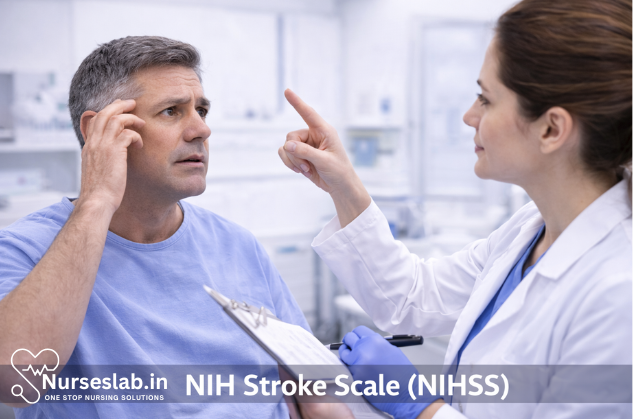
The NIH Stroke Scale (NIHSS) is a standardized neurological assessment used to evaluate stroke severity by measuring consciousness, motor function, speech, vision, and sensory deficits. It supports rapid diagnosis, treatment planning, and monitoring in emergency and acute‑care settings.
Introduction NIH Stroke Scale
Stroke remains a leading cause of morbidity and mortality worldwide, with timely and accurate diagnosis being critical for effective management. The National Institutes of Health Stroke Scale (NIHSS) is an established clinical tool designed to systematically assess neurological deficits in patients suspected of having a stroke. Widely adopted in emergency departments, neurology wards, and research settings, the NIHSS facilitates rapid and standardised evaluation, enabling clinicians to gauge stroke severity, monitor progression, and guide therapeutic decisions. Its structured approach ensures consistency, objectivity, and comparability across practitioners and institutions.
Background: History and Development of NIHSS
The NIHSS was developed in the late 1980s by a panel of stroke experts and neurologists under the auspices of the National Institutes of Health, USA. The scale emerged from the need for a reliable, reproducible, and easy-to-administer instrument to quantify neurological impairment in acute stroke patients. Since its introduction, the NIHSS has undergone validation and refinement, solidifying its role as the gold standard for initial stroke assessment and research. The scale’s utility extends beyond diagnosis to inclusion criteria for clinical trials, prognostic modelling, and outcome measurement, underscoring its enduring relevance in modern stroke care.
Components of NIHSS
The NIHSS comprises 11 distinct items, each targeting a specific domain of neurological function. The following is a detailed breakdown of each component:
- LOC Responsiveness: Assesses alertness, response to stimuli, and need for repeated stimulation.
- LOC Questions: Evaluates orientation by asking the patient their age and current month.
- LOC Commands: Tests comprehension and ability to follow simple commands (e.g., opening/closing eyes, gripping/releasing hand).
- Best Gaze: Measures voluntary and involuntary horizontal eye movements, detecting gaze palsy or deviation.
- Visual Fields: Examines vision in each quadrant, identifying hemianopia or quadrant defects.
- Facial Palsy: Assesses symmetry and movement of facial muscles, checking for droop or weakness.
- Motor Arm: Evaluates strength and drift in both arms independently over a 10-second period.
- Motor Leg: Assesses strength and drift in both legs independently over a 5-second period.
- Limb Ataxia: Tests for coordination and presence of ataxia in arms and legs.
- Sensory: Evaluates response to pinprick or touch, identifying hypoesthesia or anaesthesia.
- Best Language: Assesses speech production, comprehension, and naming, detecting aphasia.
- Dysarthria: Evaluates clarity of speech, identifying slurring or articulation deficits.
- Extinction and Inattention (Neglect): Tests for neglect or inattention to one side of the body or environment.
Scoring System: Explanation of Scoring for Each Component
Each item on the NIHSS is scored based on the degree of impairment observed, with clearly defined criteria for each level. The aggregate score quantifies overall stroke severity. Below is an outline of the scoring for each domain:
| Item | Score Range | Interpretation |
| LOC Responsiveness | 0–3 | 0 = Alert; 3 = Unresponsive |
| LOC Questions | 0–2 | 0 = Both correct; 2 = Both incorrect |
| LOC Commands | 0–2 | 0 = Both correct; 2 = Both incorrect |
| Best Gaze | 0–2 | 0 = Normal; 2 = Forced deviation |
| Visual Fields | 0–3 | 0 = No loss; 3 = Bilateral hemianopia |
| Facial Palsy | 0–3 | 0 = Normal; 3 = Complete paralysis |
| Motor Arm/Leg | 0–4 (each limb) | 0 = No drift; 4 = No movement |
| Limb Ataxia | 0–2 | 0 = Absent; 2 = Present in more than one limb |
| Sensory | 0–2 | 0 = Normal; 2 = Complete loss |
| Best Language | 0–3 | 0 = No aphasia; 3 = Severe aphasia |
| Dysarthria | 0–2 | 0 = Normal; 2 = Unintelligible or mute |
| Extinction/Inattention | 0–2 | 0 = None; 2 = Profound neglect |
The total NIHSS score ranges from 0 (no deficit) to 42 (most severe deficit). Higher scores indicate greater neurological impairment and stroke severity.
Step-by-Step Assessment: How to Perform the NIHSS
A systematic approach is essential for accurate NIHSS administration. The following step-by-step guide outlines the recommended procedure:
Preparation
- Ensure a quiet environment and proper lighting.
- Gather necessary materials (NIHSS scoring sheet, pen, sensory tools).
- Introduce yourself, explain the assessment purpose, and obtain informed consent if appropriate.
Conducting the Assessment
- LOC Responsiveness: Observe the patient’s alertness and response to verbal or tactile stimulation.
- LOC Questions: Ask the patient to state their age and the current month.
- LOC Commands: Instruct the patient to perform simple tasks (e.g., open/close eyes, grip/release hand).
- Best Gaze: Request the patient to follow your finger horizontally; observe for gaze palsy or deviation.
- Visual Fields: Test each quadrant by having the patient indicate when they see your fingers.
- Facial Palsy: Ask the patient to smile, show teeth, and raise eyebrows; note asymmetry or weakness.
- Motor Arm: Have the patient hold each arm outstretched for 10 seconds; observe for drift or paralysis.
- Motor Leg: Instruct the patient to lift each leg off the bed for 5 seconds; observe for drift or paralysis.
- Limb Ataxia: Perform finger-to-nose and heel-to-shin tests; check for coordination deficits.
- Sensory: Use a pin or cotton to test sensation on both sides of the body; compare responses.
- Best Language: Engage the patient in conversation, ask them to name objects, describe a picture, and follow complex instructions.
- Dysarthria: Listen for clarity, slurring, or articulation issues as the patient speaks.
- Extinction/Inattention: Simultaneously stimulate both sides of the body and ask the patient to identify stimuli; assess for neglect.
Scoring and Documentation
- Assign scores according to the NIHSS criteria for each item.
- Document findings promptly and accurately on the NIHSS sheet.
- Repeat the assessment if necessary to monitor changes over time.
Interpretation of Results: What Scores Mean Clinically
The NIHSS score serves as an objective measure of stroke severity and has direct implications for clinical management:
- 0: No stroke symptoms; normal neurological function.
- 1–4: Minor stroke; may not require aggressive intervention.
- 5–15: Moderate stroke; typically considered for thrombolytic therapy if within the therapeutic window.
- 16–20: Moderate to severe stroke; increased risk of complications and poorer prognosis.
- 21–42: Severe stroke; high likelihood of significant disability or mortality.
Interpretation should always consider the clinical context, patient history, and imaging findings. The NIHSS is most effective when used as part of a comprehensive stroke evaluation, guiding decisions on acute interventions (e.g., thrombolysis, thrombectomy), disposition, and rehabilitation planning.
Clinical Significance: Role in Stroke Management and Prognosis
The NIHSS is integral to stroke care for several reasons:
- Triage and Treatment Decisions: The score assists in identifying candidates for reperfusion therapies such as intravenous thrombolysis or endovascular thrombectomy.
- Prognostic Value: Higher NIHSS scores correlate with increased risk of mortality, disability, and poor functional outcomes. Scores are used to stratify patients for clinical trials and predict recovery trajectories.
- Monitoring Progression: Serial NIHSS assessments enable clinicians to detect deterioration, improvement, or complications, informing ongoing management.
- Communication and Documentation: The standardised nature of the NIHSS facilitates clear communication among multidisciplinary teams and contributes to robust documentation for medicolegal and research purposes.
In India, where stroke burden is rising and access to advanced imaging may be limited in some regions, the NIHSS provides a practical and cost-effective means of initial assessment and triage. Its use is endorsed by national and international stroke guidelines, including the Indian Stroke Association and the World Health Organization.
Common Challenges: Limitations and Considerations in Practice
Despite its strengths, the NIHSS is not without limitations. Awareness of these challenges can improve its application and interpretation:
- Inter-Rater Variability: Scoring can be influenced by examiner experience and training. Standardised education and practice are essential for consistency.
- Limited Assessment of Posterior Circulation Strokes: The NIHSS is weighted towards anterior circulation deficits (e.g., language, motor function) and may underestimate severity in posterior circulation strokes (e.g., cerebellar, brainstem involvement).
- Pre-Existing Disabilities: Patients with baseline neurological impairments (e.g., dementia, pre-existing stroke) may have elevated scores unrelated to the current event, complicating interpretation.
- Language and Cultural Barriers: The scale’s language items may be challenging for non-English speakers or those with low literacy, necessitating adaptation and cultural sensitivity.
- Time Constraints: In busy emergency settings, thorough administration may be compromised by time pressures, risking incomplete or inaccurate scoring.
- Subjective Elements: Certain items, such as sensory and neglect assessments, rely on patient cooperation and subjective judgement, introducing potential bias.
To mitigate these issues, regular training, use of validated translations, and attention to patient-specific factors are recommended. Supplementary assessments and imaging should complement the NIHSS as needed.
Nursing Care of Patients Undergoing NIH Stroke Scale (NIHSS) Diagnostic Procedure
The NIHSS is widely recognized for its reliability and validity in both clinical and research settings. Accurate administration is vital, as it directly influences treatment decisions and prognostication. The nurse’s role is pivotal in ensuring the scale is conducted correctly, efficiently, and compassionately.
Pre-Procedure Nursing Responsibilities
Prior to the NIHSS assessment, nurses must undertake several critical steps to promote patient safety, ensure accurate assessment, and foster a supportive environment.
Patient Identification and Consent
- Verify patient identity using at least two identifiers (e.g., name and date of birth) to prevent errors.
- Confirm the need for NIHSS assessment as per provider orders or clinical protocol.
- Obtain informed consent if required by facility policy, explaining the purpose and nature of the assessment.
Environment Preparation
- Prepare a quiet, well-lit, and private area to minimize distractions and ensure patient comfort.
- Gather necessary materials, such as the NIHSS scoring sheet, pen, visual aids (e.g., picture cards, objects for naming), and any assistive devices the patient uses.
- Ensure emergency equipment is accessible, as the assessment may reveal acute changes requiring intervention.
Baseline Assessment
- Assess the patient’s baseline neurological status and vital signs.
- Review the patient’s medical history, current medications, and any recent changes in condition.
- Identify factors that may impact assessment (e.g., pre-existing deficits, language barriers, cognitive impairment).
Patient Preparation and Education
Effective patient preparation and education are crucial in reducing anxiety, fostering cooperation, and ensuring accurate assessment results.
Explaining the Procedure
- Provide a clear, concise explanation of the NIHSS, emphasizing its role in evaluating neurological function after a suspected or confirmed stroke.
- Describe each step of the assessment, informing the patient that some tasks may seem repetitive or challenging but are necessary for accurate evaluation.
- Reassure the patient that the procedure is non-invasive and generally painless.
Addressing Concerns and Ensuring Comfort
- Encourage the patient to ask questions and express concerns.
- Assess for pain, discomfort, or fatigue, and address these as appropriate before beginning the assessment.
- Ensure the patient is positioned comfortably, with supportive pillows or assistive devices as needed.
- Adjust the pace of assessment based on the patient’s tolerance, providing breaks if necessary.
Nursing Care During the NIHSS Assessment
During the NIHSS procedure, nurses play a critical role in supporting the examiner (often a physician or advanced practice provider), ensuring patient safety, and assisting with accurate scoring.
Assisting the Examiner
- Hand necessary materials to the examiner and ensure all items are readily available.
- Assist in positioning the patient and providing instructions as needed, especially if the patient has sensory or cognitive impairments.
- Clarify instructions or demonstrate tasks if the patient appears confused or hesitant.
Monitoring Patient Status
- Observe the patient’s physical and emotional status throughout the assessment.
- Monitor for signs of distress, fatigue, or acute neurological deterioration (e.g., sudden change in consciousness, new weakness or speech difficulty).
- Be prepared to stop the assessment and initiate emergency protocols if the patient’s condition worsens.
Ensuring Safety
- Maintain a safe environment, free from fall hazards or clutter.
- Provide support or assistance for patients with mobility or balance issues.
- Protect the patient’s privacy and dignity at all times.
Post-Procedure Nursing Care
After the NIHSS assessment, ongoing nursing care is essential to monitor for changes, provide support, and communicate findings to the healthcare team.
Monitoring for Changes
- Reassess neurological status and vital signs, comparing them to baseline values.
- Monitor for delayed or evolving symptoms of stroke, such as new weakness, speech changes, or altered consciousness.
- Promptly report any changes or concerns to the provider.
Providing Support
- Offer emotional support and reassurance, acknowledging the patient’s experience and potential anxiety about the results.
- Address immediate needs, such as toileting, hydration, or repositioning, especially if the assessment was tiring.
- Provide information about next steps in care or treatment as appropriate.
Communicating Results
- Ensure the results of the NIHSS are accurately communicated to the interdisciplinary team, including physicians, therapists, and family as appropriate.
- Facilitate discussions about treatment options or further assessments based on the results.
Documentation and Communication
Thorough, accurate documentation and effective communication are cornerstones of quality nursing care during the NIHSS process.
Accurate Record-Keeping
- Document the total NIHSS score and individual item scores as per facility protocol.
- Record the date, time, and name of the examiner, as well as the patient’s baseline status and any relevant observations during the assessment.
- Note any patient difficulties, non-compliance, or factors that may have influenced the results (e.g., language barriers, fatigue).
Reporting Findings
- Promptly report critical findings, such as worsening neurological status, to the provider.
- Communicate any barriers to assessment or concerns about the accuracy of the results.
- Share information with the broader care team to facilitate coordinated, patient-centered care.
Interdisciplinary Collaboration
- Participate in team discussions about the patient’s care plan, contributing nursing observations and insights.
- Coordinate with speech therapists, physical therapists, and occupational therapists for further assessment and rehabilitation as indicated by the NIHSS results.
- Engage family members or caregivers in care planning, providing education and support as needed.
Special Considerations
Certain patient populations require tailored approaches to ensure accurate assessment and compassionate care during the NIHSS procedure.
Pediatric Patients
- The standard NIHSS is validated primarily in adults; modified versions may be required for children.
- Use age-appropriate language and visual aids to facilitate understanding.
- Engage parents or guardians in the preparation, assessment, and education process.
Elderly Patients
- Account for age-related sensory or cognitive impairments that may affect performance on the NIHSS.
- Allow extra time for responses and provide frequent breaks as needed.
- Assess for baseline deficits (e.g., pre-existing aphasia, dementia) and document accordingly.
Cognitively Impaired Patients
- Adapt instructions and provide additional support as needed for patients with cognitive or communication challenges.
- Involve caregivers or family members in the assessment process where appropriate.
- Document any limitations or barriers to accurate assessment.
Cultural Sensitivity
- Be aware of language barriers and provide interpreter services if needed.
- Respect cultural preferences regarding assessment, privacy, and communication.
- Adapt educational materials and explanations to align with the patient’s cultural background.
REFERENCES
- Lui SK, Nguyen MH. Elderly stroke rehabilitation: Overcoming the complications and its associated challenges. Curr Gerontol Geriatr Res. 2018;2018:9853837. doi:10.1155/2018/9853837
- Comer AR, Templeton E, Glidden M, et al. National Institutes of Health Stroke Scale (NIHSS) scoring inconsistencies between neurologists and emergency room nurses https://pmc.ncbi.nlm.nih.gov/articles/PMC9875120/ . Front Neurol. 2023 Jan 11;13:1093392.
- National Institute of Neurological Disorders and Stroke (U.S.). NIH Stroke Scale https://www.ninds.nih.gov/health-information/stroke/assess-and-treat/nih-stroke-scale . Last reviewed 7/10/2025.
- Siniscalchi A, Lochner P, Perrotta P, et al. Isolated Hand Palsy in National Institutes of Health Stroke Scale (NIHSS): Is It Useful? (https://pmc.ncbi.nlm.nih.gov/articles/PMC5942020/)West J Emerg Med. 2018 May;19(3):524-526.
- Siegler JE, Martin-Schild S, Daily National Institutes of Health Stroke Scale examinations at stroke centers: Why not do them? Int J Stroke. 2015 Feb;10(2):140-2. doi: 10.1111/ijs.12416
- Zhuo Y, Qu Y, Wu J, et al. Estimation of stroke severity with National Institutes of Health Stroke Scale grading and retinal features: A cross-sectional study (https://pmc.ncbi.nlm.nih.gov/articles/PMC8341321/). Medicine (Baltimore). 2021 Aug 6;100(31):e26846.
Stories are the threads that bind us; through them, we understand each other, grow, and heal.
JOHN NOORD
Connect with “Nurses Lab Editorial Team”
I hope you found this information helpful. Do you have any questions or comments? Kindly write in comments section. Subscribe the Blog with your email so you can stay updated on upcoming events and the latest articles.


