


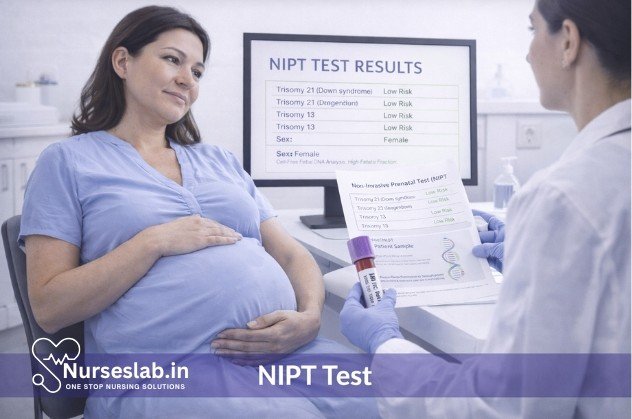
NIPT Test (Non‑Invasive Prenatal Testing) analyzes cell‑free fetal DNA in maternal blood to screen for chromosomal abnormalities including Down syndrome, trisomy 18, trisomy 13, and sex‑chromosome conditions. It offers highly accurate early‑pregnancy screening
Introduction
Prenatal screening has long been an essential aspect of obstetric care, enabling early detection of chromosomal abnormalities and genetic disorders in the developing foetus. Traditionally, invasive diagnostic procedures such as amniocentesis and chorionic villus sampling (CVS) have been employed, but these methods carry inherent risks to both mother and child. Over the past decade, the emergence of Non-Invasive Prenatal Testing (NIPT) has revolutionised the landscape of prenatal diagnostics, providing a safer, more accurate, and patient-friendly alternative.
What is NIPT?
Definition and Historical Context
Non-Invasive Prenatal Testing (NIPT) is a screening method that analyses cell-free foetal DNA (cfDNA) circulating in the maternal bloodstream to detect specific chromosomal abnormalities in the foetus. NIPT represents a significant advancement in prenatal care, allowing for early and accurate assessment without the risks associated with invasive procedures. First introduced in clinical practice in the early 2010s, NIPT has rapidly gained acceptance globally, owing to its high sensitivity and specificity.
Scientific Background
The scientific foundation of NIPT lies in the discovery that, during pregnancy, fragments of foetal DNA originating from the placenta are present in the mother’s plasma. By isolating and analysing these fragments, clinicians can screen for common chromosomal conditions such as Down syndrome (trisomy 21), Edwards syndrome (trisomy 18), Patau syndrome (trisomy 13), and certain sex chromosome anomalies. Unlike traditional diagnostic methods, NIPT does not require direct sampling from the foetus or placenta, thus dramatically reducing procedural risks.
Scientific Principles Underpinning NIPT
Cell-Free Foetal DNA (cfDNA)
Cell-free foetal DNA refers to short DNA fragments shed from the placental trophoblasts into the maternal circulation. These fragments can be detected as early as the 10th week of gestation, constituting approximately 3–13% of the total cell-free DNA in maternal plasma. The proportion of cfDNA increases with gestational age, providing a reliable substrate for molecular analysis.
Technologies Used in NIPT
NIPT utilises advanced genomic technologies, primarily massively parallel sequencing (MPS) or targeted DNA analysis platforms. MPS allows for the quantification and mapping of millions of DNA fragments, facilitating the detection of chromosomal imbalances. Targeted approaches focus on specific regions of interest, enhancing test efficiency and cost-effectiveness.
How NIPT Works
The procedure begins with maternal blood collection, from which plasma is separated. cfDNA is extracted and subjected to sequencing or molecular analysis. Bioinformatic algorithms then interpret the data, identifying abnormal chromosomal numbers or structures. The entire process is designed to minimise risks and maximise diagnostic yield, making NIPT an exemplary model of precision medicine in obstetrics.
Indications for NIPT
Who Should Consider NIPT?
NIPT is recommended for a wide spectrum of pregnancies, including both high-risk and low-risk groups. Clinical guidelines often suggest NIPT for:
- Women aged 35 years and above (advanced maternal age)
- Pregnancies with abnormal ultrasound findings
- History of chromosomal abnormalities in previous pregnancies
- Parental chromosomal rearrangements
- Positive results from first or second trimester screening tests
- Multiple gestations (with caveats regarding sensitivity)
However, NIPT is increasingly offered to all expectant mothers as a first-tier screening tool, given its non-invasiveness and robust performance.
Risk Factors and Clinical Guidelines
In India and internationally, professional bodies such as the Federation of Obstetric and Gynaecological Societies of India (FOGSI), American College of Obstetricians and Gynecologists (ACOG), and International Society for Prenatal Diagnosis (ISPD) have issued guidelines supporting the use of NIPT in various clinical scenarios. The test is particularly valuable in cases where invasive testing poses significant risks or is declined by the patient.
Step-by-Step Diagnostic Procedure
Pre-Test Counselling
Effective pre-test counselling is crucial to ensure informed decision-making. Medical professionals must explain the scope, benefits, limitations, and possible outcomes of NIPT to expectant parents. Discussion should cover:
- The conditions screened by NIPT
- The difference between screening and diagnostic tests
- Implications of positive, negative, and inconclusive results
- Potential need for confirmatory invasive testing
- Ethical and privacy considerations
Written informed consent should be obtained prior to sample collection.
Sample Collection
NIPT requires a simple venous blood draw from the mother, typically between 10 and 22 weeks of gestation. The process is akin to routine blood tests and does not necessitate fasting or special preparation. Blood samples are collected in specialised tubes designed to preserve cfDNA integrity during transport to the laboratory.
Laboratory Analysis
Upon receipt, the laboratory separates plasma from whole blood and extracts cfDNA. The DNA is then analysed using either whole-genome sequencing or targeted approaches, depending on the platform employed. Quality control measures are implemented to ensure sample viability and data accuracy.
Reporting of Results
Results are typically available within 7–10 working days. Reports are generated highlighting the presence or absence of specific chromosomal abnormalities, along with interpretive comments. Medical professionals are responsible for communicating results to parents, providing context and guidance on next steps.
Interpretation of Results
Types of Results
NIPT results are categorised as:
- Low Risk (Negative): No evidence of targeted chromosomal abnormalities.
- High Risk (Positive): Increased probability of chromosomal abnormality; confirmatory diagnostic testing recommended.
- Inconclusive: Insufficient cfDNA or technical issues; repeat testing or alternative methods may be advised.
Sensitivity, Specificity, and Predictive Value
NIPT demonstrates exceptional sensitivity (over 99%) and specificity for trisomy 21, with slightly lower figures for trisomy 18, trisomy 13, and sex chromosome anomalies. However, it is important to emphasise that NIPT is a screening, not a diagnostic tool. False positives and negatives, though rare, can occur due to biological or technical factors. Positive predictive value (PPV) is influenced by underlying population risk, necessitating confirmatory testing in high-risk cases.
Follow-Up Actions
A positive NIPT result warrants further evaluation through invasive diagnostic procedures such as amniocentesis or CVS to confirm the diagnosis. Counselling should address emotional impact, available options, and support services. For negative results, routine antenatal care continues, but clinicians should remain vigilant for other anomalies not detected by NIPT.
Benefits of NIPT
Non-Invasiveness and Safety
The most significant advantage of NIPT is its non-invasive nature. The test eliminates the risk of procedure-related miscarriage and maternal complications associated with amniocentesis and CVS, offering peace of mind to expectant parents.
Accuracy and Early Detection
NIPT provides highly accurate screening for common chromosomal abnormalities as early as the first trimester, enabling timely decision-making and intervention. Its reliability surpasses traditional serum and ultrasound-based screening methods.
Patient Experience
The ease of sample collection, rapid turnaround time, and clear reporting enhance the patient experience. NIPT reduces anxiety and uncertainty, fostering a more positive pregnancy journey.
Limitations and Risks
False Positives and Negatives
Despite its strengths, NIPT is not infallible. False positive results may arise due to confined placental mosaicism, maternal chromosomal anomalies, or technical errors. False negatives, though rare, can occur if the proportion of cfDNA is insufficient or if the abnormality is not represented in the sampled DNA.
Conditions Not Detected
NIPT primarily screens for trisomy 21, 18, 13, and select sex chromosome disorders. It does not detect all genetic or structural anomalies, such as microdeletions, single-gene disorders, or neural tube defects. Comprehensive genetic counselling is essential to clarify the scope of the test.
Technical Limitations
Factors such as maternal obesity, multiple gestations, and early gestational age can reduce cfDNA yield, impacting test accuracy. Sample mishandling and laboratory errors are rare but possible.
Ethical and Social Considerations
Informed Consent and Autonomy
Obtaining informed consent is paramount. Patients must receive balanced information regarding NIPT’s capabilities, limitations, and potential outcomes. Respect for autonomy means that parents’ choices—whether to proceed with further testing or continue the pregnancy—must be supported.
Privacy and Data Security
Genetic information is sensitive, requiring stringent safeguards to protect patient confidentiality. Laboratories and healthcare providers must comply with legal and ethical standards regarding data storage, sharing, and use.
Societal Implications
The widespread availability of NIPT raises complex societal questions. Issues such as selective termination, disability rights, and equitable access to advanced diagnostics merit ongoing dialogue. In India, where cultural and social contexts shape reproductive choices, ethical counselling must be sensitive, non-directive, and inclusive.
Nursing Care of Patients Undergoing NIPT Testing Procedure
As healthcare professionals, nurses play a crucial role in the entire NIPT process—from patient education and emotional support to sample collection and post-procedure care.
Nursing Roles and Responsibilities
The nurse’s role in the NIPT process is multifaceted and extends across several domains:
- Patient education and informed consent
- Pre-procedure assessment and preparation
- Sample collection and handling
- Post-procedure care and follow-up
- Psychosocial support and counseling
Patient Education and Informed Consent
One of the most critical aspects of nursing care is ensuring that the patient understands the nature, purpose, benefits, limitations, and potential outcomes of the NIPT. Education should be tailored to the patient’s level of health literacy and cultural background.
- Explaining NIPT: Nurses should clearly describe what NIPT is, why it is offered, and what chromosomal conditions it screens for. Use visual aids or diagrams if necessary.
- Benefits and Limitations: Patients should understand that NIPT is highly accurate but not 100% definitive. Emphasise that it is a screening tool, not a diagnostic test, and discuss the possibility of false positives or negatives.
- Informed Consent: Obtain written informed consent after ensuring the patient has had the opportunity to ask questions and fully understands the procedure.
- Confidentiality: Reassure patients about the privacy of their results and adherence to data protection protocols, in line with Irish healthcare regulations.
Pre-Procedure Assessment and Preparation
Before the NIPT procedure, a thorough pre-assessment is essential to ensure patient suitability and to identify any potential barriers or risks.
- Medical History: Review the patient’s obstetric and medical history, including previous pregnancies, family history of genetic conditions, and any current medications.
- Gestational Age: Verify that the gestational age meets the minimum requirement for NIPT (usually 10 weeks).
- Patient Concerns: Address any anxieties or misconceptions the patient may have about the test or its implications.
- Logistics: Confirm that the patient has fasted if required by the laboratory protocol, and ensure that all necessary documentation is complete.
Sample Collection and Handling
The accuracy of NIPT depends largely on proper sample collection and handling. Nurses are responsible for ensuring that blood samples are drawn, labeled, processed, and transported according to strict protocols.
- Venipuncture Technique: Use aseptic technique to collect the required volume of maternal blood, typically in specialized tubes provided by the testing laboratory.
- Sample Labeling: Accurately label the sample with the patient’s information and the date/time of collection to avoid mix-ups.
- Handling and Storage: Follow laboratory guidelines for sample storage and transport. Some samples may require refrigeration or protection from light.
- Documentation: Record the procedure, any difficulties encountered, and the patient’s response in the medical record.
Post-Procedure Care and Follow-Up
While NIPT is non-invasive and generally risk-free, nurses should monitor the patient for any immediate adverse effects (such as fainting or bruising at the venipuncture site) and provide appropriate aftercare instructions.
- Observation: Observe the patient for a few minutes post-procedure, especially if they have a history of fainting or anxiety related to blood draws.
- Aftercare: Advise the patient to keep the venipuncture site clean and to report any signs of infection or discomfort.
- Result Communication: Inform the patient of the expected turnaround time for results (typically 7-10 days in Ireland) and the process for receiving them.
- Next Steps: Clarify that further testing may be required if the result is abnormal, and that genetic counselling will be offered in such cases.
Psychosocial Support and Counseling
NIPT results can be a source of significant emotional stress, especially if the findings are abnormal or uncertain. Nurses are often the first point of contact for patients receiving their results, and their support is crucial.
- Active Listening: Provide a supportive environment, listen to the patient’s concerns, and validate their feelings.
- Information Provision: Offer clear, unbiased information about what the results mean and the options available.
- Referral: Refer patients to genetic counsellors, social workers, or mental health professionals as needed.
- Family Involvement: Encourage the involvement of partners or family members in discussions, respecting the patient’s wishes and privacy.
Ethical and Cultural Considerations
Respect for patient autonomy is paramount. Nurses must be sensitive to cultural, religious, and personal values that may influence a patient’s decision to undergo NIPT or act on its results. In multicultural settings like Ireland, it is important to avoid assumptions and to provide culturally appropriate care.
- Use interpreters if language barriers exist.
- Be aware of religious beliefs regarding prenatal testing and pregnancy termination.
- Avoid coercion; support the patient’s informed choice regardless of personal beliefs.
Documentation and Legal Aspects
Accurate documentation is essential for legal and clinical reasons. Nurses should record all aspects of the NIPT process, including:
- Patient education and consent
- Details of the blood draw (date, time, site, any complications)
- Sample handling and transport
- Patient’s questions and emotional responses
- Follow-up instructions and referrals made
Common Challenges and Nursing Solutions
Nurses may encounter various challenges during NIPT care, including:
- Anxiety and Misinformation: Counteract myths and provide evidence-based information.
- Logistical Issues: Ensure timely sample transport and follow up on delayed results.
- Emotional Reactions: Be prepared for a range of responses and have resources for immediate support.
- Complex Results: Facilitate communication with genetic counselors and specialists for interpretation and management.
REFERENCES
- Eunice Kennedy Shriver National Institute of Child Health and Human Development. What tests might I need during pregnancy? (https://www.nichd.nih.gov/health/topics/preconceptioncare/conditioninfo/tests-needed) & How do health care providers diagnose birth defects? https://www.nichd.nih.gov/health/topics/birthdefects/conditioninfo/diagnosed
- Genetic Support Foundation. Prenatal Screening Tests (https://geneticsupportfoundation.org/pregnancy-101/).
- National Library of Medicine. What is noninvasive prenatal testing and what disorders can it screen for? https://medlineplus.gov/genetics/understanding/testing/nipt/
- Norwitz ER, Levy B. Noninvasive prenatal testing: the future is now (https://www.ncbi.nlm.nih.gov/labs/pmc/articles/PMC3893900/). Rev Obstet Gynecol. 2013;6(2):48-62.
- Hargrave J, et al. (2025). Non-invasive prenatal testing (NIPT).
https://www.genomicseducation.hee.nhs.uk/genotes/knowledge-hub/non-invasive-prenatal-testing-nipt/ - Taylor-Phillips S, Freeman K, Geppert J, et al. Accuracy of noninvasive prenatal testing using cell-free DNA for detection of Down, Edwards and Patau syndromes: a systematic review and meta-analysis (https://pubmed.ncbi.nlm.nih.gov/26781507/). BMJ Open. 2016 Jan 18;6(1):e010002.
Stories are the threads that bind us; through them, we understand each other, grow, and heal.
JOHN NOORD
Connect with “Nurses Lab Editorial Team”
I hope you found this information helpful. Do you have any questions or comments? Kindly write in comments section. Subscribe the Blog with your email so you can stay updated on upcoming events and the latest articles.


