


A PCR test is a molecular diagnostic method that identifies viral or bacterial genetic material with high sensitivity and specificity. It is widely used for detecting infectious diseases, guiding treatment decisions, and supporting public‑health surveillance.
Introduction
The Polymerase Chain Reaction (PCR) test has revolutionised molecular biology, diagnostics, and medical research since its invention in the mid-1980s. PCR enables the amplification of specific DNA sequences, allowing scientists and clinicians to detect, analyse, and manipulate genetic material with remarkable precision and speed.
Historical Background
PCR was invented by Dr. Kary Mullis in 1983, a breakthrough that earned him the Nobel Prize in Chemistry in 1993. Prior to PCR, DNA analysis involved laborious and time-consuming processes, which limited the scope of genetic studies and diagnostics. The introduction of PCR provided a fast, reliable, and scalable method to amplify DNA, laying the foundation for modern molecular biology and genetics.
The Science Behind PCR
Principle and Mechanism
PCR is based on the principle of DNA replication. It mimics the natural process by which cells duplicate their DNA, but in a controlled laboratory setting. The reaction requires a DNA template, primers (short single-stranded DNA sequences), a thermostable DNA polymerase enzyme (commonly Taq polymerase), nucleotides (dNTPs), and a buffer solution. The process involves repeated cycles of heating and cooling to denature DNA, anneal primers, and extend the DNA strands.
The three main steps in a PCR cycle are:
- Denaturation: The reaction mixture is heated (usually to 94-98°C) to separate the double-stranded DNA into single strands.
- Annealing: The temperature is lowered (typically to 50-65°C) to allow primers to bind to their complementary sequences on the DNA template.
- Extension: The temperature is raised to around 72°C, enabling the DNA polymerase to synthesise new DNA strands by adding nucleotides to the primers.
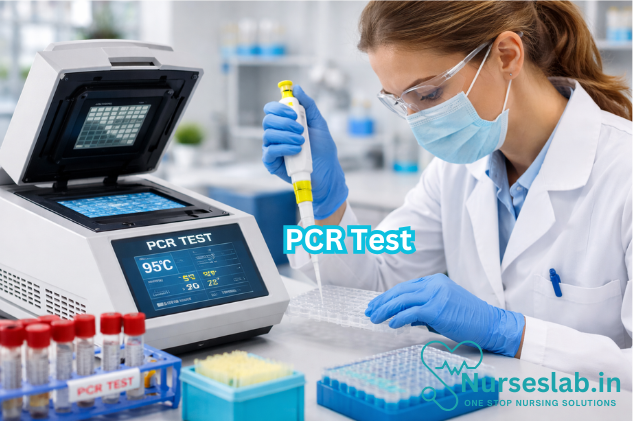
This cycle is repeated 20-40 times, resulting in exponential amplification of the target DNA sequence. The entire process can take a few hours and is conducted in a thermal cycler, a specialised laboratory device.
Key Components of PCR
- DNA Template: The sample containing the DNA region to be amplified.
- Primers: Short synthetic DNA fragments designed to bind to specific sequences flanking the target region.
- Taq Polymerase: A thermostable enzyme that can withstand high temperatures required for denaturation.
- dNTPs (Deoxynucleotide Triphosphates): Building blocks for new DNA synthesis.
- Buffer Solution: Maintains optimal conditions for the enzyme activity and stability.
Types of PCR
Over the years, several variations of PCR have been developed to meet specific research and diagnostic needs. Some of the most common types include:
- Conventional PCR: The original method, used for basic DNA amplification.
- Real-Time PCR (qPCR): Allows quantification of DNA in real time, widely used for measuring gene expression and viral load.
- Reverse Transcription PCR (RT-PCR): Converts RNA into DNA before amplification, essential for detecting RNA viruses such as SARS-CoV-2.
- Multiplex PCR: Simultaneously amplifies multiple DNA targets in one reaction, increasing efficiency.
- Nested PCR: Uses two sets of primers in successive reactions to improve specificity and sensitivity.
- Digital PCR: Enables absolute quantification of DNA by partitioning the sample into thousands of reactions.
Applications of PCR
Medical Diagnostics
PCR has transformed medical diagnostics, enabling the detection of pathogens, genetic disorders, and cancer markers with high sensitivity and specificity. In India, PCR tests are routinely used for diagnosing infectious diseases such as tuberculosis, hepatitis, HIV, and most recently, COVID-19. During the COVID-19 pandemic, RT-PCR tests became the gold standard for detecting SARS-CoV-2, the virus responsible for the disease. These tests can identify even small amounts of viral RNA, allowing early and accurate diagnosis.
Apart from infectious diseases, PCR is used in prenatal genetic screening, cancer diagnostics (detecting mutations and gene fusions), and monitoring treatment efficacy. Its ability to detect minimal residual disease in cancer patients is invaluable for personalised medicine.
Forensic Science
PCR has revolutionised forensic investigations by enabling DNA profiling from minute biological samples—such as blood, hair, or saliva—collected from crime scenes. Short Tandem Repeat (STR) analysis, a form of PCR, is used for human identification, paternity testing, and solving criminal cases. In India, PCR-based DNA fingerprinting has helped resolve complex legal disputes and contributed to the justice system.
Genetic Research
In research laboratories, PCR is indispensable for cloning genes, sequencing genomes, and studying genetic variations. It has accelerated the discovery of disease-related genes, facilitated the development of genetically modified organisms (GMOs), and enabled large-scale projects such as the Human Genome Project.
Agriculture and Food Safety
PCR is used in agriculture for detecting plant pathogens, verifying GMO content, and ensuring food safety. It helps identify contamination in food products and trace the source of outbreaks, protecting public health and supporting regulatory compliance. Indian agricultural research institutes employ PCR to monitor crop diseases and improve food security.
Environmental Science
Environmental monitoring uses PCR to detect and quantify microorganisms in soil, water, and air samples. It assists in tracking pollution, assessing biodiversity, and monitoring bioremediation efforts. PCR-based assays help ensure safe drinking water and manage environmental health risks in Indian cities and rural areas.
Advantages of PCR Testing
- Sensitivity: Can detect minute quantities of DNA or RNA, making it highly effective for early diagnosis.
- Specificity: Primers are designed to target specific sequences, reducing false positives.
- Speed: Results can be obtained within hours, facilitating timely medical intervention.
- Versatility: Applicable to a wide range of samples—blood, tissue, saliva, environmental samples.
- Scalability: Suitable for both small-scale and high-throughput testing.
Limitations and Challenges
Despite its numerous advantages, PCR testing is not without limitations. These include:
- Contamination Risk: PCR is highly sensitive to contamination, which can lead to false positives. Strict laboratory protocols are essential.
- Technical Expertise: Requires skilled personnel and well-equipped laboratories, which may not be available in all regions.
- Cost: While PCR costs have reduced over time, they can still be prohibitive for widespread screening, especially in resource-limited settings.
- Quantitative Limitations: Conventional PCR is qualitative; for quantification, specialised techniques like qPCR and digital PCR are needed.
- Sample Quality: PCR results depend on the quality and integrity of the sample. Degraded samples may yield unreliable results.
COVID-19 and the Rise of PCR Testing
The COVID-19 pandemic brought PCR testing into the public spotlight. RT-PCR tests for SARS-CoV-2 became the primary method for confirming infection, guiding public health responses and policy decisions. The ability of PCR to detect viral RNA even before symptoms appear has been crucial in controlling the spread of the virus. Indian laboratories processed lakhs of samples daily, enabling mass screening, contact tracing, and timely isolation of positive cases.
Several indigenous PCR test kits were developed by Indian biotech companies, reducing dependence on imports and improving affordability. The government subsidised testing costs and promoted widespread access, including drive-through and home collection services in major cities.
Quality Assurance and Standardisation
Quality assurance is paramount in PCR testing. Laboratories must adhere to stringent protocols for sample collection, handling, and processing. Standardisation of reagents, equipment calibration, and regular proficiency testing are essential to avoid errors and ensure reliable results. Accreditation by agencies such as NABL (National Accreditation Board for Testing and Calibration Laboratories) assures the credibility of PCR laboratories in India.
Future Trends in PCR Technology
PCR technology continues to evolve, with advances focusing on speed, automation, and portability. Point-of-care PCR devices are being developed for rapid diagnostics in clinics, ambulances, and remote locations. Digital PCR offers precise quantification of genetic material, expanding applications in cancer research and personalised medicine.
Integration with microfluidics and nanotechnology is enabling miniaturised PCR platforms, reducing reagent consumption and turnaround time. Artificial intelligence and machine learning are being used to interpret PCR data, improving accuracy and predictive capabilities.
Ethical and Social Considerations
As PCR testing becomes more widespread, ethical considerations such as privacy, informed consent, and equitable access must be addressed. Genetic testing raises concerns about data security and potential misuse of personal information. In India, regulatory frameworks are evolving to ensure responsible use of PCR-based diagnostics and protect individual rights.
Nursing Care for Patients Undergoing PCR Test Procedure
As frontline healthcare providers, nurses play a critical role in ensuring the safety, comfort, and well-being of patients undergoing PCR testing.
Pre-Test Nursing Care
1. Patient Assessment
Nurses should begin with a thorough patient assessment, including:
- Reviewing the patient’s medical history and reason for testing.
- Identifying allergies, especially to latex or materials used in swabs.
- Assessing for symptoms such as nasal congestion, bleeding disorders, or anxiety.
2. Patient Education and Communication
Effective communication is vital to alleviate patient anxiety and ensure cooperation. Nurses should:
- Explain the purpose of the PCR test and what the procedure entails.
- Discuss potential discomfort (e.g., gagging, sneezing, mild pain) and reassure patients that it is brief.
- Inform patients about infection control measures (e.g., mask-wearing, hand hygiene).
- Answer any questions or concerns the patient may have.
3. Preparation and Infection Control
- Ensure all necessary equipment is ready: swabs, transport media, labels, PPE (personal protective equipment), and biohazard bags.
- Don appropriate PPE as per institutional guidelines (gloves, gown, mask, face shield/goggles).
- Prepare a clean, well-ventilated area for sample collection.
- Verify patient identity and label specimens accurately.
Nursing Role During the PCR Test Procedure
1. Assisting with Sample Collection
Nurses may perform the sample collection or assist other healthcare providers. Key steps include:
- Instruct the patient to sit comfortably with their head tilted slightly back.
- Ask the patient to remove their mask just prior to sample collection, if applicable.
- Insert the swab gently into the nostril (for nasopharyngeal swab) until resistance is met; rotate and hold for a few seconds.
- Withdraw the swab carefully and place it into the transport medium.
- For oropharyngeal swabs, instruct the patient to open their mouth wide, depress the tongue with a depressor, and swab the tonsillar area.
2. Ensuring Patient Comfort and Safety
- Observe for signs of distress, discomfort, or adverse reactions (e.g., bleeding, severe coughing).
- Provide tissues or masks immediately after the procedure if the patient sneezes or coughs.
- Offer reassurance and explain the next steps after sample collection.
3. Specimen Handling and Documentation
- Label the specimen correctly with patient details, date, and time.
- Place the specimen in a biohazard bag for transport to the laboratory.
- Document the procedure in the patient’s medical record, including type of test, site of collection, any complications, and patient response.
Post-Test Nursing Care
1. Immediate Aftercare
- Monitor the patient for any immediate adverse effects (e.g., nosebleed, dizziness).
- Advise the patient to report any delayed symptoms such as persistent bleeding or severe discomfort.
- Assist the patient with hand hygiene and provide a mask if needed.
2. Patient Instructions and Education
Nurses should provide clear guidance on post-test care and follow-up:
- Explain when and how the patient will receive their results.
- Advise on self-isolation protocols if indicated (e.g., suspected COVID-19) until results are available.
- Provide information on symptom monitoring and when to seek medical attention.
- Offer resources for psychological support if the patient is anxious about results.
3. Disinfection and Waste Disposal
- Dispose of used PPE, swabs, and other materials in accordance with infection control protocols.
- Clean and disinfect all surfaces and equipment used during the procedure.
- Perform hand hygiene before and after patient contact and after removing gloves.
Special Considerations
1. Pediatric and Geriatric Patients
- Use age-appropriate communication and comfort measures.
- Involve caregivers or family members as needed.
- Be mindful of increased anxiety or confusion in elderly patients.
2. Patients with Special Needs
- Assess for sensory or cognitive impairments that may affect cooperation.
- Utilize alternative sampling methods if standard approaches are not feasible.
- Document any adaptations to the procedure.
Infection Prevention and Control
Strict adherence to infection prevention and control measures is critical to protect both patients and healthcare workers during PCR testing. This includes:
- Consistent use of PPE as per guidelines.
- Minimizing exposure by limiting the number of people present during sample collection.
- Proper handling and transport of specimens to avoid contamination or spillage.
- Regular training and competency assessments for staff involved in testing.
Psychological Support and Patient Advocacy
Undergoing a PCR test can be stressful, especially for individuals worried about their health or possible isolation. Nurses should:
- Provide empathetic listening and emotional support.
- Address fears related to the test procedure and potential results.
- Advocate for patient needs, including timely communication of results and follow-up care.
- Refer patients to counseling or support services if needed.
Documentation and Legal Considerations
- Ensure accurate and timely documentation of all aspects of the PCR testing process.
- Maintain patient confidentiality and data protection in accordance with institutional policies and legal requirements.
- Report any incidents or adverse events as per protocol.
Education and Training for Nurses
- Ongoing education and training are essential to maintain high standards of care. Nurses should:
- Stay informed about emerging pathogens and testing technologies.
- Participate in regular updates on testing protocols and infection control practices.
- Engage in simulation or hands-on training for sample collection techniques.
REFERENCES
- National Library of Medicine (U.S.). PCR Tests https://medlineplus.gov/lab-tests/pcr-tests/. Updated 9/19/2024.
- Waters DL, Shapter FM. The polymerase chain reaction (PCR): general methods (https://pubmed.ncbi.nlm.nih.gov/24243196/). Methods Mol Biol. 2014;1099:65-75.
- CDC’s influenza SARS-CoV-2 Multiplex assay. Centers for Disease Control and Prevention. https://www.cdc.gov/coronavirus/2019-ncov/lab/multiplex.html.
- Zhang Y, et al. Molecular and antigen tests, and sample types for diagnosis of COVID-19: A review. Future Virology. 2022; doi:10.2217/fvl-2021-0256.
- Weil P. Molecular Genetics, Recombinant DNA, & Genomic Technology. In: Kennelly PJ, Botham KM, McGuinness OP, Rodwell VW, Weil P, eds. Harper’s Illustrated Biochemistry. 32nd ed. McGraw Hill Education; 2023.
- Gans JS, et al. False-positive results in rapid antigen tests for SARS-CoV-2. Journal of the American Medical Association. 2022; doi:10.1001/jama.2021.24355.
Stories are the threads that bind us; through them, we understand each other, grow, and heal.
JOHN NOORD
Connect with “Nurses Lab Editorial Team”
I hope you found this information helpful. Do you have any questions or comments? Kindly write in comments section. Subscribe the Blog with your email so you can stay updated on upcoming events and the latest articles.


