


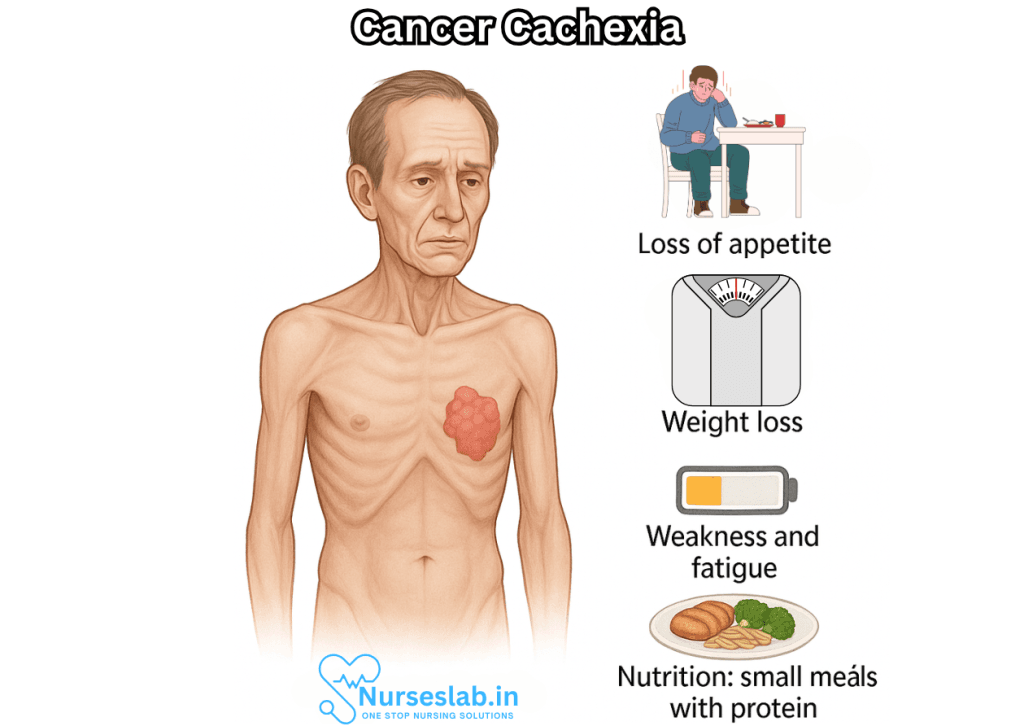
Cancer cachexia is when cancer affects your appetite, so you lose skeletal muscle and fat. In cancer cachexia, you don’t eat enough food to meet your body’s energy needs. Symptoms include significant weight loss, weakness and fatigue. It can be a life-threatening condition. Treatment focuses on nutrition, like eating small meals with lots of protein.
Introduction
Cancer cachexia is a multifactorial syndrome characterized by severe body weight, fat, and muscle loss, accompanied by profound weakness, anorexia, and anemia. Unlike simple starvation, cachexia is marked by an ongoing loss of skeletal muscle mass that cannot be fully reversed by conventional nutritional support and leads to progressive functional impairment. This condition predominantly affects individuals with advanced cancers, particularly those of the pancreas, lung, esophagus, colon, and stomach. Cachexia is a significant contributor to morbidity and mortality among cancer patients, accounting for an estimated 20-30% of cancer-related deaths.
Definition and Diagnostic Criteria
The term “cachexia” derives from the Greek words “kakos,” meaning bad, and “hexis,” meaning condition, reflecting the syndrome’s devastating impact on the body. In cancer patients, cachexia is defined by involuntary weight loss of greater than 5% over six months, or a body mass index (BMI) below 20 kg/m² with weight loss of more than 2%, or the presence of sarcopenia (loss of muscle mass) with weight loss exceeding 2%. Unlike starvation, cancer cachexia involves an inflammatory component and metabolic abnormalities that accelerate muscle protein breakdown and energy expenditure.
Pathophysiology
Cancer cachexia arises from a complex interplay between the cancer itself, the host’s immune response, and the metabolic alterations induced by malignancy. The key aspects of its pathophysiology include:
1. Inflammatory Cytokines and Mediators
Tumors release pro-inflammatory cytokines such as interleukin-6 (IL-6), tumor necrosis factor-alpha (TNF-α), and interferon-gamma (IFN-γ), which contribute to increased muscle protein degradation and reduced protein synthesis. These cytokines also promote anorexia and disturb the normal hormonal responses regulating appetite and metabolism.
2. Hormonal and Metabolic Changes
Cancer cachexia is associated with increased basal metabolic rate, insulin resistance, and abnormal fat metabolism. Elevated levels of cortisol and decreased anabolic hormones like testosterone and insulin-like growth factor 1 (IGF-1) further drive muscle wasting. Tumor-derived factors, such as proteolysis-inducing factor (PIF) and lipid-mobilizing factor (LMF), directly stimulate the breakdown of muscle and fat tissue.
3. Appetite Suppression and Nutritional Impact
Appetite loss, or anorexia, is a central component of cancer cachexia. Cytokines and tumor-derived molecules act on the hypothalamus to alter appetite-regulating pathways. Patients often experience early satiety, taste alterations, nausea, and dysphagia, which collectively reduce food intake.
4. Muscular and Adipose Tissue Effects
The combined effect of reduced intake and hypercatabolism is a net loss of muscle (sarcopenia) and fat tissue. Muscle loss leads to decreased strength, increased risk of falls, and diminished capacity to tolerate cancer treatments. Adipose tissue loss further exacerbates energy deficits.
Clinical Manifestations
Cancer cachexia presents with a spectrum of symptoms, including:
- Unintentional, significant weight loss
- Muscle wasting and weakness
- Loss of subcutaneous fat
- Fatigue and decreased physical functioning
- Anorexia and early satiety
- Nausea and gastrointestinal disturbances
- Edema in some cases due to hypoalbuminemia
- Impaired immune response and increased susceptibility to infections
- Anemia and related symptoms
The impact on quality of life is profound, affecting mobility, independence, psychological well-being, and the ability to tolerate anti-cancer therapies.
Stages of Cancer Cachexia
Cancer cachexia is commonly divided into three stages:
- Pre-cachexia: Early clinical and metabolic signs such as minor weight loss, reduced appetite, and metabolic changes. Early intervention may delay progression.
- Cachexia: Clinically apparent weight loss (over 5%) with muscle wasting and functional impairment.
- Refractory cachexia: Occurs in the final months of life when cancer is no longer responsive to treatment and cachexia is irreversible, leading to limited survival.
Diagnosis
Diagnosing cancer cachexia requires a comprehensive assessment including:
- Documented weight loss history
- Assessment of muscle mass via imaging (CT, MRI, DEXA scans)
- Nutritional assessment and dietary intake evaluation
- Laboratory tests for inflammatory markers, albumin, and other relevant parameters
Differentiating cachexia from starvation, depression-related anorexia, and side effects of cancer therapy is essential for appropriate management.
Impact on Patients and Healthcare
Cachexia diminishes patients’ physical capabilities, limits independence, and increases the risk of treatment-related toxicities. It is linked to poorer response to chemotherapy and radiotherapy, higher rates of treatment interruptions, increased hospitalizations, and lower overall survival. The emotional and psychological burden on both patients and families is considerable, as cachexia is often perceived as a visible sign of terminal decline.
Management Strategies
There is no single, universally effective treatment for cancer cachexia; management is multidisciplinary and includes:
1. Nutritional Support
Although nutritional supplementation alone does not reverse cachexia, optimizing caloric and protein intake is critical to improving quality of life and supporting muscle maintenance. Strategies include oral nutritional supplements, enteral feeding, or parenteral nutrition, tailored to individual needs and preferences.
2. Pharmacologic Approaches
Several medications have been investigated for cancer cachexia, including:
- Appetite stimulants: Megestrol acetate and corticosteroids may temporarily increase appetite and weight, though effects on muscle mass are limited.
- Anabolic agents: Selective androgen receptor modulators and testosterone analogs have shown promise in promoting muscle synthesis but are not without side effects.
- Anti-inflammatory agents: NSAIDs and cytokine inhibitors aim to blunt the inflammatory response associated with cachexia.
- Prokinetic drugs: To alleviate gastrointestinal symptoms and improve food intake.
None of these therapies is curative; they are often used in combination to address multiple aspects of the syndrome.
3. Physical Activity and Rehabilitation
Exercise interventions, particularly resistance and aerobic training, may help preserve muscle mass and improve physical functioning, even in the context of ongoing cancer therapy. Rehabilitation programs are adapted to patient capacity and focus on improving strength, balance, and endurance.
4. Psychosocial Support
The emotional stress of cachexia can be profound for both patients and families. Counseling, support groups, and interventions by psychologists, dietitians, and palliative care specialists are vital for holistic care.
5. Treating Underlying Cancer
Successful control of the underlying malignancy, when possible, remains the most effective way to halt or reverse cachexia. Tumor shrinkage often results in partial improvement of metabolic disturbances and appetite.he drug megestrol acetate may improve your appetite so you eat more and gain weight, the drug doesn’t have U.S. Food and Drug Administration (FDA) approval for cancer cachexia treatment. In some situations, your provider may prescribe corticosteroids that you’ll take for a short period of time.
Nursing Care of Patients with Cancer Cachexia
Nursing care is central to the multidisciplinary management of cancer cachexia, as nurses are often the health professionals most attuned to a patient’s daily needs, symptoms, and psychosocial challenges. The approach is holistic, addressing not just physical symptoms, but also emotional, social, and spiritual well-being.
Assessment and Monitoring
- Nutritional assessment: Regular monitoring of weight, body mass index (BMI), and dietary intake helps track disease progression and the effectiveness of interventions. Nurses systematically record changes in muscle mass, fat stores, and hydration levels, often collaborating with dietitians.
- Symptom assessment: Nurses vigilantly observe for symptoms such as anorexia, early satiety, nausea, vomiting, and fatigue. Early detection of worsening symptoms leads to prompt intervention and referral to appropriate therapies.
- Functional status: Ongoing evaluation of a patient’s ability to perform activities of daily living informs personalized rehabilitation and support strategies.
Nutritional Support and Symptom Management
- Facilitating food intake: Nurses encourage small, frequent meals and the inclusion of high-protein, high-calorie foods. They work with families to identify favorite or better-tolerated foods, optimizing mealtime enjoyment and nutritional benefit.
- Managing gastrointestinal symptoms: Practical interventions—such as antiemetic administration, mouth care, and positioning—can alleviate nausea, dry mouth, and taste changes that impede eating.
- Oral care: Attention to oral hygiene is essential to minimize mucositis and infection, making eating less uncomfortable.
Physical Activity and Mobility
Nurses motivate and assist patients with individualized exercise regimens, tailored to tolerance and energy levels. Even modest activity—such as guided stretching or walking—can help maintain muscle strength, function, and morale. Ensuring a safe environment to reduce fall risk is a nursing priority.
Psychosocial and Emotional Support
- Counseling and communication: Nurses provide empathetic listening and reassurance, supporting patients and families as they navigate the distressing physical and emotional consequences of cachexia. Open communication about prognosis and care goals fosters trust and shared decision-making.
- Facilitating support resources: Referrals to psychologists, spiritual care providers, and support groups connect patients to essential resources for coping and resilience.
Education and Empowerment
Nurses educate patients and caregivers about the nature of cachexia, its symptoms, and management strategies. By empowering families, nurses help reduce anxiety, promote realistic expectations, and encourage active participation in care.
Coordination of Care
Acting as care coordinators, nurses facilitate communication between physicians, dietitians, rehabilitation specialists, and palliative care teams. They help ensure seamless, patient-centred care transitions and advocate for timely adjustments in treatment plans as the patient’s condition evolves.
Ethical Considerations and End-of-Life Care
As cachexia often signals advanced disease, nurses play a pivotal role in discussing goals of care, respecting patient autonomy, and supporting dignity at the end of life. They help families navigate complex decisions about feeding, hydration, and comfort, always prioritizing the patient’s values and wishes.
Through vigilant assessment, compassionate support, skillful symptom management, and ongoing advocacy, nurses are indispensable allies in the care of patients with cancer cachexia, striving to preserve quality of life even in the face of challenging illness.
REFERENCES
- Ferrer M, Anthony TG, Ayres JS, et al. Cachexia: A systemic consequence of progressive, unresolved disease.. https://pubmed.ncbi.nlm.nih.gov/37116469/ Cell. 2023 Apr 27;186(9):1824-1845.
- Hopkinson JB. Psychosocial impact of cancer cachexia. https://pubmed.ncbi.nlm.nih.gov/24737110/. J Cachexia Sarcopenia Muscle. 2014 Jun;5(2):89-94.
- Nishikawa H, Goto M, Fukunishi S, Asai A, Nishiguchi S, Higuchi K. Cancer Cachexia: Its Mechanism and Clinical Significance. Int J Mol Sci. 2021 Aug 6;22(16):8491. doi: 10.3390/ijms22168491. PMID: 34445197; PMCID: PMC8395185.
- Malla J, Zahra A, Venugopal S, et al. What Role Do Inflammatory Cytokines Play in Cancer Cachexia. https://www.ncbi.nlm.nih.gov/pmc/articles/PMC9372379/? Cureus. 2022 Jul 12;14(7):e26798.
- Ni J, Zhang L. Cancer Cachexia: Definition, Staging, and Emerging Treatments. Cancer Manag Res. 2020 Jul 9;12:5597-5605. doi: 10.2147/CMAR.S261585. https://pmc.ncbi.nlm.nih.gov/articles/PMC7358070/
- Roeland EJ, Bohlke K, Baracos VE, et al. Management of Cancer Cachexia: ASCO Guideline . https://pubmed.ncbi.nlm.nih.gov/32432946/). J Clin Oncol. 2020 Jul 20;38(21):2438-2453.
- Pandey S, Bradley L, Del Fabbro E. Updates in Cancer Cachexia: Clinical Management and Pharmacologic Interventions. Cancers (Basel). 2024 Apr 27;16(9):1696. doi: 10.3390/cancers16091696. PMID: 38730648; PMCID: PMC11083841.
- Setiawan T, Sari IN, Wijaya YT, Julianto NM, Muhammad JA, Lee H, Chae JH, Kwon HY. Cancer cachexia: molecular mechanisms and treatment strategies. J Hematol Oncol. 2023 May 22;16(1):54. doi: 10.1186/s13045-023-01454-0. PMID: 37217930; PMCID: PMC10204324.
- Rohm M, Zeigerer A, Machado J, Herzig S. Energy metabolism in cachexia. https://www.ncbi.nlm.nih.gov/pmc/articles/PMC6446208/. EMBO Rep. 2019 Apr;20(4):e47258.
Stories are the threads that bind us; through them, we understand each other, grow, and heal.
JOHN NOORD
Connect with “Nurses Lab Editorial Team”
I hope you found this information helpful. Do you have any questions or comments? Kindly write in comments section. Subscribe the Blog with your email so you can stay updated on upcoming events and the latest articles.


