


Choriocarcinoma is a highly malignant gestational trophoblastic tumor characterized by rapid spread and elevated hCG levels. Understanding its causes, symptoms, diagnosis, and treatment is essential in obstetrics, oncology, and clinical practice.
Introduction
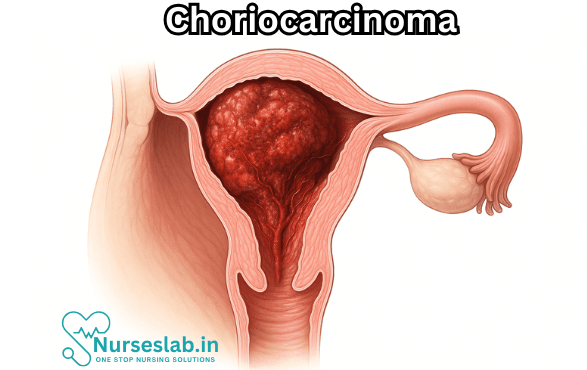
Choriocarcinoma is a rare, highly malignant neoplasm originating from trophoblastic tissue, characterised by rapid proliferation and a tendency for early metastasis. As a subset of gestational trophoblastic disease (GTD), choriocarcinoma poses significant challenges in diagnosis and management due to its aggressive nature and variable clinical presentations. Historically, the disease has been associated with pregnancy-related events, but non-gestational cases also exist.
Definition and Historical Background
Choriocarcinoma is defined as a malignant tumour composed of anaplastic cytotrophoblasts and syncytiotrophoblasts, without the presence of chorionic villi. The disease was first described in the late 19th century, with early observations noting its association with pregnancy and its rapidly fatal course prior to the advent of effective chemotherapy. Choriocarcinoma can arise following any form of gestation, including molar pregnancy (hydatidiform mole), normal pregnancy, ectopic pregnancy, or abortion. Non-gestational choriocarcinoma, though exceedingly rare, may originate in the gonads or other extragonadal sites.
Epidemiology
Incidence and Prevalence
The global incidence of choriocarcinoma varies significantly, influenced by geographical, genetic, and environmental factors. In Western countries, the estimated incidence is approximately 1 in 40,000 pregnancies, whereas higher rates are observed in Southeast Asia and Africa, where gestational trophoblastic diseases are more prevalent. Choriocarcinoma accounts for less than 0.025% of all gynaecological malignancies.
Risk Factors
- Molar Pregnancy: The most significant risk factor, with choriocarcinoma developing in approximately 2–3% of complete hydatidiform moles.
- Previous Gestational Events: Occurrence after normal pregnancy, abortion, or ectopic pregnancy, though less common than after molar gestation.
- Age: Extremes of reproductive age (teenagers and women above 40 years) are associated with increased risk.
- Ethnic and Geographic Factors: Higher incidence in certain Asian and African populations.
- Genetic Susceptibility: Familial cases are rare but have been reported.
Global Distribution
Choriocarcinoma demonstrates marked variation in distribution. Countries with limited access to healthcare and poor follow-up of molar pregnancies tend to have higher rates and worse outcomes. Advances in early detection and treatment have led to improved survival in developed nations.
Pathophysiology
Origin and Cellular Mechanisms
Choriocarcinoma arises from trophoblastic tissue, which is responsible for placental development. The neoplasm is composed predominantly of malignant cytotrophoblasts and syncytiotrophoblasts, lacking villous structures. Uncontrolled proliferation, invasion of uterine wall, and vascular infiltration are hallmarks of the disease, contributing to early dissemination.
Genetic and Molecular Factors
Genetic aberrations, including abnormal expression of oncogenes and tumour suppressor genes, play a role in tumourigenesis. High levels of human chorionic gonadotropin (hCG) are produced by tumour cells, serving both as a marker and as a mediator of paraneoplastic syndromes. Molecular studies have identified dysregulation in pathways such as p53, beta-catenin, and cell cycle regulators, although the exact mechanisms remain under investigation.
Metastatic Potential
Choriocarcinoma is distinguished by its propensity for haematogenous spread, most frequently to the lungs, followed by the vagina, liver, and brain. Metastatic lesions are often haemorrhagic due to tumour invasion of blood vessels.
Clinical Presentation
Signs and Symptoms
Clinical manifestations depend on the primary site, extent of disease, and presence of metastases. Common presentations include:
- Abnormal Uterine Bleeding: The most frequent symptom, occurring weeks to months after a gestational event.
- Enlarged Uterus: Disproportionate uterine enlargement may be noted.
- Symptoms of Metastasis: Haemoptysis, dyspnoea (lung), vaginal bleeding (vagina), neurological deficits (brain), and right upper quadrant pain (liver).
- Paraneoplastic Syndromes: Hyperthyroidism, due to hCG cross-reactivity with TSH receptors.
- Systemic Symptoms: Fatigue, weight loss, fever.
Complications
- Massive Haemorrhage: From uterine or metastatic lesions, potentially life-threatening.
- Organ Dysfunction: Due to metastatic involvement.
- Infection: Secondary to necrosis or immunosuppression.
Diagnosis and Investigations
Laboratory Tests
- Serum beta-hCG: Extremely elevated levels, often exceeding those seen in normal pregnancy or other GTDs.
- Complete Blood Count: May reveal anaemia or evidence of haemorrhage.
- Liver and Renal Function Tests: To assess organ involvement and suitability for chemotherapy.
- Thyroid Function Tests: If symptoms of hyperthyroidism are present.
Imaging Studies
- Pelvic Ultrasound: May show a heterogeneous mass in the uterus, absence of villous structures.
- Chest X-ray and CT Scan: To detect pulmonary metastases, which are present in 80% of cases at diagnosis.
- Brain MRI/CT: Indicated if neurological symptoms or high-risk features are present.
- Abdominal Imaging: Liver metastases evaluation.
Histopathological Examination
Definitive diagnosis is established by histological analysis, revealing sheets of malignant trophoblastic cells without villi. Biopsy is generally reserved for cases where diagnosis is uncertain, as the risk of haemorrhage is significant.
Differential Diagnosis
- Other gestational trophoblastic neoplasms (e.g., invasive mole, placental site trophoblastic tumour)
- Ectopic pregnancy
- Endometrial carcinoma
- Non-gestational choriocarcinoma (testicular, ovarian, extragonadal)
Treatment Modalities
Chemotherapy
Chemotherapy is the cornerstone of choriocarcinoma management, with cure rates exceeding 90% in gestational cases. The choice of regimen depends on the risk stratification (low vs. high risk) and the extent of disease.
- Low-risk Disease: Single-agent chemotherapy, most commonly methotrexate or actinomycin D.
- High-risk Disease: Multi-agent regimens such as EMA/CO (etoposide, methotrexate, actinomycin D, cyclophosphamide, vincristine) are employed.
- Monitoring: Serial measurement of serum hCG to assess response and guide therapy duration.
- Resistance: Alternative regimens (e.g., EMA/EP, BEP) for refractory cases.
Surgical Intervention
Surgery is reserved for specific indications, including persistent uterine bleeding, removal of resistant local disease, or resection of isolated metastatic lesions (e.g., brain or liver). Hysterectomy may be considered in women who have completed childbearing and have localised uterine disease unresponsive to chemotherapy.
Radiotherapy
Radiotherapy has a limited role in the management of choriocarcinoma. It may be considered for brain metastases or palliative treatment of bleeding lesions, but chemotherapy remains the primary modality.
Supportive Care
- Blood transfusions for anaemia or haemorrhage.
- Management of complications such as infection, organ dysfunction, or hyperthyroidism.
- Psychological support and counselling.
Prognosis and Outcomes
Survival Rates
Gestational choriocarcinoma is one of the most curable solid tumours, with survival rates exceeding 90% for low-risk cases and 80% for high-risk cases when treated appropriately. Non-gestational choriocarcinoma has a poorer prognosis due to its resistance to chemotherapy and late presentation.
Factors Affecting Outcomes
- Extent of disease at diagnosis (number and location of metastases)
- Interval from antecedent pregnancy
- Serum hCG levels
- Patient age and comorbidities
- Response to initial therapy
Recurrence
Recurrence is uncommon with appropriate therapy but may occur in patients with high-risk features or incomplete response. Lifelong follow-up with serial hCG monitoring is recommended to detect early relapse.
Nursing Care of Patients with Choriocarcinoma
Nurses play a pivotal role in the holistic management of choriocarcinoma. Their responsibilities extend across physical, emotional, psychosocial, and educational domains, supporting both the patient and their family throughout the continuum of care. The following sections detail the essential aspects of nursing care for patients with choriocarcinoma.
Assessment and Monitoring
Initial Assessment
- Comprehensive Health History: Elicit detailed obstetric, gynecological, and relevant medical history. Pay special attention to recent pregnancies, miscarriages, or molar pregnancies.
- Clinical Presentation: Common symptoms include abnormal uterine bleeding, enlarged uterus, pelvic pain, and symptoms of metastasis such as cough, hemoptysis, neurological deficits, or jaundice.
- Vital Signs: Monitor for fever, tachycardia, hypotension, and other signs indicative of infection or hemorrhage.
Ongoing Monitoring
- Vital Parameters: Regularly monitor vital signs, including temperature, blood pressure, pulse, and respiratory rate.
- Bleeding Assessment: Evaluate for vaginal bleeding, monitor pad count, and observe for signs of hypovolemia or shock.
- Laboratory Investigations: Monitor beta-hCG levels, which serve as both diagnostic and prognostic markers. Evaluate CBC, liver function, renal parameters, and coagulation profile as indicated.
- Imaging Studies: Facilitate timely imaging such as pelvic ultrasound, chest X-ray, CT, or MRI as per the treatment protocol to assess the spread of disease.
Management of Physical Needs
Prevention and Management of Bleeding
- Promptly recognize and report any increase in vaginal bleeding.
- Ensure bed rest during episodes of active bleeding as prescribed.
- Establish intravenous access for fluid resuscitation and possible transfusion if significant hemorrhage is present.
- Prepare for emergency interventions, including surgical procedures if medically indicated.
Pain Management
- Assess pain using standardized scales and provide analgesics as prescribed.
- Offer non-pharmacological interventions such as relaxation techniques, positioning, and emotional support.
Prevention and Management of Infection
- Observe for signs of infection, especially if immunosuppressive chemotherapy is used.
- Maintain strict aseptic technique during all invasive procedures.
- Educate the patient on personal hygiene and infection prevention strategies.
Chemotherapy Administration and Monitoring
- Assist in the preparation and safe administration of chemotherapeutic agents, adhering strictly to protocols to reduce the risk of medication errors and occupational exposure.
- Monitor for both acute and delayed side effects: nausea, vomiting, mucositis, alopecia, myelosuppression, and organ toxicities.
- Observe for allergic reactions and extravasation during administration.
- Encourage adequate hydration and nutrition to help manage side effects.
Nutrition and Hydration
- Assess nutritional status regularly and collaborate with dietitians for appropriate dietary planning.
- Monitor for signs of dehydration, especially in the presence of vomiting or diarrhea secondary to chemotherapy.
- Encourage small, frequent, nutrient-dense meals and oral fluids as tolerated.
- Offer antiemetics and appetite stimulants as prescribed to manage nausea and anorexia.
Psychosocial and Emotional Support
Psychological Impact
A diagnosis of choriocarcinoma can be emotionally devastating due to its association with pregnancy and potential threat to fertility and life. Nurses must provide empathetic support, recognizing the unique psychological and cultural needs of each patient.
- Assess for signs of anxiety, depression, or emotional distress.
- Offer a listening ear and encourage expression of feelings and concerns.
- Promote coping mechanisms such as mindfulness, support groups, or spiritual resources as appropriate.
- Facilitate referrals to mental health professionals or counselors when necessary.
Family and Social Support
- Involve family members in care planning and education, respecting patient confidentiality and autonomy.
- Address concerns about fertility, future pregnancies, and long-term health.
- Connect patients and families to community resources, support groups, or counselling services as needed.
Education and Health Promotion
Patient Education
- Inform the patient about choriocarcinoma, its treatment options, prognosis, and the importance of compliance with therapy.
- Explain the purpose and frequency of beta-hCG monitoring and follow-up visits.
- Educate about the potential side effects of chemotherapy and ways to manage them.
- Provide instructions on recognizing warning signs such as increased bleeding, fever, dyspnea, or neurological changes, and emphasize when to seek immediate medical attention.
Fertility and Reproductive Health
- Discuss fertility preservation options if desired and feasible.
- Provide contraceptive counseling, as pregnancy is contraindicated during treatment and follow-up due to interference with disease monitoring.
- Reassure the patient that many individuals can achieve healthy pregnancies after successful treatment, depending on individual circumstances.
Discharge Planning and Community Care
- Coordinate with multidisciplinary teams to ensure a smooth transition from hospital to home care.
- Provide clear, written instructions for medication administration, chemotherapy schedules, follow-up appointments, and emergency contacts.
- Facilitate access to home care nursing if required for ongoing monitoring or support.
- Promote adherence to long-term follow-up, as recurrence may occur months or years after apparent remission.
Ethical and Cultural Considerations
- Respect the patient’s beliefs, values, and preferences regarding treatment choices, end-of-life care, and reproductive decisions.
- Advocate for the patient’s autonomy, informed consent, and right to participate actively in care decisions.
- Be sensitive to cultural perceptions of cancer, fertility, and women’s health, and adapt communication and education strategies accordingly.
REFERENCES
- Bishop BN, Edemekong PF. Choriocarcinoma. https://www.ncbi.nlm.nih.gov/books/NBK535434/. [Updated 2022 Aug 8]. In: StatPearls [Internet]. Treasure Island (FL): StatPearls Publishing; 2022 Jan-.
- Cancer Research UK. Symptoms of persistent trophoblastic disease and choriocarcinoma. https://www.cancerresearchuk.org/about-cancer/gestational-trophoblastic-disease-gtd/persistent-trophoblastic-disease-ptd-choriocarcinoma/symptoms.
- Bogani G, Ray-Coquard I, Mutch D, Vergote I, Ramirez PT, Prat J, Concin N, Ngoi NYL,Pignata S, Zannoni G, Scambia G, Monk BJ. Gestational choriocarcinoma. Int J Gynecol Cancer. 2023 Oct 2;33(10):1504-1514. doi: 10.1136/ijgc-2023-004704. PMID: 37758451.
- National Cancer Institute. Choriocarcinoma. . https://www.cancer.gov/publications/dictionaries/cancer-terms/def/choriocarcinoma
- National Health Service. Persistent trophoblastic disease and choriocarcinoma. https://www.nhs.uk/conditions/persistent-trophoblastic-disease-choriocarcinoma/.
- Bracken MB, Brinton LA, Hayashi K. Epidemiology of hydatidiform mole and choriocarcinoma. Epidemiol Rev. 1984;6:52-75. doi: 10.1093/oxfordjournals.epirev.a036275. PMID: 6386504.
Stories are the threads that bind us; through them, we understand each other, grow, and heal.
JOHN NOORD
Connect with “Nurses Lab Editorial Team”
I hope you found this information helpful. Do you have any questions or comments? Kindly write in comments section. Subscribe the Blog with your email so you can stay updated on upcoming events and the latest articles.


