


HIV (Human Immunodeficiency Virus) attacks the immune system, reducing the body’s ability to fight infections. Transmitted through blood and bodily fluids, HIV requires early testing, antiretroviral treatment, and prevention strategies critical in nursing and global health.
Introduction
HIV (Human Immunodeficiency Virus) infection and acquired immunodeficiency syndrome (AIDS) remain among the most significant public health challenges globally. Since its identification in the early 1980s, HIV/AIDS has led to substantial morbidity, mortality, and socio-economic disruption. Despite remarkable advances in prevention, diagnosis, and treatment, the epidemic continues to evolve, demanding an informed, coordinated, and evidence-based response, especially in resource-limited settings.
Global Context
Globally, an estimated 38 million people were living with HIV at the end of 2023, with about 1.5 million new infections and 680,000 AIDS-related deaths reported annually. India, the third-largest country in terms of HIV burden, has made significant strides in controlling the epidemic, with an adult prevalence rate of approximately 0.22%. The country’s response, led by NACO, emphasises prevention, targeted interventions, and universal access to treatment, care, and support.
Morphology of HIV
Structure of HIV
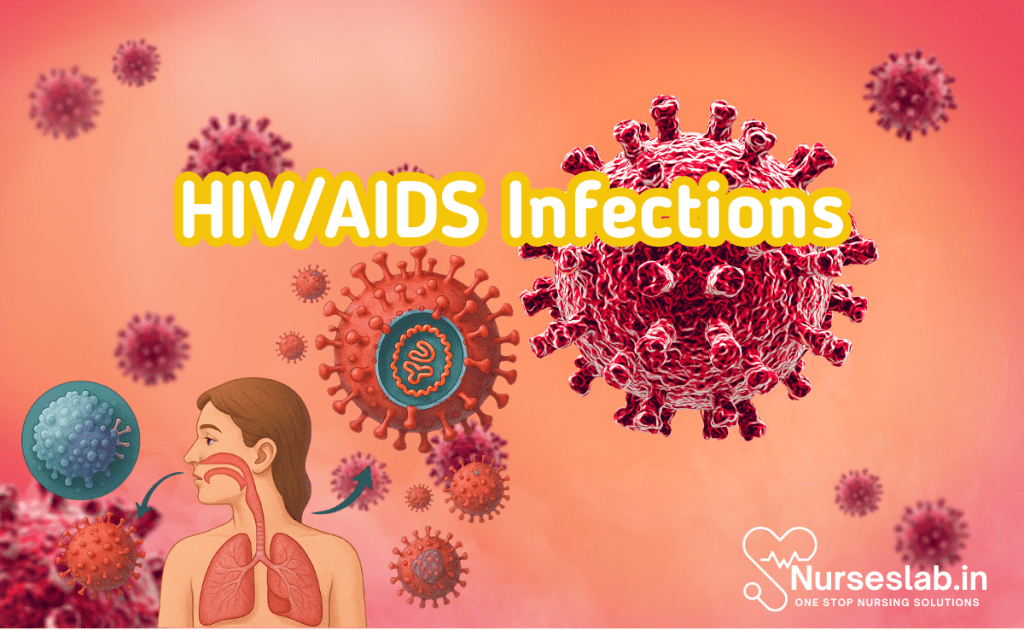
HIV is a member of the Lentivirus genus within the Retroviridae family. The virus is enveloped, spherical (about 100-120 nm in diameter), and contains two identical single-stranded positive-sense RNA molecules. The structure comprises an outer lipid envelope derived from the host cell membrane, embedded with viral glycoproteins, and an internal core containing the viral genome and associated proteins.
Key Structural Components
- Envelope Glycoproteins: The envelope contains two main glycoproteins:
- gp120: Surface glycoprotein responsible for binding to the CD4 receptor and chemokine co-receptors (CCR5, CXCR4) on host cells.
- gp41: Transmembrane protein that facilitates fusion between viral and host cell membranes.
- Matrix Protein (p17): Lines the inner surface of the envelope, providing structural integrity.
- Capsid Protein (p24): Forms the conical core that encases the viral RNA.
- Nucleocapsid Proteins (p7/p9): Bind to viral RNA, stabilising it within the core.
Genome Organisation
The HIV genome consists of approximately 9.7 kilobases and contains major genes:
- gag: Encodes core and matrix proteins (p24, p17, p7).
- pol: Encodes enzymes—reverse transcriptase, integrase, and protease.
- env: Encodes envelope glycoproteins (gp120, gp41).
- Regulatory Genes: tat, rev, nef, vif, vpu, vpr—regulate viral replication and pathogenesis.
Viral Proteins and Their Functions
- Reverse Transcriptase: Converts viral RNA into DNA after entry into host cells.
- Integrase: Facilitates integration of viral DNA into the host genome.
- Protease: Cleaves viral polyproteins into functional proteins required for assembly and maturation.
Pathogenesis of HIV Infection
Mechanism of Infection
The pathogenesis of HIV is characterised by the virus’s ability to infect and deplete CD4+ T lymphocytes, leading to progressive immune dysfunction. The key steps in HIV infection include:
- Attachment and Entry: HIV binds to the CD4 receptor and a chemokine co-receptor (CCR5 or CXCR4) on target cells, leading to fusion of viral and cell membranes and entry of the viral core.
- Reverse Transcription: The viral RNA genome is reverse-transcribed into complementary DNA (cDNA) by reverse transcriptase.
- Integration: cDNA is transported into the nucleus and integrated into the host cell’s genome by integrase.
- Transcription and Translation: Host transcriptional machinery produces viral mRNA and proteins.
- Assembly and Budding: New virions assemble at the cell membrane and bud off, acquiring their envelope from the host cell.
Immune Response to HIV
The initial immune response includes both humoral and cellular arms. Cytotoxic T lymphocytes (CD8+) and neutralising antibodies initially control viremia but cannot eliminate the virus due to its integration into the host genome, high mutation rate, and establishment of latent reservoirs.
Progression to AIDS
Over years, persistent viral replication and immune activation lead to gradual depletion of CD4+ T cells. When the CD4+ count falls below 200 cells/µL or an AIDS-defining illness occurs, the patient is considered to have progressed to AIDS. Opportunistic infections and malignancies become prevalent due to profound immunosuppression.
Clinical Stages of HIV Infection
Acute HIV Infection
Acute infection occurs 2-4 weeks after exposure and may present as a mononucleosis-like illness (fever, sore throat, rash, lymphadenopathy). High levels of viremia are seen, but antibodies may not yet be detectable.
Clinical Latency (Chronic HIV Infection)
This stage is marked by asymptomatic or mildly symptomatic infection. The virus continues to replicate, and CD4+ counts gradually decline. This phase may last several years.
Acquired Immunodeficiency Syndrome (AIDS)
AIDS is defined by the occurrence of severe immunosuppression, CD4+ count < 200 cells/µL, or the presence of specific opportunistic infections or malignancies (e.g., Pneumocystis jirovecii pneumonia, Kaposi’s sarcoma).
WHO Clinical Staging
| Stage | Description |
| Stage 1 | Asymptomatic, persistent generalised lymphadenopathy |
| Stage 2 | Mild symptoms: weight loss < 10%, minor mucocutaneous manifestations, recurrent upper respiratory infections |
| Stage 3 | Advanced symptoms: weight loss > 10%, chronic diarrhoea, prolonged fever, oral candidiasis, pulmonary TB, severe bacterial infections |
| Stage 4 | Severe symptoms (AIDS): HIV wasting syndrome, Pneumocystis pneumonia, Kaposi’s sarcoma, CNS toxoplasmosis, cryptococcal meningitis |
Epidemiology of HIV/AIDS
Global Epidemiology
The HIV/AIDS epidemic remains concentrated in sub-Saharan Africa, accounting for nearly two-thirds of global cases. The infection disproportionately affects key populations such as men who have sex with men, sex workers, people who inject drugs, and transgender individuals.
Transmission Routes
- Unprotected sexual intercourse (vaginal, anal, oral)
- Sharing contaminated needles and syringes
- Transfusion of infected blood and blood products
- Vertical (mother-to-child) transmission—during pregnancy, delivery, or breastfeeding
Risk Factors
- Multiple sexual partners
- Lack of condom use
- Presence of other sexually transmitted infections (STIs)
- Injecting drug use
- Occupational exposure in healthcare settings
Laboratory Diagnosis of HIV Infection
Serological Tests
Diagnosis primarily relies on detection of HIV-specific antibodies and/or antigens in blood. The following are the main categories:
- Screening Tests: Highly sensitive enzyme-linked immunosorbent assays (ELISA), rapid tests, and chemiluminescence immunoassays (CMIA).
- Confirmatory Tests: Western blot (historically), line immunoassay, or a second/third rapid test with a different antigen preparation.
- Antigen Tests: p24 antigen detection allows earlier diagnosis before seroconversion.
Molecular Methods
- Polymerase Chain Reaction (PCR): Detects HIV RNA or DNA and is useful for early detection, especially in infants and during the window period.
- Nucleic Acid Testing (NAT): Employed for blood donor screening and confirmation of infection in ambiguous cases.
CD4 Count and Viral Load
- CD4+ T Cell Count: Assesses immune status, guides ART initiation, and monitors disease progression.
- HIV Viral Load: Quantitative measurement of HIV RNA in plasma; used to monitor response to ART and detect treatment failure.
Algorithmic Approach to HIV Testing
The Indian NACO guidelines advocate a sequential testing strategy to maximise sensitivity and specificity, minimise false positives, and ensure appropriate counselling.
NACO Strategic Algorithms for HIV Diagnosis
NACO HIV Testing Algorithm for Adults and Adolescents
Screening Test:
- Screening Test (Test 1): If reactive, proceed to Test 2.
- Second Test (Test 2): A different principle/antigen preparation; if reactive, proceed to Test 3.
- Third Test (Test 3): A third test with a different principle/antigen preparation.
Interpretation:
- Reactive on all three: HIV positive
- Reactive on Test 1 but non-reactive on Test 2: Report as negative
- Reactive on Test 1 and 2 but non-reactive on Test 3: Inconclusive; retest after 2-4 weeks
This strategy minimises false positives, especially in low-prevalence settings, and ensures that only true positives receive HIV-positive status. Pre- and post-test counselling are integral components at each step.
Testing in Special Populations
- Blood Donors: Mandatory screening using sensitive ELISA/CMIA or NAT.
- Pregnant Women: Universal screening in antenatal clinics, with linkage to prevention of mother-to-child transmission (PMTCT) services.
Diagnosis of Paediatric HIV Infection
Challenges in Paediatric Diagnosis
Diagnosis in infants is complicated by the presence of maternal anti-HIV antibodies, which persist up to 18 months of age and may lead to false-positive results with antibody-based tests.
Diagnostic Protocols
- Virological Testing: HIV-1 DNA PCR or RNA PCR is recommended for early infant diagnosis at 6 weeks of age, 6 months, and 12 months, or at the earliest possible time if the child is symptomatic.
- Antibody Testing: After 18 months, standard antibody-based algorithms are applicable.
- Repeat Testing: In the case of an initial positive result, a second virological test on a separate sample is required for confirmation.
Diagnostic Criteria
- Two positive virological tests on separate samples confirm HIV infection in infants.
- For children >18 months, standard serological algorithms apply.
Diagnosis of HIV in the Window Period
Window Period and Its Implications
The window period is the interval between initial infection and the appearance of detectable antibodies. It typically lasts 3-12 weeks, during which standard antibody-based tests may yield false-negative results despite the person being infectious.
Limitations of Conventional Tests
- ELISA and rapid tests may not detect infection during the early window period.
- p24 antigen appears earlier than antibodies but disappears as antibodies develop.
Early Detection Strategies
- Fourth-Generation Tests: Detect both p24 antigen and antibodies, reducing the window period to about 2-3 weeks post-infection.
- Nucleic Acid Testing (NAT): Detects viral RNA as early as 10-12 days after infection, useful in high-risk exposures, blood donor screening, and ambiguous cases.
- Repeat Testing: In cases of high suspicion, retesting after 2-4 weeks is recommended.
Antiretroviral Therapy (ART)
Principles of ART
Antiretroviral therapy aims to suppress HIV replication, restore and preserve immune function, reduce HIV-related morbidity and mortality, and prevent onward transmission. Universal test-and-treat policy is advocated, i.e., ART is offered to all diagnosed individuals regardless of CD4 count.
Classes of Antiretroviral Drugs
| Class | Examples | Mechanism of Action |
| Nucleoside/Nucleotide Reverse Transcriptase Inhibitors (NRTIs) | Tenofovir, Zidovudine, Lamivudine, Abacavir | Inhibit reverse transcriptase by incorporation into viral DNA |
| Non-Nucleoside Reverse Transcriptase Inhibitors (NNRTIs) | Efavirenz, Nevirapine | Bind directly to reverse transcriptase, inhibit its function |
| Protease Inhibitors (PIs) | Lopinavir/ritonavir, Atazanavir | Inhibit viral protease, preventing maturation of virions |
| Integrase Strand Transfer Inhibitors (INSTIs) | Dolutegravir, Raltegravir | Inhibit integration of viral DNA into host genome |
| Entry/Fusion Inhibitors | Maraviroc, Enfuvirtide | Block entry or fusion of virus with host cell |
ART Regimen
Current NACO guidelines recommend the use of fixed-dose combinations, with first-line therapy usually comprising:
- TLD regimen: Tenofovir (TDF) + Lamivudine (3TC) + Dolutegravir (DTG)
- Alternative first-line: TDF + 3TC + Efavirenz (EFV)
Second-line and third-line regimens are reserved for treatment failures and are based on drug resistance profiles.
Monitoring and Follow-up
- Clinical monitoring for symptoms, adherence, and side effects
- CD4+ count and viral load assessment every 6-12 months
- Drug resistance testing in cases of virological failure
Side Effects of ART
- NRTIs: Anaemia (zidovudine), renal toxicity (tenofovir), lactic acidosis
- NNRTIs: Rash, hepatotoxicity, neuropsychiatric effects (efavirenz)
- PIs: Dyslipidaemia, insulin resistance, fat redistribution
- INSTIs: Insomnia, headache, weight gain
Drug Resistance and Its Management
Emergence of drug-resistant HIV strains is a growing concern. Causes include poor adherence, suboptimal regimens, and prior exposure to substandard drugs. Genotypic resistance testing is recommended before switching therapy following virological failure.
Conclusion
HIV/AIDS continues to pose a complex challenge to global and Indian healthcare systems. Understanding the virus’s morphology, mechanisms of pathogenesis, clinical progression, and epidemiology is crucial for effective diagnosis and management. Laboratory diagnosis, guided by NACO algorithms, ensures accurate detection and linkage to care, while special attention is required for paediatric cases and the diagnostic window period. Antiretroviral therapy has transformed HIV from a fatal disease to a manageable chronic condition, though vigilance for resistance and side effects is essential. Continued research, public health investment, and community engagement are key to achieving an AIDS-free generation.
Future Directions and Public Health Implications
- Scaling up early detection and universal ART coverage
- Strengthening paediatric and adolescent HIV services
- Innovations in long-acting ART and vaccine development
- Reducing stigma and discrimination to enhance health-seeking behaviour
- Integrating HIV services with broader health systems for sustainability
By staying informed and adhering to evidence-based guidelines, healthcare professionals can play a pivotal role in controlling the HIV/AIDS epidemic and improving the quality of life for affected populations.
REFERENCES
- Apurba S Sastry, Essential Applied Microbiology for Nurses including Infection Control and Safety, First Edition 2022, Jaypee Publishers, ISBN: 978-9354659386
- Joanne Willey, Prescott’s Microbiology, 11th Edition, 2019, Innox Publishers, ASIN- B0FM8CVYL4.
- Anju Dhir, Textbook of Applied Microbiology including Infection Control and Safety, 2nd Edition, December 2022, CBS Publishers and Distributors, ISBN: 978-9390619450
- Gerard J. Tortora, Microbiology: An Introduction 13th Edition, 2019, Published by Pearson, ISBN: 978-0134688640
- Durrant RJ, Doig AK, Buxton RL, Fenn JP. Microbiology Education in Nursing Practice. J Microbiol Biol Educ. 2017 Sep 1;18(2):18.2.43. https://pmc.ncbi.nlm.nih.gov/articles/PMC5577971/
Stories are the threads that bind us; through them, we understand each other, grow, and heal.
JOHN NOORD
Connect with “Nurses Lab Editorial Team”
I hope you found this information helpful. Do you have any questions or comments? Kindly write in comments section. Subscribe the Blog with your email so you can stay updated on upcoming events and the latest articles.


