


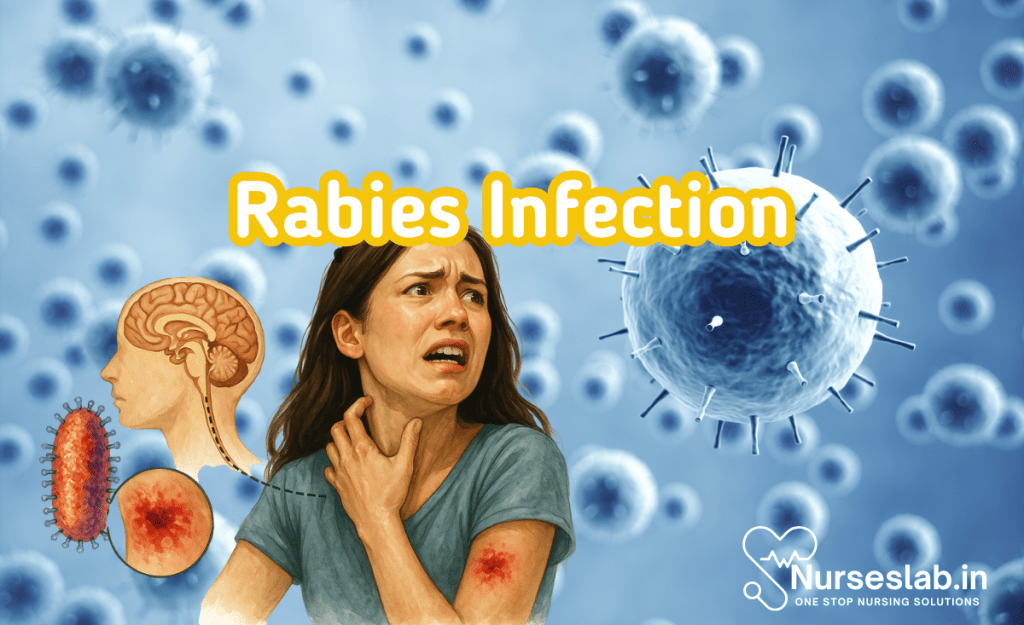
Rabies infections are caused by a neurotropic virus transmitted via bites from infected animals. Once symptoms appear, the disease is almost always fatal. Early post-exposure prophylaxis and vaccination are essential—critical in nursing, virology, and public health.
Introduction
Rabies is a deadly viral zoonosis that continues to pose a significant public health threat globally, particularly in Asia and Africa. Despite being preventable, rabies claims thousands of lives annually, with the majority of cases resulting from dog bites in resource-limited settings. The infection is almost invariably fatal once clinical symptoms appear, underscoring the importance of timely intervention and education.
Morphology of Rabies Virus
Structure and Classification
Rabies virus (RABV) is a member of the Lyssavirus genus within the family Rhabdoviridae. It is an enveloped, bullet-shaped virus measuring approximately 180 nm in length and 75 nm in diameter. The virion is composed of a helical ribonucleoprotein core surrounded by a lipid envelope derived from the host cell membrane.
Genetic Features
The rabies virus genome is a single-stranded, negative-sense RNA, roughly 12 kilobases in length. It encodes five major proteins:
- Nucleoprotein (N): Encapsulates the viral RNA, forming the ribonucleoprotein complex.
- Phosphoprotein (P): Functions as a co-factor for RNA transcription and replication.
- Matrix protein (M): Assists in virion assembly and budding.
- Glycoprotein (G): Mediates viral attachment to host cells and induces neutralising antibodies.
- Large protein (L): The viral RNA-dependent RNA polymerase responsible for transcription and replication.
The glycoprotein G is of particular importance, as it is the principal target for vaccine-induced immunity.
Pathogenesis of Rabies
Transmission
Rabies is primarily transmitted through the saliva of infected mammals, most commonly via bites. Less frequently, transmission may occur through scratches, open wounds, or mucous membrane exposure. Aerosol transmission has been reported in rare cases, particularly in laboratory settings or caves inhabited by infected bats.
Viral Replication and Spread
Following inoculation, the virus initially replicates locally in muscle tissue or subcutaneous cells near the site of entry. The virus then binds to nicotinic acetylcholine receptors at the neuromuscular junction, facilitating entry into peripheral nerves. Once inside the nervous system, rabies virus travels centripetally via retrograde axonal transport towards the central nervous system (CNS), evading immune detection due to the lack of major histocompatibility complex (MHC) expression in neurons.
Spread to the Central Nervous System
Upon reaching the CNS, the virus replicates extensively in neuronal cells, causing widespread encephalitis. Following CNS involvement, the virus disseminates centrifugally to various tissues, including the salivary glands, skin, cornea, and other organs, which facilitates further transmission through saliva.
Clinical Manifestations of Rabies
Incubation Period
The incubation period for rabies typically ranges from 1 to 3 months, but can vary from a few days to several years depending on factors such as the location and severity of exposure, viral load, and host immunity. Bites closer to the head and neck are associated with shorter incubation periods due to proximity to the CNS.
Prodromal Phase
The prodromal phase lasts 2–10 days and is characterised by non-specific symptoms such as fever, malaise, headache, nausea, vomiting, and pain or paraesthesia at the site of exposure. The latter is a classic early sign and may present as itching, tingling, or burning.
Neurological Symptoms
Neurological manifestations mark the onset of encephalitic (furious) or paralytic (dumb) rabies. Furious rabies, accounting for 80% of cases, presents with:
- Hyperactivity and agitation
- Confusion and hallucinations
- Hydrophobia (fear of water) due to pharyngeal spasm
- Aerophobia (fear of air drafts)
- Autonomic dysfunction: hypersalivation, sweating, tachycardia
Paralytic rabies, seen in about 20% of cases, is characterised by flaccid muscle weakness, progressing to quadriparesis and respiratory failure. Both forms ultimately result in coma and death, usually within 2 to 7 days of symptom onset.
Fatality
Rabies is almost universally fatal once neurological symptoms develop. Death typically results from respiratory muscle paralysis or cardiac arrhythmias. Survival is extremely rare and has been documented only in exceptional cases with aggressive supportive care.
Rabies Vaccine
Types of Vaccines
Modern rabies vaccines are inactivated preparations, produced either from cell cultures (e.g., human diploid cell vaccine [HDCV], purified chick embryo cell vaccine [PCECV]) or Vero cell lines. Nerve tissue-derived vaccines have been phased out due to high rates of adverse reactions.
Mechanism of Action
Rabies vaccines stimulate the host immune system to produce neutralising antibodies against the viral glycoprotein G. These antibodies confer protective immunity by preventing viral attachment and entry into host cells.
Administration Schedules
There are two main indications for rabies vaccination: pre-exposure prophylaxis (PrEP) and post-exposure prophylaxis (PEP).
- Pre-exposure prophylaxis: Recommended for individuals at high risk (e.g., veterinarians, animal handlers, laboratory workers). The standard regimen involves intramuscular administration on days 0, 7, and 21 or 28.
- Post-exposure prophylaxis: For individuals exposed to potentially rabid animals, vaccine is administered according to the WHO recommended schedule, typically on days 0, 3, 7, and 14. Immunocompromised persons may require an additional dose on day 28.
Efficacy
Rabies vaccines are highly effective in preventing disease when administered promptly and correctly. Immunogenicity is robust, and adverse reactions are rare, usually limited to mild local symptoms such as pain or swelling at the injection site.
Rabies Immunoglobulin
Types
Rabies immunoglobulin (RIG) is available in two forms:
- Human rabies immunoglobulin (HRIG): Derived from human plasma; preferred due to lower risk of hypersensitivity.
- Equine rabies immunoglobulin (ERIG): Obtained from horse serum; less expensive but carries a higher risk of allergic reactions.
Indications
RIG is indicated for category III exposures (single or multiple transdermal bites or scratches, contamination of mucous membrane with saliva from a suspected rabid animal) in individuals who have not previously received rabies vaccination.
Administration
RIG should be infiltrated thoroughly into and around the wound as soon as possible after exposure, with any remaining volume administered intramuscularly at a site distant from the vaccine. The recommended dose for HRIG is 20 IU/kg and for ERIG is 40 IU/kg body weight.
Mechanism of Action
RIG provides passive immunity by supplying immediate neutralising antibodies at the site of viral entry, bridging the gap until the patient’s own immune response is induced by the vaccine.
Prevention Strategies
Animal Control
Effective rabies prevention requires robust animal control measures, including mass vaccination of dogs, responsible pet ownership, and management of stray animal populations. Dog vaccination campaigns have proven successful in reducing human rabies cases in several countries.
Public Health Measures
Public health initiatives encompass surveillance, prompt reporting of exposures, laboratory confirmation of suspected cases, and ensuring the availability of vaccines and immunoglobulins. Coordination between veterinary and human health sectors is crucial for the success of these programmes.
Education
Community education is vital to increase awareness about rabies transmission, the importance of timely wound care, and the need for prompt medical attention following animal bites. Educational campaigns should target both rural and urban populations, with emphasis on children, who are at greater risk.
WHO Guidelines for Post-Exposure Prophylaxis (PEP)
Risk Assessment
Risk assessment begins with categorisation of the exposure:
- Category I: Touching or feeding animals, licks on intact skin—no PEP required.
- Category II: Nibbling of uncovered skin, minor scratches or abrasions without bleeding—vaccine only.
- Category III: Single or multiple transdermal bites or scratches, contamination of mucous membrane with saliva—vaccine plus RIG.
Wound Management
Immediate and thorough wound washing with soap and running water for at least 15 minutes is the single most effective measure to reduce rabies transmission. Application of antiseptics such as povidone-iodine is recommended. Suturing should be delayed or minimised, and only performed after RIG infiltration if necessary.
Vaccine Protocols
WHO recommends the following PEP vaccine schedules:
- Essen regimen (intramuscular): 1 dose each on days 0, 3, 7, and 14 (and day 28 for immunocompromised).
- Zagreb regimen: 2 doses on day 0, 1 dose on days 7 and 21.
- Intradermal regimens: Used in some countries to conserve vaccine supply, involving 2-site injections on specified days.
Vaccines should be administered in the deltoid area for adults and in the anterolateral thigh for small children. Gluteal administration is discouraged due to poor immunogenicity.
Rabies Immunoglobulin Use
RIG should be provided for all category III exposures in previously unvaccinated individuals. It must be infiltrated into all wounds, with remaining volume given intramuscularly at a site distant from vaccine administration. RIG should be administered ideally within 7 days of the first vaccine dose, as later administration may interfere with active immunity.
Special Populations
PEP is safe and effective for pregnant and lactating women, infants, elderly, and immunocompromised individuals. Dose modifications are generally not required, but immunocompromised persons may need additional vaccine doses and serological monitoring.
Recent Advances and Challenges
New Vaccines
Research is ongoing into novel rabies vaccines with improved immunogenicity, longer duration of protection, and reduced dosing schedules. Recombinant vaccines and monoclonal antibody therapies are under investigation and may offer alternatives to traditional RIG.
Global Eradication Efforts
The goal of eliminating dog-mediated human rabies by 2030 has been endorsed by WHO, OIE, FAO, and GARC. Success depends on increased access to affordable vaccines, integrated surveillance, community engagement, and intersectoral collaboration.
Challenges
Major obstacles include limited vaccine availability in high-risk regions, logistical challenges in rural areas, lack of awareness, and insufficient funding for animal vaccination campaigns. Addressing these barriers is essential to achieving global eradication.
Conclusion
Rabies remains a major public health concern, especially in developing countries. Understanding the morphology, pathogenesis, and clinical manifestations is crucial for timely diagnosis and management. Vaccines and immunoglobulin are highly effective tools for prevention, but their success hinges on proper administration and adherence to WHO guidelines. Ongoing research and coordinated global efforts offer hope for eventual eradication. Medical professionals must stay informed and actively participate in education, surveillance, and advocacy to minimise the burden of rabies worldwide.
REFERENCES
- Apurba S Sastry, Essential Applied Microbiology for Nurses including Infection Control and Safety, First Edition 2022, Jaypee Publishers, ISBN: 978-9354659386
- Joanne Willey, Prescott’s Microbiology, 11th Edition, 2019, Innox Publishers, ASIN- B0FM8CVYL4.
- Anju Dhir, Textbook of Applied Microbiology including Infection Control and Safety, 2nd Edition, December 2022, CBS Publishers and Distributors, ISBN: 978-9390619450
- Gerard J. Tortora, Microbiology: An Introduction 13th Edition, 2019, Published by Pearson, ISBN: 978-0134688640
- Durrant RJ, Doig AK, Buxton RL, Fenn JP. Microbiology Education in Nursing Practice. J Microbiol Biol Educ. 2017 Sep 1;18(2):18.2.43. https://pmc.ncbi.nlm.nih.gov/articles/PMC5577971/
Stories are the threads that bind us; through them, we understand each other, grow, and heal.
JOHN NOORD
Connect with “Nurses Lab Editorial Team”
I hope you found this information helpful. Do you have any questions or comments? Kindly write in comments section. Subscribe the Blog with your email so you can stay updated on upcoming events and the latest articles.


