


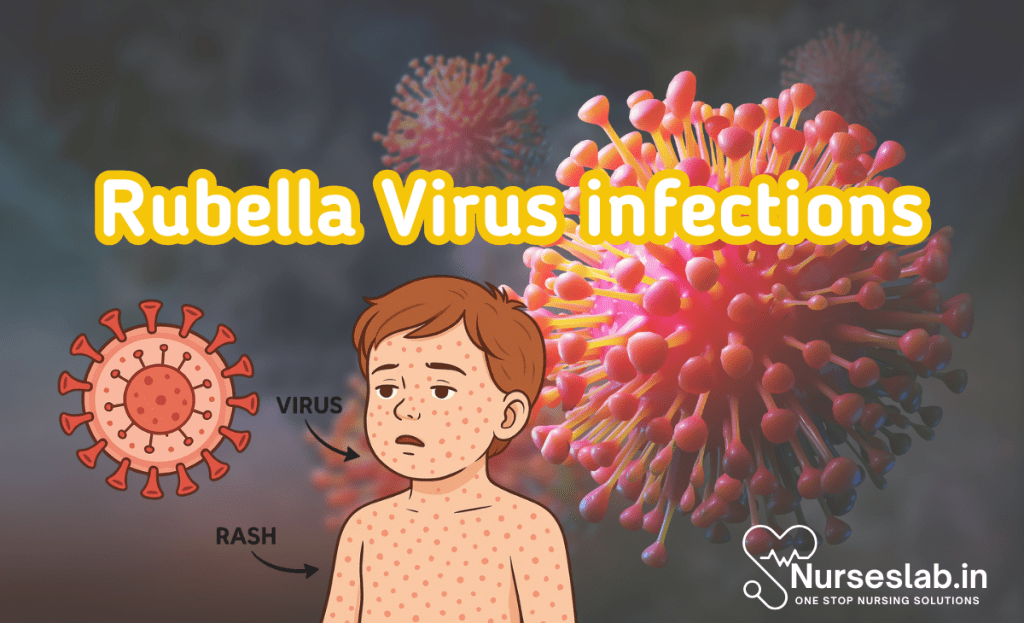
Rubella virus infections typically cause mild fever and rash but can lead to congenital rubella syndrome if contracted during pregnancy. Vaccination, early diagnosis, and public health measures are essential for prevention—critical in nursing, virology, and maternal care.
Introduction
Rubella virus infection, commonly known as German measles, is a contagious viral disease that has significant implications for public health, especially due to its teratogenic effects during pregnancy. Over the decades, rubella has transitioned from a frequently occurring childhood illness to a preventable disease in many parts of the world, owing to widespread vaccination efforts. However, the persistent threat of outbreaks and congenital rubella syndrome (CRS) in regions with suboptimal immunisation coverage underlines the ongoing importance of understanding rubella’s virology, transmission, clinical features, diagnosis, management, and global health impact.
Historical Background and Significance
Rubella was first clinically distinguished from measles and scarlet fever in the 19th century, with the term “German measles” reflecting early observations by German physicians. The critical significance of rubella emerged in the 1940s, when an epidemic in Australia led to the recognition of its teratogenic potential, as described by Dr. Norman Gregg. He documented congenital cataracts and other birth defects in infants born to mothers infected with rubella during pregnancy, coining the concept of congenital rubella syndrome (CRS). Since then, rubella has become a focal point for vaccination campaigns and public health initiatives, given the devastating outcomes of prenatal infection.
Virology and Structure
Virus Classification
Rubella virus is a member of the genus Rubivirus, within the family Matonaviridae (previously classified under Togaviridae). It is the only known member of its genus that infects humans.
Genome and Morphology
The rubella virus is an enveloped, positive-sense, single-stranded RNA virus. Its genome is approximately 9,762 nucleotides in length and encodes two open reading frames (ORFs). The 5’ ORF codes for non-structural proteins involved in viral replication, while the 3’ ORF encodes structural proteins: capsid (C), and two envelope glycoproteins (E1 and E2).
Morphologically, the virus is spherical, measuring 50–70 nm in diameter. The envelope is derived from the host cell membrane and is studded with E1 and E2 glycoproteins, which play crucial roles in viral attachment and entry into host cells. The capsid protein encapsidates the RNA genome, providing structural stability.
Replication Cycle
Rubella virus attaches to host cells via receptors that interact with its E1 glycoprotein. Following endocytosis, the viral envelope fuses with the endosomal membrane, releasing the viral RNA into the cytoplasm. The RNA serves as a template for translation of non-structural proteins, which mediate replication of the viral genome and synthesis of subgenomic RNA for structural protein production. Assembly occurs at intracellular membranes, and new virions are released by budding, acquiring their envelope in the process.
Epidemiology
Global Distribution
Rubella is endemic worldwide, with periodic epidemics occurring in populations with insufficient vaccination coverage. In regions with robust immunisation programmes, the incidence has declined dramatically, and endemic transmission has been interrupted in several countries. However, outbreaks continue to occur in areas where vaccine uptake is suboptimal.
Outbreaks and Risk Groups
Historically, rubella outbreaks have occurred in cycles every 6–9 years, particularly affecting children and young adults. The introduction of the rubella-containing vaccine (RCV) has shifted the epidemiological pattern, with higher rates now seen among unvaccinated adolescents and adults, especially women of childbearing age, who are at greatest risk of complications.
Statistics
The World Health Organization (WHO) estimates that before the introduction of vaccination, rubella epidemics led to hundreds of thousands of cases of CRS annually. As of 2023, global rubella cases have markedly declined, yet gaps in immunisation persist, particularly in parts of Africa, South-East Asia, and the Eastern Mediterranean. In 2022, over 100,000 infants were born with CRS globally, highlighting the ongoing burden in under-immunised populations.
Transmission
Modes of Transmission
Rubella virus is primarily transmitted via respiratory droplets when an infected person coughs or sneezes. The virus can also spread through direct contact with nasopharyngeal secretions. Vertical transmission from mother to fetus during pregnancy is of critical importance, as it can result in CRS.
Contagious Period
Infected individuals are most contagious from 7 days before to 7 days after the onset of rash. However, viral shedding may begin even earlier and persist for up to 2 weeks after rash onset in some cases. Infants with CRS can excrete the virus in urine and nasopharyngeal secretions for up to one year, serving as reservoirs for continued transmission.
Reservoirs
Humans are the sole known reservoir of rubella virus. There is no evidence of animal reservoirs, which has implications for eradication efforts.
Clinical Manifestations
Signs and Symptoms
Rubella infection is often asymptomatic or mild, particularly in children. When symptomatic, the classical presentation includes:
- A maculopapular rash that typically starts on the face and spreads to the trunk and extremities
- Low-grade fever
- Lymphadenopathy, especially of the postauricular, suboccipital, and cervical nodes
- Mild upper respiratory symptoms (coryza, sore throat)
- Arthralgia or arthritis, more common in adolescents and adults, especially females
The rash usually lasts about 3 days. Other symptoms may include malaise, headache, and conjunctivitis. Rubella is generally a self-limiting illness in healthy children and adults.
Incubation Period
The incubation period for rubella is typically 14–21 days, with an average of 17 days. The prodromal phase, if present, is brief and consists of mild constitutional symptoms.
Congenital Rubella Syndrome (CRS)
The most severe consequence of rubella infection occurs when a woman contracts the virus during early pregnancy. Maternal infection during the first trimester carries the highest risk of CRS, with up to 90% of fetuses affected if infection occurs before 11 weeks of gestation. CRS can lead to a spectrum of birth defects, which may include:
- Sensorineural deafness (most common)
- Cataracts and other ocular defects (retinopathy, microphthalmia)
- Cardiac abnormalities (patent ductus arteriosus, pulmonary artery stenosis)
- Neurological impairment (microcephaly, developmental delay)
- Hepatosplenomegaly, thrombocytopaenic purpura, bone lesions
Many affected infants experience multiple defects, and late manifestations such as diabetes mellitus, thyroid dysfunction, and progressive panencephalitis may develop.
Diagnosis
Clinical Diagnosis
Clinical diagnosis of rubella is challenging due to the non-specific nature of symptoms and the overlap with other viral exanthems. The presence of postauricular and suboccipital lymphadenopathy in the context of a mild rash may raise suspicion, particularly during outbreaks or in unvaccinated individuals.
Laboratory Tests
Definitive diagnosis relies on laboratory confirmation, which is critical for surveillance and outbreak control. The primary laboratory methods include:
- Serology: Detection of rubella-specific IgM antibodies in serum, which appear within a few days of rash onset and persist for 4–12 weeks. A fourfold rise in IgG titres between acute and convalescent sera also indicates recent infection.
- Molecular methods: Reverse transcription polymerase chain reaction (RT-PCR) can detect rubella RNA in nasopharyngeal, throat, or urine specimens, especially within the first week of illness.
- Virus isolation: Although less commonly performed, the virus can be cultured from clinical specimens in specialised laboratories.
In suspected CRS, laboratory testing of infants includes serology for rubella IgM and detection of viral RNA in clinical samples.
Differential Diagnosis
Rubella must be differentiated from other causes of rash and fever, such as measles, scarlet fever, parvovirus B19 infection (erythema infectiosum), enteroviral exanthems, and drug reactions. Laboratory confirmation is essential to distinguish rubella from these conditions, as clinical features overlap.
Treatment and Management
Supportive Care
There is no specific antiviral therapy for rubella. Management is primarily supportive, focusing on relief of symptoms such as fever and arthralgia. Bed rest, adequate hydration, and antipyretics (e.g., paracetamol) are recommended. Aspirin should be avoided in children due to the risk of Reye’s syndrome.
Antiviral Research
Research into antiviral agents against rubella is ongoing, but currently, no approved antiviral drugs exist for clinical use. The self-limiting nature of rubella in most cases and the effectiveness of vaccination have limited the impetus for antiviral drug development.
Management of Complications
For CRS, multidisciplinary management is required, involving paediatricians, cardiologists, ophthalmologists, audiologists, and other specialists, depending on the manifestations. Early intervention and supportive therapies can improve outcomes for affected children.
Prevention
Vaccination Strategies
Vaccination is the cornerstone of rubella prevention. The rubella vaccine is a live attenuated virus, usually administered as part of the measles-mumps-rubella (MMR) combination. Two doses are recommended for optimal protection:
- First dose at 9–12 months of age
- Second dose at 15–18 months or at school entry
Catch-up vaccination is advised for older children, adolescents, and adults lacking documented immunity, especially women of childbearing age. Vaccination is contraindicated in pregnant women and immunocompromised individuals.
Public Health Measures
Public health strategies include routine immunisation, surveillance for rubella and CRS, outbreak response, and health education. Screening for rubella immunity in women of reproductive age is vital to prevent CRS.
Herd Immunity
High vaccination coverage (≥95%) is necessary to achieve herd immunity and interrupt transmission. Herd immunity protects those who cannot be vaccinated, such as infants and certain immunocompromised individuals.
Complications
Congenital Rubella Syndrome
CRS is the most serious complication of rubella. The risk and severity of fetal damage depend on the gestational age at maternal infection. First trimester infections carry the highest risk. CRS can result in stillbirth, spontaneous abortion, or severe multisystem congenital anomalies, with lifelong disability in survivors.
Other Complications
While rare, rubella can lead to complications such as:
- Arthritis and arthralgia, especially in adult women
- Encephalitis (1 in 6,000 cases), which can be fatal or cause permanent sequelae
- Thrombocytopaenic purpura
- Myocarditis
Immunocompromised individuals may experience prolonged or atypical courses of the disease.
Long-term Outcomes
Survivors of CRS may face lifelong challenges, including hearing loss, visual impairment, intellectual disability, and chronic medical conditions such as diabetes. The economic and emotional burden on families and health systems is substantial.
Global Impact
Economic Burden
Rubella and CRS impose a significant economic burden, particularly in low- and middle-income countries. The costs associated with lifelong care for affected individuals, loss of productivity, and public health interventions are substantial. Prevention through vaccination is highly cost-effective compared to the management of CRS cases.
Eradication Efforts
The elimination of rubella and CRS is considered feasible due to the absence of animal reservoirs and the availability of an effective vaccine. The Americas were declared free of endemic rubella transmission in 2015, demonstrating the success of coordinated vaccination campaigns. The WHO has set regional goals for rubella elimination, though global eradication faces challenges related to vaccine access, political commitment, and surveillance.
Challenges in Low-Resource Settings
Barriers to eradication include limited healthcare infrastructure, vaccine hesitancy, inadequate surveillance, and competing health priorities. In many countries, rubella vaccination is not yet part of the routine immunisation schedule, and awareness of CRS remains low among healthcare providers and the public.
Conclusion
Rubella virus infection, while often mild in healthy individuals, poses a grave threat to fetal health when contracted during pregnancy. The global decline in rubella and CRS incidence attests to the effectiveness of vaccination, but persistent gaps in immunisation coverage continue to fuel outbreaks and congenital disease. Vigilant surveillance, universal immunisation, and targeted education, particularly for women of childbearing age, are essential to achieving rubella elimination and preventing the devastating consequences of CRS.
Future directions include strengthening healthcare infrastructure, integrating rubella vaccination into national immunisation programmes, enhancing global surveillance, and addressing vaccine hesitancy. Continued research into rubella virology, pathogenesis, and novel therapeutic strategies will further inform public health policy and clinical practice.
In summary, rubella is a vaccine-preventable disease with the potential for global eradication. A concerted effort by governments, healthcare workers, and communities is vital to realise the vision of a world free from rubella and its complications.
REFERENCES
- Apurba S Sastry, Essential Applied Microbiology for Nurses including Infection Control and Safety, First Edition 2022, Jaypee Publishers, ISBN: 978-9354659386
- Joanne Willey, Prescott’s Microbiology, 11th Edition, 2019, Innox Publishers, ASIN- B0FM8CVYL4.
- Anju Dhir, Textbook of Applied Microbiology including Infection Control and Safety, 2nd Edition, December 2022, CBS Publishers and Distributors, ISBN: 978-9390619450
- Gerard J. Tortora, Microbiology: An Introduction 13th Edition, 2019, Published by Pearson, ISBN: 978-0134688640
- Durrant RJ, Doig AK, Buxton RL, Fenn JP. Microbiology Education in Nursing Practice. J Microbiol Biol Educ. 2017 Sep 1;18(2):18.2.43. https://pmc.ncbi.nlm.nih.gov/articles/PMC5577971/
Stories are the threads that bind us; through them, we understand each other, grow, and heal.
JOHN NOORD
Connect with “Nurses Lab Editorial Team”
I hope you found this information helpful. Do you have any questions or comments? Kindly write in comments section. Subscribe the Blog with your email so you can stay updated on upcoming events and the latest articles.


