


Last Updated on January 12, 2026 by Nurseslab.in Editorial Team
Hemoglobin A1C (HbA1c) is a blood test that measures the average blood sugar (glucose) levels over the past two to three months. It provides a long-term view of blood sugar control, making it a crucial tool for diagnosing and managing diabetes.
Why Is It Important?
1.Diabetes Diagnosis and Screening
Identifying Prediabetes and Diabetes: An HbA1c level below 5.7% is considered normal, 5.7%–6.4% suggests prediabetes, and 6.5% or higher generally indicates diabetes. This test is a vital tool for early detection of abnormal glucose metabolism 2.
2.Monitoring Diabetes Management
Evaluating Treatment Effectiveness: For individuals already diagnosed with diabetes, regular HbA1c testing (typically every 3 to 6 months) helps healthcare providers assess how well blood sugar is being controlled. This allows for timely adjustments in lifestyle modifications, medications, or insulin therapy to improve long-term outcomes .
3.Assessing Risk for Complications
Long-Term Health Indicator: Elevated HbA1c levels are linked to a higher risk of diabetes-related complications—such as cardiovascular disease, kidney disorders, and nerve damage. Keeping HbA1c within a target range can significantly reduce these risks.
4.Guiding Clinical Decisions
Individualized Care: The HbA1c test informs both patients and clinicians about treatment efficacy over a period of time, thus playing a central role in making informed decisions about modifying care plans to better manage blood glucose levels.
HbA1c Levels & Their Meaning
| HbA1c Level | Interpretation |
|---|---|
| Below 5.7% | Normal |
| 5.7% – 6.4% | Prediabetes |
| 6.5% or higher | Diabetes |
How the A1c Test Works
The sugar in your blood is called glucose. When glucose builds up in your blood, it binds to the hemoglobin in your red blood cells. The A1c test measures how much glucose is bound.
Red blood cells live for about 3 months, so the test shows the average level of glucose in your blood for the past 3 months.
If your glucose levels have been high over recent weeks, your hemoglobin A1c test result will be higher.
The A1c test can be done in two ways. Let’s look at both.
Blood draw from a vein:
- You’ll be seated while a phlebotomist — a health care provider trained to collect blood samples — searches for an easily accessible vein in your arm. A typical spot is your inner arm near the elbow bend.
- After finding and cleansing the area around the vein, they’ll insert a needle and draw blood into a test tube.
- They’ll remove the needle after the tube fills with a sufficient amount of blood.
- The blood sample will then be sent to the lab to be analyzed.
Blood draw from a finger prick:
- You pick the finger that you would like to be used.
- A health care provider will clean and disinfect the chosen finger.
- Next, they’ll prick your finger with a small needle called a lancet.
- They will then squeeze your finger so that a drop of blood forms.
- That drop of blood will be collected into a test container and analyzed.
When to Get an A1c Test
There are several reasons why you might need an A1c test, such as if you have symptoms of diabetes. These symptoms include:
- Intense thirst
- More frequent need to pee
- Blurred vision
- Unexpected weight loss
- Feeling tired all the time
- Dry skin
What’s a dangerous level of A1C?
If your A1c climbs above 9%, your risk of serious diabetes complications goes up. These complications include:
- Vision loss or blindness
- Kidney failure
- Diabetic neuropathy, or nerve damage, which most commonly affects your hands, feet, arms, and legs
- Heart disease
- Stroke
- Gastroparesis, or paralysis of the stomach, in which your stomach cannot properly digest food.
Factors Affecting the HbA1c Results
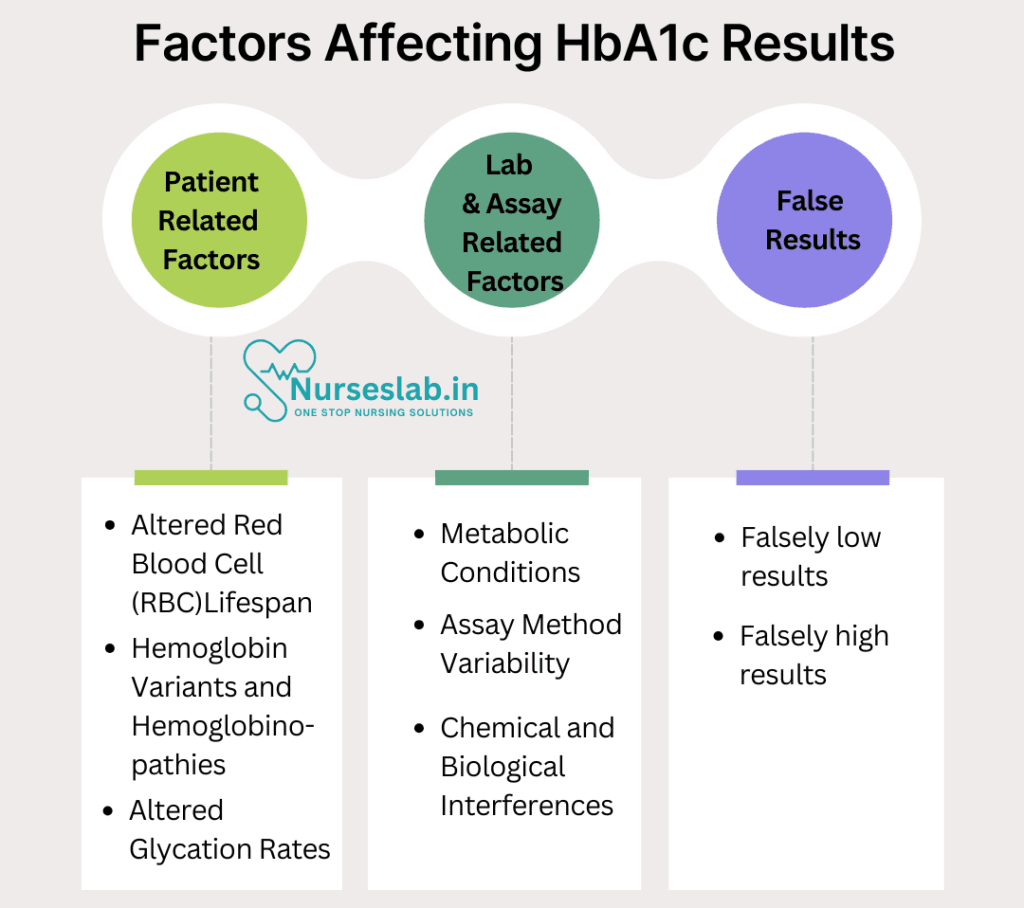
Hemoglobin A1c (HbA1c) is a valuable measure of average blood glucose over the past two to three months. However, its accuracy can be affected by several factors that don’t directly relate to blood sugar levels. These factors can be grouped into patient-related variables and laboratory or assay-specific issues.
Patient-Related Factors
- Altered Red Blood Cell (RBC) Lifespan
- Shortened RBC Life: Conditions such as hemolytic anemia, significant blood loss, or recent blood transfusions result in a reduced average age of RBCs, which can falsely lower HbA1c levels.
- Prolonged RBC Life: Conversely, factors that extend the lifespan of RBCs, such as in patients with iron deficiency anemia, may lead to a higher HbA1c reading. These effects occur because there is more time for hemoglobin to become glycated even if blood glucose levels are similar 2.
- Hemoglobin Variants and Hemoglobinopathies
- Variants like HbS, HbC, HbE, or increased levels of fetal hemoglobin (HbF) can interfere with many HbA1c assays. Depending on the method used, these variants may falsely elevate or lower the reported HbA1c value. This is an important consideration, especially in populations with a higher prevalence of these genetic differences 2.
- Altered Glycation Rates
- Changes in the environment within RBCs—such as shifts in pH or increased oxidative stress—can affect the glycation rate of hemoglobin. Conditions like chronic renal failure or even factors like alcoholism may alter the glycation process, leading to variations in HbA1c results despite similar glycemic control .
Laboratory and Assay-Related Factors
1.Metabolic Conditions: High levels of triglycerides or bilirubin, as well as other chronic inflammatory states, can also impact assay results.
2.Assay Method Variability: Different HbA1c measurement methods (immunoassays, ion-exchange high-performance liquid chromatography [HPLC], enzymatic assays, etc.) have varying susceptibilities to interference. Some assays are more affected by hemoglobin variants or chemically modified hemoglobin (such as carbamylated hemoglobin seen in renal failure) than others .
3.Chemical and Biological Interferences Medications and Supplements: Large doses of certain drugs like aspirin or high levels of vitamins C and E might potentially interfere with glycation measurements.
Falsely low results
Some health conditions and other factors can cause your A1c test results to be lower than they actually are. They include:
- Alcohol use disorder
- Blood transfusion
- Chronic kidney failure and some of its treatments
- Bleeding
- Being pregnant
- Cirrhosis of the liver
- Sickle cell anemia and hemolytic anemia
- High-altitude living
- Taking an iron supplement
Falsely high results
An artificially high A1c test result can be caused by any of the following factors:
- Certain types of anemia, including iron-deficiency anemia
- Drugs that suppress your immune system
- High triglycerides, a type of fat that circulates in your bloodstream
- An organ transplant
- Thalassemia, a blood disorder that keeps your body from producing a normal amount of hemoglobin and red blood cells
- Vitamin B12 deficiency
REFERENCES
- Matt McMillen, Hemoglobin: A1C Test, Range, and Normal Levels, June 17, 2024, https://www.webmd.com/diabetes/glycated-hemoglobin-test-hba1c.
- American Diabetes Association (2018). Statistics About Diabetes. https://www.diabetes.org/resources/statistics/statistics-about-diabetes
- Dugger, L., & Clark, A. P. (2011). Can hemoglobin A1c testing in hospital settings help the early identification of diabetes? Clinical nurse specialist CNS, 25(4), 171–175. https://doi.org/10.1097/NUR.0b013e318222a693
- Hill, A. N., & Appel, S. J. (2010). Diagnosing diabetes with A1C: implications and considerations for measurement and surrogate markers. The Nurse practitioner, 35(10), 16–24. https://doi.org/10.1097/01.NPR.0000388206.16357.02
- Selvin, E. (2020, December 4). Measurements of glycemic control in diabetesmellitus. UpToDate. https://www.uptodate.com/contents/measurements-of-glycemic-control-in-diabetes-mellitus
Stories are the threads that bind us; through them, we understand each other, grow, and heal.
JOHN NOORD
Connect with “Nurses Lab Editorial Team”
I hope you found this information helpful. Do you have any questions or comments? Kindly write in comments section. Subscribe the Blog with your email so you can stay updated on upcoming events and the latest articles.


