


Last Updated on January 13, 2026 by Nurseslab.in Editorial Team
Explore general virology: the scientific study of viruses and their behavior, structure, and impact on living organisms. Virology underpins breakthroughs in vaccine development, disease prevention, and molecular diagnostics—critical for healthcare, microbiology, and global health security.
Introduction
Virology, the study of viruses and their impact on human health, is a critical component of applied microbiology for nurses. With viral diseases contributing significantly to global morbidity and mortality, nurses must possess a thorough understanding of the nature, classification, replication, diagnosis, treatment, and prevention of viral infections. This knowledge empowers nurses to provide effective patient care, participate in disease prevention programmes, and support public health initiatives.
Morphology of Viruses
Basic Structure
Viruses are unique infectious agents that exist at the boundary between living and non-living entities. Unlike bacteria and fungi, viruses are acellular and cannot reproduce independently. Their structure is relatively simple, consisting mainly of genetic material encased in a protective shell.
Components of a Virus
- Nucleic Acid Core: The central component is the genetic material, which may be DNA or RNA, but never both. This core carries the instructions for viral replication.
- Capsid: Surrounding the nucleic acid is a protein coat called the capsid, which protects the genetic material and aids in host cell attachment. The capsid is made up of subunits called capsomeres.
- Envelope: Some viruses possess an outer lipid membrane derived from the host cell, known as the envelope. This envelope contains viral glycoproteins important for host cell recognition and entry.
- Additional Structures: Depending on the virus, other structures such as spikes, tails, or matrix proteins may be present, assisting in attachment, penetration, or assembly.
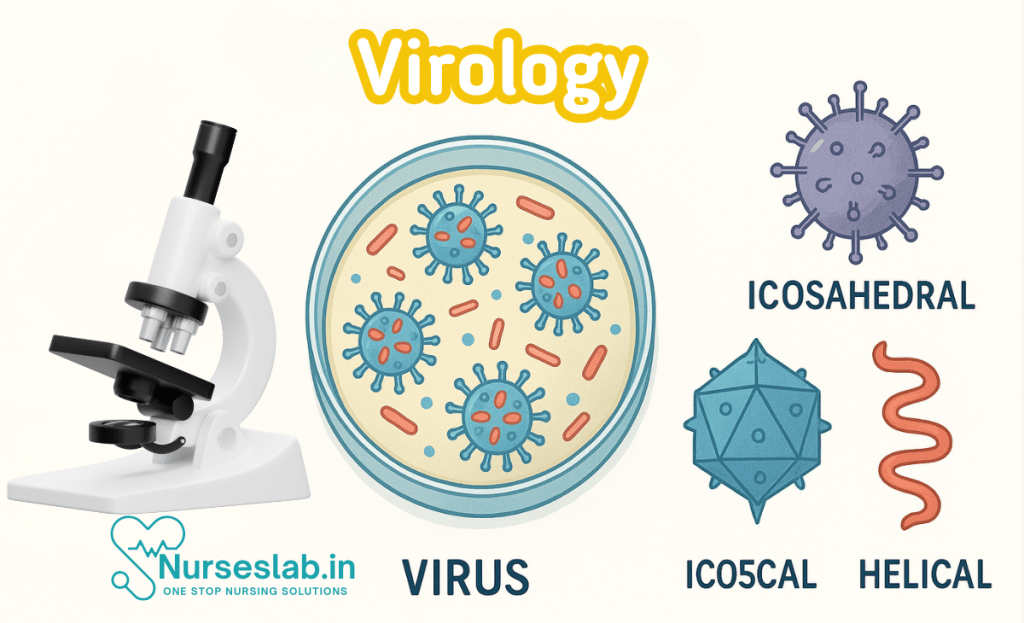
Types of Viral Morphology
- Helical Viruses: The capsid proteins form a spiral around the nucleic acid, giving the virus a rod-like appearance. Example: Rabies virus.
- Icosahedral Viruses: The capsid forms a symmetrical, 20-sided structure. Example: Adenovirus.
- Complex Viruses: These viruses possess additional structures, such as the bacteriophage, which has a head, tail, and fibres.
- Enveloped Viruses: Viruses with a lipid envelope, such as Influenza and HIV, are more sensitive to environmental changes but can evade immune detection easier.
Classification of Viruses
Criteria for Classification
Viruses are classified based on several criteria, which help in understanding their behaviour, pathogenesis, and treatment strategies.
- Type of Nucleic Acid: DNA or RNA; single-stranded or double-stranded.
- Symmetry of Capsid: Helical, icosahedral, or complex.
- Presence of Envelope: Enveloped or non-enveloped.
- Host Range: Human, animal, plant, or bacterial viruses.
- Mode of Replication: How the virus replicates within the host cell.
Major Families and Examples
| Family | Type of Nucleic Acid | Capsid Symmetry | Enveloped | Examples |
| Herpesviridae | DNA | Icosahedral | Yes | Herpes simplex virus, Varicella-zoster virus |
| Picornaviridae | RNA | Icosahedral | No | Poliovirus, Rhinovirus |
| Orthomyxoviridae | RNA | Helical | Yes | Influenza viruses |
| Retroviridae | RNA (reverse transcribing) | Icosahedral | Yes | HIV |
| Adenoviridae | DNA | Icosahedral | No | Adenovirus |
Viral Replication
General Steps in Viral Replication
Viruses cannot replicate on their own; they depend on host cells for reproduction. The process of viral replication involves several distinct steps:
- Attachment: The virus binds to specific receptors on the surface of the host cell.
- Penetration: The viral genetic material enters the host cell, either by fusion with the cell membrane or endocytosis.
- Uncoating: The viral capsid is removed, releasing the nucleic acid into the host cell’s cytoplasm.
- Replication and Transcription: The viral genome is replicated and transcribed using host cell machinery.
- Assembly: Newly synthesised viral components are assembled into complete virions.
- Release: New virions exit the host cell, often destroying it, and go on to infect other cells.
Mechanisms and Host Interactions
Viruses hijack the host cell’s biochemical pathways to produce viral proteins and nucleic acids. Some viruses integrate their genetic material into the host genome (e.g., retroviruses), leading to persistent infections. The host cell may respond by triggering immune defences, but viruses often evolve mechanisms to evade these responses, such as antigenic variation or suppression of immune signalling.
Pathogenesis of Viral Infections
Entry and Spread
Viral infections begin when viruses breach the host’s physical barriers, such as the skin or mucous membranes. Common routes of entry include respiratory tract (Influenza), gastrointestinal tract (Rotavirus), blood (HIV), and direct contact (Herpes simplex).
After entry, viruses may replicate locally or disseminate through the bloodstream (viraemia) to distant organs. The spread can be cell-to-cell or systemic, depending on the virus and host factors.
Cellular Effects
- Cytopathic Effects: Many viruses cause direct damage to host cells, leading to cell death or dysfunction. Examples include cell rounding, fusion (syncytia formation), and inclusion bodies.
- Oncogenesis: Some viruses can cause uncontrolled cell growth, leading to cancer (e.g., Human papillomavirus and cervical cancer).
- Latency: Certain viruses, such as Herpesviruses, can remain dormant within host cells and reactivate later.
Immune Response
The host immune system mounts both innate and adaptive responses to viral infections. Innate immunity, including interferons and natural killer cells, acts quickly but non-specifically. Adaptive immunity, involving T cells and antibodies, provides targeted defence and long-term protection. However, immune responses can sometimes cause tissue damage (immunopathology), as seen in dengue fever.
Laboratory Diagnosis
Specimen Collection
Accurate diagnosis begins with proper specimen collection. Common specimens include blood, throat swabs, nasal aspirates, stool, cerebrospinal fluid (CSF), and tissue biopsies. Timely collection and proper transport are critical for reliable results.
Diagnostic Methods
- Direct Detection: Visualisation of viruses using electron microscopy or antigen detection by immunofluorescence.
- Serology: Detection of viral antibodies in patient serum. Useful for confirming recent or past infections.
- Molecular Techniques: Polymerase chain reaction (PCR) and nucleic acid amplification tests (NAATs) are highly sensitive and specific, used to detect viral genetic material.
- Culture: Growing viruses in cell lines. This is time-consuming and limited to certain viruses.
- Rapid Diagnostic Tests: Point-of-care kits for diseases like Influenza and Dengue provide quick results.
Interpretation of Results
Results must be interpreted in the clinical context. Detection of viral nucleic acid or antigen confirms active infection, whereas antibody detection may indicate past exposure. False positives and negatives can occur due to technical errors or cross-reactivity. Nurses play a key role in ensuring proper specimen collection, handling, and communication of results.
Treatment of Viral Diseases
Antiviral Drugs
Unlike bacterial infections, viral diseases are less amenable to pharmacological treatment. Nevertheless, several antiviral drugs are available:
- Nucleoside Analogues: Drugs like acyclovir (for Herpesviruses) inhibit viral DNA synthesis.
- Protease Inhibitors: Used in HIV therapy to block viral protein processing.
- Neuraminidase Inhibitors: Oseltamivir and zanamivir target Influenza viruses.
- Reverse Transcriptase Inhibitors: Key drugs in HIV/AIDS management.
These drugs are often virus-specific and must be administered early in the course of illness. Resistance can develop, especially with improper use or incomplete courses.
Supportive Care
For most viral diseases, supportive care remains the cornerstone of management. This includes hydration, nutritional support, fever management, pain relief, and monitoring for complications. Nurses are essential in delivering this care, educating patients, and recognising warning signs.
Resistance Issues
Viral resistance to drugs is an increasing concern. Mutations in viral genes can render treatments ineffective, especially in chronic infections like HIV and Hepatitis B. Combination therapy and adherence to treatment guidelines help reduce resistance.
Immunoprophylaxis
Vaccines
Vaccination is the most effective strategy for preventing viral diseases. Vaccines stimulate the immune system to develop protective antibodies and memory cells without causing disease. Common vaccines include:
- Measles, Mumps, and Rubella (MMR)
- Polio (Oral and Injectable)
- Influenza
- Hepatitis B
- Human papillomavirus (HPV)
- Rabies
- Covid-19
Vaccines may be live-attenuated, inactivated, subunit, or recombinant. The choice depends on safety, efficacy, and population risk factors.
Passive Immunization
Passive immunization involves administration of preformed antibodies to provide immediate protection. Examples include rabies immunoglobulin after animal bites and hepatitis B immunoglobulin for newborns of infected mothers. While passive immunity is short-lived, it is vital in post-exposure scenarios.
Nursing Roles in Immunoprophylaxis
- Educating patients and communities about vaccine benefits and schedules.
- Administering vaccines and monitoring for adverse reactions.
- Maintaining cold chain and proper storage of vaccines.
- Reporting vaccine-preventable diseases and participating in surveillance programmes.
- Supporting national immunisation initiatives such as Pulse Polio and Universal Immunisation Programme (UIP).
Conclusion
Comprehensive knowledge of general virology is indispensable for nurses. By understanding virus morphology, classification, replication, pathogenesis, diagnosis, treatment options, and immunoprophylaxis, nursing professionals can enhance patient care and contribute to public health. Given the dynamic nature of viral diseases and their impact on healthcare, continuous learning and vigilance are essential.
REFERENCES
- Apurba S Sastry, Essential Applied Microbiology for Nurses including Infection Control and Safety, First Edition 2022, Jaypee Publishers, ISBN: 978-9354659386
- Joanne Willey, Prescott’s Microbiology, 11th Edition, 2019, Innox Publishers, ASIN- B0FM8CVYL4.
- Anju Dhir, Textbook of Applied Microbiology including Infection Control and Safety, 2nd Edition, December 2022, CBS Publishers and Distributors, ISBN: 978-9390619450
- Gerard J. Tortora, Microbiology: An Introduction 13th Edition, 2019, Published by Pearson, ISBN: 978-0134688640
- Durrant RJ, Doig AK, Buxton RL, Fenn JP. Microbiology Education in Nursing Practice. J Microbiol Biol Educ. 2017 Sep 1;18(2):18.2.43. https://pmc.ncbi.nlm.nih.gov/articles/PMC5577971/
Stories are the threads that bind us; through them, we understand each other, grow, and heal.
JOHN NOORD
Connect with “Nurses Lab Editorial Team”
I hope you found this information helpful. Do you have any questions or comments? Kindly write in comments section. Subscribe the Blog with your email so you can stay updated on upcoming events and the latest articles.


