Last Updated on January 13, 2026 by Nurseslab.in Editorial Team
Explore the concept of emotion: a multifaceted psychological experience involving feelings, physiological changes, and behavioral responses. Emotions influence decision-making, social interaction, and well-being—essential for understanding human behavior, mental health, and therapeutic care.
Introduction
Applied psychology is the practical application of psychological principles to real-world scenarios and professions. In nursing, understanding the psychological basis of human behaviour is crucial for providing holistic patient care. Among the many facets of psychology, emotion stands out as a vital aspect influencing both the patient’s and the caregiver’s experiences. Emotional responses affect patient recovery, adherence to treatment, and overall well-being, while also impacting the nurse’s ability to deliver empathetic and effective care.
Relevance of Emotion in Healthcare
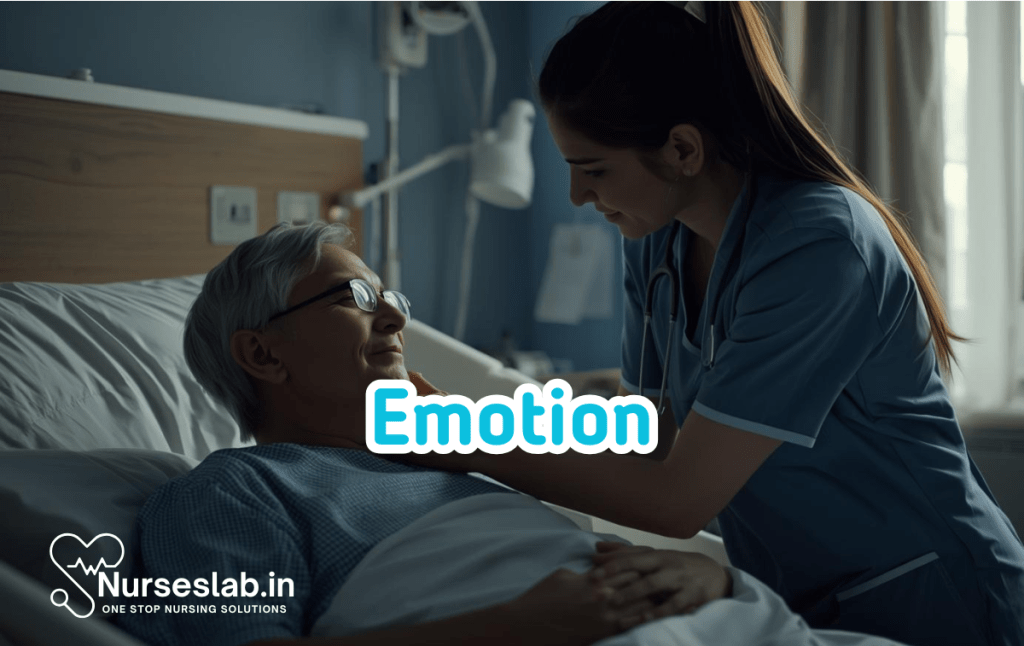
In clinical settings, emotions can govern how patients perceive illness, interact with healthcare professionals, and respond to interventions. Nurses, who are often at the forefront of patient care, must be equipped to identify, understand, and manage emotions—both their own and those of their patients. Emotional intelligence enhances nurse-patient relationships, reduces clinical errors, and contributes to a supportive healing environment. Thus, applied psychology, with its focus on the study and management of emotions, is indispensable in modern nursing practice.
Components of Emotion
Emotion is a complex psychological state that involves three key components: physiological arousal, cognitive processes, and behavioural expressions. Each component plays a distinct role in how emotions are experienced and displayed.
Physiological Component
This refers to the automatic bodily responses that accompany emotional experiences, such as increased heart rate, sweating, trembling, or hormonal changes. For example, fear may trigger the fight-or-flight response, while happiness may result in muscle relaxation and a sense of warmth. These physiological changes are mediated by the nervous and endocrine systems.
Cognitive Component
The cognitive aspect of emotion involves the interpretation and evaluation of stimuli. It includes thoughts, beliefs, and perceptions about the situation that elicits the emotion. For instance, two patients may respond differently to the same diagnosis based on their personal beliefs and past experiences, highlighting the role of cognitive appraisal in emotional experience.
Behavioural Component
Behavioural expressions of emotion include facial expressions, body language, gestures, and vocal tone. These are often observable and provide cues to others about a person’s emotional state. For nurses, recognising these behavioural indicators is essential for effective communication and intervention.
Types of Emotion
Emotions can be categorised in various ways, including primary and secondary emotions, as well as positive and negative emotions.
Primary Emotions
Primary emotions are innate, universal, and biologically programmed. They are experienced by all humans, regardless of culture or upbringing. Common primary emotions include:
- Happiness
- Sadness
- Fear
- Anger
- Disgust
- Surprise
These emotions are typically quick to arise and are often accompanied by distinct facial expressions.
Secondary Emotions
Secondary emotions develop through socialisation and experience. They are more complex and often involve a blend of primary emotions. Examples include:
- Guilt
- Shame
- Pride
- Jealousy
- Embarrassment
Secondary emotions are influenced by personal values, cultural norms, and social contexts.
Positive and Negative Emotions
Emotions are also classified based on their perceived impact:
- Positive emotions (e.g., joy, love, contentment) enhance well-being and promote healthy relationships.
- Negative emotions (e.g., anger, fear, sadness) may cause distress but are essential for adaptation and survival. They can prompt necessary actions such as seeking help or avoiding danger.
Both positive and negative emotions play crucial roles in health and recovery.
Characteristics of Emotions
Emotions possess several defining characteristics that influence how they are experienced and managed:
- Intensity: Emotions can range from mild to intense. The same emotion (e.g., anxiety) may be experienced as a fleeting worry or as overwhelming panic.
- Duration: The length of time an emotion persists varies. Some emotions are momentary, while others may linger for days or weeks.
- Expression: Emotions are expressed through verbal and non-verbal cues. Cultural norms influence how openly emotions are displayed.
- Universality: Certain emotions and their expressions are universal across cultures, as demonstrated by research on facial expressions (e.g., smiling when happy).
- Subjectivity: Emotional experiences are highly personal and influenced by individual differences, such as temperament and past experiences.
- Adaptability: Emotions are adaptive, helping individuals respond appropriately to environmental challenges and opportunities.
Development of Emotions
Emotional development is a lifelong process influenced by biological, psychological, and social factors. Understanding the trajectory of emotional growth aids nurses in providing age-appropriate care and support.
Emotional Development Across the Lifespan
- Infancy: Emotions are basic and primarily expressed through crying, smiling, or facial movements. Attachment to caregivers forms the foundation of emotional security.
- Childhood: Emotional vocabulary expands, and children learn to regulate emotions. Socialisation teaches acceptable ways to express feelings.
- Adolescence: Intense emotions and mood swings are common due to hormonal changes and identity formation. Peer relationships significantly affect emotional well-being.
- Adulthood: Emotional maturity increases, with improved self-regulation and empathy. Adults develop coping mechanisms to manage stress and loss.
- Old Age: Emotional responses may become subdued, but older adults often show greater resilience and wisdom in managing emotions. However, loneliness and loss can lead to emotional vulnerability.
Factors Influencing Emotional Growth
- Genetics: Temperament and predisposition to certain emotional responses are partly inherited.
- Environment: Family dynamics, cultural background, and social support shape emotional development.
- Life Experiences: Trauma, success, failure, and relationships influence emotional growth and resilience.
- Education: Learning about emotions and coping strategies fosters emotional intelligence.
- Health Status: Chronic illness or disability may challenge emotional development and adaptation.
Emotional Disorders
Emotional disorders are conditions characterised by disturbances in mood, affect, or emotional regulation. They significantly impact an individual’s functioning and quality of life. Nurses must be familiar with the common emotional disorders to provide effective care and support.
Common Emotional Disorders
- Depression: Marked by persistent sadness, loss of interest, fatigue, sleep and appetite disturbances, and feelings of worthlessness. Depression can lead to impaired daily functioning and increased risk of suicide.
- Anxiety Disorders: Include generalised anxiety disorder, panic disorder, social anxiety, and phobias. Symptoms are excessive worry, restlessness, muscle tension, and avoidance behaviour.
- Bipolar Disorder: Characterised by alternating episodes of depression and mania (elevated mood, increased energy, impulsivity). The disorder disrupts relationships, work, and self-care.
- Post-Traumatic Stress Disorder (PTSD): Develops after exposure to traumatic events. Symptoms include flashbacks, nightmares, hypervigilance, and emotional numbness.
- Adjustment Disorders: Emotional or behavioural symptoms in response to identifiable stressors (e.g., loss, illness, relocation). Symptoms may include sadness, anxiety, and impaired social or occupational functioning.
Symptoms and Impact on Health
Emotional disorders manifest in both psychological and physical symptoms. For example, depression can lead to chronic pain, gastrointestinal issues, or cardiovascular problems. Anxiety may cause palpitations, headaches, or insomnia. Untreated emotional disorders can hinder recovery from physical illness, reduce treatment adherence, and increase healthcare costs. Early identification and intervention are therefore critical in nursing care.
Changes in Emotional Reactions
Emotional reactions are dynamic and can change over time due to various factors such as age, illness, stress, and trauma.
Age-Related Changes
As individuals age, their emotional responses may become more regulated and less intense. Older adults often demonstrate greater emotional control and resilience, although they may also experience increased vulnerability to loneliness or grief.
Impact of Illness
Chronic or acute illnesses can alter emotional reactions. Patients may experience denial, anger, fear, or sadness in response to diagnosis and treatment. Physical symptoms, pain, and hospitalisation can heighten emotional distress, necessitating sensitive nursing interventions.
Effects of Stress and Trauma
Stressful events (such as loss, financial difficulties, or relationship problems) and trauma (such as accidents or abuse) can provoke intense emotional responses. Prolonged or unaddressed stress and trauma may lead to maladaptive coping, emotional blunting, or disorders such as PTSD.
Theories of Emotion
Multiple theories have been proposed to explain the nature and mechanisms of emotion. Understanding these theories helps nurses appreciate the complexity of emotional experiences and tailor interventions accordingly.
James-Lange Theory
This theory posits that emotions result from physiological reactions to stimuli. For example, we feel afraid because we tremble; the bodily response comes first, followed by the emotional experience. This underscores the importance of recognising physical signs of emotion in patients.
Cannon-Bard Theory
According to this theory, emotional experience and physiological arousal occur simultaneously but independently. For instance, seeing a snake triggers both fear and increased heart rate at the same time. This suggests that emotional and physical responses can be managed separately.
Schachter-Singer (Two-Factor) Theory
This theory highlights the role of cognitive appraisal. Emotional experience is the result of physiological arousal plus the interpretation of that arousal based on environmental cues. For example, a racing heart may be interpreted as excitement or fear depending on the context.
Lazarus Theory (Cognitive Appraisal Theory)
The Lazarus theory emphasises that cognitive appraisal (evaluation of a situation) precedes emotional and physiological responses. This means that how a patient perceives their illness or hospital environment will shape their emotional reactions, reinforcing the nurse’s role in providing information and reassurance.
Emotional Adjustments
Emotional adjustment refers to the strategies individuals use to cope with stress, adapt to changes, and maintain psychological well-being. Nurses play a key role in supporting patients’ emotional adjustments during illness and recovery.
Coping Mechanisms
- Problem-focused coping: Addressing the source of stress through practical solutions (e.g., seeking information, planning treatment).
- Emotion-focused coping: Managing emotional distress through relaxation, talking to others, or engaging in enjoyable activities.
- Avoidance coping: Withdrawing from or denying the problem, which may offer short-term relief but can be maladaptive in the long run.
Adaptation Strategies
- Acceptance: Coming to terms with the situation and focusing on what can be controlled.
- Positive reframing: Finding meaning or benefits in adversity.
- Seeking social support: Relying on family, friends, or support groups for emotional sustenance.
- Developing resilience: Building psychological strength to withstand and recover from challenges.
Emotion in Sickness
Illness often triggers a range of emotions, from fear and anxiety to anger and sadness. The interplay between physical and emotional health is well-documented, with each influencing the other in profound ways.
How Illness Affects Emotional State
A diagnosis of illness, particularly chronic or life-threatening conditions, can evoke shock, denial, anger, bargaining, depression, and eventually acceptance (as described in the stages of grief). Hospitalisation, pain, loss of independence, and uncertainty about the future can exacerbate emotional distress.
Psychosomatic Relationships
Psychosomatic refers to the interaction between mind and body, where emotional factors contribute to physical symptoms. For example, stress can lead to headaches, hypertension, or gastrointestinal problems. Emotional distress can weaken the immune system, delay healing, and increase susceptibility to infection. Conversely, improving emotional well-being can enhance recovery rates and quality of life.
Role of Nurses in Caring for Emotionally Sick Clients
Nurses are pivotal in recognising and addressing the emotional needs of patients. Their role extends beyond physical care to encompass psychological support, advocacy, and holistic healing.
Assessment of Emotional State
- Observation: Noting changes in mood, behaviour, and communication.
- Interviewing: Asking open-ended questions about feelings, fears, and coping strategies.
- Screening tools: Using validated questionnaires to assess depression, anxiety, or other emotional disorders.
- Collaboration: Consulting with mental health professionals when necessary.
Communication Skills
- Active listening: Giving full attention, showing empathy, and avoiding judgement.
- Non-verbal communication: Using appropriate eye contact, touch (when culturally acceptable), and body language to convey support.
- Providing information: Educating patients about their condition and treatment to reduce fear and uncertainty.
- Encouragement: Reinforcing strengths and coping abilities.
Interventions and Support Strategies
- Creating a therapeutic environment: Ensuring privacy, comfort, and respect.
- Relaxation techniques: Teaching deep breathing, progressive muscle relaxation, or mindfulness meditation.
- Facilitating social support: Encouraging family involvement and connecting patients to support groups.
- Referral: Identifying when specialist mental health care is needed and facilitating access.
- Crisis intervention: Responding promptly to suicidal ideation, severe distress, or behavioural emergencies.
Ethical Considerations
- Confidentiality: Protecting patient privacy regarding emotional and mental health information.
- Respect for autonomy: Involving patients in decisions about their care and respecting their choices.
- Cultural sensitivity: Being aware of and respecting cultural differences in emotional expression and coping.
- Non-judgemental attitude: Avoiding stigma and discrimination against those with emotional disorders.
Conclusion
Emotions are at the heart of human experience and play a crucial role in health, illness, and healing. For nurses, understanding the science and art of emotion is essential for delivering compassionate, effective, and holistic care. By recognising the components, types, and development of emotions, being vigilant for emotional disorders, appreciating the theories that explain emotional phenomena, and supporting emotional adjustments, nurses can significantly improve patient outcomes. The integration of applied psychology into nursing not only enhances patient care but also fosters the well-being and resilience of nurses themselves. As healthcare continues to evolve, the importance of emotional care and psychological insight in nursing practice cannot be overstated.
Recommendations for Nursing Practice:
- Continual education in applied psychology and emotional intelligence for all nursing professionals.
- Regular assessment of patients’ emotional states as part of routine care.
- Incorporation of psychosocial interventions into nursing care plans.
- Promotion of self-care and emotional resilience among nurses to prevent burnout.
- Advocacy for integrated mental health services within healthcare institutions.
By building a strong foundation in applied psychology and emotional care, nurses can truly make a difference in the lives of their patients and in the broader healthcare system.
REFERENCES
- R. Sreevani, Applied Psychology for Nurses, 5th Edition, 2024, Jaypee Publishers, ISBN: 978-9356966963.
- Xavier Belsiyal, Applied Psychology for Nurses, 1st Edition, July 15, 2023, Elsevier Publishers, ISBN: 978-8131266366
- Mary F Porter, Applied Psychology for Nurses, 27 October 2022, Legare Street Press, IBSN: 978-1015804302.
- Douglas A. Bernstein, Introduction to Clinical Psychology, 10th Edition, 31 October 2024, Cambridge University Press, ISBN: 978- 1009379298.
- Sailaxmi Gandhi, Basic and Applied Psychology for Nurses, First Edition, January 2023, Wolters Kluwer Publications, ISBN: 978-9395736534.
- Jacob Anthikad, Psychology for Graduate Nurses, 5th Edition, 30 January 2014, Jaypee Publishers, ISBN: 978-9351521549.
- Kumar, Rajesh. (2017). Basic Psychology for Nurses. https://www.researchgate.net/publication/337811601_Basic_Psychology_for_Nurses
Stories are the threads that bind us; through them, we understand each other, grow, and heal.
JOHN NOORD
Connect with “Nurses Lab Editorial Team”
I hope you found this information helpful. Do you have any questions or comments? Kindly write in comments section. Subscribe the Blog with your email so you can stay updated on upcoming events and the latest articles.