


Last Updated on January 14, 2026 by Nurseslab.in Editorial Team
Edema addresses fluid retention, swelling, and risk for impaired skin integrity. Nurses assess pitting, monitor weight and intake/output, elevate limbs, and educate patients on sodium restriction, mobility, and underlying conditions.
Edema is swelling caused by fluid build-up in the tissues. It can occur in any part of the body but is most noticeable in the arms, hands, legs, and feet.
Edema is a common finding and may go away on its own or may be a symptom of an underlying health condition, an allergic reaction, or an adverse effect of a medication.
Types of Edema
There are different types of edema (fluid retention) but the most common ones include:
1.Cerebral Edema:
This is a serious and life-threatening type of edema characterized by fluid buildup in the brain.
2.Pulmonary Edema:
This is another serious type of edema that occurs when fluid accumulates in the lungs. This causes shortness of breath and respiratory distress.
3.Lymphedema:
This condition typically occurs in the arms and legs and is associated with problems in the lymph nodes.
4.Peripheral Edema:
Edema in the extremities is usually a clinical manifestation of health conditions associated with the circulatory system, kidneys, or lymph nodes.
5.Pedal Edema:
This condition occurs when fluid is pooled in the lower legs and feet and is common among pregnant women.
A detailed physical assessment and medical history are essential to determine the cause of edema. Diagnostic tests that help uncover potential causes include ultrasounds, x-rays, MRIs, blood tests, and urinalysis.
Nursing Process
The management of edema depends on its severity and the underlying condition. Mild edema (fluid retention) will usually not require any interventions, as the swelling will subside on its own.
Edema of the brain or lungs will require drug therapy like diuretics to help the body expel excess fluid. The underlying condition causing the edema must also be managed and treated.
Nurses teach their patients interventions that can help improve swelling like repositioning and dietary modifications. Also, lifestyle modifications may be needed to reduce the recurrence of edema (fluid retention) along with adherence to the management of the underlying condition causing the edema.
Nursing Assessment
Nursing assessment for edema (fluid retention) focuses on identifying the underlying cause, evaluating the severity, and monitoring for complications. Here are the key components:
1. Health History Review
- Assess for underlying conditions such as heart failure, kidney disease, liver dysfunction, or recent trauma.
- Identify potential triggers like high sodium intake, prolonged immobility, or medication side effects.
- Review the patient’s history of fluid retention or previous episodes of edema.
2. Physical Examination
- Observe for swelling in affected areas, particularly in the extremities, face, or abdomen.
- Check for pitting edema by pressing on the swollen area and noting if an indentation remains.
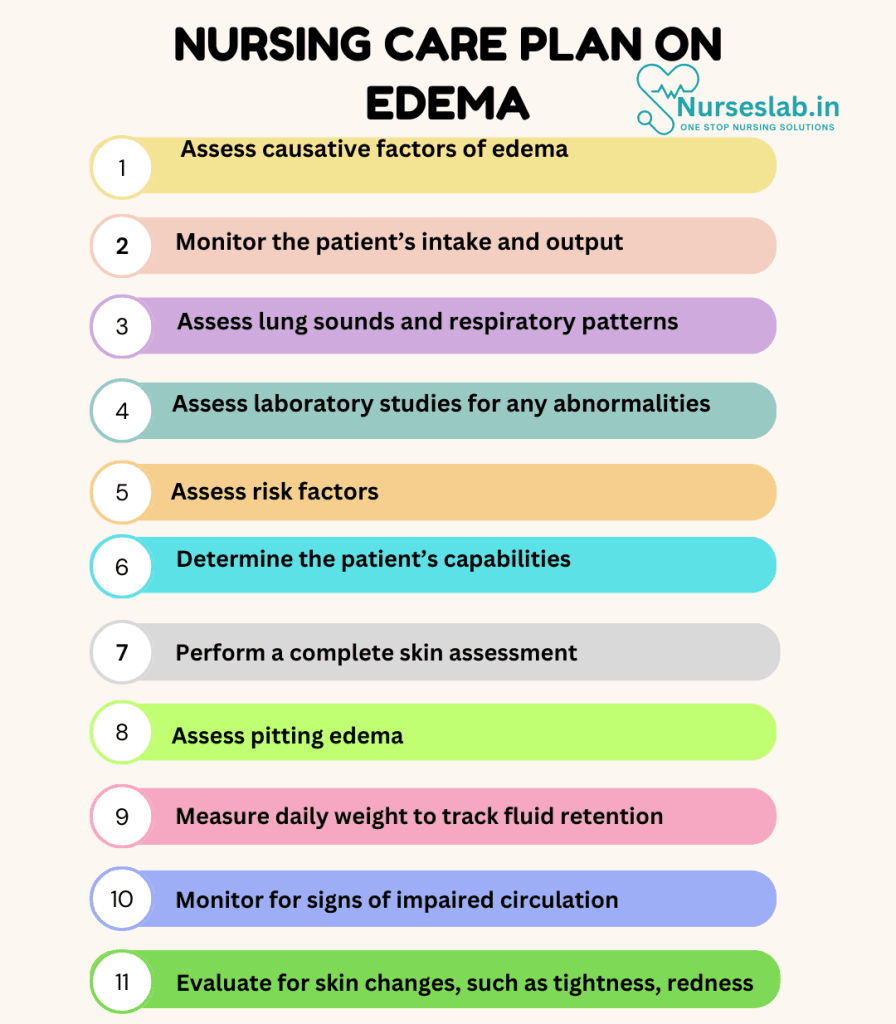
- Evaluate for skin changes, such as tightness, redness, or shiny appearance.
3. Circulatory and Respiratory Assessment
- Monitor for signs of impaired circulation, such as cool or pale skin and weak pulses.
- Assess for shortness of breath or crackles in the lungs, which may indicate pulmonary edema.
4. Diagnostic Procedures
- Measure daily weight to track fluid retention.
- Monitor intake and output to evaluate fluid balance.
- Review laboratory results, including serum albumin, electrolytes, and kidney function tests.
Nursing Interventions
Nursing interventions for edema focus on reducing fluid accumulation, improving circulation, and preventing complications. Here are some key interventions:
1. Fluid Management
- Administer prescribed diuretics to promote fluid excretion and monitor for electrolyte imbalances.
- Record intake and output and monitor daily weight to track fluid retention.
2. Positioning and Elevation
- Encourage the patient to elevate affected limbs above heart level to reduce swelling.
- Reposition frequently to prevent pressure on edematous areas and improve circulation.
3. Compression Therapy
- Apply compression stockings or wraps as prescribed to enhance venous return and reduce swelling.
- Educate the patient on proper use and care of compression garments.
4. Skin Care
- Keep the skin clean, dry, and moisturized to prevent breakdown and infection.
- Inspect edematous areas regularly for signs of redness, ulcers, or irritation.
5. Dietary Modifications
- Promote a low-sodium diet to minimize fluid retention.
- Encourage adequate hydration to support overall health and circulation.
6. Patient Education
- Teach the patient to recognize early signs of worsening edema, such as increased swelling or difficulty breathing.
- Provide guidance on lifestyle changes, including weight management and avoiding prolonged standing or sitting.
7. Monitoring and Follow-Up
- Monitor for complications like pulmonary edema or impaired circulation.
- Collaborate with healthcare providers to adjust treatment plans as needed.
Nursing Care Plans
Once the nurse identifies nursing diagnoses for edema, nursing care plans help prioritize assessments and interventions for both short and long-term goals of care. In the following section, you will find nursing care plan examples for edema.
Excess Fluid Volume
Excess fluid build-up in the body causes edema. Edema is characterized by excess fluid accumulating in the skin and surrounding tissues.
Nursing Diagnosis: Excess Fluid Volume
Related to:
- Disease processes
- Cardiac dysfunction
- Renal dysfunction
- Inflammatory process
- Loss of plasma proteins
- Excessive fluid intake
- Excessive sodium intake
- Ineffective medication self-management
- Deviations affecting fluid elimination
- Compromised regulatory mechanism
As evidenced by:
- Adventitious breath sounds
- Altered blood pressure
- Altered urine specific gravity
- Intake exceeds output
- Jugular vein distension
- Oliguria
- Edema
- Pulmonary congestion
- Weight gain over a short period
Expected Outcomes:
- The patient will demonstrate a reduction of edema through physical examination
- The patient will maintain clear lung sounds and the absence of symptoms of respiratory distress
Assessment:
1. Assess causative factors of edema.
Edema may be caused by several factors including an underlying medical condition, allergic reaction to a medication, or temporary water retention. Identifying the causative factor enables the healthcare team to formulate the most appropriate interventions and prevent further complications.
2. Monitor the patient’s intake and output.
Imbalanced fluid intake and urine output can indicate acute kidney injury or chronic renal failure and may cause complications like cardiac problems and pulmonary edema.
3. Assess lung sounds and respiratory patterns.
Excess fluid can cause pulmonary edema and respiratory distress. This is a serious condition that requires immediate intervention.
4. Assess laboratory studies for any abnormalities.
Fluid overload and edema can occur due to kidney injury. Laboratory tests such as urinalysis, BUN, and creatinine levels can indicate impaired kidney function.
Interventions:
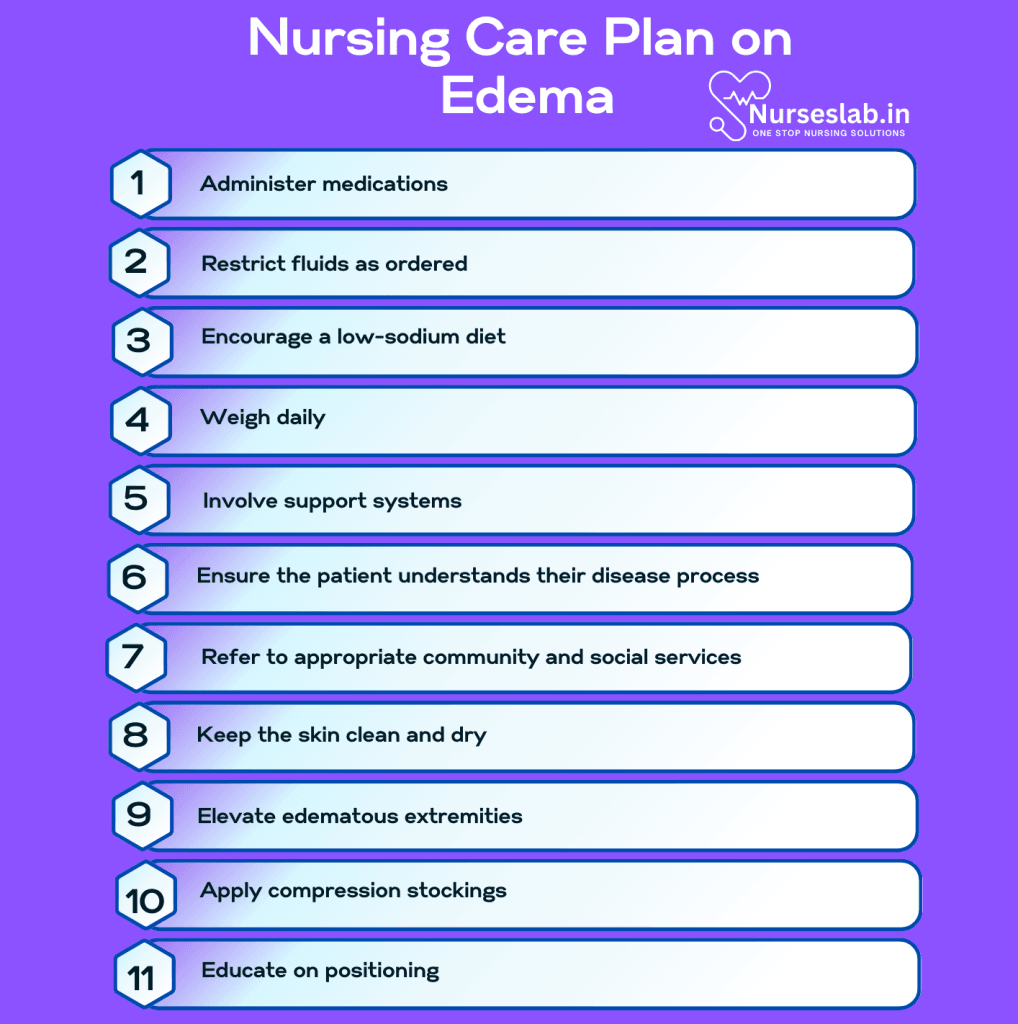
1. Administer medications.
Diuretics are provided to patients with edema and excess fluid accumulation to aid in fluid elimination by increasing urine output.
2. Restrict fluids as ordered.
Fluid restriction can decrease cardiac workload in patients with edema and fluid overload. Patients with congestive heart failure, for example, are often on fluid restrictions.
3. Encourage a low-sodium diet.
Educate patients that large amounts of sodium cause the body to retain water in an attempt to dilute it which causes fluid overload. Instruct on ways to lower sodium intake.
4. Weigh daily.
Daily weights can assess the effectiveness of diuretic therapy. Educate patients with conditions such as CHF that if they notice a weight gain of 5 lbs in a week or 2 lbs overnight, they should contact their doctor.
Ineffective Health Maintenance
Ineffective health maintenance of acute and chronic conditions can result in edema. Edema can be effectively treated and managed in compliance with prescribed treatment regimens.
Nursing Diagnosis: Ineffective Health Maintenance
Related to:
- Conflict between cultural beliefs and health practices
- Conflict between health behaviors and social norms
- Inadequate health resources
- Inadequate support system
- Inadequate trust in health care professionals
- Deficient knowledge
As evidenced by:
- Failure to take action that prevents health problem
- Inadequate commitment to a plan of action
- Inadequate interest in improving health
- Inadequate knowledge about basic health practices
- Ineffective choices in daily living for meeting health goals
Expected Outcomes:
- The patient will verbalize understanding of health maintenance goals and adhere to the treatment regimen
- The patient will demonstrate an improvement in health conditions and in turn, edema
Assessment:
1. Assess risk factors.
By identifying potential risk factors such as healthcare values, cultural beliefs, and prior decision-making, the nurse can proactively implement care to prevent complications.
2. Determine the patient’s capabilities.
Preventing and treating edema requires lifestyle modifications as well as strict treatment adherence. Assess the patient’s abilities to adhere to medications, meal planning, and appointment follow-up.
Interventions:
1. Involve support systems.
If available, involve family and other support persons in understanding the causes and prevention of edema.
2. Ensure the patient understands their disease process.
Edema is often a result of uncontrolled medical conditions such as cirrhosis, kidney disease, or heart failure. Educate the patient on the importance of managing these chronic conditions.
3. Refer to appropriate community and social services.
The involvement of a social worker or case manager may be necessary to provide routine follow-up. Disease management programs can provide ongoing education and monitoring to reduce readmissions and produce better health outcomes.
Risk for Impaired Skin Integrity
Patients with edema are at risk for impaired skin integrity. As fluid accumulates under the skin, it will appear tight and shiny. Skin can lose its integrity if edema persists, making it susceptible to injuries and possible infection.
Nursing Diagnosis: Risk for Impaired Skin Integrity
Related to:
- Edema
- Inflammatory process
- Disease condition
- Decreased tissue perfusion
- Alteration in skin turgor
As evidenced by:
A risk diagnosis is not evidenced by any signs and symptoms, as the problem has not occurred yet and the nursing interventions will be directed at the prevention of symptoms.
Expected Outcomes:
- The patient will verbalize understanding of risk factors and demonstrate interventions that prevent impaired skin integrity
- The patient will not experience impaired skin integrity
Assessment:
1. Perform a complete skin assessment.
Routine skin assessments help determine progression and appropriate interventions for patient care. Monitor for impaired skin integrity such as redness, nonblanchable skin, and open wounds.
2. Assess pitting edema.
Severe edema can be documented as pitting on a scale of 1+-4+ which is assessed by the depth of indentation in the skin without rebound when applying pressure.
Interventions:
1. Keep the skin clean and dry.
To reduce the risk of skin damage, the affected area must be kept clean and dry. Provide daily skin hygiene to patients who are bed bound and incontinence care as necessary.
2. Elevate edematous extremities.
Elevate edematous extremities above the level of the heart several times per day to ease swelling.
3. Apply compression stockings.
Compression stockings can prevent fluid build-up in the legs and ankles and improve circulation.
4. Educate on positioning.
Pregnancy, long periods of standing or sitting such as when flying can result in lower leg edema. Remind patients to elevate lower legs periodically.
Nursing Diagnoses and Rationales for Edema
1. Excess Fluid Volume
Rationale: Edema often results from an excess of fluid in the interstitial spaces. This may be due to heart failure, renal insufficiency, or excessive fluid intake. The goal is to assess the fluid balance and implement measures such as diuretics, fluid restriction, and monitoring intake and output to manage fluid volume effectively.
2. Impaired Skin Integrity
Rationale: Prolonged edema can stretch the skin, making it more susceptible to breakdown and infection. Regular skin assessments, moisture management, and use of protective barriers can help maintain skin integrity and prevent complications.
3. Ineffective Peripheral Tissue Perfusion
Rationale: Edema can impede blood flow to peripheral tissues, leading to decreased oxygenation and nutrient delivery. Elevating the affected limbs, encouraging movement, and possibly using compression therapy can improve tissue perfusion and reduce edema.
4. Activity Intolerance
Rationale: The swelling and discomfort associated with edema can limit physical activity. Assessing the patient’s tolerance for activity, encouraging gentle exercises, and providing rest periods can help improve mobility and endurance.
5. Risk for Impaired Gas Exchange
Rationale: Severe edema, particularly in cases of pulmonary edema, can impair gas exchange in the lungs. Monitoring respiratory status, administering oxygen therapy as needed, and managing the underlying cause of the edema are crucial steps in ensuring adequate oxygenation.
6. Body Image Disturbance
Rationale: Visible swelling can affect a patient’s body image and self-esteem. Providing emotional support, educating the patient about the condition, and involving them in their care plan can help address body image concerns.
7. Risk for Infection
Rationale: Edematous tissues are more prone to infection due to impaired circulation and skin integrity. Preventing infection involves maintaining hygiene, monitoring for signs of infection, and administering antibiotics if necessary.
8. Deficient Knowledge
Rationale: Patients may lack understanding of the causes and management of edema. Providing education about the condition, lifestyle modifications, and treatment options can empower patients to manage their health effectively.
REFERENCES
- Edema. Cleveland Clinic. May 17, 2022. https://my.clevelandclinic.org/health/diseases/12564-edema
- Edema. Mayo Clinic. December 1, 2020. https://www.mayoclinic.org/diseases-conditions/edema/diagnosis-treatment/drc-20366532
- InformedHealth.org [Internet]. Cologne, Germany: Institute for Quality and Efficiency in Health Care (IQWiG); 2006-. Causes and signs of edema. 2008 Nov 5 [Updated 2016 Dec 30]. Available from: https://www.ncbi.nlm.nih.gov/books/NBK279409/
- Perry, A.G., Potter, P.A., & Ostendorf, W.R. (2018). Clinical Nursing Skills & Techniques. Elsevier.
- McCance, K.L., & Huether, S.E. (2019). Pathophysiology: The Biologic Basis for Disease in Adults and Children. Elsevier.
- Ignatavicius, D.D., & Workman, M.L. (2020). Medical-Surgical Nursing: Patient-Centered Collaborative Care. Elsevier.
- Lewis, S.M., Bucher, L., Heitkemper, M.M., & Harding, M.M. (2020). Medical-Surgical Nursing: Assessment and Management of Clinical Problems. Elsevier.
- Ackley, B.J., & Ladwig, G.B. (2020). Nursing Diagnosis Handbook: An Evidence-Based Guide to Planning Care. Elsevier.
- Patient education: Edema (swelling) (Beyond the Basics). Richard H Sterns, MD. UpToDate. November 23, 2021. https://www.uptodate.com/contents/edema-swelling-beyond-the-basics/print
Stories are the threads that bind us; through them, we understand each other, grow, and heal.
JOHN NOORD
Connect with “Nurses Lab Editorial Team”
I hope you found this information helpful. Do you have any questions or comments? Kindly write in comments section. Subscribe the Blog with your email so you can stay updated on upcoming events and the latest articles.


