


Last Updated on January 15, 2026 by Nurseslab.in Editorial Team
Osteoarthritis (OA) is a degenerative joint disease and the most common type of arthritis. This condition is associated with the gradual loss of cartilage between joints and the formation of osteophytes or outgrowths at the margins of the joints. This is what causes pain and can lead to joint damage. The hands, knees, hips, and spine are most commonly affected.
While this condition is not part of the normal aging process, it is common in older adults with aging as a risk factor. It affects women more often than men.
Clinical manifestations of OA can range from mild discomfort to significant and severe disability and may include the following:
- Joint pain that intensifies with use
- Joint stiffness
- Joint inflammation
- Limited range of motion
- Heberden’s nodes
- Bouchard’s nodes
- Fatigue
This condition is diagnosed through an x-ray or MRI. These diagnostic tests can determine the presence of bone spurs and the stage of joint damage.
Nursing Process
Since there is no cure for osteoarthritis, nursing care focuses on pain management, comfort measures, preventing disability, and improving joint function. In more severe cases, nurses may care for patients following joint replacement surgery. Nurses can also educate patients on nonpharmacologic and outpatient strategies to reduce pain and improve mobility.
Nursing Assessment
Initial Evaluation
The initial evaluation of a patient with suspected osteoarthritis involves a thorough medical history and physical examination. Key aspects to assess include:
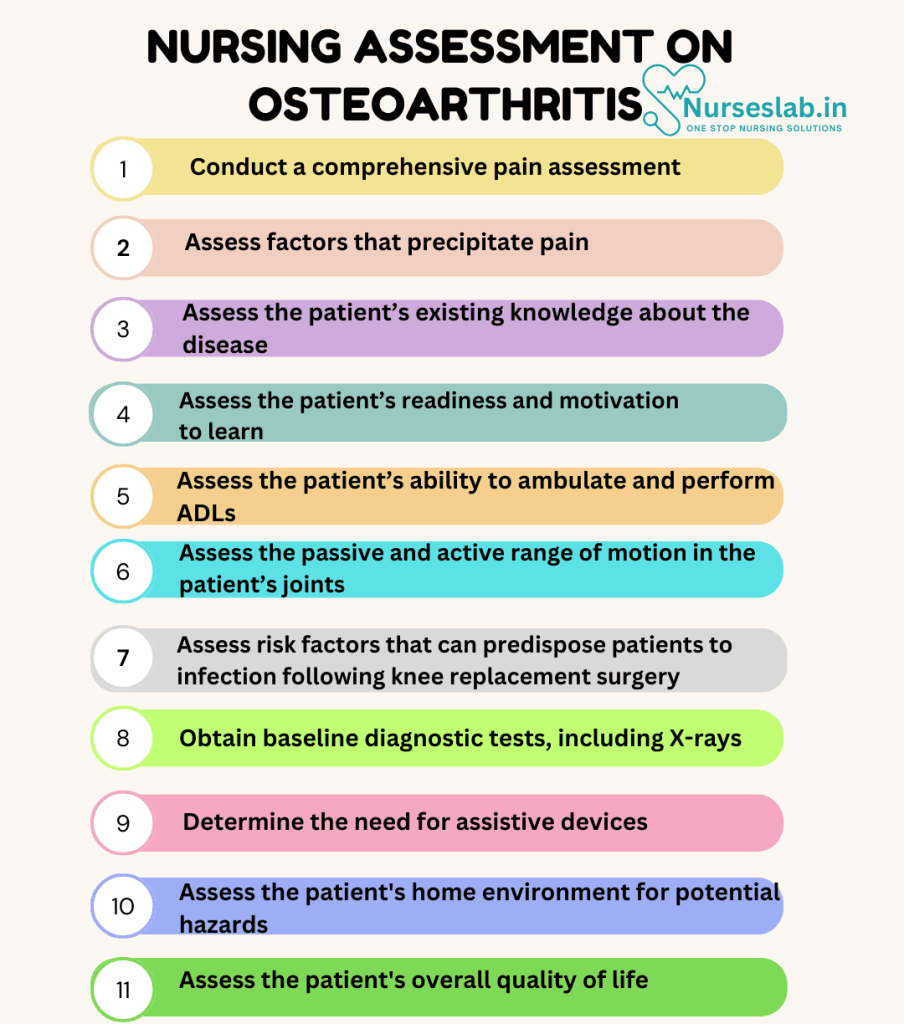
- Medical History: Review the patient’s history for risk factors such as age, obesity, previous joint injuries, and family history of OA. Inquire about symptoms such as joint pain, stiffness, and functional limitations, and note the duration and severity of these symptoms.
- Physical Examination: Perform a comprehensive physical examination focusing on the affected joints. Look for signs of joint swelling, tenderness, crepitus (a grating sensation), and reduced range of motion. Assess the patient’s gait and posture, as well as any deformities or muscle atrophy.
- Diagnostic Tests: Obtain baseline diagnostic tests, including X-rays, which can reveal joint space narrowing, osteophytes, and other changes indicative of OA. MRI and ultrasound may be used for a more detailed assessment of joint structures. Laboratory tests may be conducted to rule out other conditions with similar symptoms, such as rheumatoid arthritis.
Pain Assessment
Pain is a primary symptom of osteoarthritis and significantly impacts the patient’s quality of life. A thorough pain assessment is essential to guide treatment:
- Pain Intensity: Use standardized tools such as the Visual Analog Scale (VAS) or the Numeric Rating Scale (NRS) to quantify the intensity of the patient’s pain.
- Pain Location: Identify the specific joints affected by pain and assess whether the pain is localized or radiates to other areas.
- Pain Characteristics: Determine the nature of the pain (e.g., sharp, dull, aching) and any factors that exacerbate or alleviate it (e.g., activity, rest, medications).
- Impact on Function: Assess how pain affects the patient’s daily activities, including mobility, self-care, and sleep. Evaluate the patient’s coping mechanisms and psychological response to pain.
Functional Assessment
Osteoarthritis can lead to significant functional limitations. A functional assessment helps identify the extent of these limitations and informs the development of a personalized care plan:
- Mobility: Evaluate the patient’s ability to perform activities of daily living (ADLs) such as walking, climbing stairs, and transferring from sitting to standing.
- Dexterity: Assess fine motor skills and the patient’s ability to perform tasks requiring hand function, such as buttoning clothes or using utensils.
- Assistive Devices: Determine the need for assistive devices (e.g., canes, walkers, orthotic supports) to improve mobility and reduce the risk of falls.
- Home Environment: Assess the patient’s home environment for potential hazards and barriers to mobility. Recommend modifications to enhance safety and accessibility.
Psychosocial Assessment
Osteoarthritis can have a significant impact on the patient’s psychological and social well-being. A comprehensive psychosocial assessment includes:
- Emotional Health: Screen for symptoms of depression, anxiety, and stress, which are common in patients with chronic pain. Provide support and referrals to mental health professionals as needed.
- Social Support: Evaluate the patient’s support system, including family, friends, and community resources. Encourage participation in support groups and social activities to reduce isolation.
- Quality of Life: Assess the patient’s overall quality of life and identify areas where interventions can improve well-being. Discuss the patient’s goals and preferences for managing OA.
Nursing Interventions
Effective nursing interventions for osteoarthritis focus on pain management, improving joint function, and enhancing the patient’s overall quality of life:
Pain Management
Pain management is a central component of OA care. Nurses can implement various strategies to help patients manage pain effectively:
- Pharmacologic Interventions: Administer prescribed medications, including nonsteroidal anti-inflammatory drugs (NSAIDs), acetaminophen, and topical analgesics. Educate patients about the proper use and potential side effects of these medications.
- Non-Pharmacologic Interventions: Encourage the use of heat and cold therapy to alleviate pain and reduce inflammation. Teach patients relaxation techniques such as deep breathing, meditation, and guided imagery to help manage pain.
- Physical Therapy: Refer patients to physical therapy for individualized exercise programs that strengthen muscles, improve joint flexibility, and reduce pain. Collaborate with physical therapists to ensure continuity of care.
Joint Protection and Activity Modification
Protecting the joints and modifying activities can help prevent further damage and reduce pain:
- Joint Protection Techniques: Teach patients techniques to protect their joints, such as using larger joints to perform tasks, avoiding repetitive movements, and maintaining proper body mechanics.
- Activity Modification: Recommend modifications to daily activities to reduce joint stress. For example, suggest using ergonomic tools, pacing activities, and incorporating rest breaks.
- Weight Management: Educate patients about the importance of maintaining a healthy weight to reduce the load on weight-bearing joints. Provide nutritional counseling and support for weight loss if needed.
Exercise and Physical Activity
Regular exercise is essential for managing osteoarthritis and improving joint function:
- Exercise Programs: Develop individualized exercise programs that include aerobic, strength training, and flexibility exercises. Emphasize low-impact activities such as swimming, cycling, and walking.
- Encouragement and Motivation: Encourage patients to stay active and maintain a regular exercise routine. Provide motivation and support to help patients overcome barriers to physical activity.
- Monitoring and Adjustment: Monitor the patient’s response to exercise and adjust the program as needed to ensure it remains safe and effective. Address any concerns or difficulties the patient may encounter.
Patient Education and Self-Management
Educating patients about osteoarthritis and promoting self-management are key components of nursing intervention:
- Education: Provide comprehensive education about OA, including its causes, symptoms, and treatment options. Use understandable language and visual aids to enhance learning.
- Self-Management Strategies: Teach patients self-management strategies to help them take an active role in their care. This includes pain management techniques, activity modification, and recognizing early signs of complications.
- Support and Resources: Connect patients with resources such as support groups, educational materials, and community programs. Encourage them to seek support from healthcare professionals and peers.
Nursing Care Plans
Once the nurse identifies nursing diagnoses for osteoarthritis, nursing care plans help prioritize assessments and interventions for both short and long-term goals of care. In the following section, you will find nursing care plan examples for osteoarthritis.
Chronic Pain
Osteoarthritis causes ongoing pain. Pain is often worse with activity and may improve with rest. Stiffness in the morning does not last beyond 30 minutes.
Nursing Diagnosis: Chronic Pain
Related to:
- Disease process
- Joint stiffness
- Joint degeneration
- Bone deformities
- Inflammatory process
- Bone spurs
As evidenced by:
- Diaphoresis
- Distraction behavior
- Expressive behavior
- Guarding behavior
- Facial grimacing
- Positioning to ease pain
- Reports pain intensity
- Hesitancy to move joints
Expected outcomes:
- The patient will report pain relief and comfort
- The patient will demonstrate two strategies to reduce pain
Assessment:
1. Conduct a comprehensive pain assessment.
Results from a comprehensive pain assessment are critical to identifying the underlying cause of pain and the effectiveness of treatment.
2. Assess factors that precipitate pain.
Pain in osteoarthritis may be associated with specific movements of affected joints. Joint pain when waking is normal but should dissipate within 15-20 minutes.
Interventions:
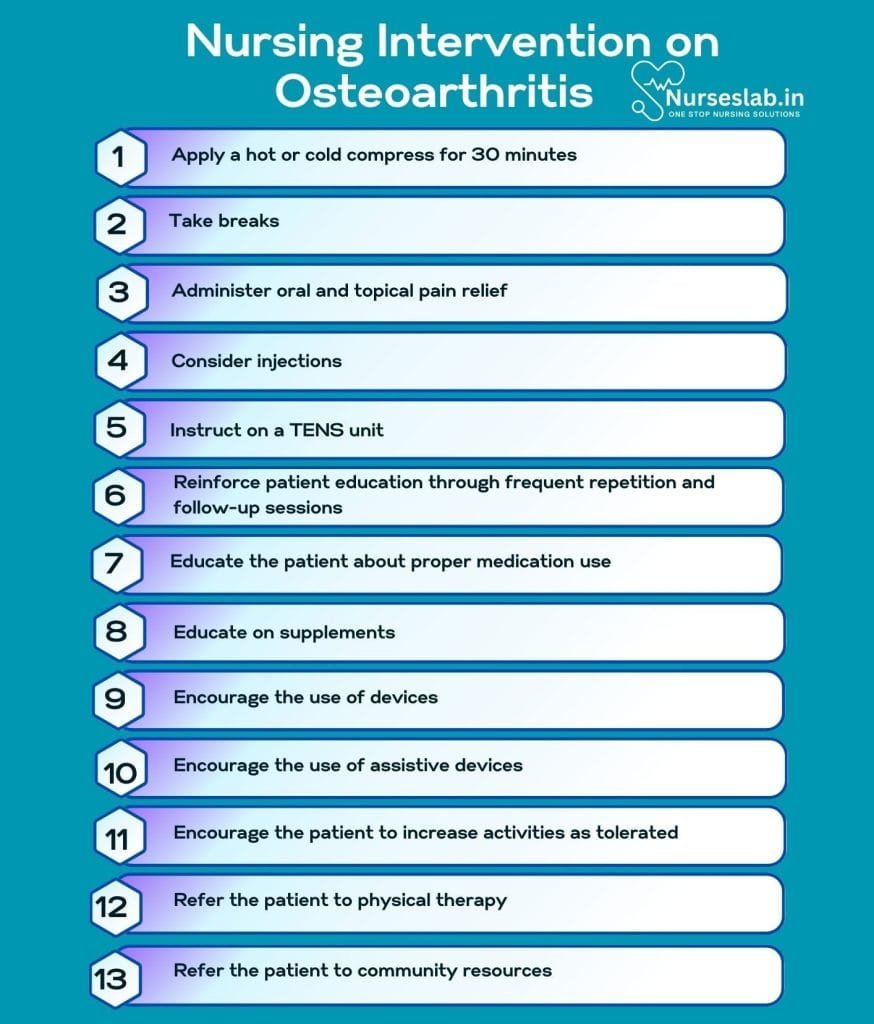
1. Apply a hot or cold compress for 30 minutes.
Heat improves blood flow and reduces pain reflexes. Cold can help reduce inflammation, pain, and muscle elasticity. Each patient may prefer one over the other.
2. Take breaks.
Joint pain with OA often worsens with activity and lessens with rest. The patient may need to take breaks when working, exercising, or completing tasks.
3. Administer oral and topical pain relief.
NSAIDs are recommended for OA pain. Over-the-counter topical creams and gels such as diclofenac are commonly used to relieve arthritic pain.
4. Consider injections.
Cortisone injections injected into the joint space can relieve pain temporarily for a few weeks. Lubrication injections that use hyaluronic acid may help cushion the joints.
5. Instruct on a TENS unit.
Transcutaneous electrical nerve stimulation sends low-voltage currents to the area around the joint to provide short-term relief.
Deficient Knowledge
A lack of knowledge about osteoarthritis and its management options can decrease the patient’s adherence to the treatment regimen. If left untreated, osteoarthritis can affect mobility function and quality of life.
Nursing Diagnosis: Deficient Knowledge
Related to:
- Misinformation
- Inadequate access to resources
- Inadequate commitment to learning
- Inadequate awareness of resources
- Inadequate interest in learning
- Inadequate participation in care planning
As evidenced by:
- Inaccurate follow-through of instructions
- Poor adherence to therapy or exercise
- Inaccurate statements about a topic
- Development of irreversible joint damage
Expected outcomes:
- The patient will explain the disease process and the necessity of the treatment regimen
- The patient will adhere to the treatment regimen and exhibit improved symptoms, as evidenced by reduced pain and stiffness and a more active lifestyle
Assessment:
1. Assess the patient’s existing knowledge about the disease.
Evaluating the patient’s understanding and how the patient perceives the management of osteoarthritis allows healthcare providers to plan appropriate care and provide correct patient education.
2. Assess the patient’s readiness and motivation to learn.
The patient’s motivation and readiness to learn will affect retention and adherence to the treatment regimen.
Interventions:
1. Reinforce patient education through frequent repetition and follow-up sessions.
Frequent and regular education sessions promote medication and self-care management adherence with improved outcomes.
2. Educate the patient about proper medication use.
NSAIDs are commonly prescribed in the treatment regimen of osteoarthritis but can have side effects if taken incorrectly. Proper timing, dosage, and use of medications should be provided to the patient.
3. Educate on supplements.
If prescribed by the provider, the nurse can educate the patient on supplements for joint health. These often include collagen, glucosamine, and chondroitin.
4. Encourage the use of devices.
The nurse can educate the patient on devices to make everyday activities easier. Electric can openers and large-handled utensils can reduce stress on finger joints. Rubber grips on knobs and handles can make turning easier. Gloves and knee/elbow sleeves can keep joints aligned for better mobility.
Impaired Physical Mobility
Osteoarthritis can cause bone deformity and degrade cartilage which can cause permanent joint damage leading to impaired physical mobility.
Nursing Diagnosis: Impaired Physical Mobility
Related to:
- Disease process
- Joint pain
- Joint stiffness
- Muscle weakness
- Fatigue
- Restricted joint movement
- Inflammatory process
- Decreased muscle strength
As evidenced by:
- Decreased range of motion
- Difficulty turning
- Engages in substitutions for movement
- Expresses discomfort
- Uncoordinated movement
- Sedentary lifestyle
Expected outcomes:
- The patient will perform activities without discomfort and with minimal supervision
- The patient will participate in therapy and exercise to improve mobility
Assessment:
1. Assess the patient’s ability to ambulate and perform ADLs.
It is important to determine the extent of the patient’s physical immobility to determine the resources needed.
2. Assess the passive and active range of motion in the patient’s joints.
Osteoarthritis causes joint deformity and stiffness leading to progressive loss of range of motion.
Interventions:
1. Encourage the use of assistive devices.
The correct use of assistive devices can help improve the patient’s mobility, promote safety, and reduce the risk of injury.
2. Encourage the patient to increase activities as tolerated.
The patient may be hesitant to participate in exercise that can cause pain, but increasing activity can help improve and maintain joint function and independence. The patient can partake in low-impact activities like swimming and biking, which may be easier on joints.
3. Refer the patient to physical therapy.
A physical therapist can help formulate an exercise program addressing the immobility and joint dysfunction of the patient.
4. Refer the patient to community resources.
Local gyms or clubs may offer “joint-friendly” classes such as chair yoga or water aerobics that also provide socialization.
Nursing Diagnoses and Rationales for Osteoarthritis
1. Chronic Pain
Rationale: Osteoarthritis (OA) is characterized by the degeneration of joint cartilage and the underlying bone, which often causes chronic pain and discomfort in affected joints. Assessing the patient’s pain level regularly, providing appropriate analgesics, and implementing non-pharmacological interventions such as physical therapy, heat/cold therapy, and relaxation techniques can help manage pain and improve quality of life.
2. Impaired Physical Mobility
Rationale: Joint stiffness, pain, and swelling associated with OA can significantly impair a patient’s ability to move and perform daily activities. Encouraging a balance of rest and activity, providing assistive devices (e.g., walkers, canes), and referring the patient to occupational and physical therapy can enhance mobility and independence.
3. Activity Intolerance
Rationale: Patients with OA may experience fatigue and reduced endurance due to chronic pain and joint stiffness. Assessing the patient’s activity tolerance, planning activities with adequate rest periods, and gradually increasing activity levels through a tailored exercise program can help build endurance and reduce fatigue.
4. Self-Care Deficit
Rationale: The physical limitations caused by OA may prevent patients from performing basic self-care tasks such as bathing, dressing, and grooming. Assessing the patient’s ability to perform self-care, providing adaptive equipment, and teaching energy conservation techniques can support the patient’s independence and maintain their dignity.
5. Risk for Falls
Rationale: Joint instability, muscle weakness, and impaired mobility increase the risk of falls in patients with OA. Conducting fall risk assessments, ensuring a safe home environment, educating the patient on fall prevention strategies, and encouraging the use of assistive devices can reduce the likelihood of falls and related injuries.
6. Ineffective Coping
Rationale: The chronic nature of OA and its impact on physical function and quality of life can lead to emotional distress, anxiety, and depression. Assessing the patient’s coping mechanisms, providing emotional support, referring to counseling services, and promoting involvement in support groups can help patients manage the psychological effects of OA.
7. Sleep Disturbance
Rationale: Pain and discomfort from OA can interfere with the patient’s ability to sleep, leading to sleep disturbances and fatigue. Assessing sleep patterns, providing pain relief before bedtime, and recommending sleep hygiene practices can improve sleep quality and overall well-being.
8. Knowledge Deficit
Rationale: Patients may lack understanding about OA, its progression, and effective management strategies. Educating patients and their families about the disease process, treatment options, lifestyle modifications (e.g., weight management, exercise), and the importance of adherence to prescribed therapies can empower them to manage their condition effectively.
9. Social Isolation
Rationale: The limitations imposed by OA may lead to reduced social interactions and feelings of isolation. Encouraging participation in social activities, facilitating support group involvement, and promoting communication with family and friends can help patients stay connected and maintain a sense of community.
10. Altered Nutrition: Less Than Body Requirements
Rationale: Pain and reduced mobility may lead to decreased appetite and difficulty obtaining or preparing food, resulting in inadequate nutrition. Assessing nutritional status, providing dietary education, and coordinating with a dietitian to develop an appropriate meal plan can ensure the patient receives adequate nutrition.
REFERENCES
- Osteoarthritis. Sen R, Hurley JA. [Updated 2022 May 1]. In: StatPearls [Internet]. Treasure Island (FL): StatPearls Publishing; 2022 Jan-. Available from: https://www.ncbi.nlm.nih.gov/books/NBK482326/
- ACCN Essentials of Critical Care Nursing. 3rd Edition. Suzanne M. Burns, MSN, RRT, ACNP, CCRN, FAAN, FCCM, FAANP. 2014. McGraw Hill Education.
- Medical-Surgical Nursing: Concepts for Interprofessional Collaborative Care. 9th Edition. Donna D. Ignatavicius, MS, RN, CNE, ANEF. 2018. Elsevier, Inc.
- Abramoff B, Caldera FE. Osteoarthritis: Pathology, Diagnosis, and Treatment Options. Med Clin North Am. 2020 Mar;104(2):293-311. doi: 10.1016/j.mcna.2019.10.007. Epub 2019 Dec 18. PMID: 32035570.
- Ackley, B. J., Ladwig, G. B., Makic, M. B., Martinez-Kratz, M. R., & Zanotti, M. (2023). Nursing diagnoses handbook: An evidence-based guide to planning care. St. Louis, MO: Elsevier.
- Glyn-Jones S, Palmer AJ, Agricola R, Price AJ, Vincent TL, Weinans H, Carr AJ. Osteoarthritis. Lancet. 2015 Jul 25;386(9991):376-87. doi: 10.1016/S0140-6736(14)60802-3. Epub 2015 Mar 4. PMID: 25748615.
- Harding, M. M., Kwong, J., & Hagler, D. (2022). Lewis’s Medical-Surgical Nursing: Assessment and Management of Clinical Problems, Single Volume. Elsevier.
- Herdman, T. H., Kamitsuru, S., & Lopes, C. (2024). NANDA International Nursing Diagnoses – Definitions and Classification, 2024-2026.
- Ignatavicius, D. D., Rebar, C., & Heimgartner, N. M. (2023). Medical-Surgical Nursing: Concepts for Clinical Judgment and Collaborative Care. Elsevier.
- Martel-Pelletier J, Barr AJ, Cicuttini FM, Conaghan PG, Cooper C, Goldring MB, Goldring SR, Jones G, Teichtahl AJ, Pelletier JP. Osteoarthritis. Nat Rev Dis Primers. 2016 Oct 13;2:16072. doi: 10.1038/nrdp.2016.72. PMID: 27734845.
- Silvestri, L. A. (2023). Saunders comprehensive review for the NCLEX-RN examination. St. Louis, MO: Elsevier.
- Osteoarthritis. Arthritis Foundation. 2022. From: https://www.arthritis.org/diseases/osteoarthritis
- Osteoarthritis. Mayo Clinic. Reviewed: June 16, 2021. From: https://www.mayoclinic.org/diseases conditions/osteoarthritis/symptoms-causes/syc-20351925
- Osteoarthritis (OA). Centers for Disease Control and Prevention. Reviewed: July 27, 2020. From: https://www.cdc.gov/arthritis/basics/osteoarthritis.htm
- Osteoarthritis (OA). Versus Arthritis. 2022. From: https://www.versusarthritis.org/about-arthritis/conditions/osteoarthritis/
Stories are the threads that bind us; through them, we understand each other, grow, and heal.
JOHN NOORD
Connect with “Nurses Lab Editorial Team”
I hope you found this information helpful. Do you have any questions or comments? Kindly write in comments section. Subscribe the Blog with your email so you can stay updated on upcoming events and the latest articles.


