


Lydia E. Hall’s Care, Core, Cure Theory—often called the Three Cs of Nursing is a beautifully structured model that emphasizes holistic, patient-centered care. Developed in the 1960s, it remains a cornerstone in nursing education and practice, especially in rehabilitation and chronic care settings.
Life Story of Lydia Hall
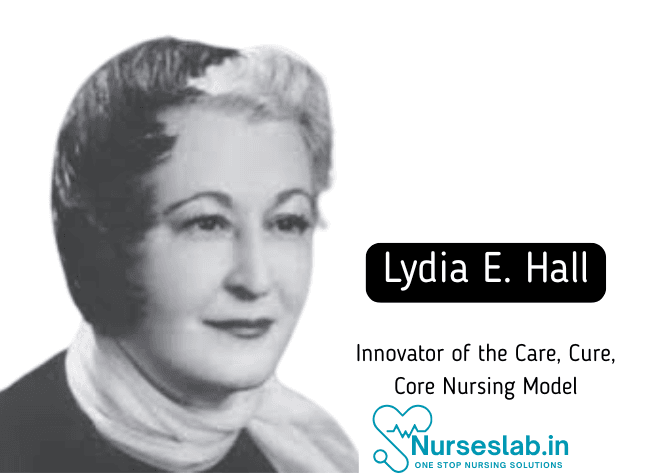
Lydia Eloise Hall (1906–1969) was a visionary nurse theorist whose Care, Cure, Core Theory transformed nursing into a more holistic, patient-centered practice. Her work emphasized the interplay between physical care, emotional support, and medical treatment, and she remains a celebrated figure in nursing education and rehabilitation.
Early Life & Education
- Born September 21, 1906, in New York City, named after her maternal grandmother.
- Moved to York, Pennsylvania shortly after birth, where her father practiced medicine.
- Graduated from York Hospital School of Nursing in 1927.
- Earned a BS in Public Health Nursing from Columbia University in 1932.
- Completed Master’s in teaching Natural Sciences at Columbia in 1942.
- Pursued doctoral studies but did not complete her dissertation.
- Married Reginald A. Hall in 1945, adopting the name by which she became known.
Career & Contributions
- Began as a public health nurse, focusing on preventive care.
- Worked with the New York Heart Association and Visiting Nurses Association.
- Became a professor at Teachers College, Columbia University, teaching nursing students to serve as medical consultants.
- Served as a research analyst in cardiovascular disease.
- Founded and directed the Loeb Center for Nursing and Rehabilitation at Montefiore Medical Center (1957–1962), pioneering nurse-led care for chronically ill patients.
Care, Cure, Core Theory
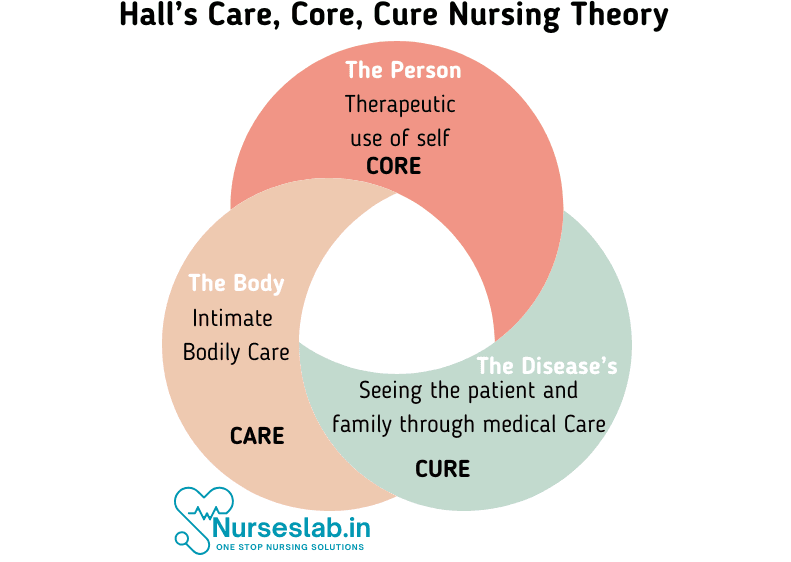
Hall’s model consists of three overlapping circles:
- Care – The nurturing role of nurses, including comfort, hygiene, and emotional support.
- Core – The patient’s inner self, values, and goals; nurses help patients explore and express their feelings.
- Cure – Medical treatment and interventions, shared with other healthcare professionals.
Her theory emphasized:
- The nurse-patient relationship as central to healing.
- The patient’s autonomy and emotional well-being.
- Nurses as advocates and educators, not just caregivers.
Legacy & Honors
- Authored 21 publications and numerous articles on chronic illness and nursing theory.
- Inducted into the American Nurses Association Hall of Fame in 1984.
- Her work influenced rehabilitation nursing, long-term care, and nursing education across North America.
Final Years
- Passed away on February 27, 1969, at Queens Hospital, New York.
- Her legacy lives on in every nurse who sees the patient as a whole person—body, mind, and spirit.
Major Concepts
Lydia Hall’s theory emphasizes that nursing has three interrelated components that guide holistic patient care:
- Care (Nursing Component)
- Focuses on the body and physical needs of the patient.
- Includes basic nursing activities: hygiene, comfort, nutrition, medication administration.
- Nurse’s Role: Direct caregiver ensuring physical well-being.
- Core (Person/Patient Component)
- Focuses on the person as a whole, including their emotions, values, and self-identity.
- Emphasizes therapeutic communication and interpersonal relationships.
- Nurse’s Role: Counselor or facilitator, helping the patient understand themselves and participate in care.
- Cure (Medical Component)
- Focuses on the illness and medical treatment provided by the healthcare team.
- Relates to curative interventions and procedures to treat the disease.
- Nurse’s Role: Collaborates with physicians and other professionals to ensure effective treatment.
Care Dimension
The Care dimension in Hall’s theory refers to the nurturing and supportive aspects of nursing. It involves the emotional and psychological care provided to patients, fostering a therapeutic relationship that allows the nurse to understand the patient’s feelings, fears, and concerns.
This dimension acknowledges that patients’ experiences and perceptions greatly influence their healing process. Nurses are encouraged to offer empathy, active listening, and compassionate care to enhance the patient’s sense of well-being and promote healing.
Cure Dimension
The Cure dimension focuses on the medical interventions and treatments provided to address the patient’s physical health conditions. This aspect is often associated with traditional medical care, including medications, surgeries, and other therapeutic interventions. While the cure dimension is vital for addressing the patient’s medical needs, Hall emphasized the necessity of combining it with the care and core dimensions for more effective and holistic healing.
Core Dimension
The Core dimension represents the essence of an individual, encompassing their unique beliefs, values, and spirituality. Hall highlighted the significance of understanding the patient’s core dimension to tailor care plans that resonate with their identity and foster a sense of dignity and respect. Acknowledging the core dimension helps nurses provide culturally competent care, which is crucial in promoting positive patient outcomes.
Assumptions
- The patient is central to the healing process—not just the illness.
- Nursing is a collaborative and holistic discipline.
- The Care circle is where nurses make their most distinctive contribution.
Application of Hall’s Care, Core, Cure Theory
- Holistic Patient Care
- Nurses integrate care, core, and cure to address the patient’s physical, emotional, and medical needs.
- Example: A nurse not only gives medication (cure) but also provides emotional support (core) and assists with hygiene (care).
- Patient-Centered Approach
- Encourages active patient participation in care planning and decision-making.
- Builds a therapeutic nurse-patient relationship that promotes healing.
- Interdisciplinary Collaboration
- Nurses coordinate with physicians, therapists, and other professionals to ensure effective disease management (cure) while maintaining compassionate care (care) and emotional support (core).
- Nursing Focus on the “Care” Aspect
- Hall emphasized that nurses primarily contribute through the “care” component, but true healing requires integrating core and cure.
Case Scenario 1: Postoperative Abdominal Surgery Patient
Scenario:
Mr. A, 50 years old, is 3 days post-abdominal surgery. He complains of pain at the incision site, is anxious about recovery, and requires help with ambulation and wound care.
Assessment
- Limited mobility due to pain
- Surgical incision with dressing intact
- Verbalizes fear about complications
Nursing Diagnoses
- Acute Pain related to surgical incision.
- Anxiety related to hospitalization and fear of complications.
Nursing Interventions Based on Hall’s Theory
- Care (Body/Physical Needs):
- Provide wound care and dressing changes to promote healing.
- Assist with ambulation and hygiene to enhance comfort.
- Core (Emotional/Psychological Support):
- Encourage patient to express fears and concerns about surgery.
- Provide therapeutic communication and emotional reassurance.
- Cure (Medical/Illness Management):
- Administer prescribed analgesics and monitor pain levels.
- Collaborate with the physician for postoperative progress evaluation.
Expected Outcome:
- Pain is controlled within 30 minutes after analgesic administration.
- Patient verbalizes reduced anxiety and participates in early mobilization.
Case Scenario 2: Patient with Uncontrolled Diabetes Mellitus
Scenario:
Mrs. B, 60 years old, is admitted for poorly controlled Type 2 Diabetes. She reports fatigue, blurred vision, and poor adherence to medication and diet.
Assessment
- Blood sugar: 280 mg/dL
- Feels overwhelmed and frustrated with lifestyle restrictions
- Mild foot neuropathy present
Nursing Diagnoses
- Ineffective Health Management related to lack of adherence to therapeutic regimen.
- Risk for Impaired Skin Integrity related to peripheral neuropathy and hyperglycemia.
Nursing Interventions Based on Hall’s Theory
- Care (Body/Physical Needs):
- Monitor blood sugar and foot condition daily.
- Provide skin care and foot protection to prevent injury.
- Core (Emotional/Psychological Support):
- Educate the patient on diabetes self-care (diet, medication, exercise).
- Offer emotional support and motivational counseling to enhance self-care engagement.
- Cure (Medical/Illness Management):
- Administer insulin or oral hypoglycemics as prescribed.
- Coordinate with the physician and dietitian for a comprehensive care plan.
Expected Outcome:
- Blood sugar decreases to target range within 3–5 days.
- Patient demonstrates understanding of self-care and participates in daily foot inspection and medication adherence.
REFERENCES
- Gordon, S. C. (2015). Early conceptualizations about nursing. In M. C. Smith & M. E. Parker (editors), Nursing theories and nursing practice (4th ed.) (pp. 55-66). F. A. Davis Company.
- Meleis, A. I. (2011). Theoretical nursing: Development and progress. Lippincott Williams & Wilkins
- NursingBird. (2024, January 26). Lydia Hall: Nursing Theory of Care, Cure, and Core + Its Application and Importance. https://nursingbird.com/nursing-conceptualization-theory-care-cure-core/
- Alligood, M., & Tomey, A. (2010). Nursing theorists and their work, seventh edition (No ed.). Maryland Heights: Mosby-Elsevier.
- Hall, L. (1965) Another view of nursing care and quality. Address given at Catholic University Workshop, Washington, D.C. In George, J. (Ed.). Nursing theories: the base for professional nursing practice. Norwalk, Connecticut: Appleton & Lange.
Stories are the threads that bind us; through them, we understand each other, grow, and heal.
JOHN NOORD
Connect with “Nurses Lab Editorial Team”
I hope you found this information helpful. Do you have any questions or comments? Kindly write in comments section. Subscribe the Blog with your email so you can stay updated on upcoming events and the latest articles.


