


Last Updated on January 14, 2026 by Nurseslab.in Editorial Team
Knee replacement surgery is a procedure that replaces parts of an injured knee joint to relieve knee discomfort and resolve issues with mobility and ambulation. Artificial plastic or metal parts are used to replace worn-out bone and cartilage.
The knees are one of the most complex joints in the body. They support most of the body’s weight, making it prone to injuries and overuse.
There are two types of knee replacement surgeries:
- Total knee replacement – The entire joint is replaced, the most common procedure
- Partial knee replacement – Only one compartment of the knee joint is repaired
Knee replacement surgery is major surgery and is only recommended if other conservative treatments like steroid injections and physiotherapy have not relieved discomfort or improved mobility. The most common conditions requiring this procedure include the following:
- Osteoarthritis
- Rheumatoid arthritis
- Disorders causing unusual bone growth
- Knee injury
- Knee deformity
Providers assess patients for eligibility by performing x-rays to view the extent of damage and observe the patient’s mobility and range of motion.
As with any procedure, there are risks involved. The most common complications include:
- Bleeding at the surgical site
- Infection
- Blood clots
- Nerve damage
- Continued pain
Nursing Process
Nurses are involved with obtaining consent before surgery and educating the patient on what to expect following the procedure. Nurses will monitor the patient post-op for pain and complications. The nurse will administer ordered medications, promote mobility, and educate the patient and family prior to discharge, including coordinating outpatient or home-care services.
Nursing Assessment
This surgery involves replacing the damaged knee joint with a prosthetic implant. Effective nursing assessment are essential to ensure successful outcomes and promote patient recovery.
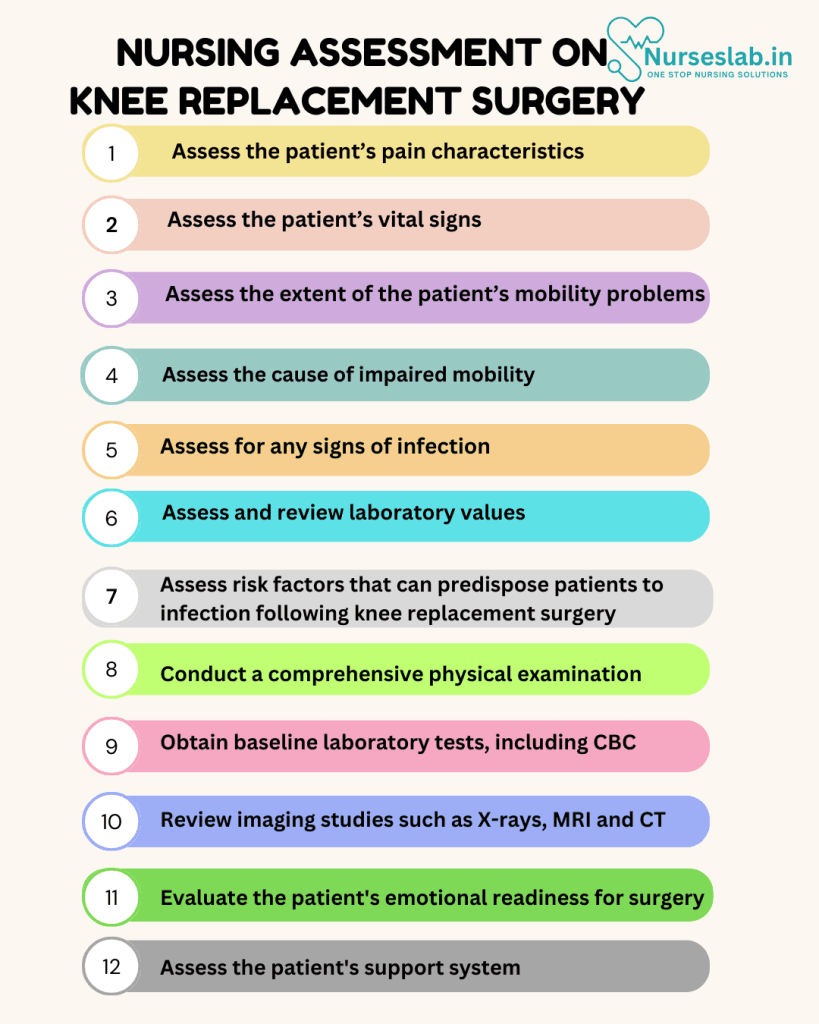
Preoperative Assessment
A thorough preoperative assessment is crucial to identify any potential risks and prepare the patient for surgery. Key components include:
Medical History: Review the patient’s medical history for conditions that may affect the surgery or recovery, such as cardiovascular disease, diabetes, or previous surgeries. Assess for allergies to medications or materials used in the prosthetic implant.
Physical Examination: Conduct a comprehensive physical examination focusing on the affected knee. Evaluate the range of motion, stability, and level of pain. Assess the patient’s overall physical condition, including cardiovascular and respiratory status.
Laboratory Tests: Obtain baseline laboratory tests, including complete blood count (CBC), coagulation profile, and electrolyte levels. These tests help identify any abnormalities that need to be addressed before surgery.
Imaging Studies: Review imaging studies such as X-rays, MRI, or CT scans to evaluate the extent of knee damage and plan the surgical approach.
Psychosocial Assessment
Assess the patient’s psychological and social well-being to identify any factors that may affect their recovery:
Emotional Status: Evaluate the patient’s emotional readiness for surgery, including their understanding of the procedure and expectations for outcomes. Provide support and education to address any anxieties or concerns.
Social Support: Assess the patient’s support system, including family, friends, and community resources. Ensure they have adequate assistance for postoperative care and transportation.
Nursing Intervention
Nursing interventions are integral to the effective management of knee replacement surgery. By conducting thorough assessments, creating individualized care plans, and offering continuous support, nurses play a pivotal role in improving the health outcomes and quality of life for patients undergoing this procedure.
Preoperative Interventions
Implementing preoperative interventions can help prepare the patient for surgery and improve outcomes:
Patient Education: Provide comprehensive education about the surgery, including the procedure, potential risks, and expected outcomes. Use visual aids and clear language to enhance understanding.
Preoperative Exercises: Teach the patient exercises to strengthen the muscles around the knee and improve flexibility. These exercises can aid in postoperative recovery.
Pain Management: Discuss pain management strategies with the patient, including the use of medications and non-pharmacological methods such as relaxation techniques.
Nutritional Support: Ensure the patient has proper nutrition to support healing and recovery. Address any nutritional deficiencies before surgery.
Postoperative Interventions
Postoperative care is critical to ensure a smooth recovery and prevent complications:
Pain Management: Monitor the patient’s pain levels and administer prescribed analgesics. Use a multimodal approach to pain management, including medications and non-pharmacological methods.
Mobility and Rehabilitation: Encourage early mobilization and participation in physical therapy. Assist the patient with exercises to improve range of motion and strength. Educate the patient on the use of assistive devices such as walkers or crutches.
Wound Care: Monitor the surgical site for signs of infection or complications. Provide instructions on wound care and dressing changes.
Prevention of Complications: Implement measures to prevent common postoperative complications such as deep vein thrombosis (DVT), infection, and pneumonia. Encourage the patient to perform deep breathing exercises and use compression devices if prescribed.
Patient Education and Support
Educating and supporting the patient throughout the recovery process is essential for successful outcomes:
Home Care Instructions: Provide the patient with detailed instructions for home care, including wound care, pain management, and mobility exercises. Ensure they understand the importance of follow-up appointments.
Self-Management Strategies: Teach the patient self-management strategies to promote independence and active participation in their recovery. This includes recognizing signs of complications and knowing when to seek medical attention.
Nursing Care Plans
Once the nurse identifies nursing diagnoses for a knee replacement surgery, nursing care plans help prioritize assessments and interventions for both short and long-term goals of care. In the following section, you will find nursing care plan examples for a knee replacement surgery.
Acute Pain
Acute pain after a surgical procedure like knee replacement is expected and is managed with pain medications. If the pain doesn’t decrease over the next few days to weeks after surgery, this may indicate a developing complication.
Nursing Diagnosis: Acute Pain
Related to:
- Effects of surgery
- Inflammatory process
- Surgical intervention
- Muscle spasms
- Nerve damage
- Presence of prosthesis
- Joint tenderness
As evidenced by:
- Altered physiological parameters
- Diaphoresis
- Facial expressions of pain
- Reports of pain
- Guarding behavior
- Distraction behavior
- Protective behavior
- Positioning to ease pain
Expected outcomes:
- Patient will report decreasing pain relief following surgery.
- Patient will effectively demonstrate interventions to relieve pain and discomfort.
Assessment:
1. Assess the patient’s pain characteristics.
A comprehensive pain assessment, including the location, intensity, duration, and characteristics, can guide the effectiveness of treatment. Pain that is unrelieved or severe may signal a complication.
2. Assess the patient’s vital signs.
Unrelieved pain can have physiological and psychological consequences like anxiety and altered vital signs, resulting in negative health outcomes.
Interventions:
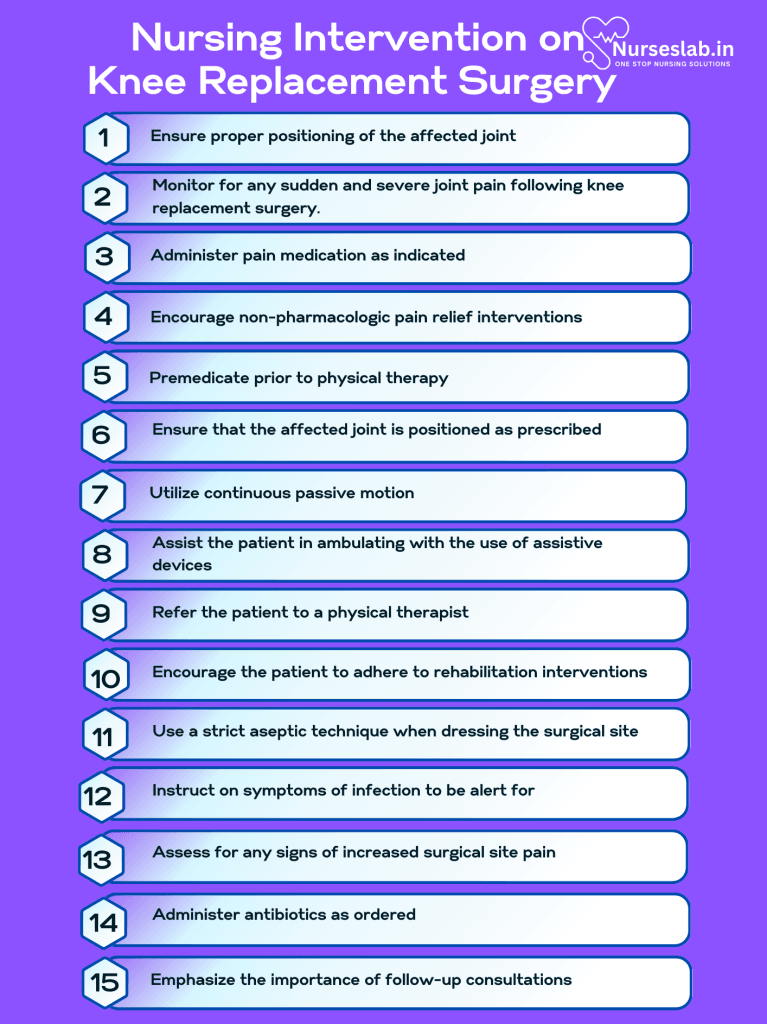
1. Ensure proper positioning of the affected joint.
Proper positioning of the affected joint after knee replacement can help reduce muscle spasms and prevent tension on the new knee prosthesis. The nurse can use pillows and wedges to keep the knee straight. Elevating the knee for short periods can reduce swelling.
2. Monitor for any sudden and severe joint pain following knee replacement surgery.
Sudden and severe joint pain after knee replacement can indicate a developing complication like blood clots, infection, or prosthesis dislocation.
3. Administer pain medication as indicated.
Opioid analgesics are prescribed to help relieve surgical site pain, while NSAIDs help with inflammation and are often prescribed together.
4. Encourage non-pharmacologic pain relief interventions.
Nonpharmacologic pain relief interventions can help reduce muscle tension, enhance coping abilities, and refocus attention, relieving overall discomfort. Encourage rest, distraction, and alternating ice and heat.
5. Premedicate prior to physical therapy.
Ambulation and physical therapy start immediately. Movement will be painful at the beginning, and the nurse can help the patient adhere to treatment by premedicating prior.
Impaired Physical Mobility
Knee joint injury can cause pain and affect a patient’s mobility. The goal of knee replacement surgery is to relieve discomfort and improve mobility. The recovery process and physical rehabilitation can be long-term and is essential to improved movement.
Nursing Diagnosis: Impaired Physical Mobility
Related to:
- Musculoskeletal impairment
- Joint pain or discomfort
- Surgical intervention
- Presence of prosthesis
- Joint stiffness
As evidenced by:
- Altered gait
- Decreased range of motion
- Difficulty ambulating
- Postural instability
- Uncoordinated movement
- Slowed movement
- Painful ambulation
- Decreased muscle strength
- Use of assistive devices
- Inability to participate in activities
Expected outcomes:
- Patient will demonstrate independence in ambulating and positioning.
- Patient will participate in physical therapy as ordered.
Assessment:
1. Assess the extent of the patient’s mobility problems.
The patient’s mobility and range of motion should be assessed before surgery as a baseline. After recovering from surgery, reassessment will demonstrate the success or limitations of the surgery.
2. Assess the cause of impaired mobility.
Several factors, including arthritis or a traumatic injury, may cause the inability to ambulate and move efficiently. Patients who have had knee replacement surgery may be anxious to ambulate, in pain, or fear falling.
Interventions:
1. Ensure that the affected joint is positioned as prescribed.
Proper positioning of the knee joint after knee replacement surgery can ensure the stabilization of the prosthesis, promote recovery, and reduce the risk of injuries.
2. Utilize continuous passive motion.
Continuous passive motion (CPM) is a machine that moves the knee joint passively to prevent stiffness and pain and improve mobility.
3. Assist the patient in ambulating with the use of assistive devices.
Assistive devices like walkers, crutches, canes, and wheelchairs can help the patient ambulate independently as their mobility improves.
4. Refer the patient to a physical therapist.
Physical therapy is required after knee replacement surgery as this can help strengthen affected muscle groups and promote recovery. PT may be inpatient, outpatient, or at the patient’s home.
5. Encourage the patient to adhere to rehabilitation interventions.
Early initiation of postoperative exercises and ambulation promotes early recovery and healing and prevents complications.
Risk for Infection
There is an increased risk of infection after a knee replacement surgery. The infection can occur in the surgical wound or around the artificial implants and may develop weeks or months after discharge from the hospital.
Nursing Diagnosis: Risk for Infection
Related to:
- Inadequate primary defenses
- Impaired skin integrity
- Invasive procedure
- Implantation of a foreign body or prosthesis
- Decreased mobility
As evidenced by:
A risk diagnosis is not evidenced by signs and symptoms, as the problem has not occurred yet, and nursing interventions will be directed at the prevention of signs and symptoms.
Expected outcomes:
- Patient will remain free from any symptoms of infection and demonstrate timely wound healing.
- Patient will demonstrate interventions that can help prevent infection.
Assessment:
1. Assess for any signs of infection.
Signs of surgical site infection include delayed healing, bleeding, redness, tenderness, warmth, swelling, and pain.
2. Assess and review laboratory values.
Alterations in laboratory values like increased white blood cell count can indicate a developing infection.
3. Assess risk factors that can predispose patients to infection following knee replacement surgery.
Patients with seropositive rheumatoid arthritis or those who previously had a knee fracture have a higher risk of developing an infection after knee replacement surgery.
Interventions:
1. Use a strict aseptic technique when dressing the surgical site.
Aseptic technique prevents contamination and infection of the surgical site.
2. Instruct on symptoms of infection to be alert for.
Educate the patient and their family to monitor for fever, increased swelling, redness, or drainage at the incision site. Contact the healthcare provider if this is observed.
3. Assess for any signs of increased surgical site pain.
Increased surgical site pain described as deep, dull, constant, and aching can indicate a developing joint infection.
4. Administer antibiotics as ordered.
Antibiotic therapy is often given prophylactically after knee replacement surgery.
5. Emphasize the importance of follow-up consultations.
Follow-up consultations are important in monitoring patients after knee replacement surgery to ensure they are not developing complications like infection.
Nursing Diagnoses and Rationales for Knee Replacement Surgery
1. Acute Pain
Rationale: Knee replacement surgery involves significant tissue manipulation and trauma, leading to postoperative pain. Effective pain management is crucial for promoting mobility and recovery. Regular pain assessments, timely administration of analgesics, and incorporating non-pharmacological pain relief methods can help manage pain effectively. Educating patients on pain management techniques and ensuring they are involved in the decision-making process can enhance their comfort and satisfaction.
2. Impaired Physical Mobility
Rationale: Postoperative immobility due to pain, swelling, and the surgical procedure itself can affect a patient’s ability to move. Early mobilization, implementing individualized physiotherapy plans, and providing assistive devices can facilitate movement and prevent complications like deep vein thrombosis. Educating patients on the importance of mobility and engaging them in goal setting can improve adherence to rehabilitation protocols.
3. Risk for Infection
Rationale: Surgical wounds are susceptible to infections. Monitoring for signs of infection, maintaining sterile techniques during wound care, and educating patients on proper wound hygiene can reduce the risk of infection. Ensuring patients understand the importance of adhering to their antibiotic regimen and follow-up appointments is also essential.
4. Deficient Knowledge
Rationale: Patients may lack understanding of postoperative care, rehabilitation processes, and potential complications. Providing comprehensive education on pain management, wound care, activity restrictions, and signs of complications empowers patients and promotes adherence to recovery protocols. Using clear, simple language and providing written materials can enhance patient understanding and retention.
5. Impaired Skin Integrity
Rationale: The surgical incision and potential immobility increase the risk of skin breakdown. Regular assessment of the surgical site, ensuring proper wound care, and encouraging repositioning can help maintain skin integrity. Educating patients on the importance of monitoring their skin and reporting any changes is also vital.
6. Risk for Deep Vein Thrombosis (DVT)
Rationale: Reduced mobility and surgical trauma increase the risk of DVT. Implementing prophylactic measures such as anticoagulants, compression stockings, and encouraging early ambulation can mitigate this risk. Educating patients on the signs and symptoms of DVT and the importance of preventive measures is crucial.
7. Impaired Comfort
Rationale: Postoperative discomfort from pain, swelling, and limited mobility can affect a patient’s overall comfort. Providing a comfortable environment, utilizing positioning techniques to alleviate pressure, and incorporating complementary therapies such as ice packs and relaxation techniques can enhance patient comfort. Regularly assessing and addressing any discomfort can improve the patient’s recovery experience.
8. Anxiety
Rationale: Surgery and the postoperative recovery period can cause anxiety due to pain, fear of complications, and concerns about mobility. Offering emotional support, providing clear information about the recovery process, and involving patients in their care can help alleviate anxiety. Encouraging patients to express their concerns and providing reassurance can also promote a sense of security.
9. Activity Intolerance
Rationale: Postoperative pain and reduced endurance can limit a patient’s ability to perform activities. Gradually increasing activity levels, incorporating structured rehabilitation exercises, and setting realistic activity goals can help build endurance. Educating patients on pacing themselves and recognizing signs of overexertion is important for safe activity progression.
10. Powerlessness
Rationale: The reliance on healthcare providers and potential complications can lead to feelings of powerlessness. Empowering patients by involving them in their care plans, setting achievable goals, and providing education on self-care can enhance their sense of control. Encouraging self-management and promoting autonomy are key strategies in addressing this diagnosis.
REFERENCES
- ACCN Essentials of Critical Care Nursing. 3rd Edition. Suzanne M. Burns, MSN, RRT, ACNP, CCRN, FAAN, FCCM, FAANP. 2014. McGraw Hill Education.
- Doenges, M. E., Moorhouse, M. F., & Murr, A. C. (2008). Nurse’s Pocket Guide Diagnoses, Prioritized Interventions, and Rationales (11th ed.). F. A. Davis Company.
- Knee Replacement. NHS. Retrieved From: https://www.nhs.uk/conditions/knee-replacement/
- Knee Replacement Surgery Procedure. Johns Hopkins Medicine. 2022. From: https://www.hopkinsmedicine.org/health/treatment-tests-and-therapies/knee-replacement-surgery-procedure
- Lewis’s Medical-Surgical Nursing. 11th Edition, Mariann M. Harding, RN, Ph.D., FAADN, CNE. 2020. Elsevier, Inc.
- Total Knee Replacement. OrthoInfo. Jared R. H. Foran, MD, FAAOS. Retrieved From: https://orthoinfo.aaos.org/en/treatment/total-knee-replacement/
- Ackley, B. J., Ladwig, G. B., Makic, M. B., Martinez-Kratz, M. R., & Zanotti, M. (2023). Nursing diagnoses handbook: An evidence-based guide to planning care. St. Louis, MO: Elsevier.
- Harding, M. M., Kwong, J., & Hagler, D. (2022). Lewis’s Medical-Surgical Nursing: Assessment and Management of Clinical Problems, Single Volume. Elsevier.
- Herdman, T. H., Kamitsuru, S., & Lopes, C. (2024). NANDA International Nursing Diagnoses – Definitions and Classification, 2024-2026.
- Ignatavicius, D. D., Rebar, C., & Heimgartner, N. M. (2023). Medical-Surgical Nursing: Concepts for Clinical Judgment and Collaborative Care. Elsevier.
- Lv H, Yang N. Clinical effect of application of nursing concept of rehabilitation surgery for improvement of quality of postoperative recovery in orthopedics. J Orthop Surg Res. 2021 Jul 30;16(1):471. doi: 10.1186/s13018-021-02610-3. PMID: 34330306; PMCID: PMC8323299.
- Parker RJ. Evidence-based practice: caring for a patient undergoing total knee arthroplasty. Orthop Nurs. 2011 Jan-Feb;30(1):4-8; quiz 9-10. doi: 10.1097/NOR.0b013e3182057451. PMID: 21278547.
- Silvestri, L. A. (2023). Saunders comprehensive review for the NCLEX-RN examination. St. Louis, MO: Elsevier.
- Yang D, Feng R, Liu L. Effect of comprehensive nursing based on evidence-based nursing on reducing the incidence of pressure ulcers in patients undergoing posterior orthopedic surgery. Medicine (Baltimore). 2023 Sep 22;102(38):e35100. doi: 10.1097/MD.0000000000035100. PMID: 37746975; PMCID: PMC10519454.
Stories are the threads that bind us; through them, we understand each other, grow, and heal.
JOHN NOORD
Connect with “Nurses Lab Editorial Team”
I hope you found this information helpful. Do you have any questions or comments? Kindly write in comments section. Subscribe the Blog with your email so you can stay updated on upcoming events and the latest articles.


