


Last Updated on January 16, 2026 by Nurseslab.in Editorial Team
A nursing care plan on vertigo addresses dizziness, balance issues, and risk for injury. Nurses assess symptoms, monitor vital signs, and implement safety measures. Education on position changes, hydration, and medication adherence supports recovery and confidence
Vertigo is a sensation that makes the patient feel that the surrounding environment is spinning or moving, resulting in dizziness and poor balance.
This condition is often caused by a problem with the inner ear but may also occur due to infections or tumors in the brain. Typical causes include:
- Benign paroxysmal positional vertigo (BPPV) (the most common cause)
- Meniere’s disease
- Labyrinthitis or vestibular neuritis
- Brain injuries
- Stroke
- Migraine headaches
- Multiple sclerosis
Clinical manifestations of vertigo are often triggered by a change in the position of the head and result in:
- Nausea and vomiting
- Loss of balance
- Tinnitus
- Motion sickness
- Ear fullness
- Dizziness
Romberg’s test, Fukuda-Unterberger’s test, and head impulse test are evaluations that the provider can perform quickly without equipment to assess for vertigo. CT scans and MRIs can assess for underlying conditions like tumors or a stroke.
Nursing Process
Managing vertigo will depend on various factors, including the root cause but may include vestibular rehabilitation, drug therapy, or surgery. Nursing care priorities for patients with vertigo include improving visual disturbances with head movement, decreasing the risk of falls, improving balance and dizziness, and providing accurate information about the condition and its treatment options.
Nursing Assessment
The initial evaluation of a patient with vertigo involves a comprehensive medical history and physical examination. Key aspects to assess include:
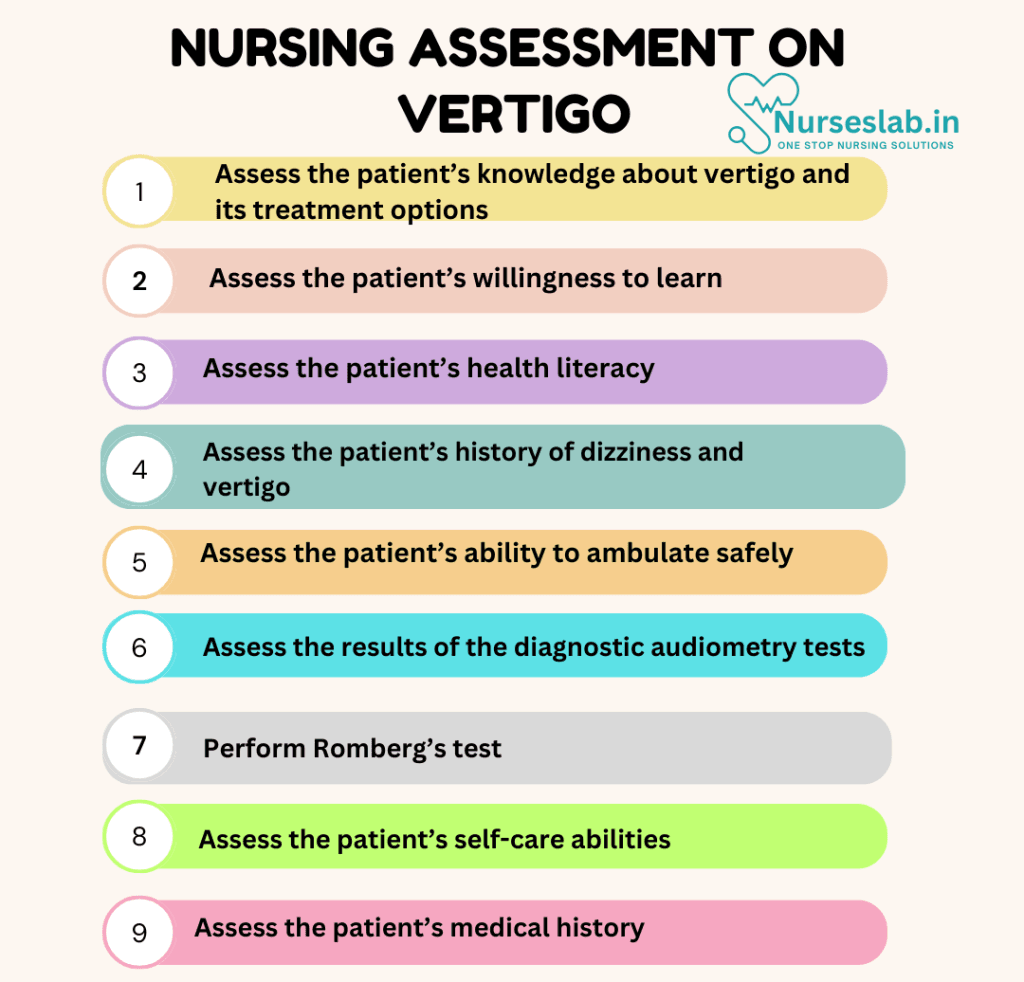
Medical History: Review the patient’s history for potential causes of vertigo, such as recent infections, head injuries, or a history of vestibular disorders. Inquire about the nature, duration, and frequency of vertigo episodes, as well as associated symptoms such as nausea, vomiting, hearing loss, and tinnitus.
Physical Examination: Conduct a thorough physical examination focusing on the head, neck, and neurological systems. Look for signs of nystagmus, gait instability, and any abnormalities in eye movements that may indicate vestibular dysfunction.
Diagnostic Tests: Consider ordering diagnostic tests such as audiometry, vestibular function tests, and imaging studies (e.g., MRI or CT scan) to identify underlying causes and confirm the diagnosis of vertigo.
Nursing Interventions
Nurses ensure that patients receive holistic, compassionate, and person-centered care, ultimately leading to successful management of vertigo and enhanced well-being.

Symptom Management
Effective symptom management is crucial in helping patients cope with vertigo. Interventions include:
Medication Administration: Administer medications prescribed by the healthcare provider to alleviate vertigo symptoms. Common medications include antihistamines, anticholinergics, benzodiazepines, and antiemetics.
Positional Manoeuvres: Perform positional maneuvers such as the Epley maneuver or the Semont maneuver for patients with benign paroxysmal positional vertigo (BPPV) to reposition the otoliths within the inner ear and reduce vertigo episodes.
Hydration and Nutrition: Encourage patients to maintain adequate hydration and a balanced diet, as dehydration and nutritional deficiencies can exacerbate vertigo symptoms. Advise patients to avoid caffeine, alcohol, and high-sodium foods, which may trigger vertigo episodes.
Patient Education
Educating patients about vertigo and its management is essential for promoting self-care and preventing recurrence. Key points to cover include:
Understanding Vertigo: Provide information about the causes and mechanisms of vertigo, helping patients understand their condition and the importance of adherence to treatment plans.
Activity Modification: Advise patients to avoid sudden head movements, changes in position, and activities that can provoke vertigo. Encourage them to rise slowly from sitting or lying positions to reduce the risk of falls.
Vestibular Rehabilitation: Educate patients about vestibular rehabilitation exercises, which can improve balance and reduce vertigo symptoms. These exercises may include gaze stabilization, balance training, and habituation exercises.
Family Involvement
Involving the patient’s family in the treatment process is crucial for comprehensive care:
- Provide family therapy to address any relational issues and improve family dynamics.
- Educate family members about vertigo and how they can support their loved one’s recovery.
- Encourage family members to participate in the patient’s care plan and attend therapy sessions.
Nursing Care Plans
Once the nurse identifies nursing diagnoses for vertigo, nursing care plans help prioritize assessments and interventions for both short and long-term goals of care. In the following section, you will find nursing care plan examples for vertigo.
Deficient Knowledge
Patient education is essential for patients experiencing vertigo to promote adherence to the treatment regimen and prevent injuries.
Nursing Diagnosis: Deficient Knowledge
Related to:
- Inadequate information
- Inadequate interest in learning
- Inadequate participation in care planning
- Misinterpretation of causes of vertigo
As evidenced by:
- Inaccurate follow-through of instructions
- Inaccurate statements about vertigo
- Nonadherence to rehabilitative exercises
Expected outcomes:
- Patient will verbalize understanding of the causes of vertigo and treatment options.
- Patient will demonstrate measures to help manage vertigo and its related symptoms.
Assessment:
1. Assess the patient’s knowledge about vertigo and its treatment options.
Understanding the learning needs of the patient can help determine additional information to help the patient manage their vertigo.
2. Assess the patient’s willingness to learn.
The patient’s motivation and willingness to learn can affect their adherence to the treatment regimen and utilization of treatment options.
3. Assess the patient’s health literacy.
Health literacy is closely related to healthcare decision-making. Understanding the patient’s health literacy can help with the appropriate planning of health education and treatment.
Interventions:
1. Educate on canalith repositioning procedures for BPPV.
BPPV is triggered by changes in head position. Specialists can perform maneuvers of the head and neck to reduce dizziness.
2. Educate the patient about the medications for vertigo.
Medications for vertigo include antihistamines and anticholinergics, as they can relieve vertigo, lightheadedness, nausea, and dizziness.
3. Advise the patient to avoid stressful situations.
Vertigo can be triggered by stress. Anxiety can make the associated symptoms of vertigo worse.
4. Educate on surgical options.
Surgical options include draining fluid in the inner ear, removing the part of the ear causing vertigo (which will also cause complete hearing loss), and cutting the vestibular nerve.
Risk for Falls
Vertigo is described as a spinning sensation that makes the patient feel off balance, increasing the patient’s risk of falling.
Nursing Diagnosis: Risk for Falls
Related to:
- Multiple sclerosis
- Dizziness
- Migraines
- Impaired balance
As evidenced by:
A risk diagnosis is not evidenced by signs and symptoms, as the problem has not occurred yet, and nursing interventions are directed at the prevention of signs and symptoms.
Expected outcomes:
- Patient will verbalize understanding of the condition and its safety issues.
- Patient will demonstrate interventions that reduce the risk of falls.
Assessment:
1. Assess the patient’s history of dizziness and vertigo.
Accurate patient history can help determine risk factors and an appropriate plan of care for patients with vertigo.
2. Assess the patient’s ability to ambulate safely.
Determining the patient’s functional abilities can help plan ways to improve and manage vertigo while reducing the risk of falls.
3. Assess the results of the diagnostic audiometry tests.
Audiometry tests can help assess the ability to hear tones and pitch, as a loss of hearing is common with vertigo. Tympanometry tests the middle ear for fullness, as this is a common complaint of patients with vertigo.
4. Perform Romberg’s test.
This neurological test examines balance. The nurse instructs the patient to stand with the feet slightly apart, and the arms either by the sides or crossed over the chest. If the patient sways to the point of losing balance or moving the feet, this is a positive result.
Interventions:
1. Use extra time to stand.
Encourage the patient to move and stand slowly to allow their equilibrium to adjust.
2. Sit down during a vertigo attack.
If spinning or dizziness occurs, sit down to prevent losing balance and falling.
3. Squat to pick something up.
Bending over at the hip with the head down can trigger vertigo. Instruct the patient to squat instead of bending over when picking something up.
4. Encourage the use of ambulation devices.
The patient may need to use a walker or wheelchair if vertigo occurs suddenly or frequently to support their balance.
Risk for Injury
Vertigo can cause disorientation and issues with balance and mobility, increasing the risk of injuries.
Nursing Diagnosis: Risk for Injury
Related to:
- Dizziness
- Loss of balance
- Fluid in the middle ear
- Inflammation of the vestibular nerve
As evidenced by:
A risk diagnosis is not evidenced by signs and symptoms, as the problem has not occurred yet, and nursing interventions are directed at the prevention of signs and symptoms.
Expected outcomes:
- Patient will remain free from any signs of injury.
- Patient will explain and demonstrate interventions to prevent or relieve vertigo.
Assessment:
1. Assess the patient’s self-care abilities.
Patients with vertigo who have difficulty dressing, bathing, or other ADLs may be more prone to injuries when vertigo occurs.
2. Assess the patient’s medical history.
Determining vertigo triggers and causes can help plan appropriate care, determine preventive measures, and promote interventions related to the underlying cause.
Interventions:
1. Provide a safe environment.
Safety measures like side rails and removing hazardous items around the patient can help decrease the risk of injuries in patients with vertigo. Patients with frequent vertigo may not want to navigate stairs without assistance.
2. Provide assistive devices.
Preventing injuries in the home related to vertigo can be accomplished by using shower benches so the patient can sit, using a bedside commode to limit walking to the bathroom at night, and placing rails near stairways.
3. Encourage family members to support and closely supervise patients with vertigo.
Close supervision is vital for patients with vertigo, especially the elderly, to ensure safety and reduce the risk of injuries.
4. Encourage vestibular rehabilitation exercises.
These include exercises of the eyes, head, and positioning. Ensure the patient is in a safe area, such as a supported chair, before attempting exercises.
Nursing Diagnoses and Rationales for Vertigo
1. Risk for Injury
Rationale: Vertigo often causes dizziness and loss of balance, which significantly increases the risk of falls and injuries. It is crucial to assess the patient’s environment for safety hazards and implement fall prevention strategies. This includes using assistive devices, keeping the environment clutter-free, and ensuring proper lighting. Educating the patient on the importance of getting up slowly from sitting or lying positions can help prevent sudden dizziness and falls.
2. Impaired Physical Mobility
Rationale: The sensation of spinning or dizziness can limit the patient’s ability to move safely and effectively. Assessing the patient’s level of mobility and providing support with activities of daily living (ADLs) is essential. Encouraging the use of assistive devices and providing physical therapy can improve mobility and reduce the risk of falls. Strengthening exercises and balance training can enhance physical stability.
3. Acute Confusion
Rationale: Vertigo can sometimes cause confusion or disorientation, particularly in older adults. Monitoring the patient’s mental status and providing orientation cues, such as clocks and calendars, can help manage confusion. Ensuring a calm and quiet environment can reduce sensory overload and prevent exacerbation of symptoms. Educating the patient and family about vertigo and its effects on cognition can facilitate better understanding and management of the condition.
4. Anxiety
Rationale: The sudden onset of vertigo and its associated symptoms can cause significant anxiety and distress. Providing psychological support, educating the patient about vertigo, and involving them in their care plan can reduce anxiety. Techniques such as deep breathing exercises, relaxation techniques, and reassurance can help manage anxiety levels. Encouraging open communication about fears and concerns can also alleviate stress.
5. Imbalanced Nutrition: Less than Body Requirements
Rationale: Nausea and vomiting associated with vertigo can reduce appetite and nutrient intake. Assessing dietary intake and providing nutritional support, such as nutrient-dense meals and supplements, are important. Collaborating with a dietitian to develop an individualized nutrition plan can improve patient outcomes. Monitoring weight and hydration status regularly ensures that the patient maintains adequate nutrition and hydration.
6. Risk for Fluid Volume Deficit
Rationale: Symptoms of vertigo, such as nausea and vomiting, can lead to dehydration. Encouraging fluid intake and monitoring for signs of dehydration, such as dry mouth, decreased urine output, and dizziness, are crucial. Educating the patient on the importance of staying hydrated, especially when experiencing symptoms, can help prevent fluid volume deficit. Providing oral rehydration solutions if necessary can maintain fluid balance.
7. Disturbed Sensory Perception
Rationale: Vertigo affects the patient’s sense of balance and spatial orientation. Assessing the patient’s sensory perception and providing support to manage these changes is vital. Educating the patient on techniques to cope with altered sensory perception, such as focusing on a fixed point or sitting down during an episode, can improve comfort. Ensuring a safe environment and minimizing stimuli that may trigger vertigo can enhance the patient’s well-being.
8. Fatigue
Rationale: The constant struggle with vertigo symptoms can lead to physical and mental exhaustion. Assessing the patient’s energy levels and encouraging rest periods throughout the day can help manage fatigue. Promoting good sleep hygiene and providing a comfortable sleeping environment can improve the quality of sleep. Educating the patient on pacing activities and conserving energy can reduce the impact of fatigue on daily life.
9. Social Isolation
Rationale: Vertigo can limit the patient’s ability to participate in social activities, leading to feelings of isolation and loneliness. Encouraging social interaction and providing support for attending social events can help maintain social connections. Involving family and friends in the care plan and educating them on the patient’s condition can foster a supportive network. Utilizing technology, such as video calls, can also facilitate social interaction when physical attendance is challenging.
10. Ineffective Coping
Rationale: Coping with chronic vertigo can be challenging and may impact the patient’s emotional well-being. Assessing the patient’s coping mechanisms and providing emotional support are essential. Educating the patient on stress management techniques, such as relaxation exercises and mindfulness, can enhance coping skills. Referral to counselling or support groups can provide additional resources for managing the emotional impact of vertigo.
REFERENCES
- ACCN Essentials of Critical Care Nursing. 3rd Edition. Suzanne M. Burns, MSN, RRT, ACNP, CCRN, FAAN, FCCM, FAANP. 2014. McGraw Hill Education.
- Doenges, M. E., Moorhouse, M. F., & Murr, A. C. (2008). Nurse’s Pocket Guide Diagnoses, Prioritized Interventions, and Rationales (11th ed.). F. A. Davis Company.
- Benign paroxysmal positional vertigo (BPPV). Mayo Clinic. Reviewed: August 5, 2022. From: https://www.mayoclinic.org/diseases-conditions/vertigo/symptoms-causes/syc-20370055
- Vertigo. Cleveland Clinic. https://my.clevelandclinic.org/health/diseases/21769-vertigo
- Vertigo. NHS inform. https://www.nhsinform.scot/illnesses-and-conditions/ears-nose-and-throat/vertigo
Stories are the threads that bind us; through them, we understand each other, grow, and heal.
JOHN NOORD
Connect with “Nurses Lab Editorial Team”
I hope you found this information helpful. Do you have any questions or comments? Kindly write in comments section. Subscribe the Blog with your email so you can stay updated on upcoming events and the latest articles.


