

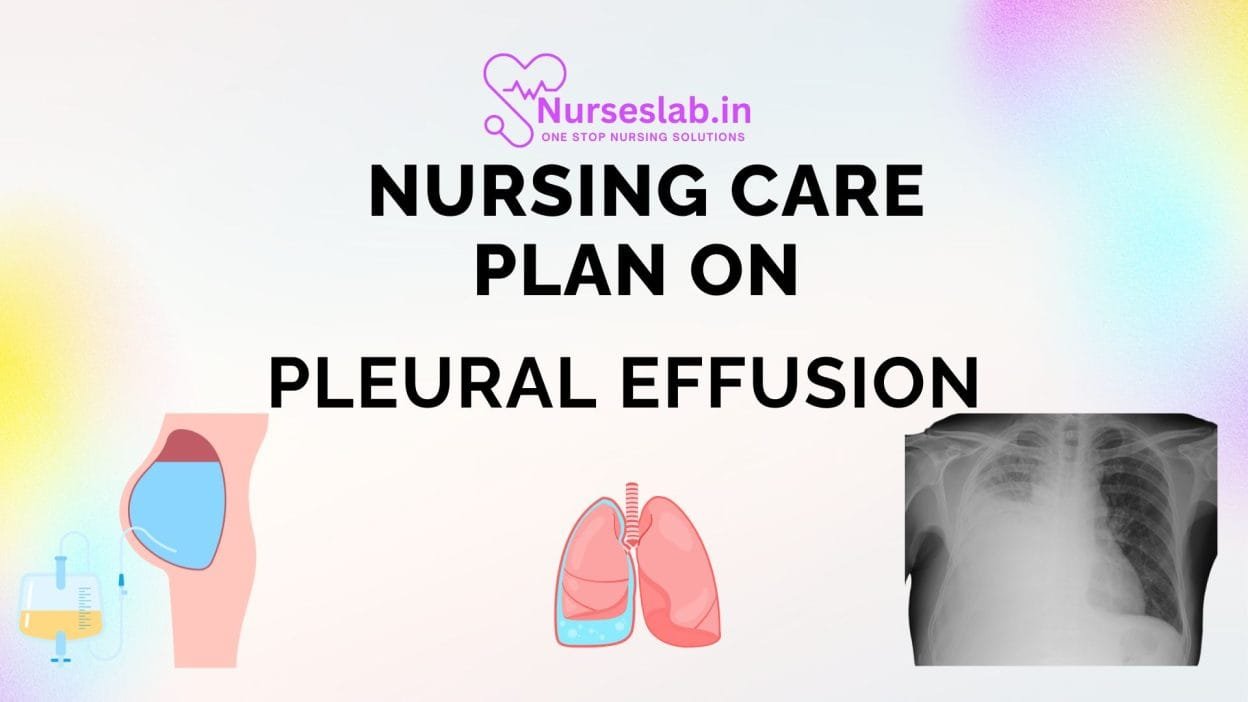
Pleural effusion is characterized by the accumulation of excess fluid between the lining of the chest wall and the lining of the lungs, known as the pleural space. Normally, there is a minimal amount of fluid in the pleural space that acts as lubrication to facilitate breathing.
There are two main types of pleural effusion:
- Transudative occurs when fluid leaks into the pleural space due to imbalances in hydrostatic or oncotic pressures, with common causes including congestive heart failure or cirrhosis.
- Exudative results from altered permeability of the pleural membranes, leading to the leakage of proteins, inflammatory cells, and other substances into the pleural space. This is usually caused by infections like pneumonia or tuberculosis or inflammatory conditions such as pancreatitis or lupus.
Nursing Process
Nursing interventions involve treating the underlying cause, which may come in the form of antibiotics for infection or diuretics for congestive heart failure.
For larger pleural effusions or respiratory distress, procedures may be indicated to drain excess fluid. Such procedures include thoracentesis, tube thoracostomy (chest tube), pleurodesis, or pleural drains. Nurses are responsible for the assessment and monitoring of the patient before and after these procedures.
Nurses can support patients through education by teaching infection prevention measures, how to manage chronic conditions, and when to seek emergency support for symptoms.
Nursing Assessment
The first step of nursing care is the nursing assessment, during which the nurse will gather physical, psychosocial, emotional, and diagnostic data. In this section, we will cover subjective and objective data related to pleural effusion.

Patient History
A comprehensive patient history is vital in assessing pleural effusion. Key elements include:
- Medical History: Chronic conditions such as heart failure, liver disease, renal disease, or recent infections.
- Medication Use: Medications such as anticoagulants or chemotherapeutic agents that may contribute to pleural effusion.
- Exposure History: Occupational or environmental exposures to asbestos, chemicals, or irritants.
- Symptom Onset and Duration: Timeline of symptom development to help determine acute versus chronic effusion.
Physical Examination
A meticulous physical examination is necessary to identify pleural effusion. Nurses should focus on:
- Inspection: Observing for signs of respiratory distress, asymmetrical chest expansion, and use of accessory muscles.
- Palpation: Assessing for reduced tactile fremitus over the effusion site.
- Percussion: Identifying areas of dullness compared to the expected resonance of lung tissue.
- Auscultation: Detecting decreased or absent breath sounds, bronchial breath sounds, or pleural friction rubs.
Diagnostic Testing
Diagnostic testing plays a pivotal role in confirming pleural effusion and understanding its etiology. Tests include:
Blood Tests: Evaluating for underlying causes such as infection, malignancy, or inflammatory conditions.ses of tuberculosis or cancer.
Chest X-Ray: Initial imaging to identify fluid accumulation and its extent.
Ultrasound: Further delineation of fluid pockets and guidance for thoracentesis.
CT Scan: Detailed visualization of the pleural space, underlying lung tissue, and mediastinal structures.
Thoracentesis: Aspiration of pleural fluid for analysis, including cell count, culture, and biochemical testing.
Nursing Interventions
Nursing interventions and care are essential for the patients recovery. In the following section, you will learn more about possible nursing interventions for a patient with pleural effusion.

Manage the Effusion
1. Treat the underlying cause.
When known, it is advised to treat the underlying cause of the pleural effusion.
2. Assist with drainage.
Regardless of transudative or exudative, large effusions causing respiratory symptoms must be drained.
3. Administer antibiotics as ordered.
Administer antibiotics for effusions with an infectious etiology.
4. Consider surgical treatment.
Surgical intervention is necessary when a needle or small-bore catheter cannot adequately drain parapneumonic effusions. Consider the following surgical procedures:
- Pleurodesis: obliterating the pleural space
- Decortication: removal of the fibrous tissue restricting lung expansion
- Pleuroperitoneal shunts: for recurring symptomatic effusions
- Surgically closing the diaphragmatic defects: to prevent recurrent fluid accumulation such as in patients with ascites
5. Prepare for therapeutic thoracentesis.
This process removes large amounts of pleural fluid to reduce dyspnea and prevent further fibrosis and inflammation.
6. Assist with chest tube insertion.
A tube thoracostomy (chest tube) may be required for more complicated effusions or empyemas.
7. Discuss indwelling tunneled pleural catheters.
Tunneled pleural catheters (TPC) are a reliable substitute for pleurodesis in some benign and malignant effusions. TPC can be implanted as an outpatient operation to be intermittently drained at home, reducing time spent in the hospital.
8. Consider diet recommendations.
Chylous effusions (lymph buildup) can cause fat, protein, and lymphocyte depletion from frequent drainage. Restricting fat intake may slow lymph accumulation in some patients. Hyperalimentation or total parenteral nutrition (TPN) may be useful to limit chylous fluid accumulation and preserve nutritional stores.
Nursing Care for Chest Tubes and Drainage
1. Assess the drainage and monitor for air leaks.
Note the quantity and characteristics of fluid drained. Document findings each shift. Check for an air leak (bubbling through the water seal). Significant air leaks (constant bubbling during the respiratory cycle) could be signs of a leak in the tubing or disconnection from the patient.
2. Perform respiratory assessments.
Assess the patient’s respiratory status and perform a thorough respiratory assessment per facility protocol.
3. Obtain follow-up chest X-rays.
A chest X-ray should be completed after pleural fluid aspiration. Obtain regular chest X-rays to confirm the chest tube position. Once chest tube fluid begins to decrease, a chest X-ray can evaluate for resolution of the effusion.
Nursing Care Plans
Once the nurse identifies nursing diagnoses for pleural effusion, nursing care plans help prioritize assessments and interventions for both short and long-term goals of care. In the following section, you will find nursing care plan examples for pleural effusion.
Acute Pain
Acute pain in pleural effusion is caused by pleural inflammation of the parietal pleura which results from the movement-related friction between the two pleural surfaces. This type of pain is also referred to as pleuritic chest pain.
The pain is often characterized as sharp and is exacerbated by movement of the pleural spaces, as with coughing, sneezing, and deep inspiration.
Nursing Diagnosis: Acute Pain
Related to:
- Inflammation and swelling of the pleura
As evidenced by:
- Reports of sharpness or burning in the chest
- Guarding the chest
- Worsening pain upon inhalation
- Shallow breathing
Expected outcomes:
- Patient will report a decrease in pain when breathing as evidenced by a pain rating of 2 or less and a relaxed, unlabored respiratory rhythm.
- Patient will complete activities of daily living without complaints of respiratory discomfort.
Assessment:
1. Assess the patient’s pain level, characteristics, and location.
Pleuritic pain must be differentiated from other types of chest pain to provide appropriate treatment. Assessing pain on a 0-10 numeric scale will provide information on the effectiveness of interventions.
2. Observe nonverbal cues and pain behaviors.
Pleuritic pain may cause patients to position themselves a certain way, decrease movement or ambulation, and restrict breathing, all of which cause deconditioning. The nurse should monitor for pain behaviors and intervene to prevent worsening complications.
Interventions:
1. Administer prescribed pain medications.
Nonsteroidal anti-inflammatory drugs (NSAIDs) such as ibuprofen may decrease inflammation causing pleuritic chest pain.
2. Provide nonpharmacologic methods of pain relief.
Nonpharmacologic interventions like repositioning, guided imagery, and splinting the chest when coughing help manage pain and reduce stress. Also, this will help lower the dose of pain medication needed with decreased side effects.
3. Provide rest and simplify ADLs.
Pain may worsen when moving or performing tasks that take great effort. Rest frequently and do not overdo activities that will increase the work of breathing.
4. Educate the patient on deep breathing exercises.
Deep breathing exercises can help avoid ineffective shallow breathing, which is a natural response when experiencing pleuritic pain. Deep breathing can strengthen the lungs and improve oxygenation.
Impaired Gas Exchange
The respiratory system is responsible for gas exchange – supplying oxygen to tissues and removing carbon dioxide. Pleural effusion affects the cardiorespiratory system and alters the ventilation-perfusion mechanism, causing reduced efficiency of the inspiratory muscles, restrictive ventilatory effect, and abnormal gas exchange.
Nursing Diagnosis: Impaired Gas Exchange
Related to:
- Altered oxygen supply
- Decreased function of lung tissue
As evidenced by:
- Lethargy
- Dyspnea
- Abnormal ABGs
- Restlessness
- Changes in mental status
- Tachycardia
Expected outcomes:
- Patient will exhibit improved gas exchange as evidenced by ABGs within normal limits.
- Patient will be able to maintain optimal gas exchange as evidenced by unlabored breathing and respiratory rate within normal limits.
Assessment:
1. Auscultate lung sounds.
An initial assessment will help provide baseline information and ongoing assessments will determine changes in the patient’s condition. Gas exchange is affected by shallow and rapid breathing patterns. Note areas of diminished breath sounds or fremitus.
2. Review laboratory values and imaging results.
Arterial blood gases (ABGs) measure oxygenation and acid-base balance in the blood which can help assess the patient’s respiratory status and prevent respiratory distress. Chest x-rays can help determine the size and location of the pleural effusion.
3. Assess and monitor the patient’s oxygen saturation.
A drop in oxygen saturation indicates respiratory insufficiency. For most individuals, oxygen saturation should be kept at 95% or greater.
Interventions:
1. Consider lateral positioning.
Elevating the head of the bed to 45 degrees and positioning the patient in a lateral position has been shown to increase O2 saturation and decrease respiratory rate in those with unilateral pleural effusions.
2. Provide supplemental oxygen as ordered.
Supplemental oxygen therapy may be necessary to maintain adequate oxygenation. Do not over-oxygenate.
3. Encourage ambulation.
Ambulation significantly improves chest expansion and the mobilization and drainage of secretions. Do not overexert to the point of dyspnea.
4. Provide support to reduce anxiety.
Dyspnea can cause anxiety and panic. These feelings can exacerbate shortness of breath. Provide a calming, supportive environment and reassure the patient.
5. Prepare the patient for indicated procedures.
Surgical interventions like thoracentesis, pleurodesis, or chest tube insertion may be indicated if the patient’s condition worsens. The nurse can educate the patient on what to expect with these treatments and how they alleviate symptoms.
Impaired Spontaneous Ventilation
Pleural effusions cause difficulty breathing, which compromises the patient’s oxygenation and ventilation.
Nursing Diagnosis: Impaired Spontaneous Ventilation
Related to:
- Ventilatory compromise
- Infectious processes (pneumonia, TB)
- Chronic diseases (CHF, cirrhosis)
- Malignancy
- Excessive fluid in the pleural cavity
As evidenced by:
- Decreased cooperation
- Dyspnea
- Restlessness
- Hypoxia
- Respiratory distress
Expected outcomes:
- Patient will demonstrate ABGs within acceptable limits.
- Patient will remain free from dyspnea or worsening respiratory distress.
Assessment:
1. Monitor closely for complications.
After thoracentesis, complications such as pneumothorax or reexpansion pulmonary edema may occur if large amounts of fluid are removed.
2. Auscultate the lungs for normal or adventitious breath sounds.
Lung sounds may be diminished or absent with pleural effusion. Monitor frequently for crackles or rhonchi that signal fluid overload from other causes.
Interventions:
1. Prepare for drainage removal.
Drainage of pleural effusion is safe for patients on mechanical ventilation and has been shown to improve ventilation.
2. Discuss surgical options.
Surgical procedures such as pleurodesis, decortication, or shunts may be necessary if drainage proves ineffective at removing fluid.
3. Assist with positioning.
Ensure the client is in a semirecumbent position with the head elevated 45 degrees. Reposition as needed to prevent atelectasis and pooling of secretions.
4. Closely monitor respiratory mechanics.
In patients who are mechanically ventilated, catheter drainage or chest tube placement has been shown to significantly improve respiratory mechanics, including respiratory system compliance, end-expiratory lung volume, and PaO2/FiO2 ratio.
Ineffective Airway Clearance
Patients with pleural effusion experience a buildup of fluid in the pleural space.
Nursing Diagnosis: Ineffective Airway Clearance
Related to:
- Infectious processes (pneumonia, TB)
- Chronic diseases (CHF, cirrhosis)
- Smoking
As evidenced by:
- Dyspnea
- Adventitious lung sounds
- Abnormal chest x-ray
- Chest pain
- Coughing
Expected outcomes:
- Patient will demonstrate a clear chest X-ray.
- Patient will demonstrate an improvement in dyspnea and chest pain.
Assessment:
1. Assess if the airway is patent.
Airway patency is the highest priority. Large pleural effusions may cause mediastinal shift and tracheal deviation.
2. Monitor the respiratory rate, rhythm, and depth.
Not all patients will experience symptoms with pleural effusion. Monitor closely for dyspnea, a dry cough, and increasing respiratory distress.
3. Assist with appropriate testing.
Uncovering the cause of the pleural effusion is crucial to effective management. Assist with imaging tests like chest X-rays, ultrasounds, CT scans, or fluid analysis to determine the type of pleural effusion.
Interventions:
1. Assist with drainage removal.
The nurse can assist with a thoracentesis that removes large amounts of pleural fluid to relieve dyspnea and prevent further inflammation.
2. Administer supplemental oxygen as ordered.
If the patient is experiencing hypoxia or respiratory distress, apply supplemental oxygen.
3. Administer medications as prescribed.
Pleural effusions with an infectious etiology require antibiotics. Nitrates or diuretics are used with congestive heart failure or pulmonary edema, and anticoagulants are used with a pulmonary embolism.
4. Prepare for a thoracostomy.
Thoracostomy (chest tube) insertion may be necessary for large or complicated effusions.
Ineffective Breathing Pattern
An ineffective breathing pattern occurs when the lungs are not able to expand effectively during inspiration and/or expiration to provide adequate ventilation. This often happens to patients with pleural effusion as there is increased pressure in the lungs due to the excess fluid buildup in the pleural space, making breathing difficult. With an ineffective breathing pattern, the body will not get adequate oxygen.
Nursing Diagnosis: Ineffective Breathing Pattern
Related to:
- Exudative pleural effusion
- Compromised lung expansion
- Excess fluid buildup in the pleura secondary to infection, inflammation, cardiac disease, or pulmonary disease
As evidenced by:
- Labored breathing
- Dyspnea
- Increased pain upon inhalation
- Oxygen saturation of less than 90%
- Tachypnea
Expected outcomes:
- Patient will achieve an effective breathing pattern as evidenced by a respiratory rate of 12-20 bpm and oxygen saturation above 95%.
- Patient will verbalize ease of breathing.
Assessment:
1. Assess the patient’s respiration characteristics and vital signs.
Assessing the rate and depth of breathing along with O2 saturation, pulse, and blood pressure are necessary to monitor for changes or worsening in respiratory status.
2. Review the patient’s underlying condition.
Understanding the patient’s underlying condition is essential to providing appropriate interventions.
Interventions:
1. Administer medications as prescribed.
The patient may be prescribed antibiotics to treat pneumonia or diuretics for congestive heart failure.
2. Administer oxygen therapy as prescribed.
Providing supplemental oxygen is essential to prevent cellular hypoxia caused by low oxygen secondary to ineffective breathing patterns.
3. Elevate the patient’s HOB.
Elevating the head of the bed can improve lung expansion and help open up the airways enabling air to pass through with less obstruction making it easier to breathe.
4. Prepare for surgery/procedure as ordered.
Depending on the cause, pleural effusion may require placing a pleural drain or chest tube or performing procedures like pleurodesis. Nurses may perform some of these skills or may monitor the patient post-procedure for complications.
Nursing Diagnoses and Rationales for Pleural Effusion
1. Impaired Gas Exchange
Rationale: Pleural effusion can lead to a decrease in lung expansion and reduced surface area for gas exchange, potentially resulting in hypoxemia. Regularly monitoring arterial blood gases (ABGs), oxygen saturation, and respiratory rate is crucial to detect and manage impaired gas exchange early. Administering supplemental oxygen and positioning the patient to optimize lung expansion can also help improve oxygenation.
2. Ineffective Breathing Pattern
Rationale: The accumulation of fluid in the pleural space can cause respiratory distress and an altered breathing pattern. Observing the patient for signs of dyspnea, tachypnea, and use of accessory muscles is important. Encouraging deep breathing exercises, providing bronchodilator medications if prescribed, and using incentive spirometry can assist in maintaining an effective breathing pattern.
3. Acute Pain
Rationale: Patients with pleural effusion may experience chest pain due to inflammation, pleural irritation, or the mechanical pressure of the fluid. Assessing pain levels regularly and administering prescribed analgesics can help manage acute pain. Techniques such as positioning for comfort and providing a calm environment can also alleviate pain.
4. Risk for Infection
Rationale: The presence of fluid in the pleural space can increase the risk of infection, particularly if the effusion is due to an underlying cause such as pneumonia. Strict adherence to aseptic techniques during thoracentesis and other invasive procedures is essential. Monitoring the patient for signs of infection, such as fever and elevated white blood cell count, and administering antibiotics as prescribed can help mitigate this risk.
5. Activity Intolerance
Rationale: Due to respiratory compromise and pain, patients with pleural effusion may have limited tolerance for physical activity. Assessing the patient’s baseline activity level and gradually increasing activity as tolerated can help improve endurance. Encouraging participation in activities of daily living (ADLs) with appropriate rest periods can also support recovery.
6. Anxiety
Rationale: The uncertainty and discomfort associated with pleural effusion can cause significant anxiety for patients. Providing clear explanations about the condition, treatment plan, and procedures can help alleviate anxiety. Offering emotional support, engaging in therapeutic communication, and involving the patient in decision-making can also reduce anxiety levels.
7. Deficient Knowledge
Rationale: Patients and their families may lack understanding of pleural effusion, its causes, and the treatment process. Educating them about the condition, demonstrating breathing exercises, and providing written and verbal instructions for home care are essential to ensure informed participation in the recovery process.
8. Risk for Fluid Volume Imbalance
Rationale: The accumulation of fluid in the pleural space can disrupt the body’s fluid balance. Monitoring fluid intake and output, assessing for signs of fluid overload or dehydration, and managing intravenous fluids as prescribed are important interventions. Educating the patient about fluid restrictions and dietary modifications can also help maintain fluid balance.
9. Impaired Physical Mobility
Rationale: Pain, dyspnea, and overall physical weakness can hinder the patient’s mobility. Assessing the patient’s mobility status and implementing a tailored exercise program can promote physical activity. Providing assistive devices and ensuring a safe environment can prevent falls and enhance mobility.
10. Powerlessness
Rationale: The chronic nature and potential complications of pleural effusion can create feelings of powerlessness in patients. Encouraging patient participation in their care, setting realistic goals, and providing support for coping mechanisms can empower patients and enhance their sense of control over their health.
REFERENCES
- Balasingam, N., Thirunavukarasu, K., & Selvaratnam, G. (2015). Etoricoxib- induced pleural effusion: A case for rational use of analgesics. Journal of Pharmacology and Pharmacotherapeutics, 6(4), 231-232. https://doi.org/10.4103/0976-500x.171876
- Boka, K. (2021, October 15). Pleural effusion clinical presentation: History, physical examination. Diseases & Conditions – Medscape https://emedicine.medscape.com/article/299959-clinical#b3
- Boka, K. (2021, October 15). Pleural effusion workup: Approach considerations, distinguishing transudates from exudates, pleural fluid LDH, glucose, and pH. Diseases & Conditions – Medscape Reference. https://emedicine.medscape.com/article/299959-workup#c17
- Boka, K. (2021, October 15). Pleural effusion treatment & management: Approach considerations, therapeutic thoracentesis, tube thoracostomy. Diseases & Conditions – Medscape Reference. https://emedicine.medscape.com/article/299959-treatment#d13
- Boka, K. (2023, June 13). Pleural effusion medication: Antibiotics, other, vasodilators, diuretics, anticoagulants, hematologic. Diseases & Conditions – Medscape Reference. https://emedicine.medscape.com/article/299959-medication#1
- Fluid Around the Lungs (Pleural Effusion). Copyright 2022 Yale Medicine. From https://www.yalemedicine.org/conditions/fluid-around-the-lungs
- Fluid Around the Lungs or Malignant Pleural Effusion. Approved by the Cancer.Net Editorial Board, 09/2021. From https://www.cancer.net/coping-with-cancer/physical-emotional-and-social-effects-cancer/managing-physical-side-effects/fluid-around-lungs-or-malignant-pleural-effusion
- Jany, B., & Welte, T. (2019). Pleural Effusion in Adults-Etiology, Diagnosis, and Treatment. Deutsches Arzteblatt international, 116(21), 377–386. https://doi.org/10.3238/arztebl.2019.0377
- Karkhanis, V. S., & Joshi, J. M. (2012). Pleural effusion: diagnosis, treatment, and management. Open access emergency medicine : OAEM, 4, 31–52. https://doi.org/10.2147/OAEM.S29942
- Krishna, R., Antoine, M. H., & Rudrappa, M. (2023, March 18). Pleural effusion – StatPearls – NCBI bookshelf. National Center for Biotechnology Information. Retrieved October 2023, from https://www.ncbi.nlm.nih.gov/books/NBK448189/
- Pleural effusion: Symptoms, causes, treatments. (2018, December 18). Cleveland Clinic. https://my.clevelandclinic.org/health/diseases/17373-pleural-effusion-causes-signs–treatment
- Rahmawati, E. Y., Pranggono, E. H., & Priambodo, A. P. (2021). The Effect of Lateral Position with Head Up 45° on Oxygenation in Pleural Effusion Patients. Jurnal Keperawatan Padjadjaran, 9(2), 124–130. https://doi.org/10.24198/jkp.v9i2.1672
- Singh, V., Gupta, P., Khatana, S., & Bhagol, A. (2011). Supplemental oxygen therapy: Important considerations in oral and maxillofacial surgery. National journal of maxillofacial surgery, 2(1), 10–14. https://doi.org/10.4103/0975-5950.85846
- Wing S. Pleural effusion: nursing care challenge in the elderly. Geriatr Nurs. 2004 Nov-Dec;25(6):348-52; quiz 353. doi: 10.1016/j.gerinurse.2004.09.016. PMID: 15592251.
Stories are the threads that bind us; through them, we understand each other, grow, and heal.
JOHN NOORD
Connect with “Nurses Lab Editorial Team”
I hope you found this information helpful. Do you have any questions or comments? Kindly write in comments section. Subscribe the Blog with your email so you can stay updated on upcoming events and the latest articles.


