


Last Updated on January 12, 2026 by Nurseslab.in Editorial Team
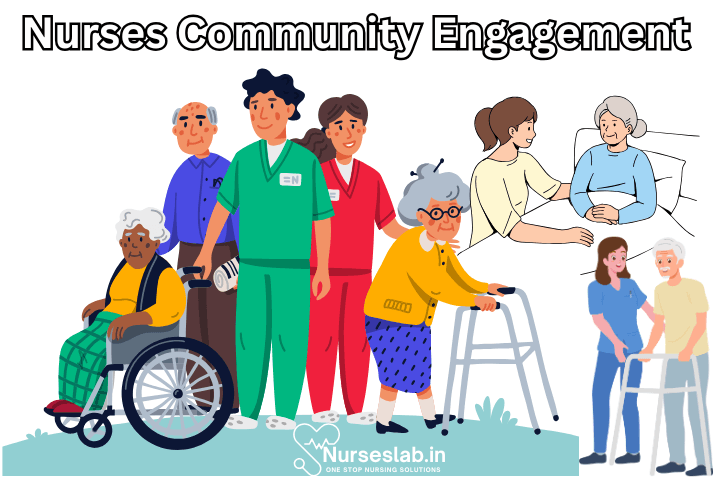
Nurses are not just caregivers; they are the linchpin that connects individuals to broader community resources.The Heart of Community Engagement is by their on-the-ground presence in clinics, schools, and community centers positions them uniquely as educators, advocates, and leaders in public health. They possess an innate ability to build trust, foster empathy, and communicate complex health information with clarity—qualities that are essential in uplifting community health standards.
The Role of Nurses in Health Education
In every community, nurses serve as key educators who break down complex medical concepts into accessible information. Whether through one-on-one consultations or community health workshops, they empower people with the knowledge necessary to prevent diseases, manage chronic conditions, and make informed health decisions. This role becomes even more vital in marginalized areas, where misinformation or lack of access to reliable health advice can be a barrier to wellness. By holding community seminars, distributing educational materials, and leveraging modern technology and social media, nurses transform health awareness into actionable community engagement.
1.Advocacy and Personalized Care
Nurses are champions of personalized care. Their deep commitment to patient well-being often makes them the first to notice gaps in the healthcare system, especially among underserved groups. Their firsthand experiences enable them to advocate for necessary resources, influence public policy, and design interventions that address the social determinants of health. This advocacy is not limited to the boundaries of a hospital but extends throughout the community, ensuring that everyone—from the youngest to the most vulnerable—receives holistic and compassionate healthcare.
2.Leadership in Crisis and Community Support
In times of crisis, such as pandemics or natural disasters, the leadership of nurses shines brightest. Their rapid response, unwavering dedication, and ability to mobilize healthcare resources make them indispensable community pillars. They orchestrate emergency responses, provide crucial mental health support, and coordinate with other community services to ensure a cohesive and effective response to emergencies. Their roles in these scenarios highlight not only their clinical expertise but also their capacity to lead, inspire, and bring people together during challenging times.
3.Building Bridges Beyond the Clinical Setting
Nurses often serve as the vital bridges that connect clinical practices with community life. They work closely with local organizations, schools, and faith-based groups to integrate health initiatives into everyday living. Their work helps dismantle the traditional silos between patient care and public health, paving the way for community-based interventions that are both sustainable and effective. Through home visits, local health fairs, and collaborative community projects, nurses are instrumental in fostering a culture of health that is ingrained in the fabric of the community.
4.Transformative Impact and Future Directions
The impact of nurses on community engagement is transformative. Their unique blend of clinical expertise and compassionate outreach fosters environments where preventive care, mental health support, and community wellness thrive. As challenges such as an aging population, chronic diseases, and emerging public health threats continue to rise, the role of the nurse as a community sentinel becomes increasingly critical. Looking forward, investing in nursing education, expanding community health initiatives, and recognizing nurses’ contributions will be essential steps in building resilient and healthier communities.
Role of Nurses in the Heart of Community Engagement
Building upon the importance of community health and the unique role of nurses in promoting and maintaining it, there are several key responsibilities that nurses own in addressing community health challenges, which are interconnected and complementary:
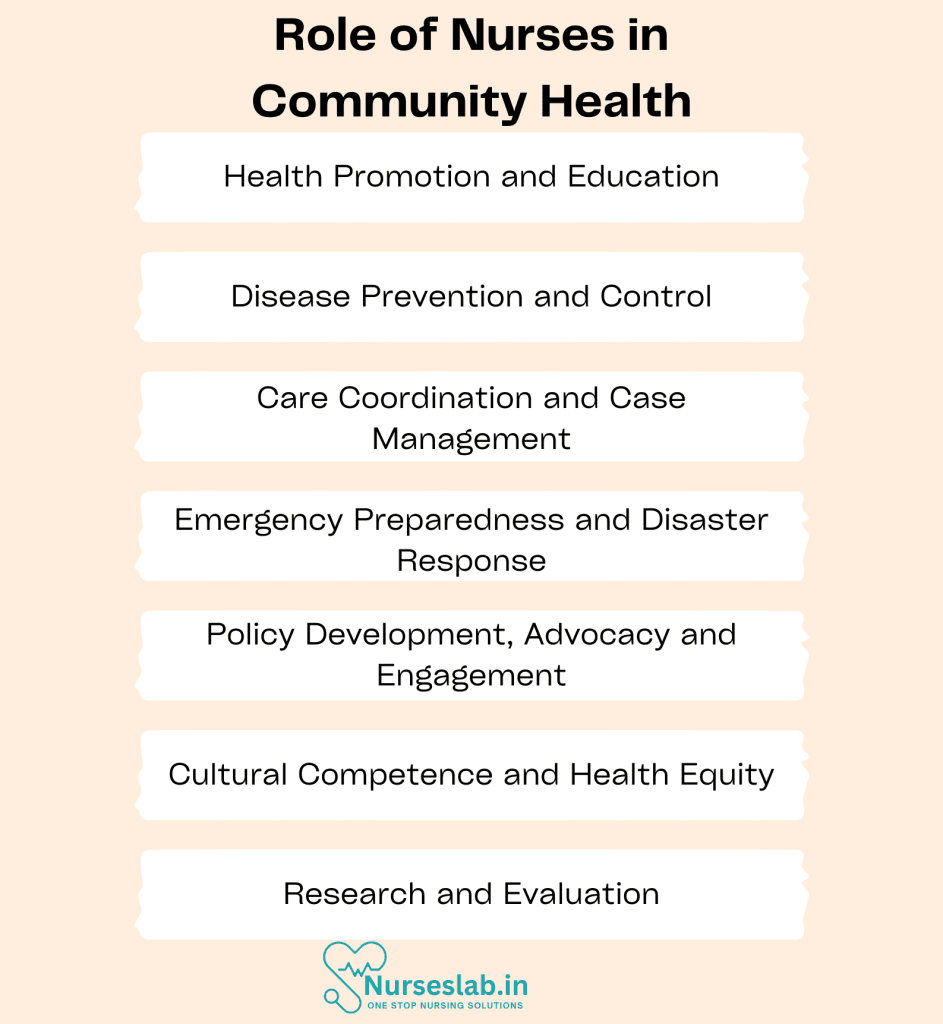
- Health Promotion and Education: Nurses conduct health assessments, develop health education materials, provide counseling on healthy behaviors, and promote preventive care.
- Disease Prevention and Control: Nurses participate in community-wide vaccination campaigns, conduct disease surveillance, monitor disease outbreaks, and provide education on infection prevention.
- Care Coordination and Case Management: Nurses coordinate and manage care for individuals and families in the community, including coordinating referrals, healthcare providers, and managing chronic conditions.
- Emergency Preparedness and Disaster Response: Nurses provide care in natural disasters or disease outbreaks and participate in disaster planning and response activities to ensure that the community is prepared to respond to health emergencies.
- Policy Development, Advocacy and Engagement: Nurses use their expertise to inform policy decisions, advocate for policies that address health disparities, as well as engage their communities in the process.
- Cultural Competence and Health Equity: Nurses strive to understand the cultural beliefs, values, and practices of the community they serve, and provide care that is sensitive to cultural differences.
- Research and Evaluation: Nurses are involved in research and evaluation activities to generate evidence-based practices and interventions that can improve community health outcomes.
Examples of successful nurse-led community initiatives
Below are several examples of successful nurse-led community initiatives that illustrate how nurses are stepping up to innovate, educate, and transform healthcare delivery far beyond traditional clinical environments:
1. Nurse-Led Pilots through the Reimagining Nursing Initiative
The American Nurses Foundation has been a catalyst for transformative ideas through its Reimagining Nursing Initiative. This program has supported over 350 nurse-led projects across 20 states with an award of $14 million over three years. These pilots are testing bold new solutions that leverage nurses’ frontline expertise. For instance:
- Technology Integration: One pilot utilizes robots equipped with artificial intelligence to predict and deliver essential supplies based on patients’ electronic health records. This approach aims to reduce manual strain and free up valuable nurse time for more direct care.
- Home-Based Primary Care: Another initiative focuses on delivering primary care directly to patients with conditions such as dementia in their homes. This model not only enhances patient comfort and safety but also ensures that vulnerable populations receive timely, personalized attention.
- On-Demand Nursing Services: Some pilots are revolutionizing how post-discharge care is delivered by enabling patients to request nurse care directly through technology—streamlining access to care and facilitating smoother transitions from hospital to home.
These examples showcase how nurses are using their expertise to identify systemic gaps and implement innovative, community-focused solutions .
2. Community-Based Palliative Care Programs
A nurse-led approach to palliative care has shown remarkable success in improving the quality of life for patients with life-limiting illnesses. In one study conducted at the Oncology and Palliative Care Unit of Zagazig University Hospitals in Egypt, a structured community-based palliative care program was implemented to address comprehensive patient needs. Key features included:
- Symptom Management: Nurses delivered tailored interventions that significantly reduced physical and psychological distress, as evidenced by a marked reduction in scores on the Edmonton Symptom Assessment Scale.
- Holistic Support: Beyond managing symptoms, the program provided emotional, social, and spiritual support, leading to a reported improvement in overall patient well-being and quality of life.
- Educational Outreach: By educating patients and family members about disease management and care coordination, nurses enabled better home care practices and empowered communities to take active roles in healthcare.
This initiative underscores the potential for nurse-led programs to bridge gaps in patient care, especially in underserved communities where traditional healthcare resources may be limited .
3. Nurse-Led Initiatives in U.S. Healthcare Outcomes
In the United States, several nurse-led initiatives have been pivotal in enhancing healthcare outcomes by fostering better communication, care integration, and evidence-based practices. Notable examples include:
- Discharge Planning and Transitions of Care: Nurse-led programs have been instrumental in designing and implementing discharge planning protocols that ensure seamless transitions from hospital to home. These initiatives have reduced readmission rates and improved patient satisfaction.
- Medication Reconciliation and Safety Protocols: By leading efforts to standardize medication reconciliation and implement regular safety rounds, nurses have significantly improved patient safety outcomes. Their proactive approach helps preempt potential errors before they escalate into serious issues.
- Interprofessional Collaboration: Nurses often spearhead collaborative projects that bring together various healthcare disciplines. This approach not only enhances care coordination but also ensures that interventions are comprehensive and tailored to patient needs.
These initiatives demonstrate that when nurses are empowered to lead, they drive measurable improvements in patient safety, care coordination, and overall healthcare quality .
Nurse-led community initiatives like these highlight the multifaceted roles of nurses—they are innovators, educators, advocates, and compassionate caregivers who drive change both at the individual and community levels. These examples not only illustrate successful models but also inspire further innovations in community health.
Addressing Social Determinants of Health
Social determinants of health are the social, economic, and environmental factors that influence health outcomes and contribute to health disparities. Examples of social determinants of health include everything from poverty, housing insecurity, food insecurity, and lack of access to healthcare, to inadequate education, unemployment, discrimination, and environmental hazards, among others.
Here are some key reasons why a holistic approach that considers social determinants of health is essential:
- Comprehensive care: This approach acknowledges that health is influenced by a multitude of factors, including social, economic, and environmental determinants, and strives to address them holistically.
- Health equity: By addressing social determinants of health, healthcare providers can work towards reducing health disparities and promoting health equity, ensuring that everyone can achieve optimal health regardless of their social circumstances.
- Prevention and early intervention: By taking a holistic approach that addresses social determinants of health, healthcare providers can focus on prevention and early intervention, leading to better health outcomes and reduced healthcare costs in the long run.
- Patient-centered care: This approach fosters a more trusting and collaborative patient-provider relationship, leading to improved patient satisfaction and engagement in their own care.
- Interdisciplinary collaboration: Collaboration can lead to more effective interventions, better coordination of care, and improved health outcomes for individuals and communities.
REFERENCES
- Scott J, Burrison S, Barron M, Logan A, Magwood GS. Exploring Nursing Strategies to Engage Community in Cardiovascular Care. Curr Cardiol Rep. 2023 Oct;25(10):1351-1359. doi: 10.1007/s11886-023-01949-9. Epub 2023 Sep 4. PMID: 37665520; PMCID: PMC11128268.
- Lisa Merenda, The power of community engagement within nursing, Retrieved from https://www.wolterskluwer.com/en/expert-insights/the-power-of-community-engagement-within-nursing
- The Role of Nurses in Community Health, Updated May 10, 2023, https://www.brooklinecollege.edu/blog/the-role-of-nurses-in-community-health/
- Cleveland, K. A., Motter, T., & Smith. Y. (May 31, 2019). Affordable care: Harnessing the power of nurses. OJIN: The Online Journal of Issus in Nursing, Vol. 24, No. 2, Manuscript https://doi.org/10.3912/OJIN.Vol24No02Man02
- Sepasi, R. R., Abbaszadeh, A., Borhani, F., & Rafiei, H. (2016). Nurses’ perceptions of thev concept of power in nursing: A qualitative research. Journal of Clinical and Diagnostic Research, 10(12), 10-15. https://pmc.ncbi.nlm.nih.gov/articles/PMC5296459/pdf/jcdr-10-LC10.pdf
- Cleary M, Hunt GE. Building community engagement in nursing. J Contin Educ Nurs. 2010 Aug;41(8):344-5. doi: 10.3928/00220124-20100726-04. PMID: 20666354.
Stories are the threads that bind us; through them, we understand each other, grow, and heal.
JOHN NOORD
Connect with “Nurses Lab Editorial Team”
I hope you found this information helpful. Do you have any questions or comments? Kindly write in comments section. Subscribe the Blog with your email so you can stay updated on upcoming events and the latest articles.


