


Glycogenolysis is the process of converting glycogen stored in the liver and muscles into glucose. This pathway maintains blood sugar during fasting or exercise, supports muscle activity, and plays a vital role in carbohydrate metabolism and energy balance.
Introduction
Among the myriad of biochemical processes, glycogenolysis stands out as essential for energy metabolism and is closely linked to both acute and chronic clinical scenarios. Glycogenolysis occurs mainly in the liver and muscles. It is initiated by the activation of glycogen phosphorylase, an enzyme that catalyzes the removal of glucose residues from the glycogen molecule.
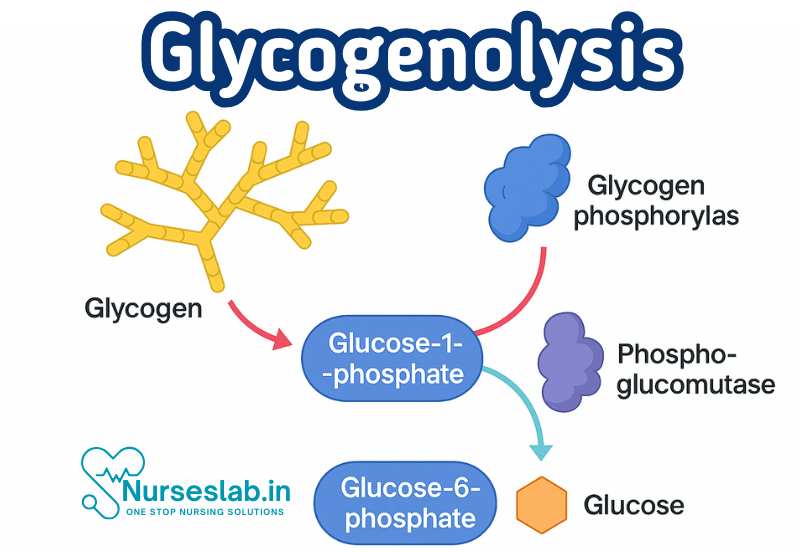
Glycogenolysis Overview
Definition
Glycogenolysis is the biochemical process by which glycogen, a large branched polysaccharide stored primarily in the liver and skeletal muscle, is broken down into glucose-1-phosphate and subsequently converted to glucose-6-phosphate. This process is vital for maintaining blood glucose levels, especially during periods of fasting, exercise, or physiological stress.
Role in Metabolism
Glycogen serves as the body’s short-term energy reserve, offering a rapid source of glucose when dietary intake is insufficient. Glycogenolysis ensures that tissues, particularly the brain and muscles, receive a continuous supply of glucose for energy production. The liver releases glucose into the bloodstream to maintain normoglycaemia, while muscle glycogenolysis supports muscular activity during exercise.
Comparison with Glycogenesis
Glycogenesis is the anabolic process by which glucose molecules are polymerised to form glycogen for storage. In contrast, glycogenolysis is catabolic, breaking down stored glycogen into glucose units. These two processes are tightly regulated and reciprocally controlled, ensuring metabolic balance according to the body’s energy needs.
Biochemical Pathway of Glycogenolysis
Step-by-Step Breakdown
- Initiation: Glycogenolysis begins when the body requires glucose, such as during fasting, exercise, or stress.
- Glycogen Phosphorylase Action: The key enzyme, glycogen phosphorylase, catalyses the cleavage of α-1,4 glycosidic bonds in glycogen, releasing glucose-1-phosphate. This reaction occurs at the non-reducing ends of the glycogen molecule.
- Debranching Enzyme Activity: As glycogen is branched, the debranching enzyme (oligo-α-1,4→α-1,4-glucantransferase and α-1,6-glucosidase) is required to remove branches. This enzyme transfers a small oligosaccharide near a branch point to another chain and then hydrolyses the α-1,6 bond, releasing free glucose.
- Conversion to Glucose-6-Phosphate: Glucose-1-phosphate produced by glycogen phosphorylase is converted to glucose-6-phosphate by the enzyme phosphoglucomutase.
- Release of Free Glucose (Liver Specific): In hepatocytes, glucose-6-phosphate can be converted to free glucose by glucose-6-phosphatase and released into the bloodstream. Muscle cells lack this enzyme, so glucose-6-phosphate enters glycolysis for energy production within the muscle.
Key Enzymes and Molecular Details
- Glycogen Phosphorylase: Regulatory enzyme, activated by phosphorylation and allosteric effectors.
- Debranching Enzyme: Facilitates the removal of branches, allowing complete degradation of glycogen.
- Phosphoglucomutase: Converts glucose-1-phosphate to glucose-6-phosphate.
- Glucose-6-Phosphatase: Present in the liver; enables release of free glucose into the blood.
Molecular Insights
Glycogen is a highly branched polymer, allowing rapid mobilisation of glucose units. The process is energy-efficient and tightly regulated, minimising waste and ensuring glucose availability during metabolic stress. The interplay of enzymes ensures that glycogen breakdown is precise and responsive to physiological demands.
Regulation of Glycogenolysis
Hormonal Control
- Insulin: Secreted by pancreatic β-cells in response to high blood glucose, insulin inhibits glycogenolysis and stimulates glycogenesis. Its action ensures glucose is stored during the fed state.
- Glucagon: Released from pancreatic α-cells during low blood glucose, glucagon stimulates glycogenolysis in the liver, raising blood glucose levels.
- Adrenaline (Epinephrine): Produced by the adrenal medulla during stress or exercise, adrenaline activates glycogenolysis in both liver and muscle via β-adrenergic receptors, mobilising energy reserves.
Allosteric Regulation
Glycogen phosphorylase is subject to allosteric control by metabolites such as AMP (activator during low energy states) and ATP/glucose-6-phosphate (inhibitors when energy is sufficient). This fine-tunes glycogen breakdown according to cellular energy status.
Feedback Mechanisms
Feedback inhibition ensures that excessive glycogen breakdown does not occur. High concentrations of glucose-6-phosphate and ATP signal adequate energy, leading to inhibition of glycogen phosphorylase. Conversely, high AMP levels during energy deprivation activate the enzyme.
Clinical Significance
Disorders Related to Glycogenolysis
Several inherited and acquired disorders affect glycogenolysis, leading to metabolic disturbances and clinical symptoms. Glycogen storage diseases (GSDs) are a group of genetic conditions characterised by enzyme deficiencies affecting glycogen metabolism.
- Type I (Von Gierke’s Disease): Deficiency of glucose-6-phosphatase results in impaired conversion of glucose-6-phosphate to glucose, causing hypoglycaemia, hepatomegaly, and lactic acidosis.
- Type II (Pompe Disease): Lysosomal α-1,4-glucosidase deficiency leads to accumulation of glycogen in tissues, particularly muscle and heart, resulting in cardiomyopathy and muscle weakness.
- Type III (Cori Disease): Debranching enzyme deficiency impairs glycogen breakdown, causing hepatomegaly, hypoglycaemia, and muscle symptoms.
- Type V (McArdle Disease): Muscle glycogen phosphorylase deficiency leads to exercise intolerance, muscle cramps, and myoglobinuria.
Symptoms and Diagnostic Approaches
Symptoms of glycogenolysis disorders vary depending on the enzyme affected and the tissues involved. Common features include hypoglycaemia, hepatomegaly, muscle weakness, exercise intolerance, and growth retardation. Diagnosis typically involves clinical assessment, laboratory tests (blood glucose, lactate, liver enzymes), genetic testing, and sometimes tissue biopsies to assess enzyme activity.
Acquired Disorders and Clinical Contexts
Beyond genetic conditions, glycogenolysis is relevant in diabetes mellitus, critical illness, and starvation. In diabetes, impaired insulin signalling leads to excessive hepatic glycogenolysis and hyperglycaemia. In critically ill patients, stress hormones may promote glycogenolysis, affecting glucose management.
Glycogenolysis in Nursing Practice
Patient Assessment and Monitoring
Nurses play a vital role in monitoring patients with metabolic disorders, diabetes, or critical illness. Understanding glycogenolysis aids in recognising signs of hypoglycaemia (e.g., sweating, tachycardia, confusion) and hyperglycaemia (e.g., polyuria, polydipsia, fatigue). Accurate blood glucose monitoring is essential, and nurses should be aware of factors that influence glucose levels, including stress, medication, and underlying disease.
Implications for Care
- Education: Nurses educate patients and families about the importance of glucose regulation, dietary management, and signs of glycaemic imbalance.
- Medication Administration: Administering insulin, glucagon, or other therapies requires understanding their effects on glycogenolysis.
- Emergency Management: In cases of hypoglycaemia, prompt recognition and administration of glucose or glucagon can be life-saving.
- Collaborative Care: Nurses coordinate with multidisciplinary teams to manage metabolic disorders, interpret laboratory data, and adjust care plans.
Documentation and Communication
Accurate documentation of symptoms, interventions, and patient responses is crucial for effective care. Nurses should communicate findings related to glucose management and metabolic status with the healthcare team, ensuring timely interventions and continuity of care.
Special Considerations
- Paediatric Patients: Children with glycogen storage diseases require tailored care, including dietary management and monitoring for growth and development.
- Pregnancy: Metabolic demands change during pregnancy, necessitating close monitoring of glucose and glycogenolysis in women with diabetes or metabolic disorders.
- Elderly Patients: Age-related changes in metabolism may affect glycogen stores and glucose regulation, requiring vigilant assessment.
REFERENCES
- Harbans Lal, Textbook of Applied Biochemistry and Nutrition& Dietetics 2nd Edition ,November 2024, CBS Publishers and Distributors, ISBN: 978-9394525757
- Suresh K Sharma, Textbook of Biochemistry and Biophysics for Nurses, 2nd Edition, September 2022, Jaypee Publishers, ISBN: 978-9354655760
- Peter J Kennelly, Harpers Illustrated Biochemistry Standard Edition, September 2022, McGraw Hill Lange Publishers, ISBN: 978-1264795673
- Denise R Ferrier, Ritu Singh, Lippincott Illustrated Reviews Biochemistry, Second Edition, June 2024, ISBN- 978-8197055973
- Yadav, Tapeshwar & Bhadeshwar, Sushma. (2022). Essential Textbook of Biochemistry for Nursing.
- Applied Sciences, Importance of Biochemistry for Nursing Practice, November 2, 2023, https://bns.institute/applied-sciences/importance-biochemistry-nursing-practice/
Stories are the threads that bind us; through them, we understand each other, grow, and heal.
JOHN NOORD
Connect with “Nurses Lab Editorial Team”
I hope you found this information helpful. Do you have any questions or comments? Kindly write in comments section. Subscribe the Blog with your email so you can stay updated on upcoming events and the latest articles.


