


How to Calculate the Absolute Neutrophil Count (ANC) is a simple but essential process that helps determine a patient’s risk for infection, especially in contexts such as chemotherapy-induced neutropenia. The ANC essentially estimates the total number of neutrophils available in the blood for fighting infections.

Uses of the ANC
Knowing a patient’s ANC has several advantages:
- It reflects the patient’s immunologic status in response to chemotherapy. Myelosuppressive chemotherapy suppresses WBC (and thus neutrophil) production, raising the risk of severe infection. A low ANC may indicate the need to delay the next chemotherapy dose or to reduce the dosage.
- The ANC value helps predict subsequent neutropenic events (such as fever) after the first chemotherapy cycle by providing a more accurate picture of immunologic status than the neutrophil or WBC count alone.
- It helps the physician determine whether to initiate treatment with growth factors, antibiotics, and other protective measures to decrease the risk of neutropenic complications. For example, administering filgrastim (recombinant methionyl human granulocyte colony-stimulating factor) can shorten neutropenia duration and reduce the risk of febrile neutropenia. This in turn increases the chance that full-dose chemotherapy can be given on time.
- For a hospitalized patient, a low ANC may indicate the need for protective isolation to guard against exposure to infection. For an outpatient, it may indicate the need to avoid crowds and people with colds, runny noses, or influenza.
How to Calculate the Absolute Neutrophil Count step-by-step guide:
Step 1: Gather Your Values
- Total White Blood Cell Count (WBC): This value is usually given in cells per microliter (cells/µL). For example, imagine a WBC of 6,000 cells/µL.
- Neutrophil Differential (%): Obtain the percentages of both segmented (mature) neutrophils and band (immature) neutrophils from the differential count. These are usually reported as percentages. For instance, you might have:
- Segmented Neutrophils: 60%
- Band Neutrophils: 5%
Step 2: Calculate the Total Neutrophil Percentage
Add the percentage of segmented neutrophils to the percentage of band neutrophils. Using our example:
Total Neutrophil %=60%+5%=65%
Step 3: Convert the Percentage to a Decimal
To use the percentage in the calculation, convert it to a decimal by dividing by 100:
Decimal Neutrophil Fraction=65/100=0.65
Step 4: Calculate the ANC
Multiply the total WBC count by this decimal fraction:
ANC=WBC count×Decimal Neutrophil Fraction
Using our values:
ANC=6000 cells/µL×0.65=3900 cells/µL
This result (3,900 cells/µL) represents the absolute number of neutrophils in each microliter of blood.
Reference Table
| Parameter | Example Value | Description |
|---|---|---|
| Total WBC Count | 6,000 cells/µL | Total white blood cells per microliter |
| Segmented Neutrophils | 60% | Mature neutrophils percentage from the differential |
| Band Neutrophils | 5% | Immature (band) neutrophils percentage from the differential |
| Total Neutrophil % | 65% | Sum of segmented and band neutrophils (60% + 5%) |
| Decimal Neutrophil Fraction | 0.65 | Conversion of percentage to decimal (65/100) |
| Absolute Neutrophil Count | 3,900 cells/µL | Final calculation: 6000 × 0.65 |
Clinical Relevance
- Interpreting the Result: An ANC between 1,500 and 8,000 cells/µL is generally considered normal. Values below 1,500 cells/µL indicate neutropenia, with values less than 500 cells/µL often signaling severe neutropenia, which heightens infection risk.
- Usage: This calculation is fundamental in clinical settings, particularly for monitoring patients receiving chemotherapy, those with bone marrow disorders, or anyone at risk for infections due to low neutrophil counts.
ANC Normal Range
The normal range for ANC (absolute neutrophil count) can vary depending on factors such as age, gender, and ethnicity, but generally falls within the following ranges:
| Age Group | ANC Range |
|---|---|
| Healthy Person | 2,500 – 6,000 cells/mm3 |
| Newborns | 1,500 – 8,000 cells/mm3 |
| Infants and toddlers | 1,000 – 5,500 cells/mm3 |
| Children | 1,500 – 8,000 cells/mm3 |
| Adults | 1,500 – 8,000 cells/mm3 |
Example Calculation
Example :1
If:
- WBC count = 6,000 cells/µL
- Segmented Neutrophils = 60%
- Band Neutrophils = 5%
Convert the percentages to decimals: = 0.60 + 0.05 = 0.65
Then calculate: = 6,000 \times 0.65 = 3,900 , cells/µL
Clinical Relevance
Severe Neutropenia: ANC < 500 cells/µL, signaling a high risk of serious infections.
Normal Range: 1,500–8,000 cells/µL.
Neutropenia: ANC < 1,500 cells/µL, indicating increased infection risk.
Example :2
If the WBC count is 6.3 thousand/uL, and neutrophils are 56.1% and bands are 3%, what is the ANC?
ANC = WBC (cells/uL) x [percent (PMNs + bands) ÷ 100]
ANC = 6,300 cells/uL x [(56.1%+3%) ÷ 100]
ANC = 6,300 cells/uL x (59.1% ÷ 100)
ANC = 6,300 cells/uL x 0.591
ANC = 3,720 cells/uL
Categorizing Neutropenia
As we mentioned, the ANC is an indicator of infection risk. Neutropenia (decreased neutrophils) is usually defined as an ANC less than 1,500 cells/uL in an adult and can be categorized as mild, moderate, or severe.
| Categorizing Neutropenia (Berlinger, 2022) | |
| Category | ANC |
| Mild | 1,000 to less than 1,500 cells/uL |
| Moderate | 500 to less than 1,000 cells/uL |
| Severe | Less than 500 cells/uL |
Possible Reason for Low ANC Causes
Here is the reason for the Low ANC results and corresponding risk categories:
| Cause | Associated Condition(s) |
|---|---|
| Chemotherapy | Chemotherapy-induced neutropenia |
| Radiation therapy | Radiation-induced neutropenia |
| Bone marrow disorders | Aplastic anemia, myelodysplastic syndromes |
| Viral infections | HIV, hepatitis B or C, Epstein-Barr virus |
| Bacterial infections | Sepsis, bacterial meningitis, tuberculosis |
| Parasitic infections | Malaria, leishmaniasis |
| Fungal infections | Invasive fungal infections |
| Autoimmune disorders | Lupus, rheumatoid arthritis |
| Nutritional deficiencies | Vitamin B12 deficiency, folate deficiency |
| Congenital disorders | Kostmann syndrome, cyclic neutropenia |
Possible Reason for High ANC Causes
Here is the reason for the the High ANC results and corresponding risk categories:
| Cause | Associated Condition(s) |
|---|---|
| Infections | Bacterial infections, viral infections |
| Inflammation | Rheumatoid arthritis, inflammatory bowel disease, vasculitis |
| Tissue injury | Burns, trauma, surgery, myocardial infarction |
| Medications | Corticosteroids, lithium, epinephrine |
| Smoking | Smoking-related lung diseases |
| Leukemia | Chronic myelogenous leukemia (CML) |
| Myeloproliferative disorders | Polycythemia vera, essential thrombocythemia |
| Chronic granulomatous disease | A disorder affecting the immune system |
| Surgery | some infarction during surgery |
| Genetic Disorder | some genetic disorders that cause damage |
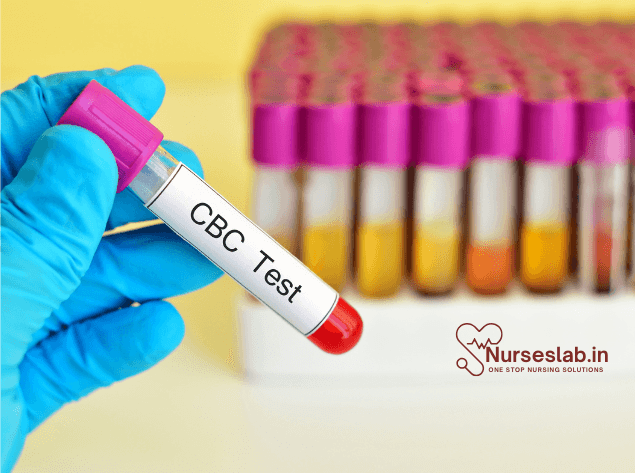
Neutropenia may be discovered while evaluating other signs and symptoms, as in the case of JD, or as an incidental finding on a routine CBC. In either circumstance, further evaluation to determine any underlying pathology and potential medical emergencies is necessary. It’s also important to be aware that most patients on chemotherapy will experience a nadir, or lowest value, in ANC five to ten days after completion of a chemotherapy session.
REFERENCES
- Berliner, N. (2022, June 3). Approach to the adult with unexplained neutropenia. UpToDate. https://www.uptodate.com/contents/approach-to-the-adult-with-unexplained-neutropenia
- Coates, T.D. (2023, August 11). Laboratory evaluation of neutrophil disorders. UpToDate. https://www.uptodate.com/contents/laboratory-evaluation-of-neutrophil-disorders
- Absolute Neutrophil Count (ANC) Calculator, https://www.drlogy.com/calculator/absolute-neutrophil-count-anc
- Pagana K, Pagana T. Mosby’s Diagnostic and Laboratory Test Reference. 8th ed. St. Louis, Mo: Elsevier/Mosby; 2007.
- Freifeld AG, Bow EJ, Sepkowitz KA, Boeckh MJ, Ito JI, Mullen CA, Raad II, Rolston KV, Young JA, Wingard JR. Clinical practice guideline for the use of antimicrobial agents in neutropenic patients with cancer: 2010 update by the infectious diseases society of america. Infectious Diseases Society of America. Clin Infect Dis. 2011;52(4):e56
Stories are the threads that bind us; through them, we understand each other, grow, and heal.
JOHN NOORD
Connect with “Nurses Lab Editorial Team”
I hope you found this information helpful. Do you have any questions or comments? Kindly write in comments section. Subscribe the Blog with your email so you can stay updated on upcoming events and the latest articles.


