


Introduction
An atrial septal aneurysm (ASA) is a rare cardiac abnormality characterized by a localized outpouching or bulging of the interatrial septum, the wall that separates the right and left atria of the heart. This condition is often identified incidentally during echocardiography, as it may not present with overt symptoms. However, its presence can have clinical significance, particularly when associated with other cardiac anomalies or in patients with unexplained embolic events.
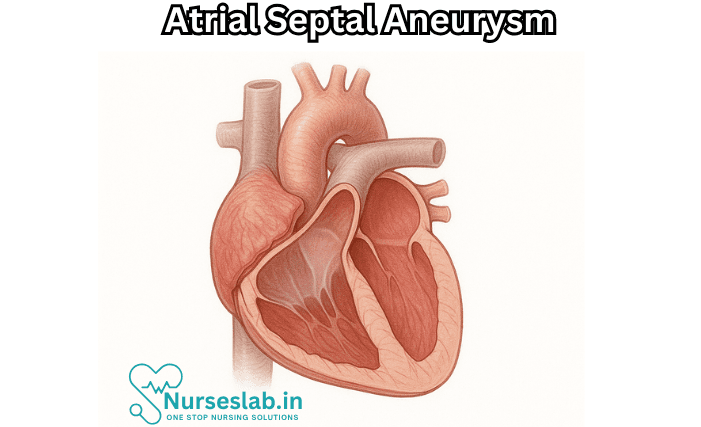
Definition and Anatomy
An atrial septal aneurysm is defined as a saccular deformity of the interatrial septum, typically at the level of the fossa ovalis. The fossa ovalis is a thin, oval-shaped depression in the interatrial septum, which is a remnant of the fetal foramen ovale. In ASA, this region becomes excessively mobile, protruding into the right or left atrium by at least 10 to 15 millimeters beyond the septal plane, although definitions can vary slightly within the literature.
Types of Atrial Septal Aneurysm
- Rightward Bulging: The aneurysm protrudes into the right atrium.
- Leftward Bulging: The aneurysm protrudes into the left atrium.
- Biphasic Bulging: The bulging alternates between the right and left atria during the cardiac cycle.
Epidemiology
ASA is a relatively uncommon finding in the general population. The prevalence varies depending on the population studied and the imaging modality used. It is estimated that ASA occurs in approximately 1–2% of the general population, but the incidence can be as high as 8–10% in patients referred for echocardiography for various reasons. It is more frequently detected in adults than in children, often because routine echocardiography is more common in adult cardiac assessments.
Pathophysiology and Etiology
The precise cause of atrial septal aneurysm is not fully understood. It is generally considered a congenital abnormality, although it may go unrecognized until adulthood. Some potential contributing factors include:
- Congenital Weakness: Inherent structural weakness at the fossa ovalis makes this region prone to aneurysmal dilation.
- Increased Pressure Gradient: Conditions that increase the pressure differential between the right and left atria may precipitate the development or worsening of an ASA.
- Associated Cardiac Defects: ASA is commonly associated with other defects such as patent foramen ovale (PFO), atrial septal defect (ASD), and mitral valve prolapse.
Clinical Manifestations
ASA is often asymptomatic and discovered incidentally. However, in some individuals, it may be associated with clinically significant events or symptoms, including:
- Embolic Events: ASA may increase the risk of stroke or transient ischemic attack (TIA), particularly when associated with a PFO or ASD, as paradoxical emboli can traverse these defects.
- Arrhythmias: Some studies suggest a correlation between ASA and atrial arrhythmias such as atrial fibrillation or atrial flutter.
- Chest Discomfort or Palpitations: Rarely, ASA may produce vague symptoms like palpitations or chest discomfort.
Associations with Other Cardiac Anomalies
ASA is frequently found in conjunction with other cardiac conditions, which can have implications for diagnosis and management. Common associations include:
- Patent Foramen Ovale (PFO): A persistent opening in the interatrial septum that frequently coexists with ASA and is implicated in cryptogenic strokes.
- Atrial Septal Defect (ASD): True defects in the septum, sometimes occurring alongside ASA, can contribute to abnormal blood flow between the atria.
- Mitral Valve Prolapse: A displacement of the mitral valve leaflets, which may be seen more frequently in patients with ASA.
Diagnostic Approach
The diagnosis of an atrial septal aneurysm is primarily imaging-based. The following modalities are commonly employed:
- Transthoracic Echocardiography (TTE): A non-invasive ultrasound technique that provides visualization of the interatrial septum and can detect ASA.
- Transesophageal Echocardiography (TEE): Offers superior resolution for detailed assessment of the septum, particularly useful in evaluating ASA size, mobility, and associated defects such as PFO or ASD.
- Cardiac MRI and CT: Occasionally used for further characterization of cardiac anatomy and to assess for other structural abnormalities.
- Bubble Study: Injection of agitated saline during echocardiography may help reveal shunts associated with ASA, such as those from a PFO.
The diagnosis is established when the bulging of the septum exceeds 10 to 15 mm beyond the baseline, with excessive mobility observed during the cardiac cycle.
Clinical Implications and Complications
The main clinical concern associated with ASA is its potential to facilitate thromboembolic events, particularly ischemic stroke in younger patients without other obvious sources (cryptogenic stroke). The mechanism may involve:
- Increased formation of thrombus on the aneurysmal septum due to sluggish blood flow.
- Facilitation of paradoxical embolism via a coexistent PFO or ASD.
Other complications can include:
- Development of atrial arrhythmias.
- Rarely, rupture of the aneurysm, though this is exceedingly uncommon.
Management Strategies
The approach to managing ASA depends on the presence or absence of associated conditions and risk factors.
Asymptomatic Patients
In individuals without symptoms and with isolated ASA (without PFO/ASD or prior embolic event), conservative management is generally recommended. This includes:
- Routine clinical follow-up.
- Periodic echocardiographic monitoring to assess for changes in aneurysm size or the development of shunting.
Patients with Embolic Events
If a patient with ASA has experienced a cryptogenic stroke or TIA, especially in the setting of a PFO or ASD, more aggressive interventions may be considered:
- Antiplatelet Therapy: Aspirin or other agents to reduce the risk of further thromboembolic events.
- Anticoagulation: In some cases, especially with recurrent events, oral anticoagulants may be employed.
- Closure of PFO/ASD: Percutaneous or surgical closure may be recommended, particularly in patients with recurrent strokes despite medical therapy.
Arrhythmia Management
If atrial arrhythmias are present, standard treatments including rate or rhythm control, anticoagulation (to prevent stroke), and sometimes ablation procedures may be warranted.
Nursing Care of Patients with Atrial Septal Aneurysm
1. Assessment and Monitoring
- Vital Signs: Regularly monitor blood pressure, pulse, respiratory rate, and oxygen saturation to detect early signs of cardiac compromise or arrhythmias.
- Cardiac Monitoring: Continuous ECG monitoring may be necessary to detect arrhythmias, especially in patients with a history of palpitations or syncope.
- Neurological Assessment: Observe for signs of transient ischaemic attacks (TIAs) or stroke, such as sudden weakness, speech disturbances, or visual changes.
- Physical Examination: Assess for peripheral oedema, cyanosis, and signs of heart failure.
2. Prevention of Complications
- Thromboembolism Prevention: Patients with ASA are at increased risk of thromboembolic events. Administer anticoagulant therapy as prescribed and monitor for bleeding complications.
- Infection Control: Educate patients about the importance of infection prevention, especially if invasive procedures are planned, to reduce the risk of infective endocarditis.
- Arrhythmia Management: Promptly report any irregularities in heart rhythm to the physician and administer antiarrhythmic medication as ordered.
3. Patient Education
- Medication Adherence: Instruct patients on the importance of adhering to prescribed medications, including anticoagulants and antiarrhythmics.
- Symptom Awareness: Educate patients and families about recognising warning signs such as chest pain, palpitations, sudden weakness, or speech difficulties, and advise them to seek immediate medical attention if these occur.
- Lifestyle Modifications: Encourage a heart-healthy diet, regular physical activity within safe limits, smoking cessation, and moderation of alcohol intake.
4. Psychosocial Support
- Counselling: Provide emotional support and counselling to alleviate anxiety and address concerns regarding the diagnosis and prognosis.
- Family Involvement: Involve family members in care planning and education to ensure a supportive home environment.
5. Coordination of Care
- Multidisciplinary Approach: Collaborate with cardiologists, physiotherapists, dietitians, and other healthcare professionals to ensure holistic care.
- Follow-up Care: Arrange regular follow-up appointments for cardiac evaluation and adjustment of therapy as needed.
REFERENCES
- Cho K, Feneley M, Holloway C. Atrial Septal Aneurysms – A Clinically Relevant Enigma?. https://pubmed.ncbi.nlm.nih.gov/34507890/Heart Lung Circ. 2022 Jan;31(1):17-24.
- Giannopoulos A, Gavras C, Sarioglou S, Agathagelou F, Kassapoglou I, Athanassiadou F. Atrial septal aneurysms in childhood: prevalence, classification, and concurrent abnormalities. https://pubmed.ncbi.nlm.nih.gov/23742845/. Cardiol Young. 2014 Jun;24(3):453-458.
- Baglivo M, Dassati S, Krasi G, et al. Atrial septal defects, supravalvular aortic stenosis and syndromes predisposing to aneurysm of large vessels. Acta Biomed. 2019;90(10-S):53–7. doi:10.23750/abm.v90i10-S.8760
- Gireadă R, Ursache A, Matasariu R, Socolov R. Fetal Atrial Septal Aneurysm: Follow-Up from Second to Third Trimester. https://pubmed.ncbi.nlm.nih.gov/35741279/)Diagnostics (Basel). 2022 Jun 15;12(6):1469.
- Sun H, Zhou C, Xu L, Xu T. A meta-analysis of the association of atrial septal abnormalities and atrial vulnerability. Medicine. 2021;100(35):e27165
- Imburgio S, Wiseman K, Udongwo N, Gor D, Desai D, Apolito R. Atrial Septal Aneurysm: An Incidental Finding or a Clinically Significant Anomaly? (https://pubmed.ncbi.nlm.nih.gov/36312631/) Cureus. 2022 Sep 25;14(9):e29557.
- Kumagai M, Nishizawa J, Takehara M, Shinoda E, Minatoya K. Surgical management of a giant atrial septal aneurysm’ https://pubmed.ncbi.nlm.nih.gov/34026164/. Clin Case Rep. 2021 May 5;9(5):e04125.
- Kuriki A, Ueno Y, Kamiya Y, et al. Atrial Septal Aneurysm may Cause In-Hospital Recurrence of Cryptogenic Stroke. https://pubmed.ncbi.nlm.nih.gov/32684557/. J Atheroscler Thromb. 2021 May 1;28(5):514-523.
- Yetkin E, Atalay H, Ileri M. Atrial septal aneurysm: Prevalence and covariates in adults. https://pubmed.ncbi.nlm.nih.gov/27567234/. Int J Cardiol. 2016 Nov 15;223:656-659.
- Yetkin E, Ileri M, Korkmaz A, Ozturk S. Association between atrial septal aneurysm and arrhythmias. https://pubmed.ncbi.nlm.nih.gov/31544553/. Scand Cardiovasc J. 2020 Jun;54(3):169-173.
- Razaq M, Parihar RK, Saini G. Atrial septal aneurysm and stroke. Ann Pediatr Cardiol. 2012 Jan;5(1):98-9. doi: 10.4103/0974-2069.93726. PMID: 22529616; PMCID: PMC3327030.
Stories are the threads that bind us; through them, we understand each other, grow, and heal.
JOHN NOORD
Connect with “Nurses Lab Editorial Team”
I hope you found this information helpful. Do you have any questions or comments? Kindly write in comments section. Subscribe the Blog with your email so you can stay updated on upcoming events and the latest articles.


