


Clostridium is a genus of bacteria responsible for serious infections such as tetanus, botulism, gas gangrene, and C. difficile colitis. These anaerobic, spore‑forming bacteria affect the gut, nerves, and tissues, making early diagnosis and treatment essential in healthcare.
Introduction
Bacterial infections are a major cause of morbidity and mortality worldwide. While many bacterial pathogens are well-known and commonly encountered in clinical practice, there exists a diverse group of bacteria termed “miscellaneous bacterial pathogens” that possess unique biological characteristics and clinical significance. This group encompasses Spirochetes, Rickettsiaceae, Chlamydiae, and Mycoplasma—organisms that differ markedly from typical bacteria in their structure, pathogenesis, and diagnostic challenges.
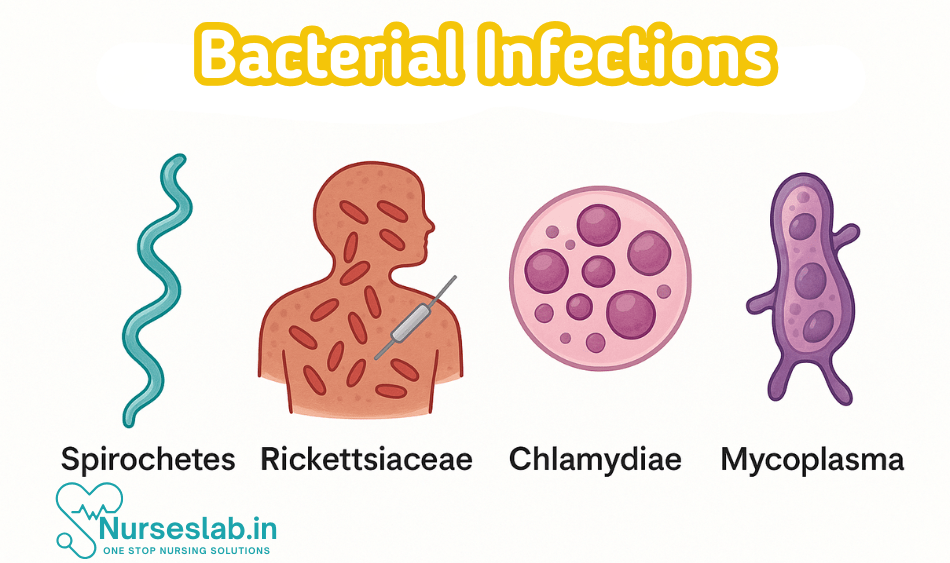
These organisms are responsible for a range of diseases, some of which are of global public health concern. Their clinical presentations are often protean, and laboratory diagnosis can be complex, requiring specialised techniques. Accurate identification is critical for guiding appropriate treatment and preventing complications.
Overview of Miscellaneous Bacterial Pathogens
The term “miscellaneous bacterial pathogens” refers to bacteria that do not fit the classic criteria of typical Gram-positive or Gram-negative organisms. They often exhibit unique structural, metabolic, or reproductive characteristics, and include:
- Spirochetes (e.g., Treponema, Borrelia, Leptospira)
- Rickettsiaceae (e.g., Rickettsia, Orientia)
- Chlamydiae (e.g., Chlamydia trachomatis, Chlamydophila pneumoniae)
- Mycoplasma (e.g., Mycoplasma pneumoniae, Ureaplasma urealyticum)
Each group displays distinct biological properties and disease associations, necessitating tailored approaches to diagnosis and management.
Spirochetes
Classification
Spirochetes are slender, flexible, helically coiled bacteria characterised by their unique corkscrew motility, which is facilitated by periplasmic flagella. The major medically important genera include:
- Treponema: Notably Treponema pallidum (syphilis)
- Borrelia: Includes Borrelia burgdorferi (Lyme disease), Borrelia recurrentis (relapsing fever)
- Leptospira: Includes Leptospira interrogans (leptospirosis)
Pathogenesis and Epidemiology
Spirochetes are found worldwide, with their distribution and epidemiology influenced by factors such as climate, animal reservoirs, and vector presence. Transmission routes vary: Treponema pallidum is primarily sexually transmitted, Borrelia species are tick- or louse-borne, and Leptospira is typically acquired through exposure to water contaminated with animal urine.
Their pathogenesis often involves invasion of host tissues, evasion of immune responses, and dissemination via the bloodstream. Spirochetes can invade a wide range of tissues, leading to multisystem involvement.
Syphilis (Treponema pallidum)
Syphilis is a chronic, sexually transmitted infection with distinct clinical stages:
- Primary syphilis: Painless chancre at the site of inoculation, regional lymphadenopathy.
- Secondary syphilis: Generalised rash (often involving palms and soles), mucous patches, condylomata lata, systemic symptoms.
- Latent syphilis: Asymptomatic, but serologically positive.
- Tertiary syphilis: Gummatous lesions, cardiovascular syphilis (aortitis), neurosyphilis (tabes dorsalis, general paresis).
- Congenital syphilis: Transplacental transmission leading to stillbirth, neonatal death, or multisystem involvement in infants.
Clinical Manifestations
Lyme Disease (Borrelia burgdorferi)
Lyme disease is transmitted by Ixodes ticks and typically progresses through three stages:
- Early localised: Erythema migrans (“bull’s eye” rash), flu-like symptoms.
- Early disseminated: Multiple erythema migrans lesions, neurological involvement (facial palsy, meningitis), carditis.
- Late disseminated: Arthritis, chronic neurological symptoms.
Relapsing Fever (Borrelia recurrentis and others)
This condition is characterised by recurrent episodes of fever, headache, and myalgia, separated by afebrile periods. Louse-borne and tick-borne forms exist, with the latter often causing more relapses.
Leptospirosis (Leptospira interrogans)
Leptospirosis presents with a wide clinical spectrum:
- Anicteric leptospirosis: Mild flu-like illness.
- Weil’s disease: Severe form with jaundice, renal failure, haemorrhage, and multi-organ dysfunction.
- Conjunctival suffusion: A characteristic finding in some cases.
Laboratory Diagnosis
- Microscopy: Dark-field microscopy for direct visualisation (e.g., syphilitic chancre exudate), silver staining for tissue sections.
Serology:
- Syphilis: Non-treponemal tests (VDRL, RPR) for screening; treponemal tests (FTA-ABS, TPHA) for confirmation.
- Lyme disease: ELISA for anti-Borrelia antibodies, confirmed by Western blot.
- Leptospirosis: Microscopic agglutination test (MAT), ELISA, PCR.
Culture: Difficult and slow for most spirochetes, not routinely performed.
Molecular methods: PCR is increasingly used for direct detection and speciation.
Differential Diagnosis
Differential diagnoses depend on the clinical syndrome:
- Syphilis: Genital ulcers caused by herpes simplex virus, chancroid, lymphogranuloma venereum.
- Lyme disease: Cellulitis, viral exanthems, autoimmune diseases.
- Relapsing fever: Malaria, dengue, typhoid fever.
- Leptospirosis: Viral hepatitis, dengue, hantavirus, malaria.
Treatment Overview
- Syphilis: Benzathine penicillin G is the treatment of choice; doxycycline or azithromycin for penicillin-allergic patients.
- Lyme disease: Doxycycline, amoxicillin, or cefuroxime; intravenous ceftriaxone for severe or neurological disease.
- Relapsing fever: Doxycycline or erythromycin.
- Leptospirosis: Doxycycline or penicillin; severe cases may require intravenous therapy.
Rickettsiaceae
Classification
Rickettsiaceae are obligate intracellular, Gram-negative coccobacilli. The family includes two major genera of medical importance:
- Rickettsia: Spotted fever group (R. rickettsii, R. conorii), typhus group (R. prowazekii, R. typhi).
- Orientia: Orientia tsutsugamushi (scrub typhus).
Pathogenesis and Epidemiology
Rickettsiaceae are transmitted to humans via arthropod vectors such as ticks, fleas, and mites. They infect vascular endothelial cells, leading to vasculitis, increased vascular permeability, and multi-organ involvement. The diseases are widely distributed, with higher prevalence in areas with dense vector populations.
Clinical Manifestations
Spotted Fever Group
- Rocky Mountain spotted fever (R. rickettsii): Fever, headache, myalgia, characteristic maculopapular rash (often involving wrists, ankles, and spreading to trunk), possible progression to petechiae and multi-organ failure.
- Indian tick typhus (R. conorii): Similar presentation, often with an eschar at the site of tick bite.
Typhus Group
- Epidemic typhus (R. prowazekii): Sudden high fever, severe headache, rash (sparing face, palms, soles), delirium, and potential for severe complications such as myocarditis and encephalitis.
- Endemic (murine) typhus (R. typhi): Milder febrile illness, rash less common.
Scrub Typhus (Orientia tsutsugamushi)
Characterised by fever, headache, lymphadenopathy, rash, and a necrotic eschar at the site of chigger bite. Severe cases may develop multi-organ dysfunction.
Laboratory Diagnosis
- Weil-Felix test: An agglutination test using Proteus strains; historically used, but low sensitivity and specificity.
- Serology: Indirect immunofluorescence assay (IFA) is the gold standard. ELISA and other antibody detection methods are also employed.
- Molecular methods: PCR-based assays for direct detection from blood or tissue.
- Culture: Rarely performed due to biosafety concerns; requires cell culture systems.
Differential Diagnosis
Rickettsial diseases can mimic many febrile illnesses:
- Viral exanthems (measles, dengue)
- Meningococcemia
- Leptospirosis
- Typhoid fever
Treatment Overview
- Doxycycline is the drug of choice for all rickettsial diseases, including scrub typhus.
- Chloramphenicol is an alternative, particularly in cases of doxycycline intolerance or contraindication.
- Prompt treatment is essential to prevent complications and reduce mortality.
Chlamydiae
Classification
Chlamydiae are obligate intracellular bacteria with a unique biphasic developmental cycle. Medically important species include:
- Chlamydia trachomatis: Urogenital infections, trachoma, lymphogranuloma venereum.
- Chlamydophila pneumoniae: Respiratory infections.
- Chlamydophila psittaci: Psittacosis (from birds).
Pathogenesis and Epidemiology
Chlamydiae are transmitted via direct contact (sexual, perinatal, or respiratory droplets) or from animal reservoirs. They enter host cells as infectious elementary bodies, transform into reticulate bodies for replication, and can cause chronic, persistent infections. Chlamydia trachomatis is a leading cause of preventable blindness (trachoma) and sexually transmitted infections worldwide.
Clinical Manifestations
- Trachoma: Chronic conjunctivitis leading to scarring and blindness, especially in children in endemic areas.
- Genital infections: Urethritis, cervicitis, pelvic inflammatory disease (PID), epididymitis, proctitis, and infertility. Neonatal conjunctivitis and pneumonia may occur following perinatal transmission.
- Lymphogranuloma venereum (LGV): Genital ulcer followed by painful inguinal lymphadenopathy, proctocolitis.
- Respiratory infections: Chlamydophila pneumoniae causes atypical pneumonia, bronchitis, sinusitis.
- Psittacosis: Zoonotic pneumonia, often severe, associated with bird exposure.
Laboratory Diagnosis
- Cell culture: Isolation in specialised cell lines (e.g., McCoy cells); labour-intensive and less commonly used now.
- Antigen detection: Direct fluorescent antibody (DFA) tests, enzyme immunoassays (EIA).
- Nucleic acid amplification tests (NAATs): PCR-based methods provide high sensitivity and specificity; now the gold standard for urogenital and ocular infections.
- Serology: Useful mainly for LGV, psittacosis, and respiratory infections; less helpful for acute urogenital infections.
Differential Diagnosis
- Other causes of urethritis/cervicitis (Neisseria gonorrhoeae, Mycoplasma genitalium, Trichomonas vaginalis)
- Viral conjunctivitis
- Bacterial pneumonia (Streptococcus pneumoniae, Mycoplasma pneumoniae)
Treatment Overview
- Chlamydia trachomatis: Azithromycin (single dose) or doxycycline (7 days); erythromycin for pregnant women and neonates.
- Chlamydophila pneumoniae/psittaci: Doxycycline or macrolides (azithromycin, clarithromycin).
- Partners should be treated concurrently to prevent reinfection.
Mycoplasma
Classification
Mycoplasmas are the smallest free-living bacteria, lacking a cell wall and possessing a flexible cell membrane containing sterols. Important species include:
- Mycoplasma pneumoniae: Atypical pneumonia.
- Ureaplasma urealyticum: Urogenital tract infections.
- Mycoplasma hominis: Pelvic inflammatory disease, postpartum sepsis.
Pathogenesis and Epidemiology
Mycoplasmas are transmitted via respiratory droplets (M. pneumoniae) or sexual contact (Ureaplasma, M. hominis). M. pneumoniae is a significant cause of community-acquired pneumonia, especially in children and young adults. Ureaplasma and M. hominis are associated with non-gonococcal urethritis and reproductive tract infections.
Due to the absence of a cell wall, mycoplasmas are inherently resistant to β-lactam antibiotics and display pleomorphic shapes.
Clinical Manifestations
- Atypical pneumonia (“walking pneumonia”): Gradual onset, dry cough, low-grade fever, malaise, headache, minimal auscultatory findings despite significant radiological changes.
- Extrapulmonary features: Skin rashes (e.g., erythema multiforme), haemolytic anaemia, neurological complications (encephalitis, Guillain-Barré syndrome).
- Urogenital infections: Non-gonococcal urethritis, PID, infertility, chorioamnionitis, neonatal infections.
Laboratory Diagnosis
- Culture: Requires specialised media (e.g., PPLO agar), slow-growing and technically demanding.
- Serology: Detection of specific IgM and IgG antibodies by ELISA or complement fixation test (CFT).
- Molecular methods: PCR assays are highly sensitive and specific, allowing for rapid detection directly from clinical specimens.
Differential Diagnosis
- Other causes of atypical pneumonia (Chlamydophila pneumoniae, Legionella pneumophila, viral agents)
- Bacterial urethritis (Neisseria gonorrhoeae, Chlamydia trachomatis)
Treatment Overview
- M. pneumoniae: Macrolides (azithromycin, clarithromycin), doxycycline, or fluoroquinolones.
- Ureaplasma and M. hominis: Doxycycline, macrolides; resistance to certain macrolides is increasingly reported.
- β-lactam antibiotics are ineffective due to lack of cell wall.
Key Differences in Clinical Features and Laboratory Diagnosis
| Group | Key Clinical Features | Transmission | Laboratory Diagnosis | Treatment Overview |
| Spirochetes | Syphilis (chancre, rash), Lyme disease (erythema migrans, arthritis), Leptospirosis (fever, jaundice, renal failure) | Sexual, vector-borne, waterborne | Dark-field microscopy, serology (VDRL, ELISA), PCR | Penicillin, doxycycline, macrolides |
| Rickettsiaceae | Fever, rash, eschar, multi-organ involvement | Arthropod vectors (ticks, mites, fleas) | Weil-Felix, IFA, PCR | Doxycycline, chloramphenicol |
| Chlamydiae | Trachoma, urethritis, PID, atypical pneumonia | Sexual, respiratory, perinatal, zoonotic | NAATs (PCR), antigen detection, serology | Azithromycin, doxycycline |
| Mycoplasma | Atypical pneumonia, urethritis, PID | Respiratory droplets, sexual | Culture (special media), serology, PCR | Macrolides, doxycycline, fluoroquinolones |
Conclusion
Miscellaneous bacterial infections caused by Spirochetes, Rickettsiaceae, Chlamydiae, and Mycoplasma present distinct diagnostic and therapeutic challenges. Their diverse clinical manifestations, ranging from sexually transmitted diseases to multi-system febrile illnesses, necessitate a high index of suspicion and familiarity with their epidemiology. Laboratory diagnosis relies increasingly on molecular methods, though traditional serological and microscopy-based techniques retain value in resource-limited settings. Prompt recognition and targeted therapy are crucial to preventing complications and long-term sequelae.
Continued research is needed to improve diagnostic accuracy, understand mechanisms of pathogenesis and antimicrobial resistance, and develop effective preventive strategies, including vaccines. As global travel, urbanisation, and climate change alter disease patterns, vigilance and updated clinical knowledge remain essential for healthcare professionals.
REFERENCES
- Apurba S Sastry, Essential Applied Microbiology for Nurses including Infection Control and Safety, First Edition 2022, Jaypee Publishers, ISBN: 978-9354659386
- Joanne Willey, Prescott’s Microbiology, 11th Edition, 2019, Innox Publishers, ASIN- B0FM8CVYL4.
- Anju Dhir, Textbook of Applied Microbiology including Infection Control and Safety, 2nd Edition, December 2022, CBS Publishers and Distributors, ISBN: 978-9390619450
- Gerard J. Tortora, Microbiology: An Introduction 13th Edition, 2019, Published by Pearson, ISBN: 978-0134688640
- Durrant RJ, Doig AK, Buxton RL, Fenn JP. Microbiology Education in Nursing Practice. J Microbiol Biol Educ. 2017 Sep 1;18(2):18.2.43. https://pmc.ncbi.nlm.nih.gov/articles/PMC5577971/
Stories are the threads that bind us; through them, we understand each other, grow, and heal.
JOHN NOORD
Connect with “Nurses Lab Editorial Team”
I hope you found this information helpful. Do you have any questions or comments? Kindly write in comments section. Subscribe the Blog with your email so you can stay updated on upcoming events and the latest articles.


