Last Updated on January 14, 2026 by Nurseslab.in Editorial Team
Communication skills are vital in nursing for accurate assessments, patient education, and team collaboration. Active listening, empathy, and clarity enhance care quality, reduce errors, and foster trust—essential in clinical practice and nursing education.
Introduction
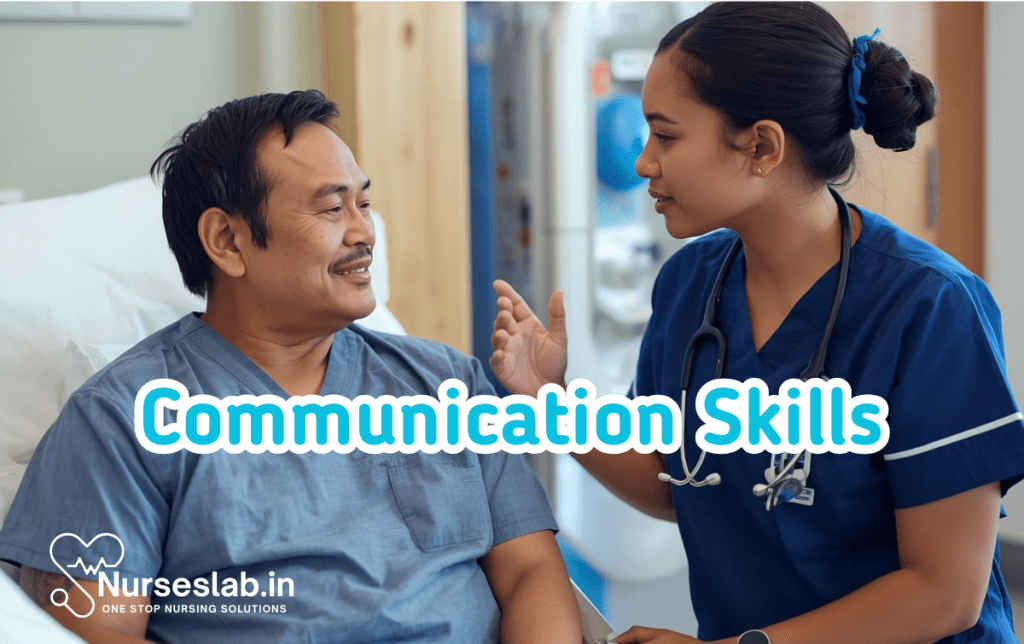
Effective communication forms the cornerstone of quality nursing care. In the dynamic and ever-evolving healthcare landscape, nurses interact with patients, families, and interdisciplinary teams, making communication skills crucial for optimal outcomes. Communication in nursing encompasses the exchange of information, thoughts, and emotions through verbal, non-verbal, written, and electronic means. The ability to communicate clearly and compassionately not only builds trust but also ensures patient safety, fosters therapeutic relationships, and contributes to holistic care.
The significance of communication in nursing cannot be overstated. It impacts patient satisfaction, adherence to treatment, and overall well-being. Miscommunication or lack of clarity can result in errors, misunderstandings, and compromised care. Therefore, mastering communication skills is not just a professional requirement but an ethical obligation for all nursing professionals and students.
Types of Communication in Nursing
Nursing professionals employ various forms of communication to deliver care and coordinate with others. Understanding these types is essential for effective practice.
Verbal Communication
Verbal communication involves the use of spoken words to convey information. This includes face-to-face conversations, telephone discussions, and video calls. The tone, pitch, volume, and pace of speech play a vital role in ensuring the message is understood as intended. Nurses must use clear, concise language, avoiding ambiguity and medical jargon when speaking with patients and families.
Non-Verbal Communication
Non-verbal cues such as facial expressions, gestures, posture, eye contact, and touch often communicate more than words. A nurse’s body language can convey empathy, reassurance, or concern. For instance, maintaining appropriate eye contact and an open posture can help patients feel valued and understood. Conversely, crossed arms or lack of attention may signal disinterest or impatience.
Written Communication
Written communication is integral to documentation, care plans, and interdepartmental correspondence. Nurses must ensure their written notes are accurate, legible, and free from ambiguities. Proper documentation supports continuity of care, legal protection, and effective handovers between shifts or departments.
Electronic Communication
With advancements in technology, electronic communication has become increasingly prevalent in healthcare. This includes emails, electronic health records (EHRs), instant messaging, and telemedicine platforms. Nurses must be adept at using digital tools while maintaining patient confidentiality and adhering to ethical guidelines.
Core Communication Skills for Nurses
The foundation of effective nursing communication rests on several core skills. Developing these abilities enhances patient care, strengthens professional relationships, and minimises the risk of errors.
Active Listening
Active listening involves fully concentrating, understanding, responding, and remembering what the patient or colleague says. It requires more than just hearing words; it entails interpreting feelings, concerns, and underlying messages. Nurses should employ techniques such as nodding, paraphrasing, and asking clarifying questions to demonstrate attentiveness.
Empathy
Empathy is the ability to understand and share another person’s feelings. In nursing, empathetic communication fosters trust and comfort, encouraging patients to express their needs and concerns. Simple gestures, such as a reassuring touch or a kind word, can make a significant difference in a patient’s experience.
Clarity and Conciseness
Clarity ensures that the intended message is understood without confusion. Nurses should use plain language, avoid unnecessary details, and tailor their communication to the listener’s level of understanding. Being concise prevents information overload and ensures key points are conveyed effectively.
Feedback
Providing and receiving feedback is essential for continuous improvement in nursing practice. Constructive feedback helps identify strengths and areas for growth, while open-mindedness to feedback from others promotes a learning culture. Nurses should offer feedback respectfully and with sensitivity, focusing on behaviours rather than personal attributes.
Patient-Centred Communication
Patient-centred communication is an approach that prioritises the patient’s needs, preferences, and values. It aims to involve patients in their care, enhance satisfaction, and improve health outcomes.
Building Trust
Trust is fundamental to the nurse-patient relationship. Nurses can build trust by being honest, reliable, and consistent in their interactions. Admitting mistakes, maintaining confidentiality, and following through on commitments are crucial for establishing credibility.
Addressing Concerns
Patients often have questions or anxieties about their condition or treatment. Nurses should encourage patients to voice their concerns, listen attentively, and provide clear, honest answers. This approach not only alleviates anxiety but also empowers patients to participate actively in their care.
Cultural Competence
India’s rich diversity brings unique challenges and opportunities to nursing communication. Cultural competence involves recognising and respecting differences in beliefs, values, language, and practices. Nurses should avoid assumptions, seek to understand cultural perspectives, and adapt their communication styles accordingly. Using interpreters or culturally appropriate educational materials can bridge language gaps and promote inclusivity.
Communication with Families: Strategies for Effective Family Engagement
Families play a crucial role in patient care, particularly in the Indian context, where family involvement is deeply valued. Effective communication with families ensures they are informed, reassured, and engaged in decision-making.
- Regular Updates: Providing timely and transparent information about the patient’s condition, treatment, and progress builds confidence and reduces anxiety among family members.
- Listening to Concerns: Families may have questions or fears regarding the patient’s care. Nurses should create an open environment where these can be discussed without judgement.
- Involving Families in Care Planning: Where appropriate, involving family members in care discussions and planning ensures their perspectives are considered and fosters collaborative decision-making.
- Respecting Privacy and Boundaries: While family involvement is important, nurses must also respect patient privacy and autonomy, sharing information only with consent.
Interdisciplinary Communication: Collaborating with Healthcare Teams
Nursing care is rarely delivered in isolation. Effective collaboration with doctors, physiotherapists, pharmacists, and other healthcare professionals is essential for comprehensive patient care. Interdisciplinary communication involves sharing information, discussing care plans, and coordinating actions to achieve common goals.
Key strategies for effective interdisciplinary communication include:
- Structured Handover: Using standardised communication tools (e.g., SBAR – Situation, Background, Assessment, Recommendation) during shift changes or patient transfers ensures critical information is conveyed accurately.
- Respect and Mutual Understanding: Acknowledging the expertise and perspectives of other team members fosters respect and collaboration.
- Regular Meetings: Participating in multidisciplinary rounds and meetings facilitates information sharing and joint problem-solving.
- Clear Documentation: Accurate written records provide a reliable reference for all team members, reducing the risk of miscommunication.
Barriers to Effective Communication: Common Challenges and Solutions
Despite best intentions, various barriers can impede effective communication in nursing. Recognising and addressing these challenges is vital for improving patient outcomes.
Language and Literacy Barriers
India’s linguistic diversity means nurses often encounter patients and families who speak different languages or dialects. Limited health literacy can further complicate understanding. Solutions include using interpreters, visual aids, and simple language, as well as confirming understanding through teach-back methods.
Emotional and Psychological Barriers
Illness, pain, anxiety, or fear can hinder a patient’s ability to communicate. Nurses should be sensitive to emotional cues and provide reassurance, patience, and support, creating a safe space for expression.
Environmental Barriers
Noisy or crowded environments, lack of privacy, and time pressures can disrupt communication. Whenever possible, nurses should choose quiet, private settings for sensitive discussions and manage their time to allow for meaningful interactions.
Personal Bias and Stereotypes
Unconscious biases or stereotypes can affect how nurses perceive and interact with patients. Reflecting on one’s attitudes, seeking feedback, and engaging in diversity training can help mitigate these biases.
Technological Barriers
While electronic communication offers many benefits, issues such as system errors, lack of training, or over-reliance on digital tools can hinder effective information exchange. Regular training and backup protocols are essential to address these challenges.
Documentation and Record-Keeping: Importance and Best Practices
Accurate documentation is a legal and professional requirement in nursing. It ensures continuity of care, supports clinical decision-making, and provides evidence in case of disputes. Good documentation practices include:
- Timeliness: Recording information as soon as possible after an event reduces the risk of forgetting details.
- Accuracy: Entries should be factual, objective, and free from personal opinions or assumptions.
- Clarity: Notes should be legible and unambiguous, using standard abbreviations and terminology.
- Confidentiality: Patient information must be protected, with records shared only with authorised personnel.
- Electronic Records: When using EHRs, nurses should ensure data is entered correctly and double-check for errors before finalising entries.
Communication in Difficult Situations: Handling Conflict and Delivering Bad News
Nurses frequently face challenging scenarios that test their communication skills. These can include conflicts with patients, families, or colleagues, as well as the task of delivering bad news.
Handling Conflict
Conflicts may arise due to misunderstandings, differing expectations, or stressful circumstances. Key techniques for managing conflict include:
- Staying Calm: Taking a few deep breaths and maintaining composure helps de-escalate tense situations.
- Listening Actively: Allowing all parties to express their views without interruption fosters mutual understanding.
- Seeking Solutions: Focusing on problem-solving rather than assigning blame encourages cooperation and resolution.
- Involving a Mediator: When conflicts persist, involving a neutral third party, such as a senior nurse or counsellor, can facilitate resolution.
Delivering Bad News
Communicating unfavourable or distressing information requires sensitivity, honesty, and empathy. The SPIKES protocol (Setting, Perception, Invitation, Knowledge, Empathy, Strategy) is a widely used framework for delivering bad news in healthcare settings. Key steps include:
- Setting: Choose a private, comfortable environment.
- Perception: Assess what the patient or family already knows.
- Invitation: Ask how much information they wish to receive.
- Knowledge: Share information clearly, avoiding jargon.
- Empathy: Respond to emotions with compassion.
- Strategy: Offer support and discuss next steps.
Improving Communication Skills: Training, Self-Reflection, and Continuous Learning
Communication skills are not innate; they can be developed and refined through ongoing education and practice. Nurses and students are encouraged to:
- Participate in Training Programmes: Workshops, seminars, and simulation exercises provide opportunities to practice and enhance communication skills.
- Engage in Self-Reflection: Reflecting on interactions, seeking feedback, and identifying areas for improvement promotes self-awareness and growth.
- Stay Updated: Keeping abreast of new communication tools, technologies, and best practices enhances professional competence.
- Learn from Mentors: Observing and learning from experienced nurses and healthcare professionals offers valuable insights and practical tips.
- Embrace Cultural Sensitivity: Regularly updating knowledge on cultural competence ensures respectful and effective communication with diverse populations.
Conclusion: Summary and Call to Action for Ongoing Skill Development
In conclusion, communication skills are foundational to nursing practice, influencing patient outcomes, professional relationships, and the overall quality of care. Mastering verbal, non-verbal, written, and electronic communication, along with core competencies such as active listening, empathy, and clarity, empowers nurses to navigate complex healthcare environments with confidence.
Nurses must remain vigilant to barriers, proactively seek solutions, and commit to lifelong learning. By prioritising effective communication, nursing professionals and students can deliver compassionate, patient-centred care, foster teamwork, and uphold the highest standards of the profession. Continuous skill development is not just recommended—it is essential for the future of nursing in India and beyond.
REFERENCES
- R. Sreevani, Applied Psychology for Nurses, 5th Edition, 2024, Jaypee Publishers, ISBN: 978-9356966963.
- Xavier Belsiyal, Applied Psychology for Nurses, 1st Edition, July 15, 2023, Elsevier Publishers, ISBN: 978-8131266366
- Mary F Porter, Applied Psychology for Nurses, 27 October 2022, Legare Street Press, IBSN: 978-1015804302.
- Douglas A. Bernstein, Introduction to Clinical Psychology, 10th Edition, 31 October 2024, Cambridge University Press, ISBN: 978- 1009379298.
- Sailaxmi Gandhi, Basic and Applied Psychology for Nurses, First Edition, January 2023, Wolters Kluwer Publications, ISBN: 978-9395736534.
- Jacob Anthikad, Psychology for Graduate Nurses, 5th Edition, 30 January 2014, Jaypee Publishers, ISBN: 978-9351521549.
- Kumar, Rajesh. (2017). Basic Psychology for Nurses. https://www.researchgate.net/publication/337811601_Basic_Psychology_for_Nurses
Stories are the threads that bind us; through them, we understand each other, grow, and heal.
JOHN NOORD
Connect with “Nurses Lab Editorial Team”
I hope you found this information helpful. Do you have any questions or comments? Kindly write in comments section. Subscribe the Blog with your email so you can stay updated on upcoming events and the latest articles.