


Last Updated on January 13, 2026 by Nurseslab.in Editorial Team
Introduction:
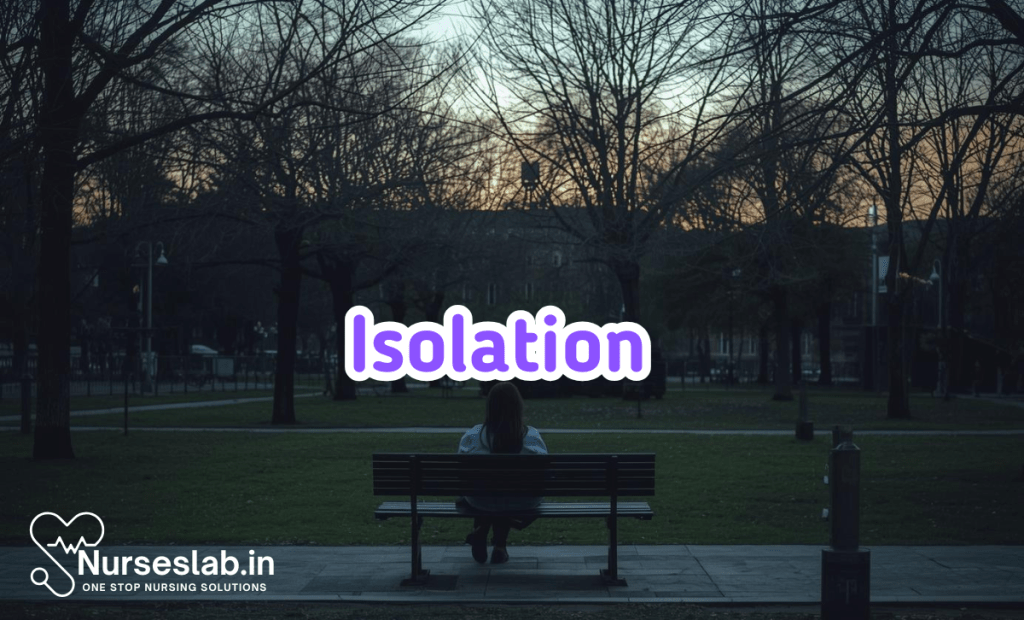
Isolation, in sociological terms, refers to a state in which individuals or groups experience a detachment or separation from others in their social environment. This phenomenon can manifest in various forms and degrees, affecting personal relationships, community engagement, and societal structures. The study of isolation is crucial in sociology because it offers insights into the dynamics of social interaction, the consequences of exclusion, and the mechanisms that underlie social integration and cohesion.
Understanding Isolation
Sociology approaches isolation through multiple theoretical frameworks. Classical sociologists such as Emile Durkheim, Karl Marx, and Max Weber examined isolation as both a personal and structural issue. Durkheim, for instance, linked social isolation to anomie—a state of normlessness resulting from rapid social change, which could lead to alienation and even suicide. Marx discussed alienation in the context of capitalist societies, where workers could become estranged from their labour, their community, and themselves. Weber explored how bureaucratic and rationalised systems could foster isolation by reducing personal connections.
Contemporary sociologists expand on these theories, considering isolation within the context of modern phenomena such as digital communication, urbanisation, and globalisation. Symbolic interactionists focus on the meaning individuals attach to their social relationships, while conflict theorists analyse how power dynamics and inequality contribute to exclusion and isolation. Structural functionalists, on the other hand, examine how isolation disrupts the functioning of social institutions and the balance of society.
Types of Isolation
Isolation is a multifaceted concept that encompasses various forms:
- Social Isolation: Refers to the absence or minimisation of social contacts and interactions. Individuals experiencing social isolation may lack meaningful relationships or frequent engagement with others.
- Emotional Isolation: Involves a lack of emotional connection or support, even when surrounded by people. This form of isolation is characterised by feelings of loneliness, detachment, or inability to share emotions.
- Physical Isolation: Denotes geographical or spatial separation from others. This can result from living in remote areas, being confined due to illness or disability, or experiencing forced segregation.
- Cultural Isolation: Occurs when individuals or groups are separated from the dominant cultural practices, values, or language of their society. Immigrants, minorities, or indigenous populations may experience cultural isolation.
- Institutional Isolation: Relates to exclusion from formal organisations or systems, such as workplaces, schools, or healthcare. Institutional isolation can be the result of discrimination, policy, or systemic barriers.
Characteristics of Isolation
Isolation presents itself through a range of observable and subjective characteristics. Sociologists identify several markers:
- Reduced Social Interaction: Limited participation in social activities, lack of regular communication, and minimal engagement with community life.
- Emotional Distress: Feelings of loneliness, sadness, hopelessness, or anxiety, often reported by individuals experiencing isolation.
- Behavioural Changes: Withdrawal from social settings, reluctance to form new relationships, and avoidance of group activities.
- Physical Symptoms: Increased risk of health problems such as insomnia, weakened immunity, and fatigue, often associated with prolonged isolation.
- Societal Indicators: High rates of single-person households, increased urban anonymity, declining community participation, and rising reports of loneliness are societal markers of isolation.
Causes of Isolation
The roots of isolation are complex and multifactorial. Key causes include:
- Social Factors: Breakdown of traditional social structures, urbanisation, migration, and demographic changes can erode communal bonds and increase isolation. Social exclusion due to age, disability, or minority status also contributes.
- Psychological Factors: Mental health conditions such as depression, anxiety, and trauma can lead to withdrawal and difficulty in forming connections. Personality traits, such as introversion or low self-esteem, may also play a role.
- Economic Factors: Poverty, unemployment, and financial insecurity limit access to social spaces and opportunities for interaction. Economic inequality can foster feelings of inferiority and exclusion.
- Technological Factors: While technology enables connectivity, excessive reliance on digital communication can paradoxically increase isolation by reducing face-to-face interaction and fostering superficial relationships.
- Cultural Factors: Cultural norms, language barriers, and discrimination can isolate individuals who do not conform to dominant societal expectations. Migration and acculturation challenges further intensify cultural isolation.
Isolation Versus Loneliness
A critical distinction exists between social isolation and loneliness. Social isolation represents an objective state of deprivation from social contact and relationships. Loneliness, by contrast, constitutes a subjective emotional statethe distressing feeling of being alone, separated from others, or experiencing a discrepancy between desired and actual social relationships.
A person may live alone and not feel lonely or isolated, while another might feel profoundly lonely despite being surrounded by people if relationships lack emotional depth or meaningful connection. This distinction is essential for sociological analysis, as addressing isolation and loneliness may require different intervention strategies.
Effects of Isolation
Impact on Individuals
Isolation has profound effects on personal well-being:
- Mental Health: Loneliness and isolation are linked to depression, anxiety, cognitive decline, and increased risk of suicide. The lack of social support can exacerbate psychological distress.
- Physical Health: Studies have shown that isolated individuals are at higher risk of cardiovascular disease, weakened immune function, and chronic illnesses.
- Behavioural Consequences: Isolation may lead to substance abuse, risky behaviours, and reduced motivation for self-care and personal development.
Impact on Families
Isolation affects family dynamics in several ways:
- Interpersonal Strain: Family members may experience tension, misunderstanding, and emotional distance, particularly when one member is isolated.
- Breakdown of Support Systems: Families with isolated members may struggle to provide adequate emotional or practical support, leading to fragmentation and conflict.
- Transmission of Isolation: Patterns of isolation can be passed across generations, influencing children’s social development and future relationships.
Impact on Society
At the societal level, isolation undermines social cohesion and productivity:
- Social Cohesion: Widespread isolation erodes trust, cooperation, and collective identity, making communities less resilient to challenges.
- Crime and Deviance: Isolated individuals may be more susceptible to criminal behaviour or victimisation, as they lack protective social networks.
- Economic Productivity: Isolation reduces labour force participation, innovation, and collaboration, leading to economic stagnation.
Sociological Significance
Understanding isolation as a sociological phenomenon shifts focus from individual responsibility to structural analysis. Rather than treating isolation as a personal failing, sociology reveals how economic organization, institutional design, community infrastructure, and social policies create conditions enabling or preventing isolation. This perspective suggests that addressing isolation requires not just individual interventions but systemic changes—strengthening community spaces, ensuring economic opportunity, reducing discrimination, and rebuilding the social institutions that historically provided belonging and connection.
Case Studies
Historical Examples
Leprosy Colonies in Colonial India: During the British colonial period, individuals afflicted with leprosy were forcibly isolated in colonies, separated from family and society. This institutional isolation had enduring effects on their psychological health and social status.
Untouchability and Social Exclusion: The caste system in India historically imposed severe social isolation on Dalits, restricting their access to public spaces, education, and employment. The legacy of such exclusion continues to shape social relations in contemporary India.
Contemporary Examples
Urban Loneliness: Rapid urbanisation in cities like Mumbai and Delhi has led to increased anonymity and social isolation, particularly among the elderly and migrants who lack established social networks.
Digital Isolation: The proliferation of smartphones and social media platforms has created virtual communities but also contributed to emotional and social isolation, as online interactions often lack depth and authenticity.
COVID-19 Pandemic: Lockdown measures implemented during the pandemic resulted in unprecedented levels of physical and social isolation globally. In India, millions experienced isolation due to travel restrictions, school closures, and limited access to healthcare and community support.
Prevention and Intervention
Addressing isolation requires coordinated efforts at individual, community, and policy levels.
Individual Strategies
- Enhancing Social Skills: Training and counselling can help individuals develop communication and relationship-building skills.
- Mental Health Support: Access to therapy, support groups, and helplines is essential for those experiencing emotional isolation.
- Engagement in Activities: Encouraging participation in hobbies, sports, and volunteer work fosters connections and reduces isolation.
Community Initiatives
- Building Inclusive Spaces: Community centres, libraries, and parks provide venues for social interaction and inclusion.
- Outreach Programmes: Targeted outreach to vulnerable groups, such as the elderly, migrants, and minorities, helps bridge gaps and foster belonging.
- Promoting Cultural Exchange: Events celebrating diversity and intercultural dialogue reduce cultural isolation and strengthen social bonds.
Policy Measures
- Legislation Against Discrimination: Enforcing anti-discrimination laws and promoting equal access to education, employment, and healthcare are vital in combating institutional isolation.
- Urban Planning: Designing cities to encourage interaction, accessibility, and inclusivity helps counteract the isolating effects of urbanisation.
- Digital Literacy and Access: Ensuring equitable access to digital technologies and educating users about healthy online practices can mitigate digital isolation.
Conclusion
Isolation in sociology is a multidimensional phenomenon with far-reaching implications for individuals, families, and societies. Its forms—social, emotional, physical, cultural, and institutional—are shaped by a complex interplay of social, psychological, economic, technological, and cultural factors. The effects of isolation are profound, influencing mental and physical health, family dynamics, and the fabric of society. Historical and contemporary case studies illustrate the persistent and evolving nature of isolation, highlighting the need for targeted interventions.
Future research should explore the impact of emerging technologies, changing social structures, and global crises on isolation. Longitudinal studies, cross-cultural comparisons, and policy evaluations will be crucial in developing effective strategies to prevent and address isolation. By deepening our understanding and fostering inclusive communities, sociology can play a pivotal role in mitigating the adverse effects of isolation and promoting collective well-being.
REFERENCES
- R Sreevani, Applied Sociology for Nurses, 2nd Edition, 2023, Jaypee Publishers, ISBN: 978-9356962866.
- I. Clement, Sociology for Nurses, 3rd Edition, 2023, Pearson Publishers, ISBN: 978-9357053273.
- Denny, Earle, Hewison, Sociology for Nurses, 3rd Edition, 2016, Wiley Publishers, ISBN: 978-1509505401.
- Hannah Cooke, Sociological Approaches to Health, Healthcare and Nursing, 1st Edition, September 9, 2024, ISBN: 978-0702083143.
- Jacob Anthikad, Sociology for Graduate Nurses, 2nd Edition, 2014, Jaypee Publishers, ISBN: 978-9351520085.
- Tubergen, Frank. March 2020. Introduction to Sociology. ISBN: 978-1351134958. https://www.researchgate.net/publication/339505825_Introduction_to_Sociology
- Van de Velde, C. (2025). Sociology of loneliness: An introduction. Acta Sociologica, 0(0). https://doi.org/10.1177/00016993251330960
Stories are the threads that bind us; through them, we understand each other, grow, and heal.
JOHN NOORD
Connect with “Nurses Lab Editorial Team”
I hope you found this information helpful. Do you have any questions or comments? Kindly write in comments section. Subscribe the Blog with your email so you can stay updated on upcoming events and the latest articles.


