


Levine’s Conservation Model, developed by Myra Estrin Levine, is a holistic nursing theory that emphasizes maintaining a patient’s integrity and promoting adaptation through four key conservation principles. It’s especially relevant in acute care, rehabilitation, and geriatric nursing.
Life Story of Myra Levine
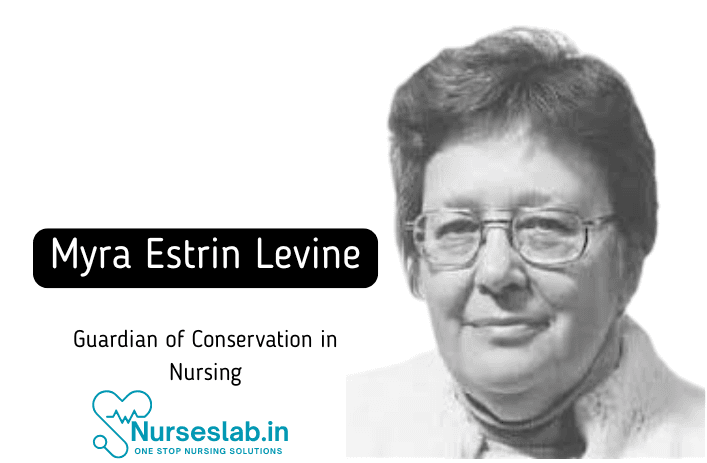
Myra Estrin Levine (1920–1996) was a pioneering nurse theorist, educator, and author best known for her Conservation Model of Nursing. Her work emphasized helping patients conserve energy, structural integrity, personal identity, and social connections—a holistic approach that continues to shape nursing practice today.
Early Life & Education
- Born December 12, 1920, in Chicago, Illinois, the eldest of three children.
- Her father’s chronic gastrointestinal illness inspired her interest in healthcare.
- Earned her nursing diploma from Cook County School of Nursing (1944).
- Completed her BSN at the University of Chicago (1949).
- Obtained her MS in Nursing from Wayne State University (1962)2.
Career & Contributions
- Worked as a private duty nurse, civilian Army nurse, and surgical supervisor at major hospitals including Henry Ford Hospital.
- Held academic positions at:
- Cook County School of Nursing
- Loyola University
- Rush University
- University of Illinois, where she became Professor Emerita.
- Served as a visiting professor in Israel at Ben Gurion University and Tel Aviv University.
- Authored Introduction to Clinical Nursing (1969), which won AJN Book of the Year awards.
Conservation Model of Nursing
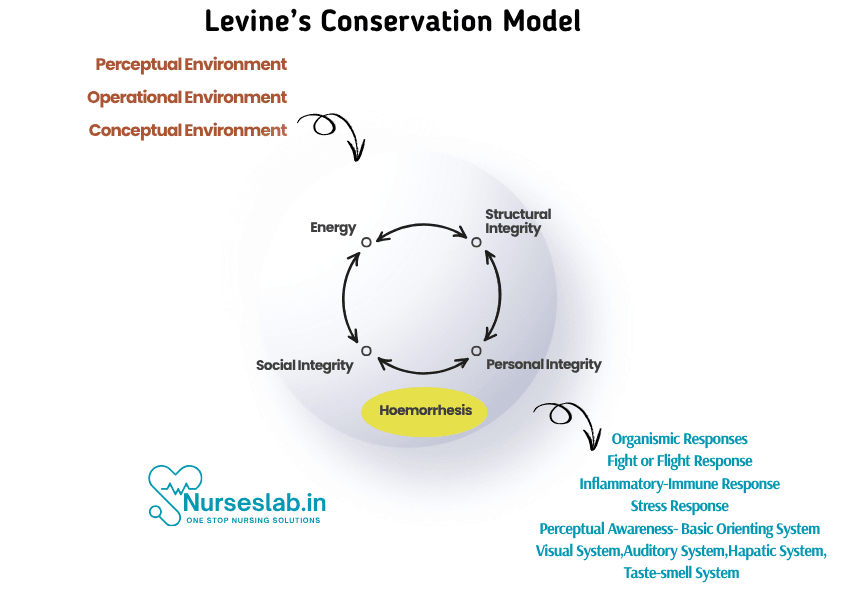
Levine’s theory focuses on adaptation and wholeness through four conservation principles:
- Energy – Balance rest, nutrition, and activity to avoid fatigue.
- Structural Integrity – Maintain physical health and promote healing.
- Personal Integrity – Respect individuality, dignity, and autonomy.
- Social Integrity – Support relationships and community ties3.
Her model guides nurses to minimize patient effort while maximizing healing, especially in medical-surgical and rehabilitation settings.
Legacy & Honors
- First recipient of the Sigma Theta Tau Elizabeth Russell Belford Award for excellence in teaching (1977).
- Received an honorary doctorate from Loyola University (1991).
- Named a charter fellow of the American Academy of Nursing (1973).
- Honored by the Illinois Nurses’ Association and listed in Who’s Who in American Nursing.
Final Years
- Married Edwin Burton Levine, a classics scholar, in 1944.
- Lost her first child, Benjamin, after just three days; had two other children.
- Retired in 1987 but remained active in nursing education.
- Passed away on March 20, 1996, in Evanston, Illinois, at age 75.
Key Concepts
- Goal of Nursing
- Promote adaptation and maintain wholeness of the individual.
- Support the patient in conserving energy and resources during illness or stress.
- Person
- A holistic being who responds physically, psychologically, and socially to environmental changes.
- Wholeness is maintained through conservation.
- Environment
- All internal and external factors influencing life and development.
- Nursing aims to promote harmony between person and environment.
- Health
- Defined as a pattern of adaptive change that promotes wholeness and integrity.
- Illness occurs when adaptive mechanisms are challenged.
Core Philosophy
- Nursing’s goal is to promote adaptation and maintain wholeness.
- Conservation is the outcome of successful adaptation.
- The nurse acts as part of the patient’s environment, facilitating healing through skill, knowledge, and compassion.
Four Conservation Principles
- Conservation of Energy
- Support the patient in balancing energy input and output.
- Example: Providing rest periods, nutritional support, and pain control.
- Conservation of Structural Integrity
- Maintain or restore physical body integrity.
- Example: Wound care, turning to prevent pressure injuries, skin protection.
- Conservation of Personal Integrity
- Protect patient’s sense of identity, dignity, and self-worth.
- Example: Respect privacy, involve the patient in decision-making.
- Conservation of Social Integrity
- Support family, community, and social roles.
- Example: Encourage family visits, maintain social interactions where possible.
Assumption
- The nurse creates an environment in which healing could occur
- A human being is more than the sum of the part
- Human being respond in a predictable way
- Human being are unique in their responses
- Human being know and appraise objects ,condition and situation
- Human being sense, reflects, reason and understand
- human being action are self determined even when emotional
- Human being are capable of prolonging reflection through such strategists raising questions
Characteristics of theory
- The concept of illness adaptation, using interventions, and the evaluation of nursing interventions are interrelated.
- Concepts are sequential and logical and can be used to explain the consequences of nursing action.
- Levine’s theory is easy to use and elements are easily comprehensible.
- Levine’s idea can be tested and hypothesis can be derived from them.
- The principle of conservation are specific enough to be testable
- Levine’s idea have not yet been widely researched.
- Levine’s theory has been applied in surgical settings.
- Levine’s ideas are consistent with other theories, laws and principles particularly those from the humanities and sciences
Application of Levine’s Conservation Model
1. Clinical Application
- Energy Conservation:
- Encourage adequate rest periods between nursing interventions.
- Minimize unnecessary physical exertion to conserve the patient’s energy.
- Example: Postoperative patients are scheduled for clustered nursing care to avoid frequent disruptions.
- Structural Integrity Conservation:
- Maintain skin integrity and prevent injuries through regular repositioning.
- Provide wound care and nutritional support to promote tissue healing.
- Personal Integrity Conservation:
- Respect patient privacy and involve them in decision-making.
- Maintain dignity by explaining all procedures and obtaining consent.
- Social Integrity Conservation:
- Encourage family involvement and social communication to reduce isolation.
- Facilitate cultural and spiritual practices when possible.
2. Community Health Application
- Use the model to support vulnerable populations in conserving energy and maintaining social roles:
- Educate elderly clients about fall prevention and balanced nutrition.
- Promote social participation and family engagement to maintain mental and social integrity.
3. Rehabilitation Setting Application
- Plan gradual activity progression to restore functional capacity without exhausting energy reserves.
- Protect physical structures with supportive devices (braces, mobility aids).
- Reinforce self-esteem and social interaction to encourage adaptation post-injury or surgery.
Case Scenario 1: Postoperative Abdominal Surgery Patient
Scenario:
Mr. A, 45 years old, is 2 days post abdominal surgery. He is weak, complains of fatigue, and has a surgical incision with minimal drainage. He expresses anxiety about moving because of pain and fear of wound opening.
Possible Nursing Diagnoses
- Acute pain related to surgical incision.
- Risk for impaired skin integrity related to immobility.
- Activity intolerance related to decreased energy reserves.
Nursing Interventions (Based on Conservation Principles)
- Conservation of Energy
- Cluster nursing care to minimize frequent disturbances.
- Encourage deep breathing and relaxation to reduce fatigue.
- Provide adequate nutrition to promote healing and energy restoration.
- Conservation of Structural Integrity
- Monitor the surgical site for infection or dehiscence.
- Assist with gentle repositioning every 2 hours to prevent pressure injuries.
- Support the incision with a pillow (splinting) during coughing or movement.
- Conservation of Personal Integrity
- Explain all procedures to reduce anxiety and maintain trust.
- Involve the patient in decisions regarding activity and self-care.
- Conservation of Social Integrity
- Encourage family visits to provide emotional support.
- Update family members and involve them in care activities as appropriate.
Case Scenario 2: Elderly Stroke Patient in Rehabilitation
Scenario:
Mrs. B, 70 years old, is recovering from a left-sided stroke. She has right-sided weakness, difficulty walking, and feels isolated because she cannot attend her usual senior group activities.
Possible Nursing Diagnoses
- Impaired physical mobility related to neuromuscular weakness.
- Risk for impaired skin integrity related to limited movement.
- Social isolation related to decreased participation in usual activities.
Nursing Interventions (Based on Conservation Principles)
- Conservation of Energy
- Schedule physical therapy sessions with adequate rest periods.
- Teach energy-saving techniques for daily activities.
- Conservation of Structural Integrity
- Implement skin care protocols and frequent repositioning.
- Use assistive devices (walker, wheelchair) to support safe ambulation.
- Conservation of Personal Integrity
- Encourage self-care activities as tolerated to boost confidence.
- Provide positive reinforcement for any progress to preserve self-esteem.
- Conservation of Social Integrity
- Arrange virtual or small group interactions to reduce social isolation.
- Involve family members in rehabilitation to maintain social connection.
REFERENCES
- Levine, M.E. (1966a). Adaptation and assessment: A rationale for nursing intervention. American Journal of Nursing, 66, 2450–2453.
- Levine, M.E. (1966b). Trophicognosis: An alternative to nursing diagnosis. In American Nurses’ Association Regional Clinical Conference (Vol. 2, pp. 55–70). New York: American Nurses’ Association.
- Levine, M.E. (1967). The four conservation principles of nursing. Nursing Forum, 6, 45–59.
- Levine, M.E. (1969a). The pursuit of wholeness. American Journal of Nursing, 69, 93–98.
- Levine, M.E. (1969b). Introduction to clinical nursing. Philadelphia: F.A. Davis.
- Levine, M.E. (1971a). Holistic nursing. Nursing Clinics of North America, 6, 253–264.
- Abumaria IM, Hastings-Tolsma M, Sakraida TJ. Levine’s Conservation Model: A Framework for Advanced Gerontology Nursing Practice. Nurs Forum. 2015 Jul-Sep;50(3):179-88. https://pubmed.ncbi.nlm.nih.gov/24404874/
- Levine, M.E. (1971b). Renewal for nursing. Philadelphia, PA: F.A. Davis.
- Levine, M.E. (1973a). Instructor’s guide: Introduction to clinical nursing (2nd ed.). Philadelphia: F.A. Davis. [Reprinted 1991. In K.M. Schaefer & J.B. Pond (Eds.), Levine’s conservation model: A framework for nursing practice (pp. 225–237). Philadelphiam, PA: F.A. Davis.]
- Levine, M.E. (1973b). Introduction to clinical nursing (2nd ed.). Philadelphia: F.A. Davis.
- Levine, M.E. (1988). Myra Levine. In T.M. Schorr & A. Zimmerman (Eds.), Making choices. Taking chances. Nurse leaders tell their stories (pp. 215– 228). St. Louis, MO: Mosby.
- Levine, M.E. (1989a). The conservation principles: Twenty years later. In J.P. Riehl (Ed.), Conceptual models for nursing practice (3rd ed., pp. 325– 337). Norwalk, CT: Appleton & Lange.
- Levine, M.E. (1989b). Ration or rescue: The elderly patient in critical care. Critical Care Nursing Quarterly, 12(1), 82–89.
- Levine, M.E. (1990). Conservation and integrity. In M.E. Parker (Ed.), Nursing theories in practice (pp. 189–201). New York, NY: National League for Nursing.
- Levine, M.E. (1991). The conservation principles: A model for health. In K.M. Schaefer & J.B. Pond (Eds.), Levine’s conservation model: A framework for nursing practice (pp. 1–11). Philadelphia, PA: F.A. Davis.
- Levine, M.E. (1992). Nightingale redux. In F.N. Nightingale, Notes on nursing: What it is, and what it is not (Commemorative edition, pp. 39–43). Philadelphia, PA: Lippincott.
- Levine, M.E. (1996). The conservation principles: A retrospective. Nursing Science Quarterly, 9, 38–41.
- Schaefer, K.M., & Pond, J.B. (Eds.). (1991). Levine’s conservation model: A framework for nursing practice. Philadelphia, PA: F.A. Davis.
Stories are the threads that bind us; through them, we understand each other, grow, and heal.
JOHN NOORD
Connect with “Nurses Lab Editorial Team”
I hope you found this information helpful. Do you have any questions or comments? Kindly write in comments section. Subscribe the Blog with your email so you can stay updated on upcoming events and the latest articles.


