


Last Updated on January 16, 2026 by Nurseslab.in Editorial Team
Introduction
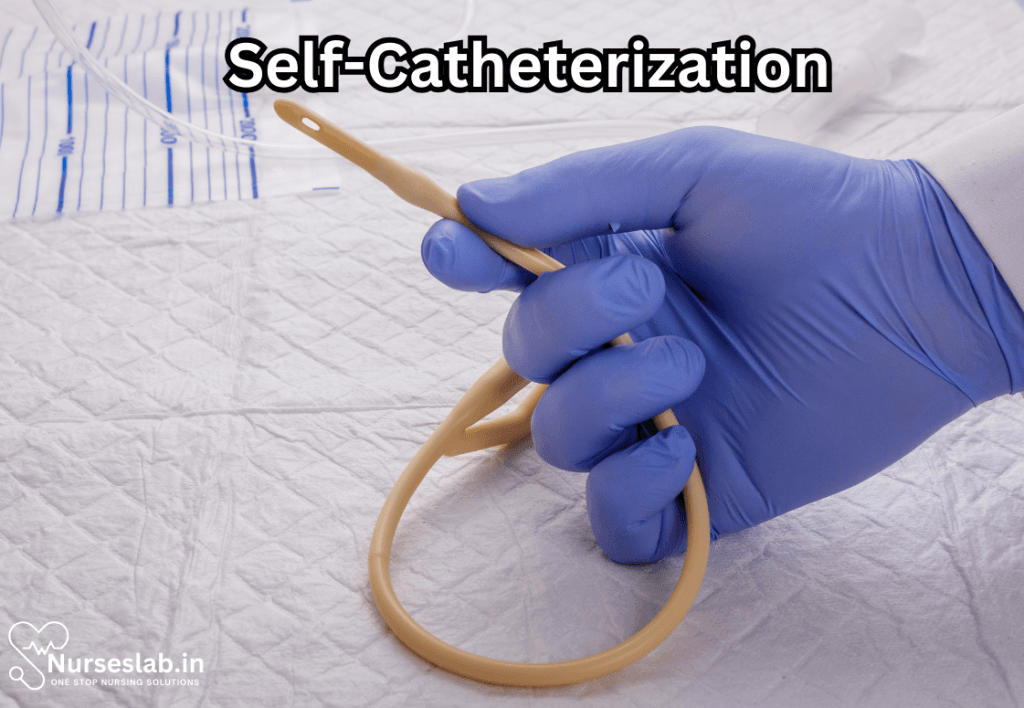
Self-catheterization, often referred to as Clean Intermittent Catheterization (CIC), is a bladder management technique that allows individuals to empty their bladder at regular intervals. This method is commonly recommended for people whose bladders do not empty fully or at all, due to various medical conditions such as spinal cord injuries, neurogenic bladder, multiple sclerosis, or certain congenital abnormalities. By learning and practicing this technique, individuals can significantly improve their quality of life, reduce the risk of urinary tract infections (UTIs), and preserve renal function.
What is Clean Intermittent Catheterization?
Clean Intermittent Catheterization is a procedure in which a thin, flexible tube called a catheter is inserted into the urethra to drain urine from the bladder. Unlike indwelling catheters, which remain in place for prolonged periods, intermittent catheterization involves periodic insertion and removal of the catheter, usually several times a day. The “clean” aspect of the technique reflects the use of clean (not sterile) equipment and practices, suitable for use outside of a hospital setting.
Benefits of CIC
- Reduces Risk of Infection: Intermittent use lowers the risk of infection compared to indwelling catheters.
- Improves Bladder Health: Regular emptying helps prevent overstretching and damage.
- Greater Independence: Empowers individuals to manage their bladder function without relying on others.
- Enhances Comfort: Avoids the discomfort and complications associated with permanent catheters.
Who Might Need Self-Catheterization?
Self-catheterization is commonly recommended for people experiencing:
- Chronic urinary retention
- Incomplete bladder emptying
- Neurogenic bladder due to spinal cord injury, multiple sclerosis, or spina bifida
- Bladder dysfunction following surgery or injury
- Certain age-related bladder control issues
Healthcare providers assess each person’s condition to determine whether CIC is appropriate and provide personalized instructions.
How to Perform Clean Intermittent Catheterization
General Preparation
- Wash your hands thoroughly with soap and water before and after the procedure.
- Gather all necessary supplies: catheter, water-based lubricant, a clean container to collect urine (if not using a toilet), disposable wipes, and, if desired, gloves.
- Find a private, comfortable, and clean area for catheterization.
Step-by-Step Guide (For Individuals Assigned Female at Birth)
- Wash hands thoroughly.
- Position yourself comfortably (sitting on the toilet, lying down, or standing with a foot on a raised surface).
- Using a mirror can help locate the urethral opening.
- Separate the labia with one hand to expose the urethra.
- Clean the area around the urethra with a disposable wipe, moving from front to back.
- Lubricate the tip of the catheter.
- Gently insert the catheter into the urethra until urine begins to flow.
- Allow all urine to drain into the toilet or container.
- When the flow stops, slowly withdraw the catheter, pausing if more urine appears.
- Dispose of urine and supplies appropriately. Wash hands again.
Step-by-Step Guide (For Individuals Assigned Male at Birth)
- Wash hands thoroughly.
- Position yourself comfortably (standing or sitting).
- Hold the penis upward and clean the tip with a disposable wipe, retracting the foreskin if necessary.
- Lubricate the catheter well.
- Gently insert the catheter into the urethra. Slight resistance may be felt at the sphincter, but do not force the catheter. Continue gently until urine begins to flow.
- Allow all urine to drain out.
- When flow stops, slowly withdraw the catheter, pausing if more urine appears.
- Dispose of urine and supplies appropriately. Wash hands again.
- If the foreskin was retracted, gently return it to its normal position.
Aftercare and Cleaning
- If using a reusable catheter, rinse with soap and warm water, then allow to air dry.
- Store catheter in a clean, dry container.
- If using a single-use catheter, dispose of it according to instructions.
Types of Catheters
- Straight Catheters: Simple, flexible tubes without additional features.
- Hydrophilic Catheters: Coated with a substance that becomes slippery when wet, reducing friction and discomfort.
- Pre-lubricated Catheters: Packaged ready-to-use with lubricant already applied.
- Coude-Tip Catheters: Designed with a curved tip to facilitate passage through the urethra in certain conditions, especially with enlarged prostate or strictures.
Choosing the Right Catheter
Healthcare providers will recommend the best type and size of catheter, tailored to individual anatomy and needs.
Hygiene and Infection Prevention
Because the process involves insertion into the urinary tract, strict attention to cleanliness is essential to minimize the risk of infection:
- Wash hands thoroughly before and after the procedure.
- Use clean supplies each time.
- Do not reuse disposable catheters.
- Store reusable catheters in a clean, dry place.
- Follow any additional instructions provided by your healthcare team.
Potential Complications and How to Avoid Them
Urinary Tract Infections (UTIs)
UTIs are the most common complication of CIC. Minimize risk by:
- Maintaining excellent hand and catheter hygiene
- Ensuring complete bladder emptying
- Drinking adequate fluids unless otherwise advised by your healthcare provider
- Reporting symptoms such as burning, fever, or cloudy urine promptly
Bleeding or Discomfort
Minor spotting or temporary discomfort may occur, especially when starting CIC. Persistent pain or bleeding should be reported.
Urethral Injury
Avoid forceful insertion and use plenty of lubricant to reduce the risk of trauma.
Other Issues
Some people may experience difficulty inserting the catheter due to anatomical differences or scar tissue. If resistance is encountered, stop and seek medical advice.
Integrating CIC Into Daily Life
Establishing a Routine
Most individuals will need to self-catheterize every 4–6 hours, depending on fluid intake, bladder capacity, and medical advice. Creating a schedule helps prevent bladder overfilling and accidents.
Travel and CIC
Traveling with CIC is entirely possible. Carry necessary supplies, a small bottle of hand sanitizer, and disposal bags. Many catheters are discreetly packaged for travel. Plan ahead for restroom access.
Emotional and Psychological Considerations
Adapting to CIC may be challenging at first. It is normal to feel apprehensive or anxious. With time and practice, most people gain confidence and find that CIC becomes a routine part of their day. Support groups and counseling may be helpful.
Nursing Care of Patients Performing Self-Catheterization (Clean Intermittent Catheterization)
CIC involves the periodic insertion of a catheter through the urethra into the bladder under clean (not sterile) conditions to drain urine, after which the catheter is removed. Performed at regular intervals, CIC mimics the bladder’s natural emptying cycle and can be managed by the patient or a caregiver, depending on individual abilities.
Assessment and Patient Selection
The nurse’s first responsibility is to assess whether a patient is a suitable candidate for self-catheterization. Considerations include:
- Cognitive capacity: Is the patient able to understand instructions and retain information regarding the procedure?
- Manual dexterity: Does the patient possess sufficient hand strength and coordination to manipulate a catheter and maintain cleanliness?
- Visual acuity: Can the patient see clearly enough to perform the steps safely, or will adaptive devices be required?
- Motivation and willingness: Is the patient comfortable with the concept and motivated to learn?
If limitations are identified, nurses should collaborate with occupational therapists, family members, or caregivers to modify education or explore alternative management strategies.
Education: Laying the Foundation for Self-Efficacy
Education is both foundational and ongoing. Nurses provide instruction tailored to the patient’s learning style (visual, auditory, hands-on demonstration), literacy level, and cultural background.
Key Educational Elements
- Anatomy and rationale: Explain the relevant anatomy, the reason for CIC, and its benefits over other forms of bladder management. Use diagrams and models as needed.
- Equipment: Familiarize patients with various catheters (single-use or reusable; straight or coude tip), lubricants, collection containers, and cleaning supplies. Discuss pros and cons of each option and address cost or insurance considerations.
- Procedure: Provide step-by-step instruction in:
- Handwashing and preparation of a clean workspace
- Lubrication of the catheter
- Proper insertion technique (with attention to gender-specific anatomy)
- Safe removal and post-procedure steps
- Catheter cleaning and storage if using reusable catheters
Frequency and schedule: Establish a routine based on physician recommendations, bladder capacity, and lifestyle. Typically, CIC is performed 4-6 times per day.
Recognition of complications: Teach patients to identify signs of urinary tract infection (UTI), trauma, bleeding, or difficulty catheterizing, and provide clear instructions for when to seek help.
Teaching Strategies
- Use written guides, illustrated handouts, and instructional videos for reinforcement.
- Encourage hands-on practice under nurse supervision until competence and comfort are demonstrated.
- Offer positive feedback, address anxieties, and normalize the learning curve.
- Involve caregivers or family in teaching, as appropriate, with the patient’s consent.
Promoting a Safe and Supportive Environment
Physical Environment
Create a private, clean, and accessible space for instruction and ongoing self-care. For patients with mobility limitations, adaptive equipment (mirrors, positioning aids, reachers) may be introduced.
Emotional Support
Learning CIC can provoke feelings of embarrassment, frustration, or anxiety. Nurses should approach teaching with empathy, sensitivity, and a non-judgmental attitude. Normalize emotional responses and connect patients with peer support groups or counselling as needed.
Ongoing Monitoring and Follow-Up
Assessing Technique and Troubleshooting
Regular review of technique is essential, particularly in the initial weeks. Nurses should observe for:
- Correct hand hygiene and use of clean technique
- Minimal trauma to urethral tissue
- Complete bladder emptying
- Proper catheter care (for reusable catheters)
If difficulties arise—such as pain, resistance, bleeding, or inability to insert the catheter—nurses should reassess technique, review possible anatomical changes, and liaise with medical providers for further evaluation.
Infection Prevention
While CIC carries a lower risk of infection than indwelling catheters, UTIs remain a concern. Strategies include:
- Rigorous handwashing and clean technique
- Using single-use sterile catheters, where possible, or meticulously cleaning reusable ones
- Ensuring adequate hydration and regular voiding
- Assessing for and promptly addressing any symptoms of infection (fever, cloudy urine, foul odour, dysuria)
Addressing Complications
Nurses should educate patients on the signs of and responses to:
- Urinary tract infections: Increased frequency, urgency, pain with catheterization, or fever. Instruct on seeking medical attention promptly.
- Urethral trauma: Blood on the catheter, pain, or resistance. Emphasize gentle technique and the importance of not forcing the catheter.
- False passages/strictures: If recurrent difficulty is experienced, refer to a urologist.
Promoting Independence and Empowerment
The ultimate goal of nursing care is to foster autonomy and confidence. Strategies include:
- Gradually transferring responsibility as competence grows
- Encouraging self-monitoring (voiding diaries, symptom checklists)
- Celebrating milestones and addressing setbacks honestly
- Adapting plans to suit changing health status, lifestyle, or living environment
Special Considerations
Paediatric Patients
For children, teaching must be adapted to the developmental level of the child and family. Play-based learning, simple language, and family involvement are crucial.
Older Adults
Address age-related changes such as arthritis, vision impairment, or cognitive decline. Collaborate with occupational therapists for adaptive solutions.
Patients with Disabilities
Customise approaches to fit physical or cognitive challenges—consider adaptive devices, alternative techniques, and robust caregiver training.
Interprofessional Collaboration
Nurses play a central role in care coordination, collaborating with physicians, occupational and physical therapists, and suppliers of medical equipment. Clear documentation and regular communication ensure patient safety and allow timely intervention if problems are detected.
Documentation and Communication
All teaching sessions, patient responses, and any issues identified must be meticulously documented. This record guides future care, supports continuity, and protects both patient and provider.
REFERENCES
- American Academy of Pediatrics. Clean Intermittent Catheterization. https://www.healthychildren.org/English/health-issues/conditions/chronic/Pages/Clean-Intermittent-Catheterization.aspx. Last updated 11/2015.
- American Urological Association Urology Care Foundation. Insights: Self-Catheterization. https://www.urologyhealth.org/healthy-living/urologyhealth-extra/magazine-archives/winter-2019/insights-self-catheterization.
- Bladder & Bowel Community (U.K.). Intermittent Self Catheterisation. https://www.bladderandbowel.org/conservative-treatment/intermittent-self-catheterisation/. Last modified 3/2022.
- How urinary catheters work. (2015, February 19). Retrieved from
http://www.nhs.uk/Conditions/Urinary-catheterization/Pages/How-is-it-performed.aspx - Merck Manual. Bladder Catheterization. https://www.merckmanuals.com/professional/genitourinary-disorders/genitourinary-tests-and-procedures/bladder-catheterization. Last reviewed 9/2022.
- Prieto JA, Murphy CL, Stewart F, Fader M. Intermittent catheter techniques, strategies and designs for managing long-term bladder conditions. https://www.ncbi.nlm.nih.gov/pmc/articles/PMC8547544/. Cochrane Database Syst Rev. 2021;10(10):CD006008. Published 2021 Oct 26.
Stories are the threads that bind us; through them, we understand each other, grow, and heal.
JOHN NOORD
Connect with “Nurses Lab Editorial Team”
I hope you found this information helpful. Do you have any questions or comments? Kindly write in comments section. Subscribe the Blog with your email so you can stay updated on upcoming events and the latest articles.


