


Last Updated on January 25, 2026 by Nurseslab.in Editorial Team
Introduction
Candida auris is an emerging fungal pathogen that has become a significant concern for global public health since its identification in 2009. Unlike other members of the Candida genus, C. auris exhibits unique characteristics that have made it notorious in the medical community: it is multi-drug resistant, difficult to identify with standard laboratory methods, and capable of causing outbreaks in healthcare settings. The rapid spread of C. auris, combined with its resilience, has underscored the urgent need for enhanced surveillance, research, and infection control measures.
Background and Discovery
C. auris was first isolated from the ear canal of a patient in Japan in 2009—hence the name “auris” (Latin for “ear”). Since then, cases have been reported in over 40 countries across six continents, revealing its remarkable ability to spread and adapt. Unlike other Candida species, which typically infect immunocompromised individuals, C. auris has been found in both immunocompromised and otherwise healthy patients, particularly those with prolonged hospital stays or invasive medical devices.
Biology and Characteristics
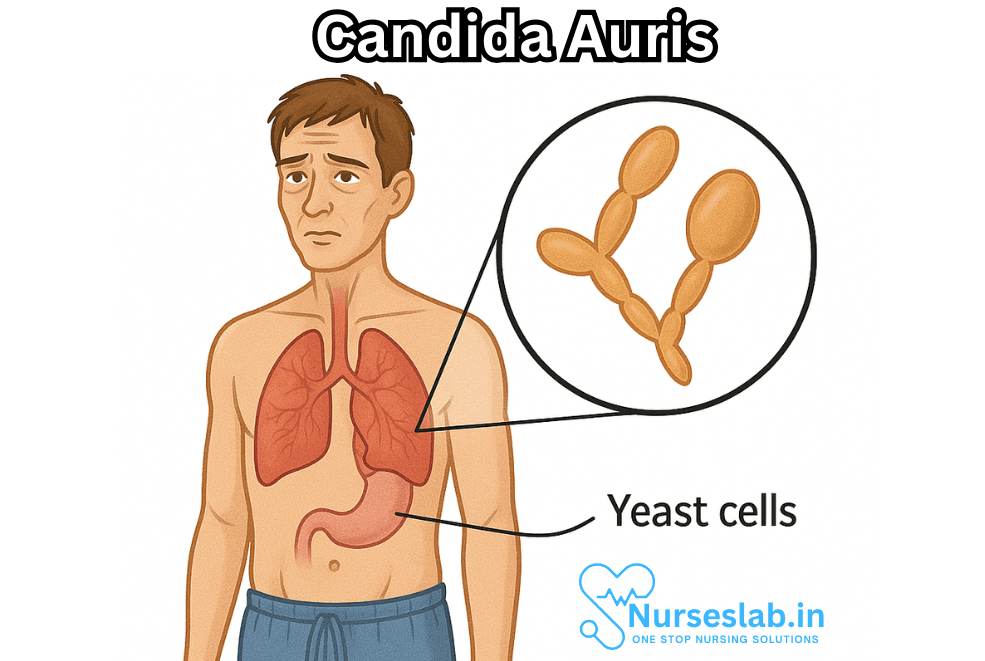
C. auris is a yeast that grows as oval-shaped cells, forming smooth, cream-colored colonies on culture media. One of its defining features is its resistance to commonly used antifungal drugs, including azoles (such as fluconazole), echinocandins, and polyenes (like amphotericin B). Some C. auris strains are resistant to all three major classes of antifungals, making infections extremely difficult to treat.
Another significant challenge is its ability to persist on surfaces in healthcare environments, such as bed rails, medical equipment, and door handles, for extended periods. Unlike other Candida species that often colonize the gastrointestinal tract, C. auris is more likely to colonize the skin, facilitating its transmission between patients and healthcare workers.
Clinical Manifestations
Infections caused by C. auris can range from superficial colonization of the skin to severe, life-threatening invasive infections, such as bloodstream infections (candidemia), wound infections, and ear infections. Patients most at risk include those in intensive care units, individuals with central venous catheters, those who have received broad-spectrum antibiotics or antifungals, and people with underlying health conditions.
Symptoms of C. auris infection are often nonspecific and can resemble other microbial infections: fever, chills, and sepsis that do not respond to typical antibiotics. This nonspecific presentation often leads to delays in diagnosis and appropriate treatment, increasing the risk of complications and mortality.
Laboratory Identification and Challenges
Detecting C. auris poses a major challenge. Conventional laboratory methods often misidentify it as other, less concerning Candida species, such as Candida haemulonii. Accurate identification typically requires advanced technology, like MALDI-TOF mass spectrometry or DNA sequencing. Laboratories lacking access to these tools may fail to recognize C. auris, impeding timely response and containment efforts.
Drug Resistance
The high level of antifungal resistance seen in C. auris sets it apart from most other fungal pathogens. Studies have shown that more than 90% of C. auris isolates are resistant to fluconazole, more than 30% to amphotericin B, and up to 12% to echinocandins. Some strains have been identified as pan-resistant, meaning they are resistant to all major classes of antifungal medications available. This severely limits treatment options and has raised alarms within the medical and scientific communities.
Transmission and Outbreaks
C. auris can spread rapidly in healthcare settings. Its ability to persist on surfaces and skin, coupled with improper hand hygiene and environmental cleaning, enables outbreaks in hospitals and long-term care facilities. Documented outbreaks have occurred in numerous countries, affecting hundreds of patients at a time. Unlike some other Candida species, C. auris is rarely acquired from the environment outside healthcare settings, making nosocomial (hospital-acquired) transmission the primary concern.
Infection Control
Because C. auris is so difficult to eradicate, strict infection control measures are paramount. These include:
- Isolating patients with confirmed or suspected C. auris infection or colonization
- Adhering to rigorous hand hygiene protocols
- Using personal protective equipment (PPE) such as gloves and gowns
- Thoroughly cleaning and disinfecting patient rooms and medical equipment with agents effective against fungi
- Screening contacts and high-risk patients for colonization
Healthcare facilities experiencing outbreaks often require coordinated efforts involving infection control teams, public health authorities, and laboratory specialists.
Global Spread and Epidemiology
Since its discovery, C. auris has appeared virtually simultaneously in multiple, geographically distinct regions. Genomic studies suggest the emergence of several distinct clades, or genetic lineages, that arose independently in different parts of the world. Factors contributing to its global spread likely include increased international travel, the movement of patients between healthcare facilities, and the widespread use of antifungal drugs that select for resistant strains.
The global distribution of C. auris highlights the importance of international collaboration in surveillance and outbreak response.
Public Health Implications
The World Health Organization (WHO) and Centers for Disease Control and Prevention (CDC) have both identified C. auris as a serious public health threat. Its ability to cause outbreaks, combined with multidrug resistance and diagnostic difficulties, make it a top-priority pathogen for research and surveillance. The COVID-19 pandemic further exacerbated the issue, with increased incidence of C. auris outbreaks reported in overwhelmed healthcare settings.
Diagnosis and Treatment
Effective management of C. auris infections begins with rapid, accurate diagnosis. Once detected, treatment typically involves echinocandins as the first-line therapy, unless resistance is present. In cases of multidrug or pan-resistant strains, treatment options are severely limited, often requiring combinations of antifungal drugs or use of newer agents like ibrexafungerp.
In addition to pharmacological management, decolonization of patients and strict adherence to infection control measures are essential to prevent further spread.
Nursing Care of a Patient with Candida auris
This comprehensive guide explores the key aspects of nursing care for patients diagnosed with Candida auris, focusing on infection prevention, patient safety, and holistic well-being.
Assessment and Early Identification
Nurses play a pivotal role in the early identification of C. auris. The following steps should be prioritized:
- Conduct thorough patient assessments: Monitor for risk factors such as prior antibiotic or antifungal use, underlying chronic illnesses (e.g., diabetes, immunosuppressive disorders), recent surgery, and the presence of invasive devices (catheters, central lines).
- Observe for signs and symptoms: Fever, chills unresponsive to broad-spectrum antibiotics, sepsis, or unexplained clinical deterioration may indicate a fungal infection, including C. auris. Note any skin or wound infections, ear pain, or discharge.
- Prompt notification: Immediately report abnormal findings to the healthcare team and collaborate for the initiation of diagnostic tests (e.g., blood cultures, wound swabs).
Infection Control Precautions
Given C. auris’s ability to persist on surfaces and its resistance to disinfectants, strict infection control is essential.
1. Isolation Precautions
- Contact precautions: Place the patient in a single room with dedicated toilet facilities when possible. Implement contact precautions for all staff and visitors (gowns and gloves upon entry).
- Cohorting: If single rooms are unavailable, cohort patients with confirmed C. auris infections together, ensuring they are separated from non-infected or uncolonized patients.
2. Hand Hygiene
- Frequent hand washing: Perform hand hygiene before and after patient contact, using alcohol-based hand rubs or soap and water. Pay special attention after removing gloves.
- Hand hygiene promotion: Educate patients, visitors, and staff about proper hand hygiene techniques and their importance in curbing the spread of infection.
3. Environmental Cleaning
- Use of effective disinfectants: Clean patient rooms and shared equipment daily using Environmental Protection Agency (EPA)-approved hospital-grade disinfectants effective against C. auris (e.g., those containing chlorine or hydrogen peroxide).
- Routine cleaning schedule: Increase the frequency of cleaning for high-touch surfaces such as bed rails, doorknobs, monitors, and other medical equipment.
- Equipment management: Dedicate patient care equipment when possible. If sharing is unavoidable, thoroughly disinfect between uses.
4. Personal Protective Equipment (PPE)
- Strict adherence to PPE: Wear gloves and gowns at all times when entering the patient’s room. Remove PPE before leaving the room, and perform hand hygiene immediately afterward.
- Visitor guidelines: Instruct visitors on proper use of PPE, and restrict visitation if necessary during outbreaks.
Antifungal Stewardship and Medication Administration
1. Collaboration with Healthcare Team
- Follow prescribed regimens: Administer antifungal medications as ordered, being vigilant about drug interactions, side effects, and signs of toxicity.
- Monitor for resistance: Report any lack of clinical improvement, as this may suggest antifungal resistance and the need for regimen adjustment.
- Antifungal stewardship: Collaborate with pharmacists and infectious disease specialists to ensure judicious use of antifungal agents, minimizing the risk of further resistance.
2. Patient Education
- Educate patients and families: Explain the nature of C. auris, reasons for isolation and PPE, and the importance of completing treatment regimens.
- Promote adherence: Encourage questions and provide written materials as needed to enhance understanding and cooperation.
Monitoring and Managing Complications
1. Clinical Monitoring
- Vital signs: Monitor temperature, blood pressure, pulse, and respiratory rate regularly, noting any signs of sepsis or shock.
- Laboratory tests: Track laboratory markers such as blood cultures, white blood cell counts, kidney and liver function tests, and antifungal levels as appropriate.
- Device management: Assess invasive lines (IVs, catheters) daily for signs of infection, and remove as soon as clinically feasible to reduce risk.
2. Supportive Care
- Manage symptoms: Address fever, pain, skin irritation, or other discomforts promptly to improve patient comfort and outcomes.
- Nutritional support: Collaborate with dietitians to ensure patients receive adequate nutrition, which is essential for recovery and immune function.
- Psychosocial support: Provide emotional support and reassurance, as isolation and prolonged hospitalization can lead to anxiety or depression.
Prevention of Transmission and Outbreak Control
1. Surveillance
- Active surveillance: Screen high-risk patients for C. auris colonization, particularly in units with known cases (e.g., ICUs, long-term care facilities).
- Outbreak investigation: Collaborate with infection prevention teams to identify sources and limit transmission through timely contact tracing and environmental sampling.
2. Communication and Reporting
- Report cases: Notify infection control, public health authorities, and relevant stakeholders as required by local regulations.
- Staff education and training: Ensure that all healthcare workers are trained in the latest infection control practices specific to C. auris.
Special Considerations for Vulnerable Populations
1. Immunocompromised Patients
- Heightened risk: Pay special attention to immunocompromised individuals, including those with cancer, organ transplants, or HIV/AIDS. Monitor closely for subtle signs of infection and deterioration.
- Tailored care plans: Individualize nursing interventions to address unique vulnerabilities and potential complications.
2. Pediatric and Geriatric Patients
- Pediatric care: Adapt infection control and supportive care to meet the developmental and psychological needs of children and their families.
- Elderly patients: Recognize increased risks associated with comorbidities, frailty, and polypharmacy in the geriatric population.
Discharge Planning and Continuity of Care
1. Preparation for Discharge
- Assess readiness: Confirm that the infection is under control, and that any ongoing treatment or wound care can be managed at home or in another facility.
- Patient and caregiver education: Instruct on infection control practices (e.g., hand hygiene, cleaning of home environment) to prevent transmission post-discharge.
- Follow-up: Arrange for timely follow-up appointments and coordinate with outpatient care providers to ensure ongoing monitoring.
Role of the Nurse in Multi-Disciplinary Care
- Collaboration: Work closely with physicians, pharmacists, infection control practitioners, environmental services, and public health to provide integrated care.
- Advocacy: Advocate for patient safety, resource allocation (e.g., single rooms, PPE supplies), and ongoing staff education.
REFERENCES
- Anwar S, Glaser A, Acharya S, Yousaf F.. https://pubmed.ncbi.nlm.nih.gov/32171623/Candida auris-an impending threat: A case report from home. https://pubmed.ncbi.nlm.nih.gov/32171623/. Am J Infect Control. 2020 Nov;48(11):1407-1408.
- Ahmad S, Alfouzan W. Candida auris: Epidemiology, Diagnosis, Pathogenesis, Antifungal Susceptibility, and Infection Control Measures to Combat the Spread of Infections in Healthcare Facilities. Microorganisms. 2021 Apr 11;9(4):807. doi: 10.3390/microorganisms9040807. PMID: 33920482; PMCID: PMC8069182.
- Centers for Disease Control and Prevention (U.S.). Candida Auris Testing. https://www.cdc.gov/fungal/candida-auris/fact-sheets/c-auris-testing.html. Last reviewed 5/29/2020.
- Eix EF, Nett JE. Candida auris: Epidemiology and Antifungal Strategy. Annu Rev Med. 2025 Jan;76(1):57-67. doi: 10.1146/annurev-med-061523-021233. Epub 2025 Jan 16. PMID: 39656947; PMCID: PMC11808652.
- Haque M, McKimm J, Sartelli M, et al. Strategies to Prevent Healthcare-Associated Infections: A Narrative Overview. https://www.ncbi.nlm.nih.gov/pmc/articles/PMC7532064/. Risk Manag Healthc Policy. 2020 Sep 28;13:1765-1780.
- Kim JS, Cha H, Bahn YS. Comprehensive Overview of Candida auris: An Emerging Multidrug-Resistant Fungal Pathogen. J Microbiol Biotechnol. 2024 Jul 28;34(7):1365-1375. doi: 10.4014/jmb.2404.04040. Epub 2024 Jun 15. PMID: 38881183; PMCID: PMC11294645.
- Lyman M, Forsberg K, Sexton DJ, et. al. Worsening Spread of Candida auris in the United States, 2019 to 2021. https://pubmed.ncbi.nlm.nih.gov/36940442/. Ann Intern Med. 2023 Mar 21.
- Sanyaolu A, Okorie C, Marinkovic A, et. al. Candida auris: An Overview of the Emerging Drug-Resistant Fungal Infection. https://pubmed.ncbi.nlm.nih.gov/35794716/. Infect Chemother. 2022 Jun;54(2):236-246.
- Hayes JF. Candida auris: Epidemiology Update and a Review of Strategies to Prevent Spread. J Clin Med. 2024 Nov 7;13(22):6675. doi: 10.3390/jcm13226675. PMID: 39597821; PMCID: PMC11595167.
Stories are the threads that bind us; through them, we understand each other, grow, and heal.
JOHN NOORD
Connect with “Nurses Lab Editorial Team”
I hope you found this information helpful. Do you have any questions or comments? Kindly write in comments section. Subscribe the Blog with your email so you can stay updated on upcoming events and the latest articles.


