


Last Updated on January 10, 2026 by Nurseslab.in Editorial Team
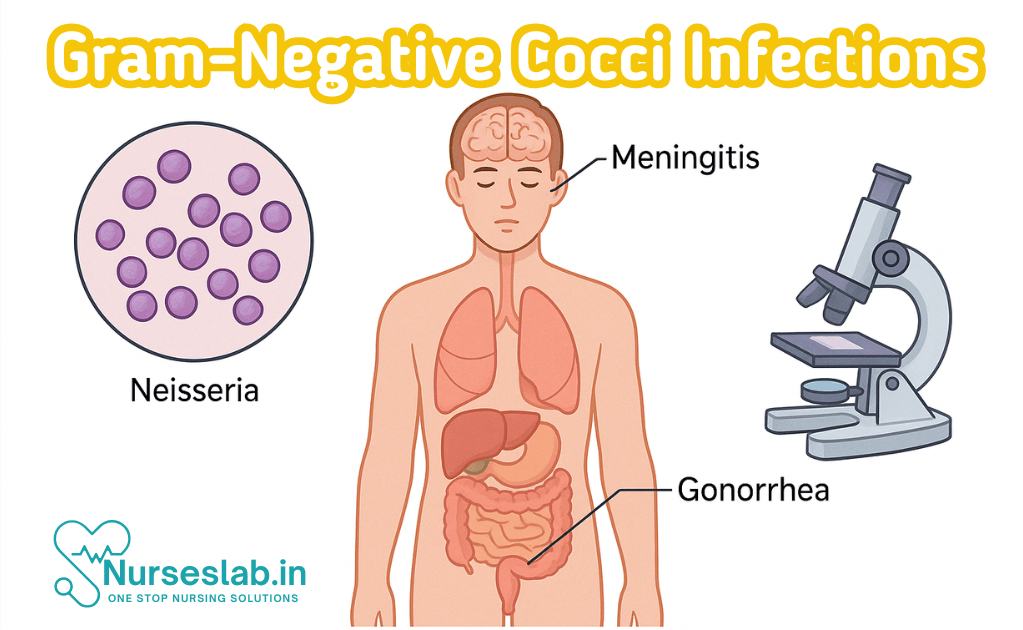
Gram-negative cocci are spherical bacteria with thin cell walls that do not retain Gram stain. Pathogens like Neisseria meningitidis and Neisseria gonorrhoeae cause meningitis, gonorrhea, and other infections—critical in clinical microbiology and nursing care.
Introduction
Gram negative cocci infections represent a significant group of bacterial diseases that pose substantial challenges to clinical practice and public health. These infections are caused by bacteria characterised by their spherical shape and distinctive cell wall structure, which does not retain the crystal violet stain in the Gram staining method. The most notable genera causing these infections include Neisseria and Moraxella.
Gram negative cocci are responsible for a variety of clinical syndromes, ranging from life-threatening meningitis and septicaemia to more common respiratory and sexually transmitted infections.
Microbiology and Classification
Definition of Gram-negative cocci
Gram negative cocci are spherical bacteria that possess a thin peptidoglycan layer surrounded by an outer membrane containing lipopolysaccharide (LPS). This outer membrane confers resistance to certain antibiotics and environmental stresses, and is a key differentiator from gram positive cocci. The gram negative cocci are distinguished in laboratory settings by their inability to retain the primary stain during Gram staining, resulting in a characteristic pink appearance under the microscope.
Major Genera and Species
- Neisseria: This genus includes two major pathogenic species—Neisseria meningitidis (meningococcus) and Neisseria gonorrhoeae (gonococcus). Both are fastidious, requiring enriched media for growth, and are oxidase positive. N. meningitidis is a leading cause of bacterial meningitis and septicaemia, while N. gonorrhoeae is the agent of gonorrhoea, a common sexually transmitted infection.
- Moraxella: Moraxella catarrhalis is the most clinically relevant species, commonly associated with respiratory tract infections such as otitis media, sinusitis, and exacerbations of chronic obstructive pulmonary disease (COPD).
- Other Genera: Less commonly, Acinetobacter species may display coccobacillary morphology and can be mistaken for gram negative cocci in clinical specimens, though they are generally classified separately.
These bacteria are distinguished by their growth requirements, colony morphology, and biochemical properties such as sugar fermentation patterns and enzyme activity (e.g., oxidase test).
Epidemiology
Global and Regional Prevalence
The prevalence of gram negative cocci infections varies widely by region, age group, and socio-economic factors. Neisseria meningitidis is endemic worldwide but causes periodic epidemics, particularly in the “meningitis belt” of sub-Saharan Africa. Neisseria gonorrhoeae is globally distributed, with higher incidence rates reported in urban populations and among sexually active young adults. Moraxella catarrhalis is found in all age groups but is most commonly seen in children and individuals with underlying respiratory disease.
Risk Factors
- Age: Young children, adolescents, and elderly individuals are at increased risk for invasive meningococcal disease.
- Sexual Behaviour: Unprotected sexual activity and multiple partners increase the risk of gonococcal infection.
- Underlying Illness: Chronic pulmonary conditions predispose to Moraxella infections.
- Socio-Economic Factors: Overcrowding, poverty, and limited access to healthcare facilitate transmission.
- Immunocompromised States: Individuals with HIV/AIDS or other immunosuppressive conditions are at higher risk.
Transmission Routes
Transmission of gram negative cocci occurs via respiratory droplets (N. meningitidis, Moraxella), direct sexual contact (N. gonorrhoeae), or through fomites in certain cases. Asymptomatic carriage, especially in the nasopharynx for meningococcus, plays a crucial role in epidemiology and outbreak potential.
Pathogenesis
Mechanisms of Infection
Gram negative cocci employ a variety of mechanisms to establish infection. The outer membrane LPS acts as both a protective barrier and a potent stimulator of the host’s immune response. Key steps in pathogenesis include:
- Colonisation: Adherence to mucosal surfaces is mediated by pili and other surface proteins.
- Invasion: Some species, notably N. meningitidis, can invade epithelial cells and cross the blood-brain barrier, leading to meningitis.
- Evasion of Host Defences: Capsule formation (in N. meningitidis) and antigenic variation (in N. gonorrhoeae) enable evasion of phagocytosis and immune recognition.
- Toxin Production: Endotoxins (LPS) trigger inflammatory cascades, leading to tissue damage and systemic symptoms.
Virulence Factors
- Pili and Adhesins: Facilitate attachment to host cells.
- Capsule: Confers resistance to phagocytosis and complement-mediated killing.
- IgA Protease: Cleaves host immunoglobulin A, promoting persistence on mucosal surfaces.
- Outer Membrane Proteins: Involved in nutrient acquisition and immune evasion.
Host-Pathogen Interactions
The interplay between gram negative cocci and the host immune system determines the clinical outcome. While effective immune responses can clear the infection, excessive inflammation may lead to complications such as septic shock or tissue necrosis.
Clinical Manifestations
Common Diseases and Symptoms
- Meningococcal Disease (N. meningitidis): Presents as acute bacterial meningitis and/or septicaemia. Symptoms include fever, headache, neck stiffness, photophobia, altered consciousness, and a characteristic petechial or purpuric rash. Complications can include shock, multi-organ failure, and death if untreated.
- Gonorrhoea (N. gonorrhoeae): Manifests as urethritis in men (dysuria, purulent discharge) and cervicitis in women (vaginal discharge, pelvic pain). Complications include pelvic inflammatory disease (PID), infertility, and disseminated gonococcal infection (DGI) presenting with arthritis, tenosynovitis, and dermatitis.
- Respiratory Infections (Moraxella catarrhalis): Causes otitis media, sinusitis, and exacerbations of COPD. Symptoms include ear pain, nasal congestion, cough, and increased sputum production.
Complications
Delayed or inadequate treatment of gram negative cocci infections can result in severe complications such as septic shock, neurological deficits, infertility, and chronic respiratory impairment. Invasive disease, especially meningococcal septicaemia, carries a high mortality rate.
Diagnostic Approaches
Laboratory Identification
Accurate diagnosis relies on a combination of clinical suspicion and laboratory tests. Key methods include:
- Microscopy: Gram stain of clinical specimens reveals gram negative diplococci, especially in cerebrospinal fluid (CSF) and urethral exudates.
- Culture Techniques: Growth on selective media such as chocolate agar, Thayer-Martin agar (for Neisseria), and blood agar (for Moraxella). Colonies are identified by oxidase testing and biochemical profiles.
- Antigen Detection: Latex agglutination tests for meningococcal antigens in CSF.
- Molecular Diagnostics: Polymerase chain reaction (PCR) assays offer rapid, sensitive detection of pathogen DNA, especially useful in partially treated or culture-negative cases.
- Serology: Detection of antibodies, primarily for epidemiological studies.
Challenges in Diagnosis
Gram negative cocci are fastidious organisms, sometimes difficult to culture, especially after antibiotic exposure. Differentiation from other gram negative or gram positive organisms requires careful interpretation of laboratory results. Molecular methods, while highly sensitive, may not be universally available in resource-limited settings.
Treatment and Management
Antibiotic Regimens
Treatment of gram negative cocci infections is guided by the site of infection, severity, and local resistance patterns. First-line therapies include:
- Meningococcal Disease: Empirical therapy with third-generation cephalosporins (e.g., ceftriaxone, cefotaxime) pending susceptibility results. Penicillin G may be used for confirmed susceptible strains.
- Gonorrhoea: Dual therapy with ceftriaxone (intramuscular) and azithromycin (oral) is recommended to cover possible co-infection with Chlamydia trachomatis and to address emerging resistance.
- Moraxella Infections: Amoxicillin-clavulanic acid, macrolides (e.g., azithromycin), or respiratory fluoroquinolones are effective, although beta-lactamase production can confer resistance to simple penicillins.
Supportive Care and Special Considerations
- Severe Infections: Intensive care support may be required for meningococcal septicaemia, including fluid resuscitation, vasopressors, and organ support.
- Contact Tracing: For sexually transmitted infections and meningococcal outbreaks, prompt identification and treatment of contacts is crucial.
- Management of Complications: Long-term follow-up may be necessary for neurological sequelae, infertility, or chronic respiratory disease.
Antibiotic Resistance
Emerging Resistance Trends
Antibiotic resistance among gram negative cocci is a growing concern. N. gonorrhoeae has demonstrated resistance to penicillins, tetracyclines, fluoroquinolones, and, alarmingly, cephalosporins in some regions. Moraxella catarrhalis commonly produces beta-lactamases, rendering penicillins ineffective.
Mechanisms of Resistance
- Beta-Lactamase Production: Enzymatic degradation of beta-lactam antibiotics.
- Altered Target Sites: Mutations in penicillin-binding proteins reduce drug efficacy.
- Efflux Pumps: Active transport of antibiotics out of the bacterial cell.
- Plasmid-Mediated Resistance: Horizontal gene transfer facilitates rapid dissemination of resistance traits.
Clinical Impact
Rising resistance necessitates changes in empirical therapy, increased reliance on combination regimens, and the development of new antibiotics. Treatment failures and limited options pose major challenges in both hospital and community settings.
Prevention and Control
Vaccines
Vaccination is a cornerstone in the prevention of certain gram negative cocci infections. Several effective vaccines target N. meningitidis, including conjugate and recombinant protein-based formulations, covering major serogroups (A, C, W, Y, and B). Uptake of meningococcal vaccines has significantly reduced disease incidence in many countries.
Public Health Measures
- Surveillance: Monitoring of disease incidence and resistance patterns enables rapid response to outbreaks.
- Health Education: Promotion of safe sexual practices, respiratory hygiene, and awareness campaigns.
- Infection Control: In healthcare settings, isolation of infected patients, use of personal protective equipment, and strict hand hygiene are essential.
- Prophylactic Antibiotics: For close contacts of meningococcal cases, chemoprophylaxis with rifampicin or ciprofloxacin is recommended.
Infection Control Practices
Routine screening, prompt treatment, and contact tracing are vital for controlling sexually transmitted gonococcal infections. In respiratory infections, minimising overcrowding and improving ventilation can reduce transmission.
Recent Advances and Research
New Therapies
The emergence of antibiotic resistance has spurred the development of novel therapeutic approaches. New antibiotics, such as zoliflodacin and gepotidacin, are currently in advanced clinical trials for the treatment of multidrug-resistant N. gonorrhoeae. Combination therapies and adjunctive agents targeting virulence factors are also under investigation.
Diagnostic Tools
Advances in molecular diagnostics, including multiplex PCR and next-generation sequencing, have improved the speed and accuracy of pathogen identification. Point-of-care tests are being developed to facilitate rapid diagnosis in resource-limited settings.
Vaccines and Immunotherapy
Research into broad-spectrum and protein-based vaccines continues, with the aim of covering diverse strains and reducing carriage rates. Immunotherapeutic strategies, such as monoclonal antibodies targeting specific bacterial antigens, are being explored for both prevention and treatment.
Future Directions
Continued research is needed to address diagnostic gaps, develop effective therapeutics, and understand the complex host-pathogen interactions that govern disease outcomes. Integrating new technologies and strengthening public health infrastructure will be essential in combating gram negative cocci infections.
Conclusion
Gram negative cocci infections remain a major public health concern, given their diverse clinical presentations, potential for severe complications, and increasing resistance to available antibiotics. Understanding the microbiology, epidemiology, and pathogenesis of these organisms is crucial for effective diagnosis, treatment, and prevention.
Recent advances in diagnostics, therapeutics, and vaccines offer hope for improved outcomes, but vigilance is necessary to monitor emerging threats and adapt strategies accordingly. Ongoing research and collaborative efforts between clinicians, researchers, and public health authorities will be pivotal in addressing the challenges posed by gram negative cocci infections in the years to come.
REFERENCES
- Apurba S Sastry, Essential Applied Microbiology for Nurses including Infection Control and Safety, First Edition 2022, Jaypee Publishers, ISBN: 978-9354659386
- Joanne Willey, Prescott’s Microbiology, 11th Edition, 2019, Innox Publishers, ASIN- B0FM8CVYL4.
- Anju Dhir, Textbook of Applied Microbiology including Infection Control and Safety, 2nd Edition, December 2022, CBS Publishers and Distributors, ISBN: 978-9390619450
- Gerard J. Tortora, Microbiology: An Introduction 13th Edition, 2019, Published by Pearson, ISBN: 978-0134688640
- Durrant RJ, Doig AK, Buxton RL, Fenn JP. Microbiology Education in Nursing Practice. J Microbiol Biol Educ. 2017 Sep 1;18(2):18.2.43. https://pmc.ncbi.nlm.nih.gov/articles/PMC5577971/
Stories are the threads that bind us; through them, we understand each other, grow, and heal.
JOHN NOORD
Connect with “Nurses Lab Editorial Team”
I hope you found this information helpful. Do you have any questions or comments? Kindly write in comments section. Subscribe the Blog with your email so you can stay updated on upcoming events and the latest articles.


