


Last Updated on January 10, 2026 by Nurseslab.in Editorial Team
COVID-19 vaccines are immunizations designed to protect against SARS-CoV-2, the virus responsible for COVID-19—reducing the risk of severe illness, hospitalization, and death through various platforms including mRNA, viral vector, and protein subunit technologies.
Overview
The Covid-19 pandemic ushered in an era of unprecedented global challenge, compelling the world’s scientific community to act with extraordinary urgency. Among the most significant achievements in the fight against Covid-19 has been the rapid development and deployment of Covid-19 vaccines.
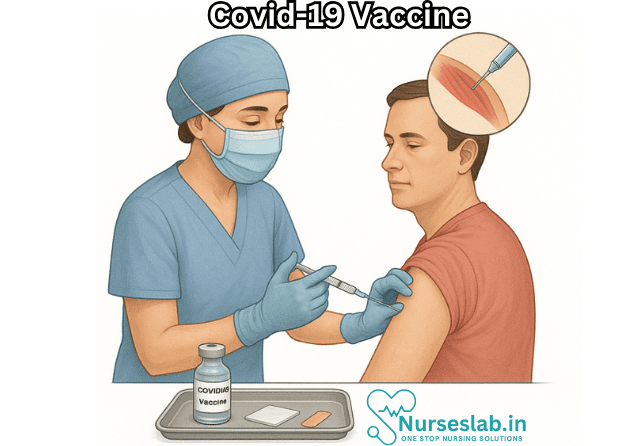
The Science Behind Covid-19 Vaccines
The severe acute respiratory syndrome coronavirus 2 (SARS-CoV-2), which causes Covid-19, is a novel coronavirus that emerged in late 2019. Its high transmissibility and potential for severe disease spurred the need for effective interventions, including vaccines.
How Vaccines Work
Vaccines work by simulating an infection, prompting the body’s immune system to produce antibodies and train immune cells to recognize and neutralize the pathogen. This enables the body to mount a rapid and effective response if exposed to the actual virus in the future.
Types of Covid-19 Vaccines
Several different types of Covid-19 vaccines have been developed using diverse technological platforms:
- Messenger RNA (mRNA) Vaccines: These vaccines, such as those by Pfizer-BioNTech and Moderna, use a small piece of genetic code (mRNA) to instruct cells to produce the spike protein found on the virus. The immune system recognizes this protein as foreign and creates antibodies against it.
- Viral Vector Vaccines: Vaccines like AstraZeneca’s Covishield and Johnson & Johnson’s Janssen use a harmless virus (not the coronavirus) to deliver genetic material encoding the spike protein into human cells, triggering an immune response.
- Protein Subunit Vaccines: Some vaccines, such as Novavax, contain harmless pieces of the virus (often the spike protein) to stimulate an immune response without using live virus.
- Inactivated or Live Attenuated Vaccines: Vaccines like Covaxin (developed by Bharat Biotech) use whole virus particles that have been killed or weakened so they cannot cause disease but still elicit immunity.
The Development and Approval Process
Traditionally, the development of vaccines takes several years, if not decades. The development of Covid-19 vaccines occurred at an unprecedented pace, thanks to global collaboration, prior research on coronaviruses, and significant financial investment.
Phases of Vaccine Development
- Preclinical Research: Laboratory studies and testing in animals to assess safety and immune response.
- Phase 1: Small-scale trials in humans to determine safety and dosage.
- Phase 2: Expanded trials to evaluate immune response and further assess safety.
- Phase 3: Large-scale trials involving tens of thousands of volunteers to measure efficacy and monitor adverse events.
- Regulatory Approval: If successful, the vaccine goes through rigorous review by regulatory agencies such as the FDA, EMA, or WHO before being approved for public use.
Emergency Use Authorization (EUA)
Due to the urgent need, many Covid-19 vaccines were initially authorized for emergency use, allowing quicker deployment while continuing safety monitoring.
Global Vaccination Campaigns
The rollout of Covid-19 vaccines has been one of the largest public health campaigns in history, involving logistical challenges, international cooperation, and local adaptation.
Distribution and Access
Ensuring equitable access to vaccines has been a major challenge. High-income countries initially secured large quantities of doses, while lower-income nations faced delays. Initiatives like COVAX, led by the World Health Organization, aimed to address these disparities and ensure worldwide distribution.
Vaccine Hesitancy
Despite the availability of vaccines, hesitancy due to misinformation, mistrust, or concerns about side effects has posed significant challenges. Public health campaigns and community engagement have been crucial in addressing these concerns and encouraging vaccination.
Booster Doses and Variant Response
As new variants of SARS-CoV-2 emerged, booster doses were recommended to enhance or restore protection. Vaccines have been updated or supplemented to address variants such as Delta and Omicron, helping to maintain efficacy against evolving threats.
Safety and Side Effects
Covid-19 vaccines, like all medical interventions, can cause side effects. Most are mild and temporary, such as soreness at the injection site, fever, or fatigue. Serious side effects are rare and are monitored closely by health authorities.
Myths and Facts
A range of myths circulated about Covid-19 vaccines, from claims of microchips to infertility. Extensive research has shown that vaccines are safe and effective, and ongoing surveillance ensures any risks are identified and managed.
Impact of Vaccination
Covid-19 vaccination has dramatically reduced the severity and mortality associated with the virus. In countries with high vaccination rates, hospitalizations and deaths have decreased substantially, even amid ongoing transmission.
Economic and Social Benefits
Beyond health, vaccination campaigns have enabled economies to reopen, schools to resume in-person classes, and societies to reconnect. Vaccines have played a central role in the gradual recovery from the disruptions caused by the pandemic.
Challenges and Lessons Learned
The vaccine rollout revealed the critical importance of public trust, transparent communication, and international solidarity. It also highlighted the need for robust healthcare infrastructure and ongoing investment in scientific research.
The Future: Endemicity and Ongoing Research
As Covid-19 transitions from a pandemic to an endemic disease, ongoing research focuses on next-generation vaccines, including those targeting multiple variants, providing longer-lasting immunity, and improving delivery methods, such as nasal sprays or patches.
Global Health Preparedness
The Covid-19 vaccine experience has reinforced the importance of pandemic preparedness, rapid response mechanisms, and the capacity for swift vaccine development in the face of emerging infectious diseases. promising for developing future vaccines quickly.
Nursing Care of Patients Receiving the COVID-19 Vaccine
Nurses play a crucial role not only in the administration of these vaccines but also in ensuring the safety, comfort, and education of patients throughout the vaccination process. This document outlines the nursing care considerations for patients receiving a COVID-19 vaccine, offering practical guidance on clinical assessment, vaccine administration, patient support, adverse event management, and thorough documentation.
Pre-Vaccination Assessment and Preparation
Patient Screening
- Obtain a comprehensive health history: Inquire about past medical conditions, current medications, known allergies (especially to medications or vaccines), and any previous adverse reactions to vaccines.
- Assess for contraindications: These may include a history of severe allergic reaction (anaphylaxis) to a previous dose of a COVID-19 vaccine or to a vaccine component. Evaluate for current febrile illness or acute infection, and defer vaccination if necessary.
- Review current COVID-19 status: Defer vaccination in patients with active COVID-19 infection until recovery and appropriate isolation period has passed.
- Identify special populations: Pregnant, lactating, immunocompromised individuals, and those with significant comorbidities may require tailored information and consent processes.
Patient Education and Consent
- Explain the purpose and benefits of the vaccine: Discuss how the vaccine protects against COVID-19, contributes to public health, and reduces the risk of severe illness or complications.
- Discuss possible side effects: Common reactions include soreness at the injection site, mild fever, fatigue, headache, and muscle aches. Rare but serious reactions (such as anaphylaxis) should also be mentioned.
- Describe the vaccination process: Outline steps involved, including site preparation, the need for observation post-injection, and whether a second dose is required.
- Obtain informed consent: Ensure the patient understands the risks and benefits, has had the opportunity to ask questions, and is comfortable proceeding.
Administration of the COVID-19 Vaccine
Preparation
- Ensure cold-chain integrity: Verify that the vaccine has been stored and handled according to manufacturer guidelines.
- Gather necessary equipment: Use appropriate PPE, alcohol swabs, syringes, and adhesive bandages.
- Practice strict infection control: Hand hygiene and proper use of gloves and masks are essential to protect both patient and nurse.
Injection Technique
- Identify the correct site: The deltoid muscle of the upper arm is the most common injection site for COVID-19 vaccines in adults. For children or those with specific needs, alternative sites may be considered.
- Use aseptic technique: Clean the injection site thoroughly and use a new sterile needle and syringe for each patient.
- Administer the vaccine intramuscularly: Follow manufacturer-specific guidelines for dose and technique.
Immediate Post-Vaccination Care
- Observation period: Monitor the patient for at least 15 minutes post-injection (30 minutes for those with previous allergic reactions to vaccines or injectable medications).
- Watch for adverse effects: Be vigilant for signs of anaphylaxis or other serious reactions, such as difficulty breathing, swelling, or a widespread rash.
- Emergency preparedness: Ensure resuscitation equipment and emergency medications (e.g., epinephrine) are readily available.
Monitoring and Management of Side Effects
Common Side Effects
- Redness, pain, or swelling at the injection site
- Mild fever or chills
- Fatigue or malaise
- Headache or muscle aches
- Nausea
These symptoms typically resolve within 48 hours. Provide reassurance, advise rest, and recommend paracetamol for discomfort if needed.
Serious Adverse Events
- Severe allergic reactions (anaphylaxis)
- Myocarditis/pericarditis (especially in younger males)
- Thrombosis with thrombocytopenia syndrome (TTS)
If any of these are suspected, initiate emergency protocols and arrange urgent medical evaluation.
Patient Instructions for Home Care
- Advise the patient to remain hydrated and avoid strenuous activity if unwell.
- Provide clear instructions on when and how to seek medical attention if severe or persistent symptoms develop.
- Share information on the importance of reporting adverse events to appropriate health authorities or vaccine surveillance systems.
Support and Reassurance
- Offer emotional support: Acknowledge patient concerns and validate feelings of anxiety or uncertainty related to vaccination.
- Encourage open communication: Invite questions and provide evidence-based responses to promote understanding and trust.
- Involve family members: When appropriate, include family in discussions to enhance support and address collective concerns.
- Refer to counselling or support services: If a patient exhibits significant distress, vaccine hesitancy, or signs of anxiety, consider referral to psychological support or community helplines.
Special Considerations
- Immunocompromised patients: May have a reduced immune response; provide education on continued precautions even after vaccination.
- Pregnant and breastfeeding patients: Stay up to date with evolving guidelines and tailor discussions to address common questions and safety data.
- Patients with comorbidities or allergies: Implement additional monitoring and ensure clear communication with the healthcare team regarding potential risks.
- Elderly or frail patients: Monitor closely for adverse reactions and support safe mobility post-vaccination.
Documentation
- Record vaccination details: Include vaccine name, lot number, expiration date, site of administration, and dose.
- Document patient consent and education: Note what information was provided and the patient’s understanding and agreement.
- Monitor and record vital signs: If indicated, document pre- and post-vaccination temperature, pulse, and blood pressure.
- Record side effects: Note any immediate or delayed reactions and actions taken in response.
- Communicate with the healthcare team: Thoroughly document all communication, interventions, and referrals to ensure continuity of care.
Promoting Vaccine Confidence in the Community
- Educate and advocate: Nurses are trusted sources of health information and should actively dispel myths, address misinformation, and reinforce the benefits of vaccination.
- Support equitable access: Pay special attention to groups who may face barriers to vaccination, such as those with limited mobility, language differences, or cultural concerns.
Foster a positive experience: Ensure the vaccination process is respectful, efficient, and compassionate to encourage future engagement with preventive healthcare.
REFERENCES
- Abara WE, Gee J, Marquez P, et al. Reports of Guillain-Barré Syndrome After COVID-19 Vaccination in the United States https://pubmed.ncbi.nlm.nih.gov/36723942/). JAMA Netw Open. 2023 Feb 1;6(2):e2253845. Erratum in: JAMA Netw Open. 2023 May 1;6(5):e2315740.
- Amanat F, et al. SARS-CoV-2 vaccines: Status report. Immunity. 2020; doi:10.1016/j.immuni.2020.03.007.
- Centers for Disease Control and Prevention (U.S.). Stay Up to Date with Vaccines. https://www.cdc.gov/coronavirus/2019-ncov/vaccines/stay-up-to-date.html. Multiple pages accessed. Updated 10/04/2023.
- Dan JM, Mateus J, Kato Y, et al. Immunological memory to SARS-CoV-2 assessed for up to 8 months after infection. (https://pubmed.ncbi.nlm.nih.gov/33408181/) Science. 2021 Feb 5;371(6529):eabf4063.
- Flacco ME, Acuti Martellucci C, Baccolini V, et al. Risk of reinfection and disease after SARS-CoV-2 primary infection: Meta-analysis. (https://pubmed.ncbi.nlm.nih.gov/35904405/) Eur J Clin Invest. 2022 Oct;52(10):e13845.
- Nascimento IP, Leite LC. Recombinant vaccines and the development of new vaccine strategies. (https://pubmed.ncbi.nlm.nih.gov/22948379/) Braz J Med Biol Res. 2012 Dec;45(12):1102-11.
- The American College of Cardiology. Which COVID Vaccine You Get Can Impact Myocarditis Risk. https://www.acc.org/About-ACC/Press-Releases/2022/11/07/18/58/Which-COVID-Vaccine-You-Get-Can-Impact-Myocarditis-Risk
- The different types of COVID-19 vaccines. World Health Organization. https://www.who.int/news-room/feature-stories/detail/the-race-for-a-covid-19-vaccine-explained.
Stories are the threads that bind us; through them, we understand each other, grow, and heal.
JOHN NOORD
Connect with “Nurses Lab Editorial Team”
I hope you found this information helpful. Do you have any questions or comments? Kindly write in comments section. Subscribe the Blog with your email so you can stay updated on upcoming events and the latest articles.


