Last Updated on January 12, 2026 by Nurseslab.in Editorial Team
Introduction
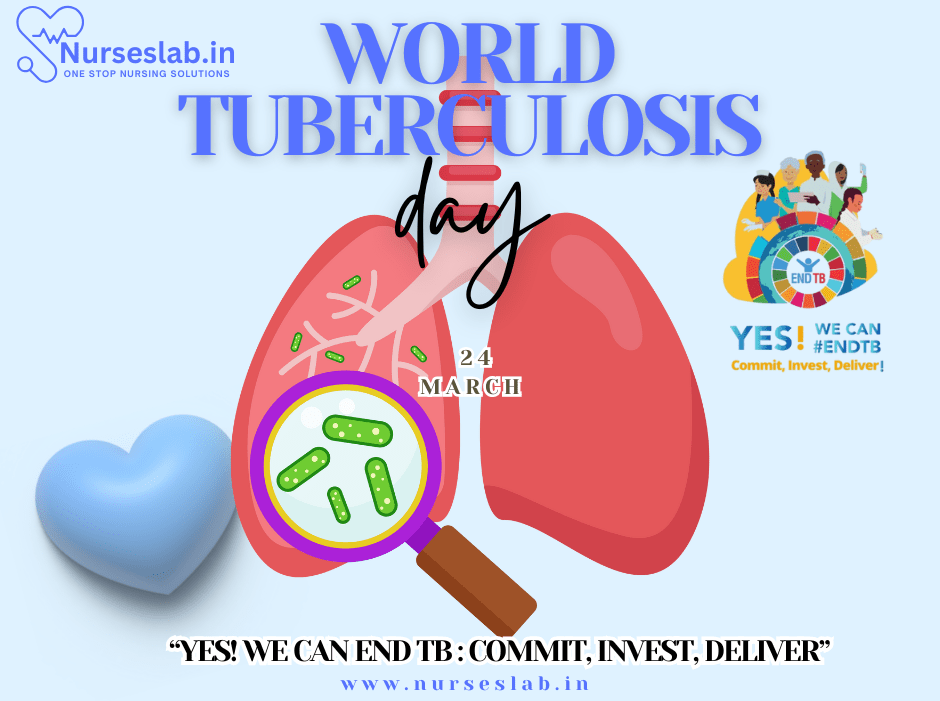
Every year on 24th March, the world comes together to observe World Tuberculosis Day—a day dedicated to raising awareness about tuberculosis (TB), commemorating the discovery of Mycobacterium tuberculosis by Dr Robert Koch in 1882, and reaffirming the commitment to eliminate one of humanity’s oldest and deadliest diseases. Tuberculosis continues to affect millions globally, despite being preventable and curable. World Tuberculosis Day serves as a reminder of the ongoing struggle, the progress made, and the urgent need to accelerate efforts to end TB once and for all.
This day is not just about statistics and science—it is about people, communities, and hope. It is a call to action for governments, health professionals, advocates, and every individual to unite against TB, spread awareness, and support those affected. In 2025, as we approach the midpoint of the United Nations’ Sustainable Development Goals, the theme for World Tuberculosis Day takes on renewed urgency and significance.
A Brief History of World Tuberculosis Day
World Tuberculosis Day dates back to 1982, marking the centenary of Dr Koch’s discovery that revolutionised the diagnosis and treatment of TB. Since then, the day has grown into a global movement, mobilising resources, leadership, and public engagement. Each year, a new theme is chosen to reflect the evolving challenges and opportunities in the fight against TB, focusing attention on areas needing urgent action.
India, with the highest TB burden globally, has been at the forefront of this movement, launching ambitious programmes like the National Tuberculosis Elimination Programme (NTEP) and engaging communities at every level. World Tuberculosis Day provides a platform for sharing experiences, celebrating milestones, and recommitting to ending TB in our lifetime.
2025 Theme Overview: “Unite for a TB-Free Future”
The theme for World Tuberculosis Day 2025, “Unite for a TB-Free Future”, reflects the collective power of individuals, communities, governments, and organisations in overcoming TB. It emphasises collaboration, solidarity, and shared responsibility, recognising that the battle against TB cannot be won by any one group alone.
This theme is especially relevant in a world still recovering from the COVID-19 pandemic, which disrupted health services and threatened to reverse gains made in TB control. By uniting, we can bridge gaps in care, address social determinants of health, and ensure no one is left behind. The 2025 theme is a call to empower everyone—from policymakers to patients—to take action, advocate for change, and build resilient health systems.
Relevance of the 2025 Theme
“Unite for a TB-Free Future” acknowledges the interconnectedness of health, social justice, and community engagement. It urges us to recognise TB not just as a medical issue but as a challenge rooted in inequality, poverty, and stigma. By fostering unity, the theme encourages innovative partnerships, sharing of resources, and a holistic approach to prevention and care.
The theme also aligns with global targets to end TB by 2030, as outlined by the WHO End TB Strategy and the UN Sustainable Development Goals. It highlights the urgency of scaling up efforts, investing in research, and ensuring universal access to TB services.
Global Impact of Tuberculosis: Current Statistics and Challenges
Tuberculosis remains one of the top infectious killers worldwide, claiming over 1.5 million lives each year and affecting more than 10 million people annually. Despite significant progress, TB continues to disproportionately impact low- and middle-income countries, with India, Indonesia, China, the Philippines, Pakistan, Nigeria, and Bangladesh bearing the highest burdens.
According to the latest data from the World Health Organization:
- 10.6 million people fell ill with TB in 2024.
- 1.3 million deaths among HIV-negative people, and 0.4 million deaths among HIV-positive people.
- The COVID-19 pandemic caused a setback in TB detection and treatment, with fewer cases reported and higher mortality in recent years.
- Drug-resistant TB is a growing concern, with nearly half a million cases of multidrug-resistant TB (MDR-TB) each year.
TB affects all age groups but hits vulnerable populations the hardest—children, the elderly, people living with HIV, migrants, and those in poverty. Stigma, discrimination, and limited access to healthcare further complicate the response.
India continues to face a massive Tuberculosis challenge, with over 26 lakh (2.6 million) cases reported annually. The government has set an ambitious goal to eliminate TB by 2025—ahead of the global target—by intensifying detection, treatment, and social support.
Affected Regions and Key Challenges
The TB epidemic is concentrated in regions with fragile health systems, poverty, and inadequate nutrition. South Asia, Sub-Saharan Africa, and parts of Eastern Europe report the highest incidence rates. Urban slums, remote rural areas, and conflict zones are particularly vulnerable.
Major challenges include:
- Delayed diagnosis due to lack of awareness or access to quality diagnostic tools.
- Stigma and discrimination discouraging people from seeking care.
- Drug resistance driven by incomplete or improper treatment.
- Co-infection with HIV, complicating diagnosis and management.
- Socioeconomic barriers such as unemployment, malnutrition, and poor living conditions.
Awareness and Advocacy: The Role of Campaigns, Organisations, and Governments
Awareness and advocacy are crucial to tackling TB. Each year, World Tuberculosis Day sparks a global wave of events—community outreach, educational seminars, social media campaigns, art exhibits, and policy dialogues. These initiatives aim to dispel myths, reduce stigma, and empower people to seek care.
Key organisations leading the fight include the World Health Organization (WHO), Stop TB Partnership, International Union Against Tuberculosis and Lung Disease, and national programmes like India’s NTEP. These bodies work with governments, NGOs, and grassroots groups to mobilise resources, develop guidelines, and monitor progress.
Government Initiatives and Policy Support
Governments play a pivotal role in TB control through policy formulation, funding, and service delivery. The Indian government’s Pradhan Mantri TB Mukt Bharat Abhiyaan is a flagship initiative providing free diagnostics, treatment, nutritional support, and community engagement. Similar efforts are underway worldwide, focusing on universal health coverage, access to new drugs, and integration of TB services with primary health care.
International advocacy, such as the UN High-Level Meeting on TB, has elevated the issue on the global agenda, resulting in increased political commitment and funding. Yet, gaps remain in reaching vulnerable populations, sustaining momentum, and translating policies into action.
Role of Media and Digital Platforms
Media—both traditional and digital—has amplified TB awareness, sharing stories, facts, and prevention messages. Social media platforms enable rapid dissemination of information, connect patients with support groups, and foster dialogue. Campaigns like “Light Up the World for TB” encourage landmarks to be illuminated in red, symbolising solidarity and hope.
Prevention and Control Strategies: Medical Advances and Public Health Measures
Prevention and control of TB require a multi-pronged approach, combining medical innovation, public health measures, and community empowerment. Key strategies include:
- Early Detection and Diagnosis: Rapid molecular tests like GeneXpert, improved screening protocols, and mobile diagnostic units have enhanced early detection, especially in remote areas.
- Effective Treatment: Standardised regimens for drug-sensitive and drug-resistant TB, shorter treatment courses, and new drugs such as bedaquiline and delamanid have improved outcomes.
- Vaccination: The BCG vaccine remains the only widely used TB vaccine, though research is underway for more effective options targeting adults and drug-resistant strains.
- Contact Tracing: Identifying and screening close contacts of TB patients helps prevent spread within households and communities.
- Integrated Care: Linking TB and HIV services, addressing diabetes and other co-morbidities, and ensuring nutritional support are essential for comprehensive care.
Public Health Measures and Education
Public health measures focus on improving living conditions, reducing overcrowding, and promoting healthy behaviours. Education campaigns target both the general public and healthcare workers, emphasising the importance of cough hygiene, regular screening, and adherence to treatment.
In India, innovative tools like the Nikshay portal allow efficient tracking and management of TB cases. Telemedicine and mobile health applications are bridging gaps in care, particularly in rural and underserved regions.
Research and Innovation
Ongoing research is vital for developing new diagnostics, drugs, and vaccines. India and other countries are investing in clinical trials, operational research, and digital health solutions to accelerate progress. Genomic studies are helping identify resistant strains and tailor treatment.
Innovative solutions such as artificial intelligence-powered tools for radiology, e-learning modules for health workers, and public-private partnerships are driving change.
Community Engagement
Communities are at the heart of the TB response. Grassroots initiatives—led by survivors, volunteers, and local organisations—play a crucial role in spreading awareness, supporting patients, and advocating for rights.
Stories of resilience abound: survivors who have overcome stigma and rebuilt their lives, volunteers who support patients through their treatment journey, and groups that challenge myths and misinformation. These narratives inspire hope and demonstrate the power of collective action.
Grassroots Initiatives and Empowering Individuals
- Patient Support Groups: Across US and other high-burden countries, support groups provide emotional, social, and financial assistance, helping patients adhere to treatment and navigate healthcare systems.
- Community Health Workers: Accredited Social Health Activists (ASHAs) and similar workers conduct outreach, screen for TB, and ensure treatment completion at the grassroots level.
- Youth Engagement: Schools and colleges run TB awareness programmes, art competitions, and street plays, mobilising young people as champions for change.
Empowerment means giving people the knowledge, tools, and confidence to act—whether by seeking care, supporting others, or challenging stigma. Community mobilisation has led to increased case detection, improved outcomes, and greater accountability.
Challenges and Opportunities
Despite progress, several barriers continue to impede the path to a TB-free future:
- Poverty and Inequality: TB thrives in settings of deprivation, making social protection and poverty alleviation essential.
- Stigma and Discrimination: Many people with TB face isolation and shame, deterring them from seeking help.
- Drug Resistance: MDR-TB and XDR-TB require complex, expensive treatment and pose a major threat to control efforts.
- Funding Gaps: Sustained investment is needed for diagnostics, drugs, vaccines, and health systems.
- Health System Weaknesses: Fragmented services, workforce shortages, and logistical challenges hamper effective care.
Innovative Solutions and Opportunities
On the brighter side, opportunities abound:
- Digital Health: Mobile apps, telemedicine, and electronic case management systems are improving access and quality of care.
- Community Leadership: Engaging survivors, local leaders, and youth in advocacy and education.
- Integrated Services: Combining TB care with HIV, diabetes, and nutrition programmes for holistic health.
- International Collaboration: Sharing best practices, resources, and research results globally.
- Policy Innovations: New financing mechanisms, public-private partnerships, and people-centred approaches are redefining TB control.
How You Can Contribute, Support, and Spread Awareness
A TB-free future is within reach, but it demands action from all of us. Here’s how you can make a difference:
- Educate Yourself and Others: Learn the facts about TB, share accurate information, and challenge myths in your community.
- Support TB Patients: Offer emotional support, encourage treatment adherence, and connect people with resources.
- Advocate for Change: Urge local leaders and policymakers to prioritise TB services, fund research, and address social determinants.
- Participate in Events: Join World Tuberculosis Day activities, volunteer with local organisations, and amplify awareness campaigns.
- Promote Healthy Living: Encourage practices that reduce TB risk—regular screening, good nutrition, and safe living conditions.
Every action, no matter how small, contributes to the global movement against TB. By uniting, we can ensure that the vision of a TB-free future becomes a reality for all.
Conclusion
World Tuberculosis Day 2025, with its inspiring theme “Unite for a TB-Free Future,” reminds us that ending TB is not only a medical challenge but a shared human endeavour. It calls on us to break barriers, build bridges, and champion the rights of every person affected by TB.
As we reflect on the progress made and the work still to be done, let us carry forward the spirit of unity, compassion, and innovation. Together, we can defeat TB, heal communities, and create a healthier, more equitable world. The journey is long, but hope is alive—and with collective action, a TB-free future is truly within our grasp.
REFERENCES
- WHO, World Tuberculosis Day 2025, 20 March 2025, https://www.who.int/campaigns/world-tb-day/2025
- International Event Day, World Tuberculosis Day 2025, World TB Day, https://internationaleventday.com/event/world-tuberculosis-day/
Stories are the threads that bind us; through them, we understand each other, grow, and heal.
JOHN NOORD
Connect with “Nurses Lab Editorial Team”
I hope you found this information helpful. Do you have any questions or comments? Kindly write in comments section. Subscribe the Blog with your email so you can stay updated on upcoming events and the latest articles.