


Last Updated on February 13, 2026 by Nurseslab.in Editorial Team
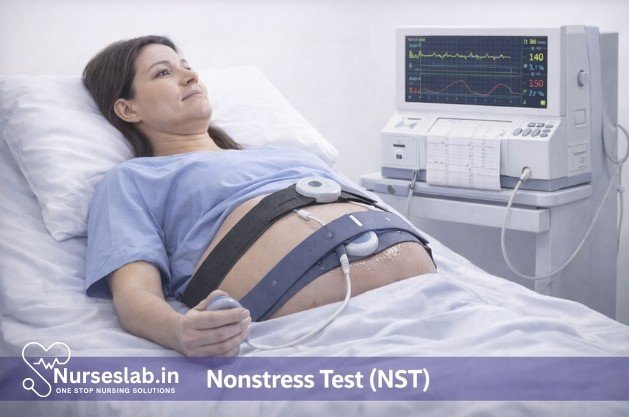
A nonstress test (NST) is a simple, noninvasive prenatal test that monitors fetal heart rate patterns and movements to assess oxygenation and overall fetal well‑being. It helps identify risks such as fetal distress, growth restriction, or high‑risk pregnancy complications.
Introduction
The Nonstress Test (NST) is a pivotal noninvasive diagnostic tool in modern obstetric care. It plays a critical role in the antenatal surveillance of fetal well-being, particularly in pregnancies where there is an increased risk of fetal compromise. The NST is designed to assess the health of the fetus by monitoring its heart rate in response to its own movements, providing valuable insights into fetal oxygenation and autonomic nervous system function.
Historical Background
The evolution of fetal surveillance has been marked by the quest for reliable, noninvasive, and easily reproducible tests to ensure fetal well-being. The NST was first introduced in the 1970s, emerging as an alternative to more invasive procedures such as the oxytocin challenge test. Over the decades, the NST has become a cornerstone of antenatal care, particularly in high-resource settings, due to its safety profile, ease of administration, and ability to provide real-time information about fetal status.
Physiological Basis of the Nonstress Test
The NST is grounded in the understanding that a healthy, well-oxygenated fetus will exhibit characteristic heart rate accelerations in response to spontaneous movements. This response is mediated by the fetal autonomic nervous system, with the sympathetic and parasympathetic branches modulating heart rate variability. When the fetus moves, there is a transient increase in sympathetic activity, leading to an acceleration in heart rate. If fetal oxygenation is compromised, these accelerations may be diminished or absent, signaling potential fetal distress.
Fetal heart rate patterns are influenced by gestational age, sleep-wake cycles, and maternal conditions. Typically, by 28-32 weeks of gestation, the fetal autonomic nervous system has matured sufficiently to produce the reactivity required for a reliable NST.
Indications for the Nonstress Test
The NST is not routinely performed in all pregnancies. Instead, it is reserved for situations where there is a concern about fetal well-being. Common indications for performing an NST include:
- Decreased Fetal Movements: Pregnant individuals who report a reduction in perceived fetal activity.
- Maternal Conditions: Such as hypertension, preeclampsia, diabetes mellitus (pre-gestational or gestational), systemic lupus erythematosus, renal disease, or thyroid disorders.
- Fetal Conditions: Intrauterine growth restriction (IUGR), oligohydramnios, polyhydramnios, multiple gestations, or Rh isoimmunization.
- Post-term Pregnancy: Pregnancies that extend beyond 40 weeks gestation.
- History of Previous Stillbirth: Increased surveillance in subsequent pregnancies.
- Other Risk Factors: Advanced maternal age, abnormal ultrasound findings, or other concerns raised during prenatal care.
Procedure and Methodology
The NST is typically conducted in an outpatient setting, such as a clinic or hospital, and does not require any special preparation. The procedure involves the following steps:
- Maternal Positioning: The patient is positioned in a semi-Fowler’s or left lateral recumbent position to avoid supine hypotension and enhance uterine perfusion.
- Application of Monitors: Two external transducers are placed on the maternal abdomen. One is an ultrasound transducer for fetal heart rate monitoring, and the other is a tocodynamometer to detect uterine contractions.
- Recording Baseline: The baseline fetal heart rate is recorded, and the mother may be asked to press a button whenever she perceives fetal movement.
- Duration: The NST is typically observed over a period of 20 to 40 minutes, allowing sufficient time to capture fetal activity, especially if the fetus is in a sleep cycle.
- Stimulation (if necessary): If no fetal movement or accelerations are observed, vibroacoustic stimulation or maternal ingestion of a sugary drink may be employed to arouse the fetus.
The procedure is painless, noninvasive, and carries no risk to the mother or fetus.
Technical Aspects
The NST utilizes Doppler ultrasound technology to detect fetal heartbeats and their variability. The tracings are recorded on graph paper, with fetal heart rate on one axis and time on the other, allowing for visual analysis of baseline rate, accelerations, decelerations, and overall variability.
Interpretation of the Nonstress Test
Interpretation of the NST centers on the presence or absence of fetal heart rate accelerations in response to fetal movements. The test is classified as either “reactive” (normal) or “nonreactive” (abnormal or equivocal), with specific criteria depending on gestational age.
Criteria for Reactivity
- For fetuses >32 weeks gestation: At least two accelerations of fetal heart rate, each increasing by at least 15 beats per minute (bpm) above the baseline and lasting at least 15 seconds within a 20-minute period.
- For fetuses ≤32 weeks gestation: At least two accelerations of 10 bpm above baseline, lasting at least 10 seconds within a 20-minute period.
A reactive NST is highly reassuring and correlates with a low risk of fetal acidemia or demise in the following week.
Nonreactive NST
A nonreactive NST is defined by the absence of sufficient accelerations over a 40-minute observation period. This may be due to fetal sleep cycles, maternal medications (such as sedatives), fetal immaturity, or fetal compromise. In such cases, further evaluation is warranted, which may include:
- Extension of observation: Prolonging the test to up to 40-60 minutes to account for fetal sleep cycles.
- Vibroacoustic stimulation: Using a sound stimulus to elicit fetal movement and accelerations.
- Additional testing: Contraction stress test, biophysical profile, or Doppler studies to further assess fetal well-being.
Additional Findings
Other features evaluated during an NST may include:
- Baseline fetal heart rate: Normal range is 110-160 bpm.
- Variability: Fluctuations in heart rate amplitude and frequency, indicative of intact neurological pathways.
- Decelerations: The presence of variable or late decelerations may suggest cord compression or uteroplacental insufficiency and warrant further evaluation.
Clinical Significance and Implications
A reactive NST is highly predictive of fetal well-being over the subsequent 3-7 days. It is associated with a low risk of intrauterine fetal demise, making it a valuable tool for ongoing surveillance in high-risk pregnancies. However, a nonreactive NST is less specific and may be influenced by benign factors such as fetal sleep or maternal medications.
Clinical decision-making following an NST is individualized, taking into account the entire clinical picture, gestational age, maternal condition, and the results of other investigations. In some cases, a nonreactive NST may necessitate immediate intervention, such as expedited delivery, while in others, further observation or testing may be appropriate.
Advantages of the Nonstress Test
- Noninvasive and Safe: No risk to mother or fetus, can be repeated as often as necessary.
- High Negative Predictive Value: A reactive NST reliably excludes acute fetal compromise in the short term.
- Convenient and Accessible: Can be performed in outpatient settings without the need for specialized equipment.
- Immediate Results: Allows for prompt clinical decision-making.
Limitations and Potential Pitfalls
Despite its utility, the NST is not without limitations:
- False Positives: Nonreactive results may occur due to fetal sleep, maternal sedation, or prematurity rather than true fetal compromise.
- Limited Predictive Value for Chronic Hypoxia: The NST is most effective in detecting acute changes in fetal oxygenation, but may not detect chronic, subacute compromise.
- Subjectivity in Interpretation: Variability in interpretation and test quality can affect accuracy.
- Time-consuming: May require prolonged observation if the fetus is in a sleep state.
Comparison with Other Antenatal Surveillance Methods
The NST is often used in conjunction with other fetal surveillance tools, each with distinct advantages and limitations:
- Biophysical Profile (BPP): Combines NST with ultrasound assessment of fetal movements, tone, breathing, and amniotic fluid volume for a comprehensive evaluation.
- Contraction Stress Test (CST): Assesses fetal response to induced uterine contractions, but is more invasive and less commonly used.
- Doppler Ultrasound: Evaluates blood flow in fetal vessels, particularly in cases of IUGR or preeclampsia.
In clinical practice, the choice of test is guided by the specific clinical scenario, available resources, and gestational age.
Special Considerations
Interpretation in Preterm Fetuses
Before 32 weeks gestation, fetal autonomic nervous system immaturity may result in fewer accelerations and reduced variability. The criteria for reactivity are accordingly adjusted (10 bpm for at least 10 seconds). Care must be taken not to overinterpret nonreactive NSTs in this population unless accompanied by other concerning findings.
Maternal Factors Affecting NST
- Medications: Narcotics, sedatives, and magnesium sulfate may blunt fetal reactivity.
- Maternal Position: Supine positioning can reduce uterine perfusion and affect fetal heart patterns.
- Maternal Illness: Fever, hypoglycemia, or other acute illnesses may transiently affect the test.
Fetal Sleep-Wake Cycles
The fetus spends significant time in quiescent (sleep) states, during which movement and reactivity are reduced. Sleep cycles typically last 20-40 minutes, and extending the NST up to 60 minutes may be necessary to capture periods of activity.
Management Following Nonstress Test Results
The management of pregnancies following NST results is a nuanced process:
- Reactive NST: Continue routine surveillance as indicated by risk status. Frequency of testing may be weekly or biweekly depending on the underlying indication.
- Nonreactive NST: Immediate further evaluation is warranted, including extended observation, vibroacoustic stimulation, or additional testing such as BPP or CST. In cases where fetal compromise is suspected, delivery may be indicated.
The overarching goal is to balance the risks of continued intrauterine life with those of premature delivery, optimizing both maternal and fetal outcomes.
Ethical and Psychological Considerations
While the NST is a valuable tool, its use must be balanced against the potential for increased maternal anxiety, false positives, and unnecessary interventions. Clear communication with patients about the purpose, limitations, and possible outcomes of the test is essential. Shared decision-making and individualized care are paramount in ensuring the best outcomes for both mother and baby.
Nursing Care of Patients Undergoing Nonstress Test (NST) Procedure
Nurses play a pivotal role in the preparation, implementation, monitoring, and follow-up care associated with NSTs. This document aims to provide a thorough understanding of the nursing care required for patients undergoing the NST procedure, from patient education to post-procedure responsibilities.
Nursing Responsibilities Before the NST
Patient Preparation
- Patient Identification and Verification:
- Confirm the identity of the patient using at least two identifiers (e.g., name and date of birth).
- Review the patient’s medical records for indications, gestational age, and any specific physician orders.
- Patient Education:
- Explain the purpose, procedure, and duration of the NST to the patient and her family, using clear and culturally sensitive language.
- Address concerns and answer questions to alleviate anxiety.
- Inform the patient that the test is painless and non-invasive, and that no special preparation such as fasting is required.
- Physical Preparation:
- Encourage the patient to empty her bladder before the procedure for comfort.
- Position the patient in a semi-Fowler’s or left lateral position to prevent supine hypotensive syndrome and optimize uteroplacental blood flow.
- Equipment Preparation:
- Ensure the availability and proper functioning of the external fetal monitor (cardiotocograph/CTG).
- Prepare belts or straps to secure the transducers.
- Have a call bell or means for the patient to signal for assistance during the procedure.
Psychosocial Support
The anticipation of fetal testing can cause anxiety for expectant mothers. The nurse should provide reassurance, maintain a calm environment, and involve the family as appropriate. Open communication helps build trust and enhances patient cooperation during the procedure.
Nursing Responsibilities During the NST
Procedure Implementation
- Monitoring Setup:
- Apply the external fetal heart rate transducer (Doppler ultrasound) to the mother’s abdomen over the area of strongest fetal heart sounds.
- Position the tocodynamometer (pressure sensor) to detect uterine activity and fetal movements.
- Ensure both transducers are secured comfortably and signals are clear on the monitor.
- Observation and Documentation:
- Instruct the patient to press a button or notify the nurse whenever she perceives fetal movement, if the equipment is not automated.
- Observe the monitor for at least 20 minutes, noting fetal heart rate patterns in response to fetal movements.
- Record baseline FHR, variability, accelerations, and any decelerations, as well as maternal vital signs and subjective observations (e.g., maternal discomfort, anxiety).
- Patient Comfort:
- Ensure the patient remains comfortable and is not experiencing dizziness, nausea, or back pain from the position.
- Adjust pillows and positioning as needed.
- Offer water or light snacks if permitted and if the procedure is prolonged.
- Safety Precautions:
- Monitor for signs of maternal hypotension, especially in supine position. If symptoms occur, adjust to left lateral position and notify the physician if necessary.
- Remain available to respond to patient needs or concerns during the test.
Interpreting NST Results
While nurses do not typically make diagnostic interpretations, they must be able to recognize normal and abnormal patterns to alert the healthcare provider promptly. Key findings include:
- Reactive NST: At least two accelerations of FHR (15 beats per minute above baseline, lasting at least 15 seconds) within a 20-minute period, indicating fetal well-being.
- Nonreactive NST: Absence of sufficient accelerations, which may indicate fetal sleep, CNS depression, or hypoxia, and typically warrants further testing (e.g., biophysical profile, contraction stress test).
If the NST is nonreactive after 20 minutes, the nurse may encourage maternal activity or provide a light snack to stimulate fetal movement, then repeat the monitoring for an additional 20 minutes as per protocol.
Nursing Responsibilities After the NST
Post-Procedure Care
- Patient Reassurance and Education:
- Inform the patient of the preliminary results as appropriate, clarifying that the final interpretation will be provided by the physician.
- Provide guidance regarding follow-up appointments or additional testing if indicated.
- Documentation:
- Accurately document the procedure, including start and end times, patient positioning, maternal and fetal responses, and any interventions performed.
- Record the NST strip or printout in the patient’s medical record as per institutional policy.
- Monitoring and Follow-up:
- Monitor the patient for any post-procedure discomfort or complications, though these are rare.
- Advise the patient to report decreased fetal movement, vaginal bleeding, or other concerning symptoms immediately.
Communication with Multidisciplinary Team
Effective nursing care involves timely communication with obstetricians, midwives, and other healthcare providers. Nurses are responsible for reporting abnormal findings promptly and participating in collaborative decision-making regarding further management.
Special Considerations in Nursing Care
High-Risk Pregnancies
Patients with high-risk factors may require more frequent NSTs or additional fetal surveillance. Nurses should be aware of specific considerations, such as the need for more detailed education, emotional support, and careful monitoring of maternal and fetal parameters.
Cultural Sensitivity and Patient-Centered Care
Nurses should be sensitive to cultural beliefs and practices related to pregnancy and medical procedures. Providing information in the patient’s preferred language, involving family members as appropriate, and respecting privacy and modesty are essential components of holistic care.
Documentation and Legal Considerations
Accurate and thorough documentation is vital for legal protection and continuity of care. Nurses must ensure that all records are complete, legible, and reflect the care provided, including patient education, procedural details, and communication with other healthcare providers.
Potential Complications and Nursing Interventions
Although the NST is considered safe, nurses must be vigilant for potential complications or issues, such as:
- Maternal discomfort or anxiety during the procedure
- Difficulty obtaining a reliable fetal heart rate tracing (e.g., due to maternal obesity, fetal position)
- Signs of maternal hypotension (e.g., dizziness, pallor, weakness)
- Technical issues with equipment
Interventions include repositioning the patient, troubleshooting equipment, providing emotional support, and escalating concerns to the medical team promptly.
Patient Education and Empowerment
Educating patients about the importance of fetal surveillance, recognizing signs of fetal distress, and understanding the implications of NST results empowers them to participate actively in their care. Nurses should encourage patients to monitor fetal movements at home and report any changes promptly.
REFERENCES
- Michigan Medicine. C.S. Mott Children’s Hospital. RH Sensitization During Pregnancy. Updated October 8, 2020.
- BNS Institute, The Importance of Non-Stress Test (NST) in Monitoring Fetal Health, https://bns.institute/maternal-health-nursing/importance-non-stress-test-fetal-health/
- American Pregnancy Association. Fetal Non-Stress Test (NST) https://americanpregnancy.org/healthy-pregnancy/pregnancy-health-wellness/non-stress-test/.
- Umana OD, Siccardi MA. Prenatal Non-stress Test (https://www.ncbi.nlm.nih.gov/books/NBK537123/). 2022 May 16. In: StatPearls [Internet]. Treasure Island, FL: StatPearls Publishing; 2022 Jan-.
- Keikha F, Vahdani FG, Latifi S. The Effects of Maternal Opium Abuse on Fetal Heart Rate using Non-Stress Test. Iran J Med Sci. 2016 Nov;41(6):479-485 doi:10.1097/GRF.0b013e318253b318
Stories are the threads that bind us; through them, we understand each other, grow, and heal.
JOHN NOORD
Connect with “Nurses Lab Editorial Team”
I hope you found this information helpful. Do you have any questions or comments? Kindly write in comments section. Subscribe the Blog with your email so you can stay updated on upcoming events and the latest articles.


