


Last Updated on January 11, 2026 by Nurseslab.in Editorial Team
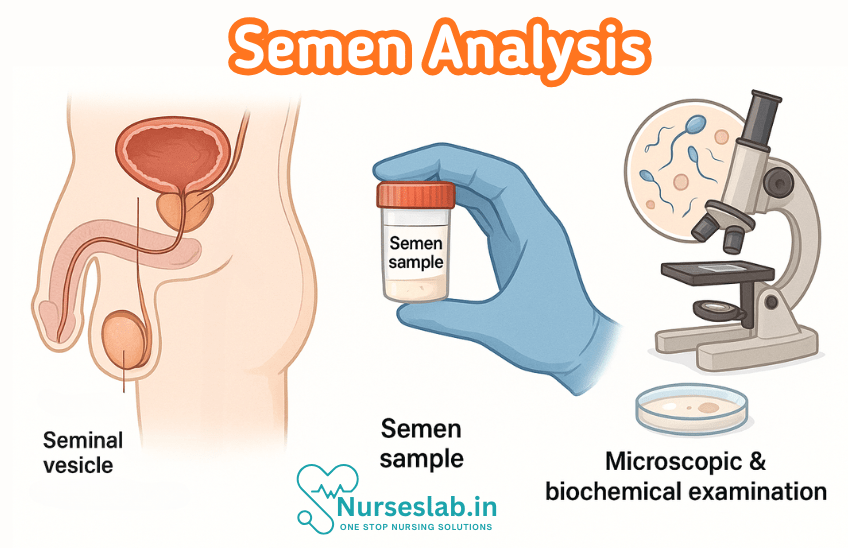
Semen analysis is a key diagnostic test in male fertility evaluation. It examines sperm count, motility, morphology, and semen volume to identify reproductive health issues. This test guides infertility treatment, patient counseling, and evidence-based nursing and medical care.
Introduction
Semen analysis stands as a cornerstone in the evaluation of male fertility. As one of the first-line investigations in couples experiencing infertility, it provides crucial insights into the functional and structural integrity of the male reproductive system. The procedure assesses not only the quantitative aspects of semen but also its qualitative features, offering a comprehensive profile of sperm health and function.
Normal Semen Parameters
The World Health Organization (WHO) periodically updates reference values for semen analysis based on large, multinational studies. These reference values serve as benchmarks for determining the normalcy of semen parameters and are critical for the diagnosis of male infertility. The following key parameters are routinely assessed:
- Semen Volume: The normal ejaculate volume is 1.5 mL or more. Lower volumes may indicate problems with seminal vesicle function or ejaculatory duct obstruction.
- Sperm Concentration: A concentration of 15 million spermatozoa/mL or more is considered normal. Oligospermia refers to counts below this threshold.
- Total Sperm Number: The normal total count per ejaculate is 39 million or more.
- Motility: At least 40% motile spermatozoa (progressive and non-progressive) or 32% with progressive motility is considered normal.
- Vitality: At least 58% live spermatozoa should be present, as assessed by dye exclusion tests.
- Morphology: Normal forms should constitute at least 4% of spermatozoa when assessed using strict (Kruger) criteria.
- pH: The normal pH of semen is typically between 7.2 and 8.0.
- Leukocyte Count: Fewer than 1 million per mL (<1 x 10⁶/mL) is considered normal, as higher levels may indicate infection or inflammation.
Deviation from these reference values prompts further evaluation to determine underlying pathology and inform clinical management.
Pathological Findings in Semen Analysis
A variety of abnormalities can be detected during semen analysis, each associated with specific pathological processes. The most common findings include:
Oligospermia
Oligospermia refers to a sperm concentration below the WHO reference value of 15 million/mL. It is graded as:
- Mild: 10–15 million/mL
- Moderate: 5–10 million/mL
- Severe: <5 million/mL
Low sperm counts may compromise the likelihood of natural conception.
Asthenozoospermia
Asthenozoospermia is defined by reduced sperm motility, with fewer than 40% motile spermatozoa or less than 32% progressive motility. This impairs the sperm’s ability to reach and fertilise the oocyte.
Teratozoospermia
Teratozoospermia denotes abnormal sperm morphology, with fewer than 4% of spermatozoa exhibiting normal forms. Morphological defects may affect the acrosome, midpiece, or tail, hindering fertilisation.
Azoospermia
Azoospermia is the complete absence of spermatozoa in the ejaculate and is classified as:
- Obstructive: Due to blockage in the reproductive tract.
- Non-obstructive: Due to impaired spermatogenesis.
This is a severe form of male infertility requiring detailed investigation.
Necrozoospermia
Necrozoospermia describes the presence of non-viable (dead) spermatozoa in the ejaculate, with vitality below 58%. This may result from infections, toxins, or testicular failure.
Leukocytospermia (Pyospermia)
Leukocytospermia is defined by a leukocyte count exceeding 1 million/mL. It signals the presence of infection or inflammation in the male genital tract and may be associated with impaired sperm function.
Other Abnormalities
Additional pathological findings include:
- Hypospermia: Reduced semen volume (<1.5 mL).
- Hyperspermia: Increased semen volume (>6 mL).
- Aspermia: Complete absence of ejaculate.
- Haemospermia: Presence of blood in semen.
Etiology of Semen Abnormalities
Semen abnormalities have diverse and often multifactorial aetiologies. Understanding these causes is essential for targeted treatment and prognosis.
Genetic Causes
- Karyotype Abnormalities: Klinefelter syndrome (47,XXY), Y-chromosome microdeletions, and chromosomal translocations can disrupt spermatogenesis, causing azoospermia or severe oligospermia.
- Single Gene Defects: Mutations in genes such as CFTR (cystic fibrosis) may lead to congenital bilateral absence of the vas deferens (CBAVD) and obstructive azoospermia.
Infectious Causes
- Sexually Transmitted Infections (STIs): Infections such as Chlamydia trachomatis, Neisseria gonorrhoeae, and Mycoplasma can damage the reproductive tract, resulting in scarring and obstruction.
- Viral Infections: Mumps orchitis, HIV, and hepatitis viruses may directly impair testicular function.
- Other Infections: Tuberculosis and other genitourinary infections can cause granulomatous inflammation and obstruction.
Environmental and Lifestyle Factors
- Heat Exposure: Elevated scrotal temperature due to varicocele, tight clothing, or occupational hazards can suppress spermatogenesis.
- Radiation and Toxins: Exposure to pesticides, heavy metals, solvents, and ionising radiation can damage germ cells.
- Smoking and Alcohol: Both have been linked to reduced sperm count, motility, and increased DNA fragmentation.
- Obesity: Associated with hormonal imbalance and oxidative stress, adversely affecting semen quality.
Endocrine Disorders
- Hypogonadism: Primary or secondary hypogonadism due to pituitary or testicular dysfunction leads to impaired spermatogenesis.
- Thyroid Disorders: Both hyperthyroidism and hypothyroidism can negatively impact semen parameters.
- Hyperprolactinaemia: Elevated prolactin suppresses gonadotropin secretion, affecting sperm production.
Anatomical and Structural Causes
- Varicocele: Abnormal dilation of the pampiniform plexus is a leading cause of male infertility, often associated with oligospermia, asthenozoospermia, and increased sperm DNA damage.
- Obstruction: Congenital or acquired blockages of the vas deferens, epididymis, or ejaculatory ducts result in azoospermia or low semen volume.
- Cryptorchidism: Undescended testes, if uncorrected, can lead to irreversible damage to germ cells.
- Testicular Trauma or Surgery: Can disrupt normal sperm production and transport.
Immunological Factors
- Antisperm Antibodies: Autoimmune responses may develop after testicular trauma, vasectomy, or infection, impairing sperm motility and fertilising capacity.
Idiopathic Causes
In a significant proportion of cases, no specific cause of semen abnormality is identified, termed idiopathic male infertility. This highlights the need for ongoing research into novel genetic and molecular mechanisms.
Clinical Implications
Abnormal semen parameters have far-reaching implications for male fertility, prognosis, and treatment strategies.
- Fertility Prognosis: The degree and combination of abnormalities correlate with the probability of natural conception. Severe oligospermia, azoospermia, or necrozoospermia portend a poor prognosis without assisted reproductive techniques (ART).
- Guiding Therapy: Identification of treatable causes (e.g., infection, varicocele, endocrine disorders) enables targeted therapy, potentially restoring fertility.
- ART Planning: Semen analysis guides the selection of appropriate ART, such as intrauterine insemination (IUI), in vitro fertilisation (IVF), or intracytoplasmic sperm injection (ICSI).
- Genetic Counselling: Men with severe or unexplained abnormalities may require genetic testing and counselling to assess the risk of transmission of genetic defects to offspring.
- Systemic Disease Detection: Certain semen abnormalities may herald underlying systemic conditions, such as cystic fibrosis, Klinefelter syndrome, or pituitary disease.
Therefore, Semen analysis serves not only as a diagnostic tool but also as a prognostic and therapeutic guide in male reproductive health.
Diagnostic Techniques and Laboratory Methods
Accurate semen analysis depends on standardised procedures for sample collection, handling, and laboratory assessment. Advances in diagnostic technologies have enhanced the detection of subtle abnormalities.
Sample Collection and Handling
- Abstinence: 2–7 days of sexual abstinence prior to sample collection is recommended to ensure optimal sperm concentration and motility.
- Collection Methods: Masturbation is preferred. Collection in a sterile, non-toxic container is essential. Use of lubricants or condoms not designed for semen collection may distort results.
- Timely Analysis: Semen should be analysed within one hour of ejaculation to prevent artefactual changes in motility and vitality.
Conventional Laboratory Assessment
- Macroscopic Evaluation: Assessment of volume, pH, colour, viscosity, and liquefaction time.
- Microscopic Evaluation: Sperm concentration, motility, vitality (eosin-nigrosin staining), morphology (Papanicolaou or Diff-Quik staining), and leukocyte count (peroxidase test or immunocytochemistry).
Advanced Diagnostic Tools
- Sperm DNA Fragmentation Tests: Techniques such as the sperm chromatin structure assay (SCSA), TUNEL assay, and comet assay detect DNA breaks, which are associated with poor fertility outcomes and recurrent pregnancy loss.
- Antisperm Antibody Testing: Mixed antiglobulin reaction (MAR) and immunobead binding tests identify the presence of antisperm antibodies.
- Computer-Assisted Sperm Analysis (CASA): Provides objective assessment of motility, concentration, and morphology.
- Reactive Oxygen Species (ROS) Measurement: High ROS levels can damage sperm membranes and DNA, contributing to infertility.
- Genetic Testing: Karyotyping, Y-chromosome microdeletion analysis, and CFTR mutation screening are indicated in severe or unexplained cases.
Quality control and adherence to WHO guidelines are essential to minimise inter-laboratory variability and ensure reliable results.
Interpretation and Reporting
Interpreting semen analysis requires a nuanced understanding of the limitations and variability inherent in the test. Key considerations include:
- Reference Ranges: WHO reference values represent the lower 5th percentile of fertile men, not strict cut-offs for fertility. Values just below the threshold may still be compatible with conception.
- Repeat Testing: At least two analyses, spaced several weeks apart, are recommended due to natural variability in semen parameters.
- Comprehensive Assessment: Isolated abnormalities should be interpreted in the context of the entire semen profile, clinical history, and physical examination.
- Pitfalls: Pre-analytical errors (e.g., improper collection, delayed analysis) and laboratory artefacts can confound results. Communication between clinicians and laboratory personnel is vital.
- Reporting: Reports should include all measured parameters, reference values, and comments on potential clinical significance. Abnormal findings should prompt further diagnostic evaluation.
Case Studies: Illustrative Examples
Case 1: Obstructive Azoospermia
A 29-year-old man presents with primary infertility. Semen analysis reveals azoospermia with normal semen volume and pH. Physical examination shows palpable vas deferens. Further evaluation, including transrectal ultrasound, identifies ejaculatory duct obstruction. Surgical intervention restores patency, and sperm are subsequently detected in the ejaculate.
Case 2: Varicocele-Associated Oligoasthenoteratozoospermia
A 32-year-old male reports two years of infertility. Semen analysis demonstrates reduced sperm count, motility, and abnormal morphology. Clinical examination identifies a grade II varicocele. After surgical repair, follow-up semen analysis shows significant improvement in all parameters, and the couple achieves conception within six months.
Case 3: Idiopathic Teratozoospermia
A 35-year-old man’s semen analysis consistently shows less than 2% normal forms, with otherwise normal volume, concentration, and motility. No identifiable cause is found after extensive evaluation. The couple is counselled regarding the low likelihood of natural conception, and IVF with ICSI is recommended.
Case 4: Leukocytospermia and Infection
A 28-year-old male presents with infertility and a history of urethral discharge. Semen analysis reveals elevated leukocyte count and reduced motility. Microbiological testing identifies Chlamydia trachomatis. Antibiotic therapy is instituted, with resolution of infection and improvement in semen parameters.
REFERENCES
- Ramadas Nayak, Textbook of Pathology and Genetics for Nurses, 2nd Edition,2024, Jaypee Publishers, ISBN: 978-93-5270-031-8.
- Suresh Sharma, Textbook of Pharmacology, Pathology & Genetics for Nurses II, 2nd Edition, 31 August 2022, Jaypee Publishers, ISBN: 978-9354655692.
- Kumar, V., Abbas, A.K., & Aster, J.C. (2020). Robbins and Cotran Pathologic Basis of Disease. 10th Edition. Elsevier.
- McCance, K.L., & Huether, S.E. (2018). Pathophysiology: The Biologic Basis for Disease in Adults and Children. 8th Edition. Elsevier.
- King O, West E, Lee S, Glenister K, Quilliam C, Wong Shee A, Beks H. Research education and training for nurses and allied health professionals: a systematic scoping review. BMC Med Educ. 2022 May 19;22(1):385. https://pmc.ncbi.nlm.nih.gov/articles/PMC9121620/
- Barría P RM. Use of Research in the Nursing Practice: from Statistical Significance to Clinical Significance. Invest Educ Enferm. 2023 Nov;41(3):e12. doi: 10.17533/udea.iee.v41n3e12. PMID: 38589312; PMCID: PMC10990586.
Stories are the threads that bind us; through them, we understand each other, grow, and heal.
JOHN NOORD
Connect with “Nurses Lab Editorial Team”
I hope you found this information helpful. Do you have any questions or comments? Kindly write in comments section. Subscribe the Blog with your email so you can stay updated on upcoming events and the latest articles.


