Last Updated on January 14, 2026 by Nurseslab.in Editorial Team
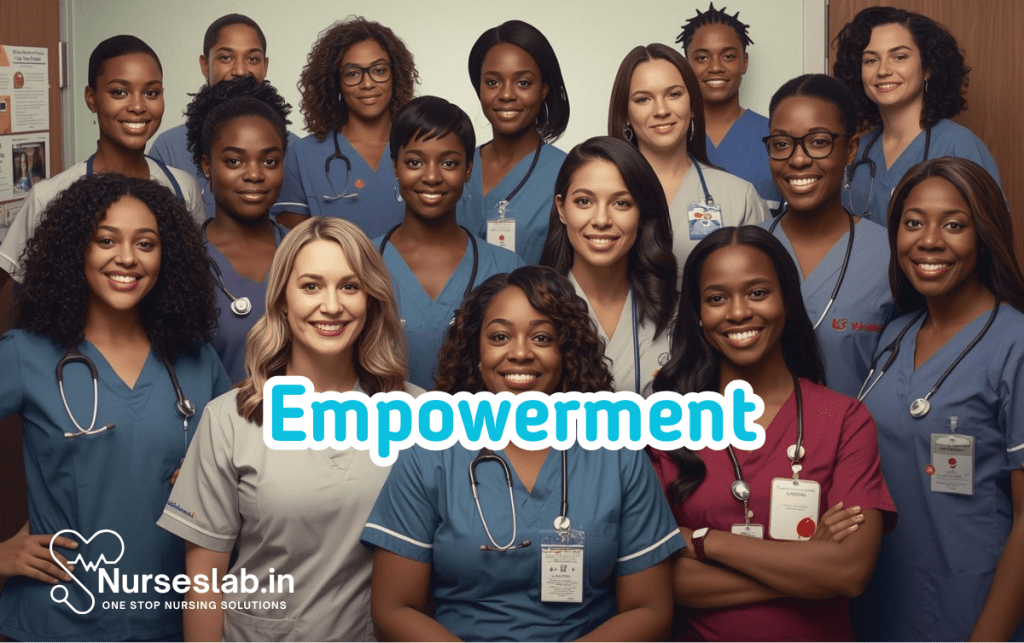
Empowerment in nursing strengthens autonomy, leadership, and advocacy. When nurses are respected, well-trained, and supported, they deliver safer, more personalized care. Empowered nurses influence policy, innovate practice, and elevate healthcare standards
Introduction
Empowerment is a foundational concept within professional nursing, shaping how nurses interact with patients, families, communities, and colleagues. In today’s dynamic healthcare landscape, the ability of nurses to empower others is not only a marker of excellence but also a driving force for improved outcomes and holistic care.
Understanding Empowerment
Definition of Empowerment
Empowerment is broadly defined as the process of enabling individuals or groups to gain control, make informed choices, and take action to improve their circumstances. In nursing, empowerment encompasses fostering autonomy, supporting self-efficacy, and facilitating informed decision-making among patients, families, communities, and peers.
Relevance in Healthcare
Empowerment is essential in healthcare as it leads to better engagement, adherence to treatment plans, and improved patient satisfaction. Empowered patients are more likely to participate actively in their care, leading to enhanced health outcomes. Similarly, empowered nurses contribute to resilient healthcare teams, effective leadership, and innovative problem-solving.
Theoretical Frameworks
Several theoretical models underpin empowerment in nursing. The Health Empowerment Theory focuses on enabling patients to develop skills and confidence to manage their health. Transformational Leadership Theory highlights the role of nurse leaders in inspiring and motivating others to achieve their potential. Social Cognitive Theory emphasises the importance of self-efficacy and learning through observation and interaction. These frameworks guide practical strategies for empowerment across various healthcare settings.
Nurse-Patient Empowerment: Strategies for Empowering Patients
Shared Decision-Making
Shared decision-making is a collaborative approach where nurses involve patients in every aspect of their care. By presenting options, discussing risks and benefits, and respecting patient preferences, nurses foster autonomy and confidence. Examples include involving patients in care planning, medication choices, and discharge decisions.
Patient Education
Educating patients is a core strategy for empowerment. Nurses use clear, culturally appropriate language to explain diagnoses, treatment plans, and self-care techniques. Tailored education increases health literacy, enabling patients to understand their conditions and participate in their recovery. For instance, teaching diabetic patients about blood glucose monitoring and lifestyle modifications empowers them to manage their health proactively.
Fostering Autonomy
Empowering patients to take charge of their health involves respecting their choices and encouraging self-management. Nurses facilitate autonomy by supporting self-care activities, providing resources, and celebrating patient achievements. This approach is particularly vital in chronic disease management, rehabilitation, and palliative care, where patient involvement is crucial.
Practical Example
Consider a nurse working with a patient recovering from a stroke. Through education about rehabilitation exercises, encouragement, and goal-setting, the nurse empowers the patient to regain independence and confidence, leading to better functional outcomes and quality of life.
Empowering Families and Communities
Involving Families in Care
Families are integral to patient recovery and well-being. Nurses empower families by involving them in care discussions, teaching caregiving skills, and providing emotional support. Family meetings, informational sessions, and open communication foster trust and enable families to advocate for their loved ones.
Community Outreach and Health Promotion
Nurses extend their empowerment role beyond the hospital by participating in community outreach programmes. These initiatives include health camps, vaccination drives, and educational workshops addressing prevalent health issues such as diabetes, hypertension, and maternal health. By engaging with communities, nurses promote preventive care and health awareness.
Cultural Competence
Empowering diverse populations requires cultural sensitivity and competence. Nurses learn about community beliefs, traditions, and health practices to deliver respectful and relevant care. For instance, adapting health education materials to local languages or customs ensures greater acceptance and impact.
Practical Example
A nurse leading a maternal health camp in a rural Indian village educates women about prenatal care, nutrition, and immunisation. By addressing cultural barriers and providing resources, the nurse empowers the community to reduce maternal and infant mortality rates.
Empowering Colleagues and Teams
Mentorship and Professional Development
Mentorship is a powerful tool for empowering nursing colleagues. Experienced nurses guide junior staff, fostering skills development, professional confidence, and ethical practice. Regular feedback, career counselling, and opportunities for continuing education contribute to a culture of growth and empowerment.
Collaborative Practice
Empowered teams deliver better patient care. Nurses encourage collaboration by sharing knowledge, respecting diverse perspectives, and promoting teamwork. Interdisciplinary rounds, joint problem-solving sessions, and peer support groups exemplify collaborative empowerment in action.
Leadership Roles
Nurses in leadership positions empower teams by setting clear goals, providing resources, and advocating for staff well-being. They create supportive environments where every member feels valued, heard, and motivated to excel. Leadership development programmes and recognition initiatives further enhance empowerment.
Practical Example
A nurse manager implements a monthly peer recognition programme, celebrating achievements and encouraging professional growth. This initiative boosts morale, fosters camaraderie, and enhances team performance.
Nurses as Advocates and Leaders
Policy Influence
Nurses play a vital role in shaping healthcare policies at institutional, regional, and national levels. By participating in policy discussions, contributing research, and representing the nursing perspective, they advocate for patient-centred care and ethical standards.
Advocacy for Patient Rights
Empowerment involves safeguarding patient rights, including informed consent, privacy, and dignity. Nurses advocate for vulnerable populations, challenge discriminatory practices, and ensure equitable access to care.
Ethical Considerations
Nurse empowerment is grounded in ethical practice. Nurses navigate complex situations by upholding professional standards, promoting justice, and respecting patient autonomy. Ethics committees, training sessions, and reflective practice support nurses in making empowered decisions.
Practical Example
A nurse advocates for a patient with limited English proficiency by arranging translation services and ensuring informed consent, thereby upholding ethical standards and empowering the patient to participate in their care.
Education and Communication
Role of Education in Empowerment
Continuous education is essential for nurse empowerment. Professional development courses, workshops, and certifications enhance clinical competence and confidence. Nurses also educate patients, families, and communities, fostering empowerment at every level.
Effective Communication Techniques
Communication is central to empowerment. Nurses use active listening, empathy, and clear explanations to build trust and understanding. Open-ended questions, non-verbal cues, and culturally appropriate dialogue enhance engagement and empowerment.
Health Literacy
Improving health literacy is a key empowerment strategy. Nurses assess patient understanding, tailor information, and use visual aids or demonstrations to ensure comprehension. Enhanced health literacy leads to better self-care and health outcomes.
Practical Example
A nurse teaching a group of elderly patients about fall prevention uses simple language, visual demonstrations, and interactive activities. This approach empowers participants to implement safety measures confidently.
Barriers to Empowerment: Challenges and Solutions
Common Obstacles
Barriers to nurse empowerment include organisational hierarchies, limited resources, cultural constraints, and communication gaps. High workloads, insufficient training, and lack of recognition may hinder empowerment efforts.
Organisational Challenges
Rigid policies, inadequate staffing, and resistance to change can impede empowerment. Nurses may struggle to implement patient-centred care or advocate for improvements in unsupportive environments.
Solutions and Recommendations
Addressing barriers requires leadership commitment, policy reform, and resource allocation. Organisations should invest in training, promote open communication, and recognise empowerment initiatives. Empowerment-friendly policies, mentorship programmes, and inclusive decision-making foster a supportive culture.
Practical Example
A hospital introduces flexible scheduling and staff wellness programmes, addressing burnout and enhancing nurse empowerment. These changes lead to improved job satisfaction and patient care quality.
Case Studies and Real-World Examples
Case Study 1: Empowering a Diabetic Patient
A nurse working in an urban clinic identifies a patient struggling with diabetes management. Through personalised education, regular follow-ups, and supportive counselling, the nurse empowers the patient to monitor blood glucose, adhere to medication, and adopt a healthier lifestyle. The patient’s improved self-care leads to better glycaemic control and reduced hospitalisations.
Case Study 2: Community Health Initiative
In a semi-urban community, nurses organise a health promotion campaign focused on hypertension awareness. They collaborate with local leaders, conduct screenings, and educate residents about healthy diets and exercise. The initiative results in increased community engagement, early detection of hypertension, and improved health outcomes.
Case Study 3: Mentorship in Nursing Education
A senior nurse mentors a group of nursing students during clinical rotations. Through guidance, feedback, and role modelling, the mentor empowers students to develop clinical skills, ethical judgement, and professional confidence. Graduates report higher job satisfaction and readiness for practice.
Case Study 4: Leadership in Crisis
During the COVID-19 pandemic, a nurse leader coordinates a response team, ensuring staff safety, resource allocation, and emotional support. By fostering teamwork, resilience, and open communication, the leader empowers colleagues to deliver high-quality care under challenging circumstances.
Impact of Empowerment on Healthcare Outcomes
Improved Patient Satisfaction
Empowered patients report higher satisfaction due to active involvement in their care, better understanding of treatment options, and enhanced trust in healthcare providers. Satisfaction surveys consistently link empowerment strategies to positive patient experiences.
Better Health Outcomes
Empowerment leads to improved clinical outcomes, including better disease management, reduced complications, and lower readmission rates. Patients empowered by nurses are more likely to adhere to treatment plans and engage in preventive care.
Enhanced Team Performance
Empowered nursing teams demonstrate greater collaboration, innovation, and resilience. Supportive environments foster professional growth, reduce burnout, and enhance quality of care. Leadership and empowerment initiatives contribute to organisational success and positive workplace culture.
Long-Term Benefits
Over time, nurse empowerment results in sustainable improvements in healthcare delivery. Empowered nurses drive policy reform, advance patient advocacy, and contribute to the evolution of nursing practice.
Conclusion: A Call to Action for Nursing Empowerment
Empowerment is at the heart of effective nursing practice, shaping the experiences of patients, families, communities, and healthcare teams. By embracing empowerment strategies, nurses become advocates, educators, leaders, and change-makers. The impact of empowerment extends beyond individual interactions, influencing healthcare outcomes, organisational culture, and societal well-being. Nursing professionals, students, and educators are urged to champion empowerment in every aspect of care, fostering an environment where everyone can thrive. Through continual education, advocacy, collaboration, and innovation, the nursing community can realise its full potential and transform healthcare for generations to come.
REFERENCES
- R. Sreevani, Applied Psychology for Nurses, 5th Edition, 2024, Jaypee Publishers, ISBN: 978-9356966963.
- Xavier Belsiyal, Applied Psychology for Nurses, 1st Edition, July 15, 2023, Elsevier Publishers, ISBN: 978-8131266366
- Mary F Porter, Applied Psychology for Nurses, 27 October 2022, Legare Street Press, IBSN: 978-1015804302.
- Douglas A. Bernstein, Introduction to Clinical Psychology, 10th Edition, 31 October 2024, Cambridge University Press, ISBN: 978- 1009379298.
- Sailaxmi Gandhi, Basic and Applied Psychology for Nurses, First Edition, January 2023, Wolters Kluwer Publications, ISBN: 978-9395736534.
- Jacob Anthikad, Psychology for Graduate Nurses, 5th Edition, 30 January 2014, Jaypee Publishers, ISBN: 978-9351521549.
- Kumar, Rajesh. (2017). Basic Psychology for Nurses. https://www.researchgate.net/publication/337811601_Basic_Psychology_for_Nurses
Stories are the threads that bind us; through them, we understand each other, grow, and heal.
JOHN NOORD
Connect with “Nurses Lab Editorial Team”
I hope you found this information helpful. Do you have any questions or comments? Kindly write in comments section. Subscribe the Blog with your email so you can stay updated on upcoming events and the latest articles.