


Last Updated on January 16, 2026 by Nurseslab.in Editorial Team
Scrotoplasty is a specialized surgical procedure that involves the reconstruction or creation of the scrotum, the anatomical pouch of skin and muscle that typically contains the testicles in people assigned male at birth. This surgery can be performed for a variety of medical, congenital, or gender-affirming reasons. Over recent decades, advances in surgical technique, anesthesia, and post-operative care have made scrotoplasty a safer and more effective procedure for individuals seeking functional, aesthetic, or psychological benefits.
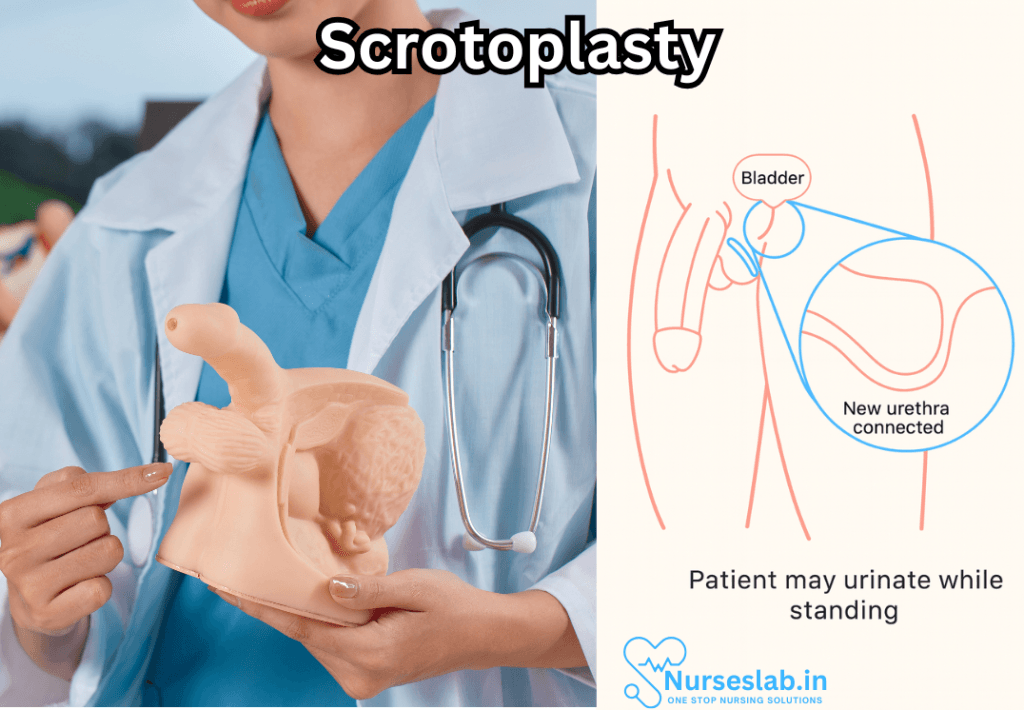
What Is Scrotoplasty?
Scrotoplasty, sometimes referred to as scrotal reconstruction, is the surgical alteration, repair, or construction of the scrotum. This procedure can include repairing damage or malformation, creating a scrotum when none is present (as in gender-affirming surgery or certain congenital conditions), or reconstructing a scrotum that has been damaged or removed due to trauma, cancer, infection, or other medical issues.
Medical Indications for Scrotoplasty
There are several common reasons why an individual may seek or require scrotoplasty, including:
- Congenital abnormalities: Some people are born with conditions such as penoscrotal transposition, scrotal agenesis (absence of scrotal tissue), or intersex variations that affect the development of the scrotum. Scrotoplasty can help create or reconstruct a scrotum in these cases.
- Trauma: Accidents, injuries, or burns to the genital region can result in loss or damage to scrotal tissue, necessitating reconstructive surgery.
- Infection or disease: Severe infections like Fournier’s gangrene, cancer, or other diseases can lead to the destruction or surgical removal of scrotal tissue.
- Gender-affirming surgery: Scrotoplasty is a key component of gender-affirming genital surgeries, particularly for transgender men and some non-binary individuals as part of phalloplasty or metoidioplasty procedures.
- Cosmetic reasons: Some individuals may seek scrotoplasty for aesthetic or functional improvements, such as tightening loose scrotal skin (scrotal lift) or correcting asymmetry.
Types of Scrotoplasty Procedures
There are several techniques used in scrotoplasty, depending on the underlying reason for the surgery and the desired outcome. These include:
1. Primary Scrotoplasty
Primary scrotoplasty is performed when creating a new scrotum, typically for transgender men or those with congenital absence of the scrotum. The procedure often involves using tissue from the labia majora or other local flaps to create a scrotal pouch.
2. Reconstructive Scrotoplasty
Reconstructive scrotoplasty is necessary when repairing or rebuilding a scrotum due to trauma, infection, cancer, or surgical removal. Surgeons may use local tissue, skin grafts, or tissue from other parts of the body to reconstruct the scrotal sac.
3. Scrotal Lift (Scrotal Reduction)
Some individuals experience excessive scrotal skin, particularly with aging or after significant weight loss. A scrotal lift, or scrotal reduction, involves removing excess skin and tightening the remaining tissue for improved appearance and comfort.
4. Testicular Implant Placement
For those who desire a natural appearance but do not have testicles—either due to removal, absence, or as part of gender-affirming care—artificial testicular implants can be inserted during or after scrotoplasty.
Preoperative Evaluation and Considerations
Prior to undergoing scrotoplasty, a comprehensive medical evaluation is essential. This includes:
- Medical history and physical examination: To assess overall health, identify any conditions that may complicate surgery, and determine the best surgical approach.
- Imaging and diagnostic tests: In cases involving trauma or malignancy, imaging may be required to evaluate the extent of damage or disease.
- Psychological evaluation: For individuals seeking scrotoplasty as part of gender-affirming surgery, a mental health assessment may be recommended or required to ensure appropriate support and readiness for the procedure.
- Discussion of expectations: Surgeons will discuss the risks, benefits, and potential outcomes with the patient, ensuring realistic expectations and informed consent.
The Scrotoplasty Procedure: What to Expect
Scrotoplasty is usually performed under general anesthesia, though minor procedures may be done under local or regional anesthesia. The approach will depend on the specific needs of the patient:
- Creation of the scrotum: Tissue is mobilized—often the labia majora in transgender men or local thigh/abdominal skin in reconstructive cases—and shaped into a pouch resembling a natural scrotum.
- Repair or reconstruction: Damaged or missing scrotal tissue is replaced with local flaps or skin grafts, and the area is closed with sutures to restore form and function.
- Implant placement: If desired, testicular prostheses are inserted into the newly created or reconstructed scrotum.
The duration of the surgery varies from one to several hours depending on complexity.
Postoperative Care and Recovery
Recovery from scrotoplasty involves several important steps:
- Hospital stay: Many procedures are done on an outpatient basis, but more extensive reconstructions may require a short hospital stay.
- Pain management: Pain and discomfort are typically managed with medication prescribed by the surgical team.
- Wound care: Patients must keep the surgical site clean and dry, and follow specific instructions regarding bathing, dressing changes, and activity restrictions.
- Follow-up appointments: These are crucial for monitoring healing, removing stitches, and addressing complications such as infection, hematoma, or poor wound healing.
- Resuming activities: Most individuals can return to light activities within a few weeks, but strenuous exercise, sexual activity, and heavy lifting are generally restricted until fully healed.
Risks and Potential Complications
As with any surgical procedure, scrotoplasty carries certain risks, including:
- Infection at the surgical site
- Bleeding or hematoma formation
- Scarring and changes in skin sensation
- Asymmetry or dissatisfaction with appearance
- Implant-related complications (if prostheses are used), such as shifting, rupture, or extrusion
- Delayed wound healing
- Allergic reaction to anesthesia or other materials
While serious complications are uncommon, prompt medical attention should be sought for any concerns during recovery.
Outcomes and Satisfaction
Satisfaction with scrotoplasty is generally high, especially when performed by experienced surgeons and when patients have realistic expectations. Functional and aesthetic outcomes are continually improving as surgical techniques advance. For individuals undergoing gender-affirming scrotoplasty, the procedure often plays a significant role in psychological well-being and congruence with gender identity.
Scrotoplasty in Gender-Affirming Surgery
For transgender men and some non-binary individuals, scrotoplasty is an important component of bottom surgery. In these cases, the goals include creating a scrotum that is both visually and tactilely similar to a cisgender male scrotum, and offers the possibility for testicular implants. Scrotoplasty is frequently performed alongside phalloplasty (creation of a penis using grafted tissue) or metoidioplasty (modification of the clitoris to resemble a penis). The procedure is highly individualized, with options tailored to the patient’s anatomy and goals.
Cost and Insurance Coverage
The cost of scrotoplasty can vary widely depending on geographic region, the surgeon’s experience, the complexity of the surgery, and whether additional procedures (such as phalloplasty or implant placement) are included. In some countries, scrotoplasty performed for medical or gender-affirming reasons may be covered by health insurance, while in other regions it may be considered an elective or cosmetic procedure and thus not covered.
Ethical and Social Considerations
Scrotoplasty, particularly as part of gender-affirming care, can carry significant social and ethical considerations. Access to experienced surgeons and comprehensive health care is crucial for equitable outcomes. Informed consent, patient autonomy, and sensitivity to individual needs and identities remain at the forefront of best practices in scrotoplasty and all related surgeries.
Nursing Care of the Patient Undergoing Scrotoplasty
As with any surgical intervention, the role of nursing is crucial to ensure optimal recovery, patient safety, and psychosocial well-being. This document outlines comprehensive nursing care guidelines for patients undergoing scrotoplasty, spanning from preoperative preparation to long-term follow-up.
Preoperative Nursing Care
Patient Assessment
- Medical History: Evaluate for co-morbidities, allergies (especially to anaesthetics and antibiotics), past surgical history, and bleeding disorders.
- Medication Review: Document current medications, including hormonal therapies, anticoagulants, and herbal supplements.
- Psychosocial Assessment: Assess patient expectations, emotional readiness, support systems, and understanding of the procedure.
Preoperative Education
- Procedure Explanation: Explain the steps of the surgery, potential risks, benefits, and expected outcomes using clear and inclusive language.
- Informed Consent: Ensure the patient has adequate information to provide informed consent. Address any questions or concerns.
- Pain Management Plan: Discuss anticipated pain and strategies for relief postoperatively.
- Preoperative Fasting: Instruct on fasting requirements as per hospital policy, typically NPO after midnight before surgery.
- Hygiene Preparation: Advise on preoperative showering with antiseptic soap to reduce infection risk.
Physical Preparation
- Baseline Vital Signs: Record blood pressure, heart rate, temperature, oxygen saturation, and respiratory rate.
- Laboratory Investigations: Ensure completion of required blood tests (CBC, electrolytes, coagulation profile) and urinalysis.
- Skin Preparation: Shave and cleanse the surgical area as per protocol, maintaining patient comfort and privacy.
- Venous Access: Ensure intravenous access for perioperative medications and fluids.
Immediate Postoperative Nursing Care
Monitoring and Assessment
- Vital Signs: Monitor closely for signs of haemodynamic instability or adverse reactions to anaesthesia.
- Pain Assessment: Use age-appropriate pain scales to assess and document pain regularly. Administer analgesics as prescribed.
- Surgical Site Observation: Inspect the wound for bleeding, swelling, haematoma, or signs of infection (redness, warmth, discharge).
- Urinary Output: Monitor urine output, especially if a catheter is in place, and assess for urinary retention or dysuria.
- Drain Management: If surgical drains are present, monitor output and maintain patency. Record characteristics and volume of drainage.
Pain and Comfort Measures
- Pharmacologic Management: Administer prescribed analgesics, anti-inflammatories, and antibiotics on schedule.
- Non-Pharmacological Approaches: Encourage rest, provide cold packs (if approved), and support gentle positioning to minimise discomfort.
Infection Prevention
- Sterile Technique: Use aseptic technique when handling surgical sites, dressings, and drains.
- Hand Hygiene: Enforce strict hand hygiene policies for staff, patient, and visitors.
- Wound Care: Change dressings as per protocol, assessing for signs of infection or delayed healing at each change.
Ongoing Postoperative Care
Patient Education and Empowerment
- Wound Care Instruction: Teach the patient and caregivers how to recognise signs of infection, how to keep the area clean, and when to seek help.
- Activity Restrictions: Instruct on avoiding strenuous activity, heavy lifting, and sexual activity until cleared by the surgical team.
- Medication Adherence: Reinforce the importance of completing prescribed antibiotics and pain medications as directed.
- Monitoring for Complications: Educate regarding potential complications such as wound dehiscence, haematoma, infection, urinary retention, or changes in skin colour and temperature around the surgical site.
Psychosocial Support
- Emotional Support: Recognise the psychosocial impact of scrotoplasty, especially in the context of gender affirmation, body image, and self-esteem. Provide empathetic care and facilitate access to counselling or peer support groups as desired by the patient.
- Inclusive Communication: Use inclusive language and respect the patient’s preferred name and pronouns at all times.
- Family and Support Network: Involve trusted family members or friends in care discussions if the patient consents.
Discharge Planning
- Follow-up Appointments: Schedule regular clinic visits for wound checks, suture or drain removal, and assessment of healing.
- Emergency Contact: Provide written emergency action plans, including who to contact for urgent medical advice, signs of complications, and how to access after-hours care.
- Home Care Resources: Refer to community nursing support if needed for dressing changes or ongoing wound management.
Complication Management
Early Complications
- Bleeding/Hematoma: Monitor for excessive swelling, bruising, or firmness at the surgical site. Notify the surgical team promptly if suspected.
- Infection: Watch for fever, increasing redness, warmth, or foul-smelling discharge. Initiate early wound assessment and collaborate with the surgical team for intervention.
- Urinary Retention: Assess for difficulty voiding and bladder distension; assist with catheter care if needed.
Late Complications
- Wound Dehiscence: Educate patient to monitor for gaping or breakdown of the incision site. Early intervention reduces risk of further complications.
- Scarring and Body Image Concerns: Address concerns compassionately and refer to support services if desired.
- Implant Issues (if applicable): Watch for implant migration, extrusion, or chronic discomfort. Educate regarding the need for prompt medical review if these occur.
Long-Term Follow-Up and Health Maintenance
- Continued Surveillance: Monitor long-term wound healing, scarring, and function during follow-up visits.
- Psychological Well-being: Assess for ongoing mental health support needs and facilitate access to resources.
- Sexual and Urological Function: Support discussions around sexual health, sensation, and urinary function. Refer to specialists as needed for any concerns.
- Health Promotion: Encourage healthy lifestyle choices, such as regular exercise and smoking cessation, to optimise healing and overall health.
REFERENCES
- American Society of Plastic Surgery. Transmasculine Bottom Surgery. https://www.plasticsurgery.org/reconstructive-procedures/transmasculine-bottom-surgery/candidates.
- Thomas C, et al. (2020). Aesthetic scrotoplasty: Systematic review and a proposed treatment algorithm for the management of bothersome scrotum in adults.
https://link.springer.com/article/10.1007%2Fs00266-020-01998-3 - American Society of Plastic Surgery. What Are Female-to-Male Gender Confirmation Surgeries?. https://www.plasticsurgery.org/news/blog/what-are-female-to-male-gender-confirmation-surgeries Last reviewed 11/2015.
- Chen ML, Reyblat P, Poh MM, Chi AC. Overview of surgical techniques in gender-affirming genital surgery. https://www.ncbi.nlm.nih.gov/pmc/articles/PMC6626317/. Transl Androl Urol. 2019;8(3):191-208.
- Schifano N, Castiglione F, Cakir OO, Montorsi F, Garaffa G. Reconstructive surgery of the scrotum: a systematic review. Int J Impot Res. 2022 May;34(4):359-368. doi: 10.1038/s41443-021-00468-x. Epub 2021 Oct 11. PMID: 34635818.
- Ho TS, Gelman J. Evaluation and management of adult acquired buried penis. https://www.ncbi.nlm.nih.gov/pmc/articles/PMC6127540/. Transl Androl Urol. 2018;7(4):618-627.
- Who is a good candidate for transmasculine bottom surgery? (2021).
https://www.plasticsurgery.org/reconstructive-procedures/transmasculine-bottom-surgery/candidates - Lucas JW, Lester KM, Chen A, Simhan J. Scrotal reconstruction and testicular prosthetics. https://www.ncbi.nlm.nih.gov/pmc/articles/PMC5583055/. Transl Androl Urol. 2017;6(4):710-721.
Stories are the threads that bind us; through them, we understand each other, grow, and heal.
JOHN NOORD
Connect with “Nurses Lab Editorial Team”
I hope you found this information helpful. Do you have any questions or comments? Kindly write in comments section. Subscribe the Blog with your email so you can stay updated on upcoming events and the latest articles.


