


Heat Rash, also known as Prickly Heat or miliaria, occurs when sweat glands become blocked, leading to irritation and small red bumps on the skin. It is common in hot, humid conditions and can cause itching or a prickling sensation. First aid for Prickly heat is discussed here.,
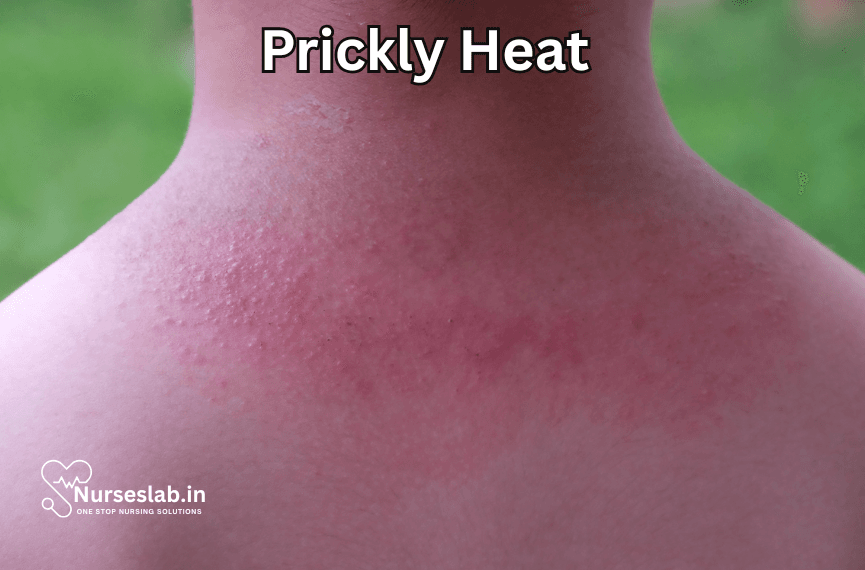
Symptoms:
Adults usually develop heat rash in skin folds and where clothing causes friction. In infants, the rash is mainly found on the neck, shoulders and chest. It can also show up in the armpits, elbow creases and groin.
Heat rash usually heals by cooling the skin and avoiding exposure to the heat that caused it. See your doctor if you or your child has symptoms that last longer than a few days, the rash seems to be getting worse, or you notice signs of infection, such as:
- Increased pain, swelling, redness or warmth around the affected area.
- Pus draining from the lesions.
- Swollen lymph nodes in the armpit, neck or groin.
- A fever or chills
Causes:
Heat rash develops when some of your sweat ducts clog. Instead of evaporating, perspiration gets trapped beneath the skin, causing inflammation and rash.
It’s not always clear why the sweat ducts become blocked, but certain factors seem to play a role, including:
- Immature sweat ducts. A newborn’s sweat ducts aren’t fully developed. They can rupture more easily, trapping perspiration beneath the skin. Heat rash can develop in the first week of life, especially if the infant is being warmed in an incubator, is dressed too warmly or has a fever.
- Tropical climates. Hot, humid weather can cause heat rash.
- Physical activity. Intense exercise, hard work or any activity that causes you to sweat heavily can lead to heat rash.
- Overheating. Overheating in general — dressing too warmly or sleeping under an electric blanket — can lead to heat rash.
- Prolonged bed rest. Heat rash can also occur in people who are confined to bed for long periods, especially if they have a fever.
Risk Factors
Some things can make you more likely to get a heat rash. These include:
- Frequent exercise. Physical activity makes you sweat. Too much sweat can clog your sweat ducts.
- Hot, humid weather. When it’s hot, your body sweats to stay cool. Up to 30% of people living in warm climates get heat rashes.
- Bed rest. Staying in one position can trap sweat between your clothes and skin and cause irritation.
- Fever. This can cause you to sweat, especially if you stay in bed while you’re feeling sick.
- Being a newborn. Up to 9% of newborns get it in their first few weeks of life. Young babies have a harder time controlling their body temperature than adults. This might be partly because they don’t have fully developed sweat ducts. These immature ducts are more likely to get clogged.
First aid for prickly heat:
1. Cool the Skin
- Move to a cooler environment—preferably an air-conditioned or shaded area.
- Take a cool bath or shower to soothe the skin and remove sweat buildup.
- Avoid perfumed soaps or lotions, as they may further irritate the skin.
2. Keep the Skin Dry
- Pat the skin dry gently after bathing—do not rub.
- Wear loose, breathable clothing, preferably cotton, to allow airflow.
- Avoid excessive sweating by staying in a cool environment.
3. Relieve Itching and Irritation
- Apply calamine lotion or an antihistamine cream to reduce discomfort.
- Use cold compresses for up to 10 minutes to soothe inflamed areas.
- Avoid scratching, as it can worsen irritation or lead to infection.
4. Hydration and Prevention
- Drink plenty of water to stay hydrated and regulate body temperature.
- Avoid hot environments and prolonged exposure to heat.
- If symptoms persist or worsen after a few days, consult a healthcare professional.
Prevention
The best way to prevent prickly heat is to keep your baby or young child clean, dry and comfortable.
- In hot and humid weather, try to keep the child in the shade, and avoid taking him out during the hottest periods.
- Give frequent, lukewarm baths in hot weather, but be sure to dry the child’s skin thoroughly afterwards.
- During cold weather, avoid overdressing the child. When you come inside, remove unnecessary layers of heavy clothing.
- Use clothing made of cotton or other breathable fabrics.
- Avoid greasy ointments and lotions, which hold moisture in.
REFERENCES
- Danzig RM, Raunig JM, Acholonu CJ. Exertional Heat Illness-From Identifying Heat Rash to Treating Heat Stroke (https://pubmed.ncbi.nlm.nih.gov/38194658/). Pediatr Ann. 2024 Jan;53(1):e17-e21.
- Danzl DF. Heat-Related Illnesses. In: Loscalzo J, Fauci A, Kasper D, Hauser S, Longo D, Jameson J, eds. Harrison’s Principles of Internal Medicine. 21st ed. McGraw-Hill Education; 2022.
- Gauer R, Meyers BK. Heat-Related Illnesses (https://pubmed.ncbi.nlm.nih.gov/30990296/). Am Fam Physician. 2019 Apr;99(8):482-489.
- Guerra KC, Toncar A, Krishnamurthy K. Miliaria https://www.ncbi.nlm.nih.gov/books/NBK537176/. 2024 Sep 1. In: StatPearls [Internet]. Treasure Island (FL): StatPearls Publishing; 2025 Jan.
- National Health Service (UK). Heat rash (prickly heat) https://www.nhs.uk/conditions/heat-rash-prickly-heat/. Page last reviewed 5/9/2024.
- Rojek NW, Worswick S, Shinkai K, Fox LP. Miliaria (Heat Rash). In: Papadakis MA, Rabow MW, McQuaid KR, Gandhi M, eds. Current Medical Diagnosis & Treatment 2025. McGraw-Hill Education; 2025.
Stories are the threads that bind us; through them, we understand each other, grow, and heal.
JOHN NOORD
Connect with “Nurses Lab Editorial Team”
I hope you found this information helpful. Do you have any questions or comments? Kindly write in comments section. Subscribe the Blog with your email so you can stay updated on upcoming events and the latest articles.


