


Last Updated on August 28, 2026 by Nurseslab.in Editorial Team
Overview
Meningitis is inflammation of the meninges, the protective membranes surrounding the brain and spinal cord. It may be caused by bacteria, viruses, fungi, parasites, amoebae, medications, autoimmune disease, cancer, or other non-infectious processes. The term describes a syndrome rather than one single illness; urgency, treatment, contagiousness, and outcome depend on the cause.
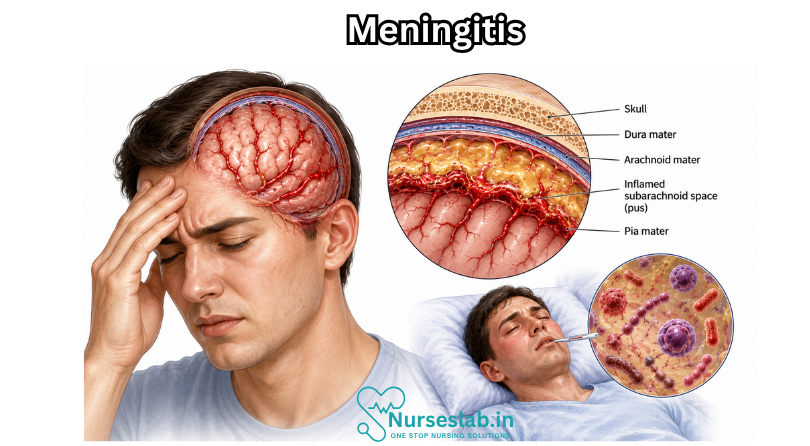
Acute bacterial meningitis is the most time-critical form. Organisms can multiply rapidly in cerebrospinal fluid, trigger intense inflammation, impair brain blood flow, raise intracranial pressure, cause seizures, and enter the bloodstream. Viral meningitis is more common and often less severe, but hospital assessment may still be required because its early presentation can resemble bacterial disease. Tuberculous, fungal, and some parasitic forms often evolve more gradually and are especially important in people with impaired immunity or relevant exposures.
The Meninges and Cerebrospinal Fluid
The meninges have three layers: the dura mater on the outside, the arachnoid mater in the middle, and the pia mater closely covering the brain and spinal cord. Cerebrospinal fluid circulates mainly in the subarachnoid space between the arachnoid and pia. It cushions the central nervous system, carries nutrients and signalling molecules, and helps remove waste.
When infection reaches this space, immune mediators make blood vessels more permeable and attract inflammatory cells. Oedema, abnormal blood flow, small-vessel clotting, and impaired cerebrospinal fluid drainage may follow. Cranial nerves can be injured, particularly those involved in hearing. Inflammation may extend into brain tissue, blood vessels, ventricles, or spinal roots, producing meningoencephalitis, stroke, hydrocephalus, or neurological deficits.
Major Types and Causes
- Acute bacterial meningitis: Important causes include Streptococcus pneumoniae, Neisseria meningitidis, Haemophilus influenzae, group B streptococcus, Escherichia coli, and Listeria monocytogenes. The likely organism changes with age, vaccination, pregnancy, immunity, geography, and healthcare exposure.
- Viral meningitis: Enteroviruses are common causes. Herpes simplex virus type 2, varicella-zoster virus, mumps virus, influenza, arboviruses, and other viruses may also be responsible.
- Tuberculous meningitis: Mycobacterium tuberculosis causes a subacute illness that can affect the brain base, cranial nerves, and blood vessels.
- Fungal meningitis: Cryptococcus is important in advanced immune suppression; other fungi include Coccidioides, Histoplasma, Candida, and Aspergillus in relevant settings.
- Parasitic or eosinophilic meningitis: Certain worms and protozoa cause disease after specific food, water, soil, animal, or travel exposures.
- Amoebic meningitis: Primary amoebic meningoencephalitis is a rare, rapidly destructive infection associated with warm freshwater entering the nose.
- Non-infectious meningitis: Autoimmune disease, cancer involving the meninges, inflammatory disorders, medicines, surgery, trauma, and chemical irritation can produce meningeal inflammation.
How Infection Reaches the Meninges
- Bloodstream spread: Organisms colonise the nose, throat, lungs, gut, skin, or urinary tract, enter the blood, and cross into the nervous system.
- Direct extension: Infection spreads from the middle ear, mastoid, sinuses, skull, or another nearby structure.
- Structural route: A skull fracture, congenital defect, or cerebrospinal fluid leak creates a pathway.
- Medical procedure or device: Neurosurgery, lumbar devices, ventricular shunts, or penetrating trauma can introduce organisms.
- Reactivation: Latent viruses, tuberculosis, or fungi may reactivate when immunity declines.
- Maternal or birth-related transmission: Newborns may acquire organisms before, during, or after delivery.
Transmission and Contagiousness
Meningitis itself is not transmitted as a single condition. Some causative organisms spread between people, while others come from environmental exposure or reactivation. Meningococcus and some respiratory bacteria spread through respiratory or throat secretions, generally requiring close or prolonged contact. Enteroviruses can spread through faecal–oral and respiratory routes. Tuberculosis spreads through airborne particles. Fungal meningitis is usually acquired from the environment rather than from another person.
Public-health teams determine whether close contacts need antibiotics, vaccination, testing, or monitoring. Casual contact does not automatically require prophylaxis. People should follow official advice rather than sharing leftover antibiotics or avoiding everyone who has had meningitis.
Risk Factors
- Newborn or very young age; adolescence and young adulthood for some meningococcal strains; and older age for pneumococcal or Listeria disease.
- Missing or incomplete vaccination.
- Close living conditions such as dormitories, military accommodation, shelters, or crowded households.
- Absent or poorly functioning spleen, complement deficiency, or treatment with a complement inhibitor.
- HIV infection, cancer, transplantation, steroid use, biological therapy, or another form of immune suppression.
- Pregnancy, which increases susceptibility to invasive Listeria infection.
- Recent ear infection, sinusitis, pneumonia, skull fracture, cerebrospinal fluid leak, neurosurgery, or cochlear implant.
- Travel to an outbreak area or the African meningitis belt, including particular mass gatherings.
- Exposure to tuberculosis, endemic fungi, mosquitoes, ticks, rodents, warm freshwater, or high-risk foods depending on the suspected pathogen.
Symptoms in Older Children and Adults
- Fever or an abnormally low temperature.
- Severe or rapidly worsening headache.
- Neck stiffness or pain with movement.
- Photophobia, nausea, or repeated vomiting.
- Confusion, unusual behaviour, drowsiness, or difficulty waking.
- Seizure, weakness, speech difficulty, poor coordination, or altered sensation.
- Rapid breathing, fast heart rate, mottled skin, cold hands and feet, severe limb pain, or reduced urine suggesting sepsis.
- A non-blanching petechial or purpuric rash, particularly in meningococcal disease. A rash may be absent and can be difficult to see on darker skin; check less pigmented areas such as palms, soles, conjunctivae, and inside the mouth.
The classic combination of fever, headache, neck stiffness, and altered consciousness is highly concerning but is not present in every patient. Symptoms can appear in any order. Older adults or immunocompromised people may have confusion, weakness, or reduced alertness without marked fever or neck stiffness.
Symptoms in Babies and Young Children
- Poor feeding, vomiting, weak suck, or refusal of feeds.
- Marked irritability, an unusual high-pitched cry, or distress when handled.
- Floppiness, stiffness, abnormal movements, or seizures.
- Sleepiness, reduced interaction, or difficulty waking.
- A tense or bulging fontanelle, although this may be absent.
- Fever, low temperature, mottled colour, pale or blotchy skin, or cold extremities.
- Rapid breathing, pauses in breathing, or grunting.
- A non-blanching rash or signs of shock.
Emergency Recognition
- Call emergency services for suspected meningitis, severe sepsis, altered consciousness, seizure, rapidly spreading non-blanching rash, or a seriously ill baby.
- Do not wait for a rash. Bacterial meningitis may occur without one.
- Do not let a temporarily normal temperature or pain response provide false reassurance.
- If the person becomes unconscious but is breathing, place them safely on their side if trained and monitor breathing.
- Do not give food or drink to someone with reduced consciousness or repeated vomiting.
- Tell clinicians about recent antibiotics, vaccination, travel, immune suppression, pregnancy, exposure, surgery, or a cerebrospinal fluid leak.
Diagnostic Evaluation
- Immediate clinical assessment: Airway, breathing, circulation, oxygenation, temperature, blood pressure, perfusion, level of consciousness, seizure activity, hydration, and signs of raised intracranial pressure are assessed first.
- Focused history: Onset and progression, headache, neck symptoms, rash, mental-state change, seizures, recent infection, antibiotics, immunisation, travel, exposures, immune status, pregnancy, medicines, surgery, and trauma are reviewed.
- Physical examination: Includes neurological examination, skin inspection, neck movement, cranial nerves, fundus examination when feasible, ear and sinus assessment, cardiorespiratory findings, and a search for a source of infection.
- Blood tests: Full blood count, inflammatory markers, electrolytes, glucose, liver and kidney function, coagulation, lactate, and blood gas testing help assess severity and treatment safety.
- Blood cultures: Collected before antibiotics when this can be done without delaying treatment. They may identify bacteria even when cerebrospinal fluid is sterilised by prior antibiotics.
- Whole-blood molecular testing: Polymerase chain reaction may detect meningococcal or pneumococcal DNA and can support diagnosis after antibiotics.
- Lumbar puncture: Cerebrospinal fluid is obtained as soon as safely possible, preferably before antimicrobials, but treatment must not wait when the procedure is delayed or contraindicated.
- Opening pressure: Measured when feasible and safe; it may be raised in bacterial, tuberculous, or fungal disease.
- Cerebrospinal fluid cell count: Neutrophils often predominate in bacterial meningitis, while lymphocytes are more common in viral, tuberculous, or fungal forms. Early or partially treated disease can be atypical.
- Cerebrospinal fluid glucose: Interpreted with a near-simultaneous blood glucose. Low fluid glucose or a low fluid-to-blood ratio supports bacterial, tuberculous, or fungal disease.
- Cerebrospinal fluid protein and lactate: Raised protein is common but non-specific; lactate can support bacterial diagnosis when interpreted with other findings.
- Microscopy, culture, antigen, and PCR: Gram stain and bacterial culture guide therapy; molecular panels detect selected bacteria and viruses. Targeted tests are required for tuberculosis, Cryptococcus, fungi, or parasites.
- Neuroimaging: Computed tomography or MRI is used when focal neurological signs, papilloedema, severely reduced consciousness, new adult seizure, profound immune suppression, or another concern suggests mass effect or an alternative diagnosis. Imaging should not routinely precede lumbar puncture.
- Additional tests: HIV testing, tuberculosis studies, chest imaging, respiratory sampling, serology, autoimmune markers, toxicology, or cancer evaluation are selected according to context.
When Lumbar Puncture Is Deferred
- Unstable airway, breathing, or circulation requiring immediate resuscitation.
- Clinical signs suggesting dangerous intracranial pressure or mass effect.
- Focal neurological deficit, concerning cranial nerve abnormality, severely reduced consciousness, or selected new-onset seizures.
- Known or suspected bleeding disorder, severe thrombocytopenia, or unsafe anticoagulation.
- Skin infection or suspected epidural infection at the puncture site.
- Another anatomical or procedural risk identified by the treating team.
Deferral is not diagnostic delay. Blood cultures and other samples are collected promptly, empirical treatment begins, and lumbar puncture is reconsidered when safe. A normal scan does not by itself prove that lumbar puncture is safe; clinical assessment remains essential.
Typical Cerebrospinal Fluid Patterns
- Acute bacterial: Often cloudy fluid, high opening pressure, neutrophilic pleocytosis, high protein, and low glucose.
- Viral: Usually clear fluid, lymphocytic pleocytosis, moderately raised protein, and generally preserved glucose.
- Tuberculous: Commonly high pressure, lymphocytes, very high protein, and low glucose; microbiological confirmation may require large-volume and repeated targeted testing.
- Fungal: Often lymphocytic inflammation, raised pressure and protein, and low glucose, with antigen or culture selected for the organism.
Patterns overlap, especially after antibiotics, early in illness, or in immunocompromised patients. No single cerebrospinal fluid value should be interpreted alone.
Treatment Principles
Hospital treatment begins from the likely syndrome and risk factors, then narrows when microbiology is available. In suspected bacterial meningitis, every avoidable delay matters.
- Stabilise airway, breathing, circulation, oxygenation, blood glucose, temperature, and seizures.
- Obtain blood cultures promptly if this does not delay antimicrobials.
- Start age- and risk-appropriate intravenous empirical antibiotics immediately when bacterial meningitis is suspected.
- Add Listeria coverage for relevant age groups, pregnancy, or immune compromise according to local guidance.
- Give dexamethasone with or just before the first antibiotic dose when recommended; benefit is greatest when started early.
- Use aciclovir when herpes encephalitis or an appropriate herpes meningitis syndrome is suspected.
- Adjust treatment when culture, PCR, susceptibility, renal function, allergy history, and source become clear.
- Use intensive monitoring for shock, respiratory failure, seizures, raised intracranial pressure, disseminated coagulation, or organ dysfunction.
Cause-Specific Treatment
- Bacterial meningitis: Intravenous bactericidal antibiotics are selected for age and resistance patterns, then targeted to the organism. Duration varies by pathogen, complications, and response. Source control may include treating mastoiditis, sinus disease, an abscess, infected hardware, or a cerebrospinal fluid leak.
- Meningococcal disease: Immediate antibiotics and sepsis care are essential. Droplet precautions and public-health notification allow timely prophylaxis for eligible close contacts.
- Viral meningitis: Many enteroviral cases need fluids, analgesia, antiemetics, and observation only. Antiviral therapy is used for treatable herpes-family infections or when encephalitis is possible.
- Tuberculous meningitis: Requires a prolonged multidrug tuberculosis regimen, corticosteroids in most cases, monitoring for toxicity, and management of hydrocephalus, stroke, or electrolyte disturbance.
- Cryptococcal meningitis: Uses staged antifungal therapy and repeated management of raised intracranial pressure. Immune restoration is timed carefully in HIV-associated disease.
- Other fungal meningitis: Organism-specific antifungal therapy may be prolonged and require infectious-disease expertise.
- Parasitic or amoebic disease: Urgent specialist and public-health consultation is required because treatment is organism-specific and evidence may be limited.
- Non-infectious meningitis: Stop a causative medicine when appropriate and treat the autoimmune, inflammatory, or malignant cause after infection has been adequately excluded.
Supportive and Intensive Care
- Fluids and perfusion: Treat shock while avoiding both inadequate circulation and harmful fluid excess. Routine fluid restriction is not appropriate unless a specific indication exists.
- Seizure treatment: Acute seizures receive prompt medication; continuous electroencephalography may be needed with persistent coma or subtle seizures.
- Intracranial pressure: Head positioning, ventilation, osmotic therapy, drainage, or neurosurgical care may be required in selected patients.
- Electrolytes: Sodium abnormalities can arise from inappropriate antidiuretic hormone secretion, cerebral salt wasting, dehydration, or treatment.
- Respiratory support: Oxygen, airway protection, or mechanical ventilation may be needed.
- Skin and limb care: Purpura fulminans and severe sepsis can cause tissue ischaemia requiring surgical, vascular, wound, and rehabilitation input.
- Nutrition and rehabilitation: Early swallowing assessment, nutrition, mobilisation, communication support, and rehabilitation reduce secondary complications.
Infection Control and Management of Contacts
- Use droplet precautions for suspected meningococcal disease until the patient has received effective antibiotics for the locally specified period.
- Notify public-health authorities promptly where required.
- Identify household members, intimate contacts, and people exposed directly to oral or respiratory secretions.
- Offer recommended antibiotic prophylaxis quickly to eligible contacts; drug choice depends on age, pregnancy, contraindications, and resistance guidance.
- Provide vaccination to contacts or communities when indicated by the organism, serogroup, or outbreak.
- Explain symptoms and the need for urgent care because prophylaxis does not provide complete protection.
- Do not routinely exclude or treat casual contacts unless public-health advice indicates otherwise.
Complications and Long-Term Effects
- Hearing loss: May be mild to profound, unilateral or bilateral, and can appear during recovery.
- Neurological injury: Seizures, epilepsy, stroke, weakness, coordination problems, cranial nerve palsy, or hydrocephalus.
- Cognitive and behavioural change: Problems with memory, attention, processing speed, executive function, fatigue, sleep, mood, or school performance.
- Vision and communication difficulties: Visual impairment, speech or language delay, and swallowing problems can occur.
- Sepsis-related injury: Kidney, heart, lung, or coagulation failure; skin scarring; limb ischaemia; and amputation in severe meningococcal sepsis.
- Children’s development: Hearing, language, motor, educational, and behavioural impacts may emerge months later as demands increase.
- Psychological effects: Anxiety, depression, post-traumatic symptoms, grief, or fear of recurrence may affect survivors and families.
- Death: Bacterial, tuberculous, fungal, and amoebic forms can be fatal despite treatment.
Recovery and Follow-Up
Recovery ranges from rapid improvement after uncomplicated viral meningitis to prolonged rehabilitation after bacterial or chronic disease. Headache, fatigue, poor concentration, sleep disturbance, dizziness, and emotional distress can outlast the acute infection. Return to work, study, driving, sport, and childcare should be gradual and based on function rather than pressure to appear recovered.
- Arrange age-appropriate hearing assessment before or soon after discharge and repeat it if concerns arise.
- Review neurological status, seizures, headaches, balance, vision, swallowing, and movement.
- Assess cognition, mood, sleep, fatigue, school progress, and work function.
- Provide physiotherapy, occupational therapy, speech and language therapy, neuropsychology, audiology, or mental-health support as needed.
- Review immunisation status and investigate immune deficiency, asplenia, complement disorder, cerebrospinal fluid leak, or anatomical risk after recurrent or unusual infection.
- Give patients and families a written account of the organism, treatment, complications, follow-up plan, and warning signs.
Prevention
- Vaccination: Follow the national schedule for meningococcal, pneumococcal, Haemophilus influenzae type b, measles–mumps–rubella, varicella, influenza, and other relevant vaccines.
- Risk-based vaccination: Additional meningococcal or pneumococcal doses may be advised for asplenia, complement deficiency, immune suppression, cochlear implants, cerebrospinal fluid leaks, travel, or outbreak exposure.
- Maternal care: Screening and intrapartum prevention reduce early-onset group B streptococcal disease according to national policy.
- Hand and respiratory hygiene: Wash hands, cover coughs, clean shared surfaces, and avoid sharing items contaminated with saliva.
- Food safety: People at increased Listeria risk should follow local guidance on refrigerated ready-to-eat foods, unpasteurised products, and thorough cooking.
- Tuberculosis control: Early diagnosis, treatment, ventilation, contact investigation, and vaccination policy reduce disease burden.
- Environmental precautions: Follow travel advice for mosquitoes and ticks, and prevent warm freshwater from entering the nose during relevant activities.
- Manage structural risk: Persistent clear fluid leakage from the nose or ear after trauma or surgery requires specialist assessment.
Prognosis
Outcome depends on the organism, age, immunity, speed of recognition and treatment, consciousness level, seizures, shock, intracranial complications, and access to intensive care. Many patients with viral meningitis recover fully. Bacterial meningitis remains dangerous even with modern treatment; the World Health Organization reports that approximately one in six affected people die and about one in five develop serious complications. Tuberculous and fungal meningitis often have worse outcomes when diagnosis is delayed.
Early improvement does not exclude later hearing, cognitive, educational, or psychological effects. Planned follow-up is therefore part of treatment, not an optional extra. Prognostic statistics describe populations and cannot predict an individual survivor’s abilities or recovery timeline.
Nursing Care of a Patient with Meningitis
Nursing care focuses on rapid recognition, infection control, urgent treatment support, neurological monitoring, airway and circulation support, fever and pain control, seizure precautions, patient and family education, and prevention of complications.
Assessment
- Assess airway, breathing, circulation, oxygen saturation, respiratory pattern, heart rate, blood pressure, temperature, capillary refill, urine output, hydration status, and signs of sepsis or shock.
- Assess neurological status frequently, including level of consciousness, orientation, Glasgow Coma Scale, pupils, motor response, speech, behaviour, irritability, neck stiffness, photophobia, headache, vomiting, focal deficits, and seizure activity.
- Assess for signs of increased intracranial pressure, such as worsening headache, repeated vomiting, decreasing consciousness, unequal pupils, bradycardia with hypertension, abnormal posturing, or bulging fontanelle in infants.
- Inspect the skin for petechiae, purpura, non-blanching rash, mottling, bruising, or signs of meningococcal sepsis.
- Review risk factors and history, including recent respiratory or ear infection, sinus infection, head trauma, neurosurgery, cerebrospinal fluid leak, immunosuppression, asplenia, crowded living, sick contacts, travel, and vaccination status.
- Review diagnostic results such as blood cultures, complete blood count, glucose, electrolytes, renal and liver function, inflammatory markers, blood gas, lactate, lumbar puncture and cerebrospinal fluid results, CT or MRI findings, and pathogen testing when ordered.
- Assess pain, fever, nausea, vomiting, nutrition, swallowing safety, mobility, fall risk, aspiration risk, skin integrity, family anxiety, baseline function, and need for rehabilitation or follow-up support.
Priority Nursing Diagnoses
- Risk for ineffective cerebral tissue perfusion related to meningeal inflammation, cerebral oedema, seizures, sepsis, or increased intracranial pressure.
- Hyperthermia related to infectious or inflammatory process.
- Acute pain related to meningeal irritation, headache, photophobia, fever, or increased intracranial pressure.
- Risk for ineffective airway clearance related to reduced level of consciousness, vomiting, secretions, seizures, or respiratory distress.
- Risk for injury related to seizures, confusion, agitation, weakness, altered consciousness, or impaired mobility.
- Risk for deficient fluid volume related to fever, vomiting, poor intake, diaphoresis, or increased metabolic demand.
- Deficient knowledge related to disease process, medications, isolation precautions, vaccination, warning signs, follow-up, and possible rehabilitation needs.
Nursing Interventions
- Activate urgent medical review for suspected meningitis, especially with fever, severe headache, neck stiffness, altered mental status, seizures, non-blanching rash, or rapid deterioration.
- Place the patient on appropriate isolation precautions as ordered; use droplet precautions immediately for suspected bacterial or meningococcal meningitis according to facility policy.
- Support prompt diagnostic actions, including blood cultures, lumbar puncture preparation when safe, imaging when ordered, and early administration of prescribed antibiotics, antivirals, corticosteroids, or antifungals.
- Maintain airway safety, position the patient to support ventilation, provide oxygen as prescribed, keep suction available, and prepare for advanced airway or intensive care support if consciousness or breathing worsens.
- Perform frequent neurological observations and report decreasing consciousness, seizures, unequal pupils, new focal deficits, persistent vomiting, abnormal posturing, or signs of increased intracranial pressure immediately.
- Implement seizure precautions, maintain a safe environment, administer prescribed anti-seizure medicines, document seizure duration and features, and protect the patient from injury during events.
- Manage fever and pain with prescribed antipyretics, analgesics, cooling measures as appropriate, low-stimulation environment, dim lighting for photophobia, and reduced noise.
- Maintain fluid and electrolyte balance by monitoring intake and output, urine output, daily weight when ordered, vomiting, diarrhoea, laboratory trends, and signs of dehydration or fluid overload.
- Use aspiration, fall, pressure-injury, and delirium precautions for patients with altered consciousness, weakness, poor mobility, or swallowing difficulty.
- Coordinate care with infectious diseases, neurology, critical care, pharmacy, rehabilitation, speech therapy, physiotherapy, occupational therapy, dietetics, social work, public health, and community nursing as needed.
Patient and Family Education
- Explain that meningitis is inflammation around the brain and spinal cord and can become serious quickly, especially when caused by bacteria.
- Teach the family to seek emergency care for fever with severe headache, stiff neck, confusion, seizure, non-blanching rash, repeated vomiting, severe drowsiness, breathing difficulty, or rapid worsening.
- Review the purpose and schedule of prescribed medicines, including antibiotics, antivirals, antifungals, corticosteroids, anti-seizure medicines, pain medicines, or fever medicines, and stress completing the prescribed course.
- Teach infection-control measures such as hand hygiene, respiratory etiquette, masks or isolation precautions when instructed, and prophylaxis guidance for close contacts when ordered.
- Encourage vaccination review according to local recommendations, including meningococcal, pneumococcal, Haemophilus influenzae type b, influenza, measles, mumps, varicella, and other relevant vaccines.
- Explain that recovery may require follow-up for hearing, vision, memory, speech, mobility, seizures, mood, school or work performance, and rehabilitation needs.
- Encourage caregivers to monitor fatigue, headaches, behaviour changes, sleep problems, weakness, seizures, medication side effects, and difficulty returning to normal activities after discharge.
Expected Outcomes
- The patient maintains a patent airway, adequate oxygenation, stable circulation, and stable temperature.
- The patient shows stable or improving neurological status with reduced confusion, headache, photophobia, vomiting, or seizure activity.
- Antimicrobial, antiviral, anti-seizure, and supportive therapies are administered promptly as prescribed.
- The patient remains free from preventable aspiration, falls, pressure injury, uncontrolled seizures, severe dehydration, septic shock, and avoidable neurological deterioration.
- The patient and family explain warning signs, medication use, infection-control measures, vaccination needs, follow-up care, and possible rehabilitation requirements.
- The patient receives coordinated care and appropriate referral for neurological, cognitive, hearing, vision, mobility, speech, psychosocial, or school/work support.
Evaluation
Evaluate nursing care by reviewing airway and respiratory stability, temperature, pain, hydration, neurological observations, seizure frequency, signs of increased intracranial pressure, laboratory and cerebrospinal fluid results, medication response, side effects, infection-control needs, mobility, swallowing, cognition, family understanding, and follow-up attendance. Revise the care plan if consciousness decreases, seizures persist, respiratory status worsens, intracranial pressure signs appear, sepsis develops, complications occur, or the patient requires intensive care, rehabilitation, or additional specialist support.
REFERENCES
- Meningitis. National Institute of Neurological Disorders and Stroke. https://www.ninds.nih.gov/health-information/disorders/meningitis#
- Centers for Disease Control and Prevention (U.S.). About Bacterial Meningitis (https://www.cdc.gov/meningitis/about/bacterial-meningitis.html). Last updated 1/9/2024.
- Meningitis. World Health Organization. https://www.who.int/news-room/fact-sheets/detail/meningitis.
- Hersi K, Gonzalez FJ, Kondamudi NP. Meningitis (https://www.ncbi.nlm.nih.gov/books/NBK459360/). 2023 Aug 12. In: StatPearls [Internet]. Treasure Island (FL): StatPearls Publishing; 2025 Jan.
- Meningitis. In: Kumar N, Law A, Choudhry NK, eds. Teaching Rounds: A Visual Aid to Teaching Internal Medicine Pearls on the Wards. McGraw-Hill Education; 2016.
- Merck Manual, Consumer Version. Subacute and Chronic Meningitis (https://www.merckmanuals.com/home/brain-spinal-cord-and-nerve-disorders/meningitis/subacute-and-chronic-meningitis). Last reviewed 11/2024.
Stories are the threads that bind us; through them, we understand each other, grow, and heal.
JOHN NOORD
Connect with “Nurses Lab Editorial Team”
I hope you found this information helpful. Do you have any questions or comments? Kindly write in comments section. Subscribe the Blog with your email so you can stay updated on upcoming events and the latest articles.


