


Last Updated on September 2, 2026 by Nurseslab.in Editorial Team
Carney complex, also known as Carney syndrome, is a rare genetic condition that causes skin pigmentation changes and benign tumors to form in children and young adults.
Introduction
Carney Complex (CNC) is a rare, genetically determined, multisystem disorder characterised by a constellation of endocrine and non-endocrine tumours, spotty skin pigmentation, and other diverse clinical features. First described by Dr. J. Aidan Carney in 1985, this syndrome has drawn considerable attention in medical research due to its unique presentation and implications for both hereditary and sporadic tumour syndromes. The disease, though uncommon, presents significant challenges in diagnosis and management, making awareness and understanding crucial among medical professionals, students, and even the general public.
Historical Background
Carney Complex was first systematically described in the mid-1980s by Dr. Carney, who observed a pattern of myxomas, spotty skin pigmentation, and endocrine overactivity in several patients. This constellation of findings was initially referred to as the “myxoma syndrome” before being formally recognised as Carney Complex. Since then, further clinical and molecular characterisations have expanded understanding of the disease, highlighting its genetic basis and diverse phenotypic expression.
Epidemiology
Prevalence
Carney Complex is an exceedingly rare disorder, with fewer than 1,000 cases reported worldwide. The true prevalence is likely underestimated due to underdiagnosis, variable phenotypic expression, and overlap with other syndromes. CNC affects both males and females, although some studies suggest a slight female predominance.
Demographics and Risk Factors
CNC can present at any age, but the majority of cases are diagnosed in adolescence or early adulthood. There are no clear geographical or ethnic predilections. The most significant risk factor is a positive family history, as the condition follows an autosomal dominant inheritance pattern. De novo mutations, though rare, have also been documented.
Genetics and Pathophysiology
Genetic Mutations
Carney Complex is primarily associated with mutations in the PRKAR1A gene, located on chromosome 17q24.2. This gene encodes the regulatory subunit type 1-alpha of protein kinase A (PKA), a critical enzyme in cellular signalling pathways. Approximately 70% of CNC cases harbour germline inactivating mutations in PRKAR1A. Other genetic loci, such as CNC2 on chromosome 2p16, have been implicated in a minority of cases, suggesting genetic heterogeneity.
Molecular Mechanisms
The inactivation of PRKAR1A disrupts the regulation of PKA activity, leading to increased cellular proliferation and tumourigenesis. This loss of function results in enhanced cAMP signalling, contributing to the development of various benign and, rarely, malignant tumours. The molecular mechanisms also underlie the diverse endocrine and non-endocrine manifestations seen in CNC.
Clinical Manifestations
Signs and Symptoms
Carney Complex is a pleiotropic syndrome with a wide spectrum of clinical features, which may appear at different times and with varying severity. The cardinal manifestations include:
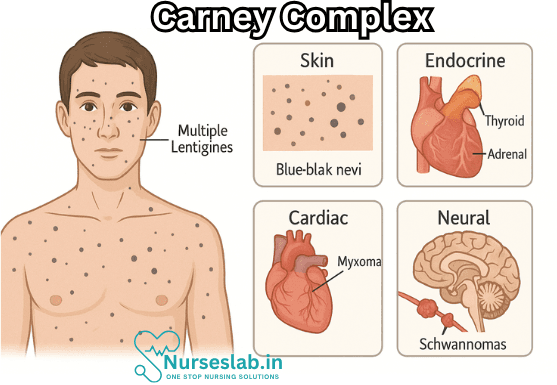
- Spotty Skin Pigmentation: Lentigines, blue nevi, and café-au-lait spots are common. These pigmented lesions typically appear on the face (particularly around the lips, eyes, and mucosa), trunk, and extremities.
- Myxomas: These benign tumours may occur in the heart (cardiac myxomas), skin (cutaneous myxomas), and breast. Cardiac myxomas are particularly significant due to their potential to cause embolic events, heart failure, or sudden death.
- Endocrine Tumours and Overactivity: CNC is associated with multiple endocrine abnormalities, most notably:
- Primary pigmented nodular adrenocortical disease (PPNAD), leading to Cushing’s syndrome
- Acromegaly due to growth hormone–secreting pituitary adenomas
- Thyroid nodules or carcinoma
- Testicular tumours (large-cell calcifying Sertoli cell tumours) in males
Other Tumours and Conditions: Schwannomas, psammomatous melanotic schwannomas, and breast ductal adenomas are also observed.
Associated Conditions
Patients may develop additional complications, such as cardiac arrhythmias, embolic strokes from cardiac myxomas, or adrenal insufficiency following treatment for Cushing’s syndrome. The multisystem nature of CNC necessitates a high index of suspicion and multidisciplinary care.
Diagnosis
Diagnostic Criteria
The diagnosis of Carney Complex is established based on clinical criteria and, when available, genetic testing. The most widely accepted criteria include the presence of two or more of the following features:
- Spotty skin pigmentation (lentigines, blue nevi)
- Cardiac, cutaneous, or breast myxomas
- Endocrine tumours or overactivity (PPNAD, acromegaly, thyroid, or testicular tumours)
- Psammomatous melanotic schwannoma
- Affected first-degree relative
Alternatively, the presence of one major criterion and a pathogenic PRKAR1A mutation is sufficient for diagnosis.
Diagnostic Tests
A comprehensive evaluation includes:
- Clinical examination: Inspection for skin pigmentation, palpable masses, or signs of endocrine dysfunction.
- Imaging studies: Echocardiography to detect cardiac myxomas, MRI/CT for soft tissue and endocrine tumours, and ultrasound for thyroid and testicular lesions.
- Hormonal assays: Assessment of cortisol, ACTH, growth hormone, and other relevant endocrine markers.
- Genetic testing: Sequencing of the PRKAR1A gene and other candidate loci.
- Histopathology: Biopsy and microscopic evaluation of tumours, when indicated.
Differential Diagnosis
Several conditions may mimic aspects of Carney Complex and should be considered in the differential diagnosis:
- McCune-Albright syndrome
- Multiple endocrine neoplasia (MEN) syndromes
- Pigmented villonodular synovitis
- LAMB syndrome (Lentigines, Atrial myxoma, Blue nevi)
- Sporadic cardiac myxomas
A combination of clinical, radiological, and genetic findings aids in distinguishing CNC from these entities.
Management and Treatment
Medical Management
There is no cure for Carney Complex, and management is primarily symptomatic and preventive. Key components include:
- Endocrine control: Pharmacological agents may be used to manage hormonal excess, such as ketoconazole or metyrapone for Cushing’s syndrome, and somatostatin analogues for acromegaly.
- Monitoring and surveillance: Regular screening for new or recurrent tumours, endocrine dysfunction, and associated complications.
- Genetic counselling: Essential for affected individuals and family members due to the hereditary nature of the condition.
Surgical and Interventional Approaches
Surgery remains the mainstay for the removal of symptomatic or potentially life-threatening tumours:
- Cardiac myxomas: Prompt surgical excision is critical due to the risk of embolism or sudden death. Recurrence is possible, necessitating periodic echocardiographic monitoring.
- Adrenalectomy: Bilateral adrenalectomy may be required for refractory Cushing’s syndrome due to PPNAD.
- Resection of other tumours: Surgical removal of cutaneous, breast, or testicular tumours as indicated.
Adjunctive therapies, such as radiotherapy, are rarely indicated and are generally reserved for malignant or inoperable cases.
Supportive Therapies
Multidisciplinary care, including psychological support, rehabilitation, and social services, is vital for optimising quality of life. Patients should be educated about symptom recognition and the importance of regular follow-up.
Prognosis
Long-Term Outcomes
The prognosis for individuals with Carney Complex varies depending on the severity and location of manifestations. Most tumours are benign, but the risk of recurrence and the potential for life-threatening complications, such as cardiac embolism, necessitate lifelong surveillance. Early diagnosis and proactive management can significantly improve outcomes.
Complications
Major complications include:
- Cardiac embolic events and sudden death from myxomas
- Adrenal insufficiency following bilateral adrenalectomy
- Endocrine crises (e.g., Cushing’s syndrome, acromegaly)
- Psychosocial impact due to visible skin lesions or chronic illness
Despite these risks, with appropriate management, many patients lead productive lives.
Quality of Life
Quality of life may be affected by recurrent tumours, repeated surgeries, chronic hormonal imbalances, and the psychological burden of a hereditary disease. Access to experienced multidisciplinary teams and support networks can mitigate some of these challenges.
Nursing Care of Patients with Carney Complex
Carney complex is an exceptionally rare, autosomal dominant genetic syndrome that manifests with a constellation of symptoms, including multiple neoplasms (such as cardiac and extracardiac myxomas), skin pigmentation abnormalities, and various endocrine disorders. Given its diverse clinical presentation and systemic implications, holistic and individualized nursing care is crucial for optimizing the quality of life and outcomes for patients living with this condition.
Assessment and Early Identification
Nursing care begins with thorough assessment and ongoing surveillance, as early identification of complications can be life-saving. Key points in the assessment include:
- Medical history: Obtain detailed personal and family history, focusing on known cases of Carney complex, sudden cardiac death, unexplained strokes (potentially due to cardiac myxoma emboli), and previous endocrine abnormalities.
- Physical examination: Observe for characteristic skin findings, including lentigines (often around the lips, eyes, and genitalia), and palpable masses or nodules.
- Vital signs: Monitor for signs of cardiac involvement (arrhythmias, murmurs, or heart failure symptoms) and endocrine disturbances (hypertension, cushingoid features, signs of acromegaly, thyroid dysfunction, or sexual development abnormalities).
- Psycho-social assessment: Assess the patient’s understanding of the condition, emotional response to chronic disease, and support systems.
Monitoring and Prevention of Complications
Since Carney complex can result in serious complications, especially from cardiac and endocrine tumors, vigilant monitoring is essential.
Cardiac care:
- Monitor for new murmurs, arrhythmias, symptoms of embolism (stroke, limb ischemia), and heart failure.
- Facilitate regular echocardiographic screening as recommended by the care team.
- Educate the patient and family about warning symptoms such as sudden dyspnea, chest pain, palpitations, or syncope.
Endocrine surveillance:
- Monitor signs of hormone excess (weight gain, skin changes, mood swings, abnormal growth).
- Assist with blood and urine sampling for hormonal studies as prescribed.
- Observe for symptoms of adrenal crisis, especially in the context of Cushing’s syndrome treatment.
Oncological vigilance:
- Support surveillance for secondary tumors, including testicular or ovarian masses in children and adults, and thyroid nodules.
- Promote adherence to periodic imaging (ultrasound, MRI, CT) as per specialist’s recommendations.
Symptom Management and Supportive Care
- Pain and discomfort: Provide analgesia as required for post-surgical pain (after myxoma excision) or discomfort related to tumor burden.
- Wound care: Monitor and assist with the care of surgical sites, ensuring infection control and optimal healing.
- Skin care: Educate on sun protection and skin surveillance, given the presence of pigmented lesions and potential risk of malignancy.
- Endocrine crisis prevention: For those on corticosteroid replacement, ensure the patient understands the need for dose adjustment during illness or stress.
- Nutritional support: Monitor nutritional status, provide dietary counseling as needed, particularly for those with metabolic or growth disturbances.
Patient and Family Education
Education is vital given the lifelong nature of Carney complex and the importance of early intervention.
- Explain the genetic nature of the disorder and the rationale for family screening.
- Discuss the importance of regular follow-up, imaging, and laboratory evaluation.
- Provide clear instructions on recognizing symptoms of acute complications such as cardiac embolism, adrenal crisis, or tumor-related symptoms.
- Inform about genetic counseling options, especially for patients planning families.
- Emphasize the importance of adherence to prescribed medications and therapies.
- Provide written materials and resources for further information and support groups.
Coordination of Multidisciplinary Care
Patients with Carney complex require a coordinated, multidisciplinary approach:
- Collaboration with specialists: Coordinate care with cardiologists, endocrinologists, oncologists, dermatologists, geneticists, and surgeons.
- Facilitate communication: Ensure effective information exchange among all members of the healthcare team, the patient, and their family.
- Advocacy: Advocate for appropriate access to genetic testing, psychosocial support, and specialist referrals.
- Community resources: Connect patients and families with rare disease networks, mental health providers, and social services.
Psycho-Social and Emotional Support
Living with a rare, chronic, and potentially life-threatening disease can be isolating and emotionally challenging.
- Counseling: Offer or arrange psychological counseling to help patients and families cope with uncertainty, anxiety, and grief associated with the disease.
- Peer support: Encourage participation in patient support groups or online communities.
- School and work guidance: For children and working-age adults, collaborate with educators or employers to ensure accommodations and support as needed.
Discharge Planning and Long-term Follow-up
- Plan for safe discharge with clear follow-up appointments and instructions.
- Review warning symptoms and the action plan for emergencies.
- Ensure ongoing access to medications and necessary equipment.
- Document and communicate care plans with primary and specialty care providers.
Special Considerations
- Pediatric care: Children may need extra support due to the risk of growth disturbances, learning difficulties, and psychological impact.
- Pregnancy: Women with Carney complex require pre-pregnancy counseling and multidisciplinary management during pregnancy due to increased risks.
- Genetic implications: Consideration must be given to family planning and screening of at-risk relatives.
REFERENCES
- Correa R, Salpea P, Stratakis CA. Carney complex: an update. https://www.ncbi.nlm.nih.gov/pmc/articles/PMC4553126/. Eur J Endocrinol. 2015;173(4):M85-M97.
- Elshimy G, Rout P. Carney Complex. [Updated 2025 Jun 22]. In: StatPearls [Internet]. Treasure Island (FL): StatPearls Publishing; 2026 Jan-.
- National Library of Medicine. Carney complex. https://medlineplus.gov/genetics/condition/carney-complex/.
- Rodrigo García González, Aridna Melissa Alonso Padilla, Jennifer Aída Ortega Romero, and Melissa Anahí Chan Verdugo. 2024. “Carney Complex: A Comprehensive Review of Clinical Presentation, Genetics, and Therapeutic Advances”. International Journal of Medical Science and Clinical Research Studies 4 (01):30-35. https://doi.org/10.47191/ijmscrs/v4-i01-07.
- Stratakis CA, Raygada M. Carney Complex. https://www.ncbi.nlm.nih.gov/books/NBK1286/. 2003 Feb 5 [Updated 2018 Aug 16]. In: Adam MP, Ardinger HH, Pagon RA, et al., editors. GeneReviews® [Internet]. Seattle (WA): University of Washington, Seattle; 1993-2021.
- Yu W, Zhang ZZ, Wang O, Huang MQ, Xia WB, Guermazi A. Ring sign: an imaging sign for osteochondromyxoma in Carney complex. https://www.ncbi.nlm.nih.gov/pmc/articles/PMC6942971/. Quant Imaging Med Surg. 2019;9(12):1958-1965.
- González, Rodrigo & Padilla, Aridna & Romero, Jennifer & Verdugo, Melissa. (2024). Carney Complex: A Comprehensive Review of Clinical Presentation, Genetics, and Therapeutic Advances. International Journal of Medical Science and Clinical Research Studies. 04. 10.47191/ijmscrs/v4-i01-07.
Stories are the threads that bind us; through them, we understand each other, grow, and heal.
JOHN NOORD
Connect with “Nurses Lab Editorial Team”
I hope you found this information helpful. Do you have any questions or comments? Kindly write in comments section. Subscribe the Blog with your email so you can stay updated on upcoming events and the latest articles.


